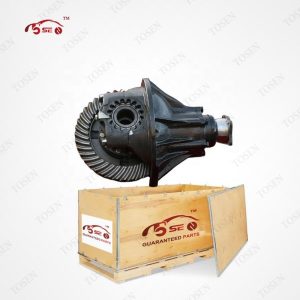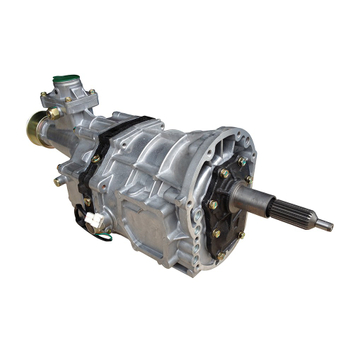
Differential whine and gear whine are two gear-mesh noises that originate at opposite ends of the driveline: differential whine is produced by the crown wheel and pinion pair that forms the final drive inside the axle, while gear whine is produced by the gear clusters inside the manual gearbox that create the driver-selected ratios. Both noises are sustained tones rather than knocks or clicks, both tend to grow as mileage accumulates, and both tempt a workshop to order parts before the source is certain — which is exactly why telling them apart matters. The propeller shaft forms the boundary between the two domains: everything ahead of it turns with the engine through the gearbox, and everything behind it turns only when the wheels are rolling. This guide works through that boundary, the road tests that assign a whine to one side of it, the evidence that confirms an axle order, and the choice between a replacement gear set and a complete assembly once the diagnosis is settled.
Two Gear Meshes at Opposite Ends of the Driveline
Inside the axle, the final drive is a matched gear pair. The crown wheel bolts to the differential case, the pinion receives rotation from the propeller shaft, and the mesh between the two carries the full driving load while turning the drive through ninety degrees on its way to the axle shafts. Torque leaving the mesh is shared out by the differential’s side gears, and because each rear wheel takes its share through its own axle shaft, the two wheels are free to turn at different rates whenever the vehicle follows a curve. The tooth counts of the pair set the final-drive ratio — an eight-tooth pinion matched with a forty-three-tooth crown wheel, for instance, yields a calculated ratio of 5.375:1 in the Isuzu NPR application, a specification that is not interchangeable with the 7×41 gearing of the same truck family.
Inside the gearbox, a different set of gears does different work. A five-speed-class manual gearbox builds its ratios from gear clusters, with synchronised hubs brought onto the clusters by an internal rail-and-fork mechanism, and the input shaft turning whenever the clutch delivers engine torque into the case. In a rear-wheel-drive layout the gearbox output feeds the single propeller shaft that drives the axle pinion — the same shaft that serves as the diagnostic boundary between the two domains.
| Attribute | Differential whine (axle side) | Gear whine (gearbox side) |
|---|---|---|
| Parts that generate the noise | The crown wheel and pinion mesh, together with the bearings that support the pair inside the axle | The gear clusters, the synchronised hubs and the constant-running shafts inside the gearbox case |
| When the parts are turning | Only while the vehicle is rolling, because the pinion is driven by the propeller shaft | Whenever the clutch delivers torque into the case, including in neutral at a standstill |
| What the noise tracks | Road speed — the same tone at the same road speed in every gear | Engine speed and gear selection — the tone moves with the ratio engaged |
| Gear-lever response | No change across the gear pattern; third and fourth sound alike at equal road speed | Often confined to one or two gears, or present in neutral with the clutch engaged |
| Order that typically follows | A crown wheel and pinion set, or a complete differential assembly | Individual internal components or a complete gearbox, specified by gearbox code |
Road Tests That Assign the Whine
Four comparisons, recorded in one quiet-road session, place the noise on one side of the propeller shaft. Each test is a controlled comparison, and the comparison — not the impression of the noise — is what carries the evidence:
- Standstill test. With the vehicle stationary, the gearbox in neutral and the clutch engaged, raise the engine speed gently and listen. A whine audible in this state can only come from the constant-running gearbox parts, because the wheels and the propeller shaft are not turning and an axle cannot generate noise at rest.
- Gear-pattern test. Drive through the gears and note whether the whine appears in one ratio only, in several, or in all of them equally. A single noisy gear implicates the gear wheel and synchronised hub at that position inside the gearbox; an identical whine across every ratio points downstream of the gearbox.
- Same-speed, different-gear test. Hold a fixed road speed in a lower gear, then in a higher one. A tone that stays constant across the two states tracks road speed and belongs to the crown wheel and pinion mesh; a tone that rises and falls with the ratio tracks engine speed and belongs to the gearbox clusters.
- Corner test. Drive through long, gentle corners and note whether the whine changes character, because the differential side gears allow the two axle shafts to rotate at unequal speeds while turning. A whine that shifts through corners supports an axle-side finding; a gearbox-side whine is indifferent to cornering direction.
Throttle adds a supporting signal on the axle side: the crown wheel and pinion mesh carries load on its drive faces under power and its coast faces on overrun, so an axle whine often changes between acceleration and lifting off. Recording that change is worth a line in the notes, but the four comparisons above are the ones that separate the domains — load response alone does not, because gearbox meshes also feel the change in force.
Confirming the Axle Diagnosis Before Ordering
When the road tests point at the axle, the order is prepared from the axle’s own identification rather than from the vehicle model name. The checks below are the ones a workshop can complete before the old unit is disturbed:
- Write down every noise event with its road speed, selected gear, throttle state and corner direction, because the pattern across several events is what confirms the side before any part is touched.
- Read the final-drive figures from the truck’s axle data or from the identification on the original assembly, since the ratio is the axle’s defining specification.
- Where the unit is accessible, count the pinion teeth and the crown wheel teeth on the original: an eight-and-forty-three count identifies the 8×43 specification and rules out the 7×41 unit of the same truck family, which will not substitute for it.
- Compare the axle-shaft splines, the mounting pattern and the input flange alongside the ratio, because the interfaces have to match as well as the tooth combination.
- For a gear-set rebuild, record the markings on both gears, both tooth counts, the crown-wheel diameter, the mounting-hole pattern, and the pinion length with its spline arrangement — a replacement pair is matched to the axle through exactly those readings.
The reason the identification work comes first is the cost of getting the ratio wrong. Fit a unit with the wrong tooth combination and the arithmetic of the driveline changes: the wheels receive a different number of propeller-shaft turns for every rotation they make, the speedometer and odometer drift away from the distance actually covered, and the engine settles into a different working range at the same cruise speed. The way the truck pulls comes away from its designed delivery with it, since the axle no longer multiplies torque at the ratio the driveline was engineered around.
Gear Set or Complete Assembly?
Once the axle is confirmed as the source, the purchasing fork has two branches. The gear-set branch suits an axle whose housing and surrounding components are sound: a differential crown wheel and pinion set replaces the gear pair inside an axle whose remaining parts stay in service, and the two gears are supplied and installed together because a crown wheel and its pinion are machined as a matching set. The assembly branch suits a failure affecting the whole unit, or a schedule that cannot accommodate an in-house gear setup.
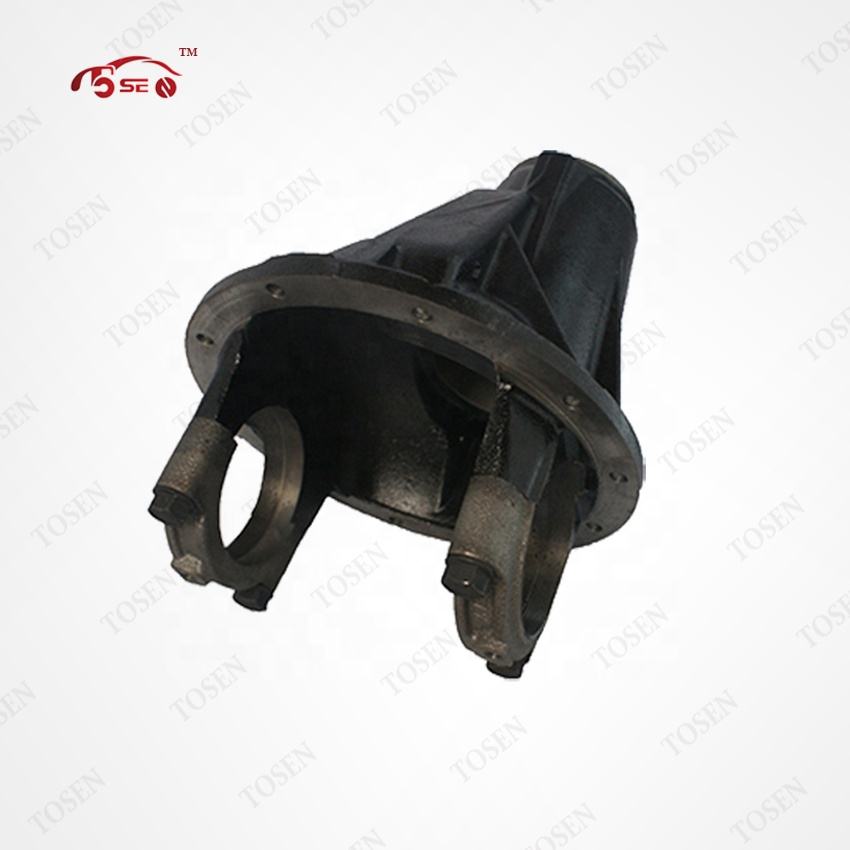
On the assembly branch, the 8×43 rear differential assembly for the Isuzu NPR shows the discipline the order follows: the pinion is counted to eight teeth and the crown wheel to forty-three before dispatch, and the axle-shaft splines, the mounting pattern and the input flange are verified against the enquiry, because a unit shipped with the wrong counts would change the truck’s speedometer accuracy and driveline behaviour once installed. A rebuild that has a sound carrier but worn gears takes the gear-set branch instead, and buyers weighing both can browse the wider Differential Parts range before preparing the enquiry. Whichever branch the diagnosis selects, a crown wheel and pinion set for differential rebuilding and a verified assembly differ in scope, not in the identification discipline: both orders are matched to the axle through tooth counts, markings and interfaces, never through the model name alone.
Frequently Asked Questions
What is the difference between differential whine and gear whine?
Differential whine is produced by the crown wheel and pinion pair inside the axle’s final drive, where the mesh carries the full driving load and turns the drive through ninety degrees on its way to the axle shafts; gear whine is produced by the gear clusters inside the manual gearbox, which create the driver-selected ratios. The two are separated by what the noise tracks: differential whine follows road speed and sounds identical in every gear, while gear whine follows the ratio engaged and can appear in a single gear or even in neutral at a standstill. The propeller shaft marks the boundary, with the gearbox on the engine side and the final drive on the wheel side.
Does a whine that stays the same in every gear point to the differential?
A whine that holds the same character at the same road speed in every gear points to the axle side of the driveline. The pinion is driven by the propeller shaft and turns at a speed set by road speed alone, so the crown wheel and pinion mesh sounds the same whether a lower or a higher gear is engaged. A noise that moves with the gear, or that appears in only one ratio, belongs to the gearbox clusters instead. Running the same-speed, different-gear comparison during a quiet-road session settles the side before any part is ordered.
How is a replacement crown wheel and pinion set matched to an axle?
A replacement pair is matched to the axle through the gears it replaces: the markings on both gears, the crown-wheel tooth count, the pinion tooth count, the crown-wheel diameter, the mounting-hole pattern, and the pinion length with its spline arrangement. Identical readings on every point mean the same ratio and the same installation interfaces, which is what a rebuild requires. The two gears are ordered together because a crown wheel and its pinion are machined as a matching set, and sending the old gears’ details with the axle identification lets TOSEN confirm the match before dispatch.
When should a complete differential assembly be ordered instead of a gear set?
Order the gear set when the housing and the surrounding components are sound and only the gears are worn, because the set replaces the gear pair inside an axle whose remaining parts stay in service. Order a complete assembly when the failure affects the whole unit or when downtime rules out an in-house gear setup. On the assembly route the ratio is confirmed first: an 8×43 Isuzu NPR unit, for example, will not substitute for the 7×41 specification of the same truck family, and a ratio that does not match the truck’s build leaves the instruments showing figures that no longer agree with the road.
Hearing a whine that could be axle or gearbox? Run the four road comparisons, record the pattern, then send TOSEN the axle identification, the tooth counts and the interface details for a quotation on a crown wheel and pinion set or a complete differential assembly.