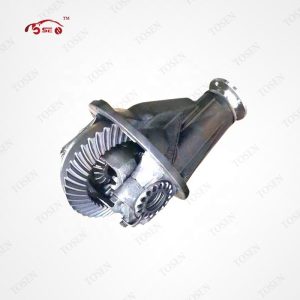
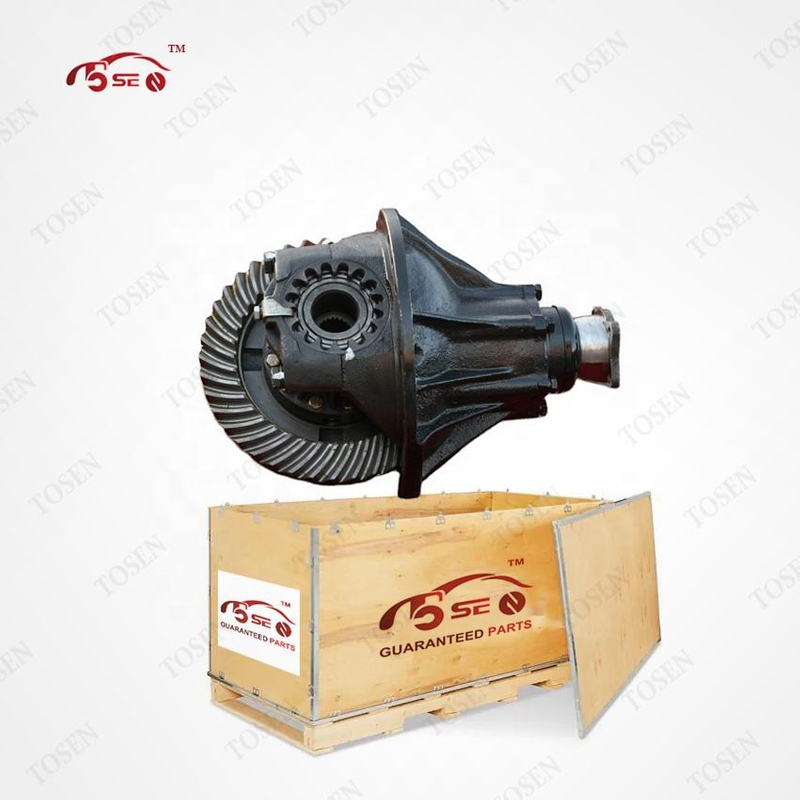
The Isuzu NPR 8:43 differential is a rear-axle final drive unit used on the popular NPR light truck line. When the old carrier starts to whine, loses tooth contact, or fails under load, the replacement question is not just “which brand” but “which ratio and which axle.” This guide walks you through what 8:43 actually means, how to confirm your axle code, which shell, spline and bearing details must match, and the installation checks that keep a new differential from failing early.
What Does 8:43 Mean? Reading the Ratio from the Teeth
The “8:43” is not a single gear ratio in the way most people expect. It is a tooth count written in pinion-to-crown form. The pinion (drive gear) has 8 teeth and the crown wheel (ring gear) has 43 teeth. Divide the ring teeth by the pinion teeth, and you get the final drive ratio: 43 ÷ 8 = 5.375:1. A truck with this ratio turns the crown wheel 5.375 times for every turn of the drive pinion, which translates into stronger pull for heavy loads at the cost of top speed.
This is why the teeth must be counted on the actual part, not guessed from the model name. Isuzu NPR axles were built with several tooth combinations, including 6:37, 6:39, 7:39, 7:41, 7:43, 8:39 and 8:43. Two trucks from the same year can sit on different final drives, and the crown wheel from one will not mesh with the pinion from the other. Count both gear sets before you order, and check the result with a simple formula. A free public tool such as the Spicer gear ratio calculator lets you confirm the math the same way a shop would.
For a deeper look at how tooth counts translate into real driving behavior across different axles, read our related technical guide on differential ratios and crown-and-pinion sets.
Find the Axle Code Before You Compare Anything
The ratio is only half the answer. The NPR family covers the NPR, NKR, NQR and NRR models, and even within one model the axle can differ by wheelbase, brake spec and gross vehicle weight. The axle code is the short identifier that tells you which differential the factory fitted to that chassis. Look for it in three places: the sticker on the driver door jamb, the plate on the axle housing, and the vehicle data from your VIN. All three should agree.
When you compare a replacement differential, write down three values: the axle code, the tooth count, and the wheel-end type (hub style, brake drum diameter, and axle spline). The official Isuzu spare-parts catalogues list the differential carriers by vehicle model and ratio, which is exactly why matching a catalogue entry to your axle code beats matching by truck name. Keep a photo of the old carrier’s label — it usually carries the ratio and often the part number.
Front and rear axles on the NPR are not interchangeable. The rear axle is the hypoid final drive discussed here, while the front axle (where fitted) is a steering axle with its own swivel hubs. If your enquiry mentions “front” or “rear” without the axle code, a supplier cannot confirm fitment. Give the code and the location in the same message.
Housing, Splines and Bearings: What Must Match Your Axle
A differential is not a standalone part. It bolts into a housing, locks to the axle shafts through splines, and carries its own bearings. If any of these three interfaces differ from your original carrier, the new unit will not seat correctly even when the ratio is right.
The first check is the carrier mounting. Differential carriers are made for a specific housing bolt pattern and a specific ring-gear flange diameter. An 8:43 crown wheel from a heavier NPR axle will not bolt into a housing sized for a lighter axle code, and forcing it damages both the housing and the new gears.
The second check is the side-gear splines that receive the axle shafts. Aftermarket NPR carriers are commonly listed with 19-tooth, 20-tooth and 23-tooth axle spline options, so the spline count must match your axle shafts exactly. Count the splines on your old carrier or measure the axle shaft before you order.
The third check is the bearing set. The carrier uses differential bearings to support the case and pinion bearings to support the pinion. A unit that ships with the correct bearings for your housing saves you a separate bearing order and removes the most common cause of a “fits on the bench, fails on the road” install.
This is the level of match you should expect from a supplier. When you are comparing options, browse our differential assemblies and gear sets category to see the ratio and application details that should be stated on a professional listing.
Crown Wheel and Pinion Checks: Backlash and Tooth Contact
Once the carrier is in the housing, two checks decide whether the gears will run quietly or fail quickly: backlash and tooth contact pattern. Both are standard practice in any drivetrain workshop, and both should be confirmed before you declare the job finished.
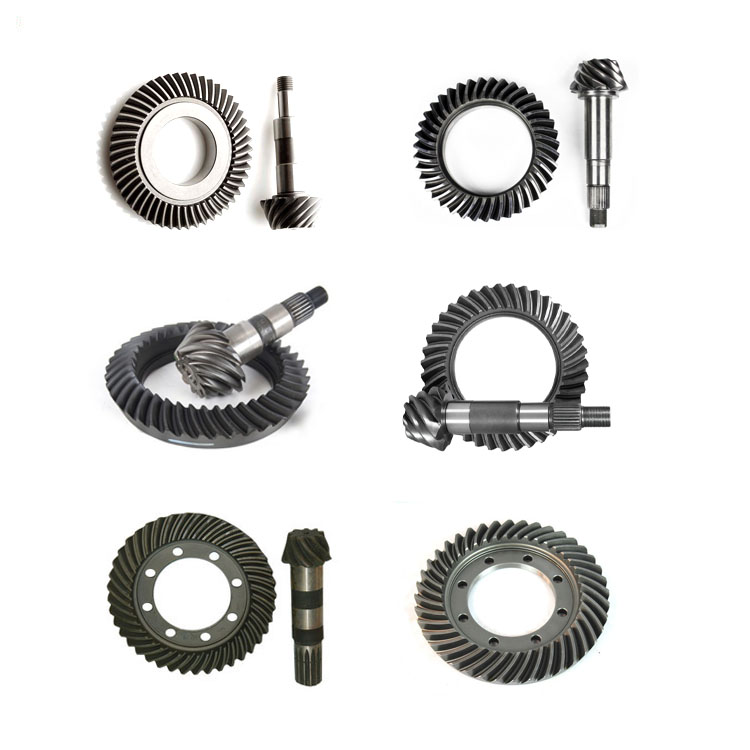
Backlash is the small amount of play between the ring gear and the pinion when the carrier is held still. It is measured with a dial indicator against the ring gear teeth and is adjusted with shims. Too little backlash makes the gears bind and heat up; too much backlash makes them knock and whine. Workshops that publish repair procedures, such as those covering crown-wheel and pinion service, treat backlash as a measured step, not a judgement call.
Tooth contact is the real proof of correct mesh. A thin coat of gear marking compound is brushed onto the ring teeth, the axle is turned, and the contact patch is read. A correct hypoid pattern sits near the centre of the tooth — neither the too-high heel contact nor the too-low toe contact that causes rapid wear. This is exactly why you should ask what the supplier checked before shipping. A trusted supplier can tell you whether the unit was run and how the pattern was verified, and can provide photos of the old part so the responsibility for noise stays clear.
For the gear sets themselves, specialist manufacturers such as Quaife’s crown-wheel and pinion range explain that matching pinion and crown as a matched set is essential — mixing teeth from different sets is a fast route to noise and failure.
Heavy-Duty Service: When a Complete Assembly Beats Gear Sets Only
The NPR earns its living under load. Parcel delivery, beverage trucks, and light freight all hammer the final drive with start-stop torque and full GVM runs. In that kind of service, buying only a crown wheel and pinion and swapping them into the old carrier can be false economy. The old case bearings, the old pinion bearings, and the old shim stack have already lived a working life, and the new gears inherit their wear.
A complete differential assembly — carrier, crown wheel, pinion, bearings and seals assembled and set at the factory — removes that variable. The gears are set together on fresh bearings, which is the configuration most likely to survive heavy-duty cycles. It also shortens shop time: the job becomes a straight exchange instead of a gear-setting exercise that can take a skilled fitter a full shift.
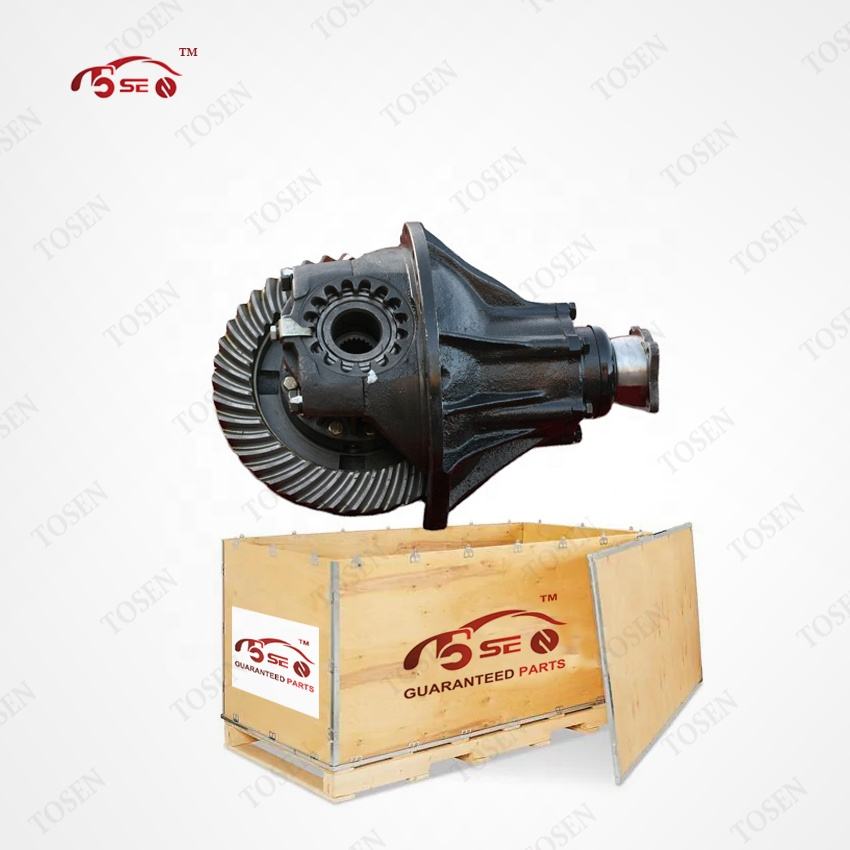
For a fleet or a repair shop that needs the truck back on the road, the complete assembly is usually the lower-risk answer. If you are managing stock for a specialist diff shop, gear-set-only might be right for jobs where the customer supplies a known-good carrier. Either way, the supplier should confirm which option covers your axle code and ratio before you pay.
Order the Right NPR Differential Without a Wrong-Shipment
The mistakes that cost the most are the ones made before the order. A wrong ratio ships across an ocean, is discovered in the bay, and turns a one-week job into a six-week one. Avoid it by sending the supplier a small set of identifiers: the VIN, the axle code, the tooth count (or a photo of the old crown wheel with the teeth visible), the model year, and whether the truck is single-rear-wheel or dual-wheel at the rear.
Reputable suppliers treat these identifiers as mandatory, not optional. For the exact 8:43 unit built for this application, see our Isuzu NPR Compatible Differential, Precision 8 43 Ratio, Design product page, which lists the ratio and the supplied configuration. Ask the seller to confirm fitment in writing before the crate is built, and keep the confirmation with your order records.
When the crate arrives, inspect before you sign. A differential is a heavy machined assembly, and a drop in transit can shift a pre-set bearing or crack a housing. Photograph the crate and the unit while the carrier is still present. This single step protects both sides and makes a later warranty claim simple and fair.
Frequently Asked Questions
Is the 8:43 differential ratio the same as a 5.375 ratio?
Yes. 8:43 means 8 pinion teeth and 43 crown-wheel teeth. 43 divided by 8 equals 5.375, so the 8:43 set produces a 5.375:1 final drive ratio.
How do I know if my Isuzu NPR has the 8:43 differential?
Check the axle code on the door-jamb sticker or the axle housing plate, then confirm the tooth count on the crown wheel. The axle code ties to the factory ratio, but only counting the teeth gives a certain answer.
Can I replace only the crown wheel and pinion instead of the whole differential?
Yes, if the old carrier and bearings are still good. For heavy-duty use, a complete assembly is usually the safer choice because the new gears are set on fresh bearings instead of inheriting the old wear.
What causes a new differential to whine or knock?
The usual causes are wrong backlash, an incorrect tooth contact pattern, or reused bearings. All three are checked during installation: backlash with a dial indicator and tooth contact with marking compound.
What information should I send to get an accurate quote?
Send the VIN, the axle code, the tooth count or a photo of the old carrier, the model year, the quantity, and the destination port. That set of details lets a supplier confirm fitment before pricing.
Get a Fitment-Confirmed Quote
Submit your VIN, old-part label / OE number, model year, quantity, and destination port to receive a fitment confirmation and a quote. The same identifiers that prove the ratio and axle code become the records used to ship the correct 8:43 differential for your Isuzu NPR — matched, crated for sea freight, and ready for the bay.
References
- Spicer Parts — Gear Ratio Calculator: spicerparts.com/calculators/gear-ratio-calculator
- Isuzu Commercial Spare Parts Catalogue: isuzucomlen.com — Download Catalogues
- Quaife — Crown Wheel and Pinions: quaife.co.uk/quaife-products/crown-wheel-pinions