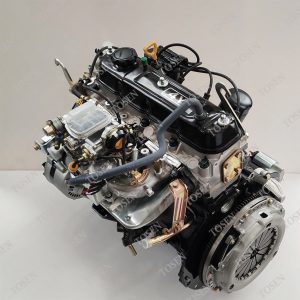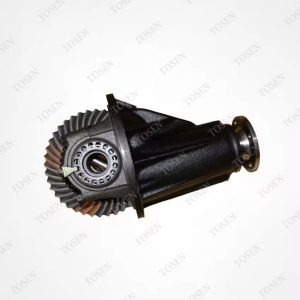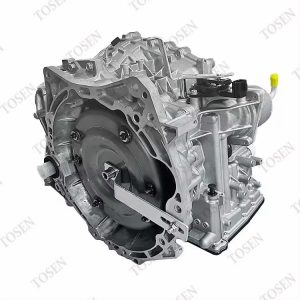
If you have ever ordered a differential and been asked for “the ratio”, you have felt the pain of a parts conversation that went sideways. The ratio decides how your engine’s torque becomes forward motion, and getting it wrong can turn a perfectly good axle into a highway nightmare. Here is what you actually need to know.
What a Differential Ratio Is
The ratio is the number of teeth on the ring gear (crown) divided by the number on the pinion. A set stamped 41/10 gives a 4.10 ratio: the driveshaft turns 4.10 times for every turn of the wheels. Higher numbers (4.56, 4.88) favour acceleration and towing; lower numbers (3.73, 3.08) favour cruising economy and top speed.
How to Identify the Ratio You Have
- Stamped markings — most crown and pinion sets carry the tooth count stamped on the ring gear, e.g. “41:10”.
- Axle tag — the metal tag bolted to the differential cover lists the ratio and model code for most trucks.
- Count the teeth — when the unit is out, counting ring teeth and dividing by pinion teeth is the only method that never lies.
Which Ratio Should You Order?
| Application | Typical ratio | Effect |
|---|---|---|
| Light van / urban delivery | 3.70 – 4.10 | Balanced economy and load |
| Pickup with towing | 4.10 – 4.56 | More torque at the wheels |
| Heavy truck / loaded 4×4 | 4.56 – 4.88 | Maximum low-speed pull |
| Highway cruiser | 3.30 – 3.73 | Lower RPM at cruise speed |
Buying a Complete Differential vs Parts
If the housing is sound, replacing just the gear set is the economical route. If bearings, seals or the carrier are worn, a complete differential assembly removes the guesswork of setting backlash and preload — the two adjustments that determine gear whine and lifespan.
Common aftermarket fits include Toyota Hiace and Land Cruiser units (e.g. 10:41 and 11:41), Isuzu NPR/NQR (7:41 and 10:41) and Mitsubishi Canter PS100/PS120 (6:40). When ordering, always provide your vehicle model, axle code and the current ratio — or send a photo of the axle tag and our team will match it for you.