The Chevrolet 96642708 cylinder head is the GM assembly for the 0.8 L F8CV engine — a three-cylinder, six-valve petrol unit used in the Daewoo Matiz (M100/M150) and in the Chevrolet Matiz and Spark versions sold in some markets. That much is consistent across the catalogs.
What is not consistent is almost everything a buyer needs next. The same number is titled under three different car names, "assembly" arrives without a contents list, and "tested" rarely says what was tested. This guide sorts those out in the order you need them: what the number is, which version sits on your engine, what the box should contain, what inspection really proves, and what to check before you pay and fit.
What 96642708 Identifies — and What It Fits
Three things can be checked here, and they are not the same: what the aftermarket catalogs list, what the manufacturer documents say, and what is stamped on the casting. The catalog level is solid — the number is listed as the head assembly for the 0.8 F8CV — but listed is not the same as confirmed.
The catalogs checked for this guide in October 2026 are aftermarket parts catalogs, not a GM parts system. They agree on the engine family and the valve count and disagree on the car name. That is why the table below separates what is listed from what is confirmed, and why the casting is the final check.
| Number | What it is | What we can confirm | What to do with it |
|---|---|---|---|
| 96642708 | Catalogued as the GM assembly number for the F8CV cylinder head | Listed in aftermarket catalogs; no GM parts-system check | Use it as the primary identifier |
| 96316210 | Companion head number listed against the same 0.8 F8CV application | Catalogued companion; not proved to be the same casting | Ask which number is stamped on the unit you receive |
| 96642705 | Second number in our listing's combined reference 96642708-96642705 | Sold under the combined reference; what the second number denotes is not documented | Ask for the relationship in writing before treating it as the same part |
| 11110-80D00 | A number some sellers stack into 96642708 titles | Unchecked cross-reference; no source shows it supersedes 96642708 | Do not order by it without confirmation |
The extra numbers are where buyers get hurt. Some sellers stack every number they can find into one title, so a single head appears as 96316210, 96642708 and a third number on the same line. That does not make the numbers equal. Our listing sells the head under the combined reference 96642708-96642705, and the sources we checked do not document what the second number denotes, so we do not present the pair as interchangeable.
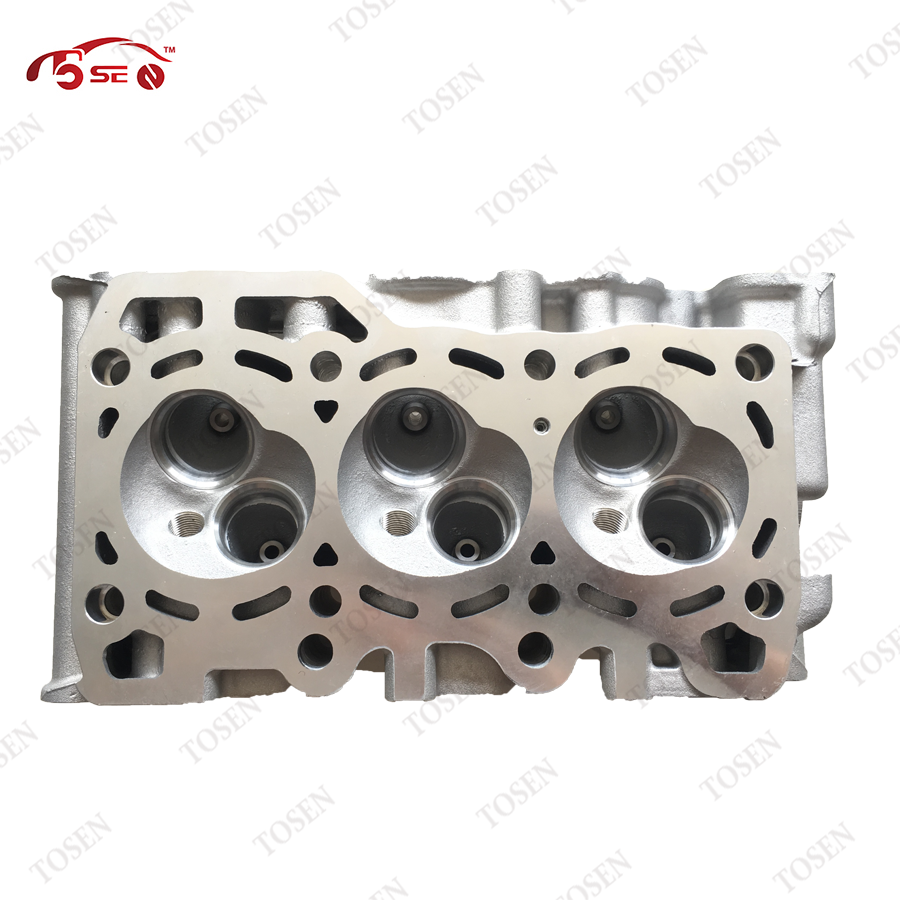
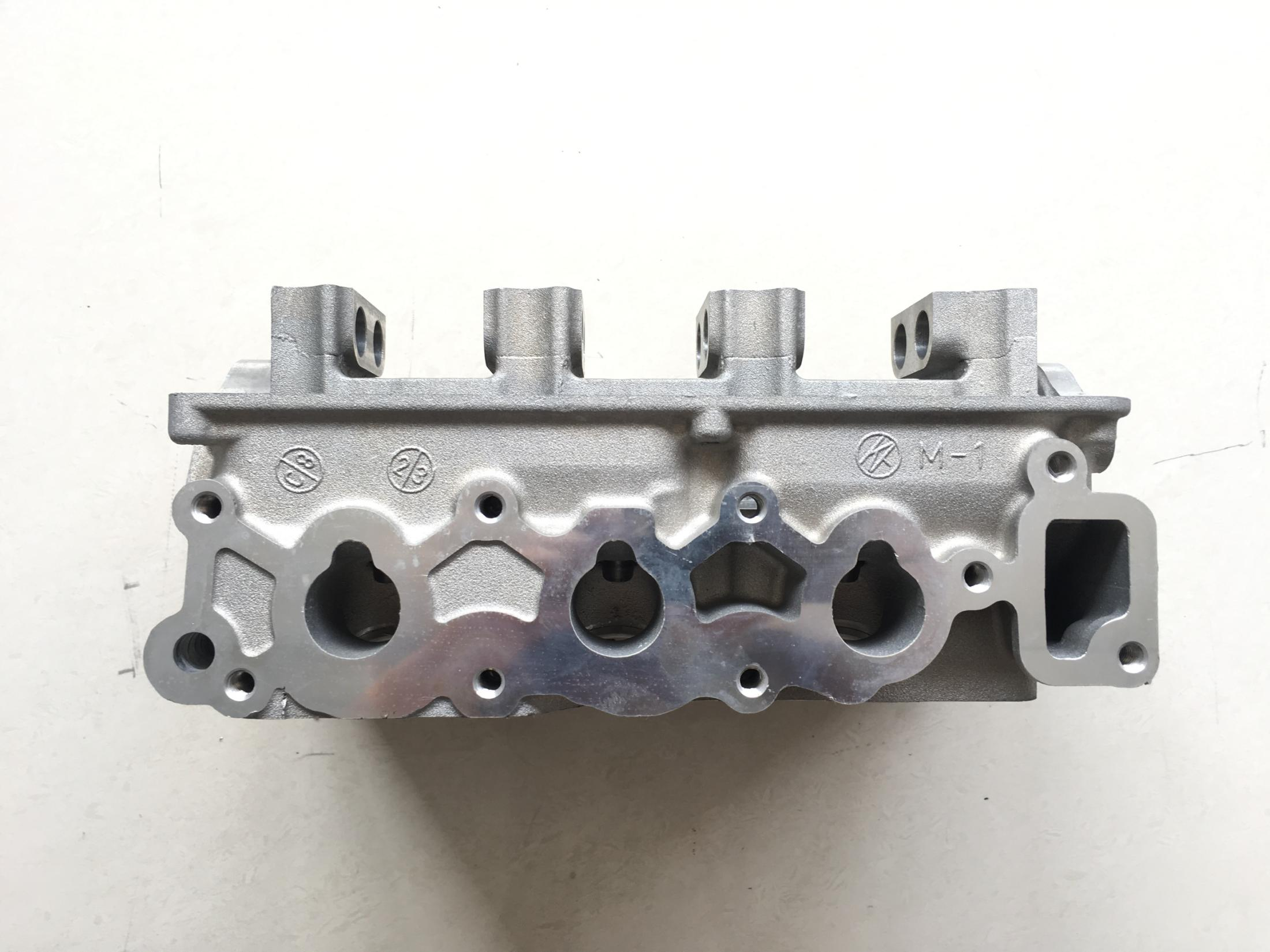
One limit matters more than the rest. The photographs of the supplied head show the casting and its mould marks, not a part-number stamp, and the sources checked do not publish one. Read the number stamped on the unit you receive and compare it with your old head; if they differ, stop and ask before fitting. The assembly number is a catalogue identifier until the metal agrees with it.
Treat the number stamped on the casting as the anchor and a seller's title as a lead. If reading a casting is new to you, our guide explains how to find and read the number on a head, and where the number sits.
The vehicle name will not settle it either. The same small car was sold as a Daewoo and as a Chevrolet in different markets, and sellers mix the names freely. The engine code F8CV and the number stamped on the head are what you can actually verify. The badge on the tailgate is not.
The catalogues stop at the engine family, the valve count and the application range. They do not give chamber volume, valve sizes, cam type or compression ratio for this head, and we will not fill those gaps with figures from an unverified listing. If a rebuild needs them, they come from the workshop manual for that engine, not from a parts page.
Confirming the Version on Your Engine
The catalogues disagree about the car, but one production variable is visible on the engine: ignition hardware. The supplied casting has a machined bore at the end face where a distributor drive seats — the end-face photo shows it. If your engine runs a coil pack instead, confirm with the supplier that this casting suits your build before you order.
The castings can also differ at the mounting bosses and the thermostat housing area. Compare those with the supplied photos rather than trusting the model year; no catalogue we checked documents the year of the change, so the hardware on the engine decides.
The supplied casting gives you something concrete to compare. On the manifold face, the photos show three ports, a coolant outlet, a circular manufacturer mark and the mould marks "2/3" and "M-1". Those are casting marks from the mould, not a version code: use them to confirm that the unit in the photo is the unit you were offered, and use the ports, the coolant outlet and the mounting bosses for the fitment comparison. On the chamber side, three chambers carry two valves each — the six-valve layout in metal.
Ask for a photo of the marked area on the unit you are buying and compare it with those. If the casting carries no readable number, do not assume it matches; ask the supplier to photograph the marking they are relying on and to confirm the number in writing.
- Look at the ignition hardware on the engine: a distributor body at the end of the head, or a coil pack with plug-top or short leads.
- Check the end face for the distributor drive bore and confirm it matches your engine's ignition.
- Compare the port pattern, coolant outlet and mounting bosses with the supplied photos, not a stock image from another listing.
- Check the cam cover face and the thermostat housing area for differences.
- Confirm the engine code on the block, not from a parts listing.
- If the engine has been swapped or rebuilt, the VIN describes the original build only: read the code on the installed block and the stamp on the fitted head.
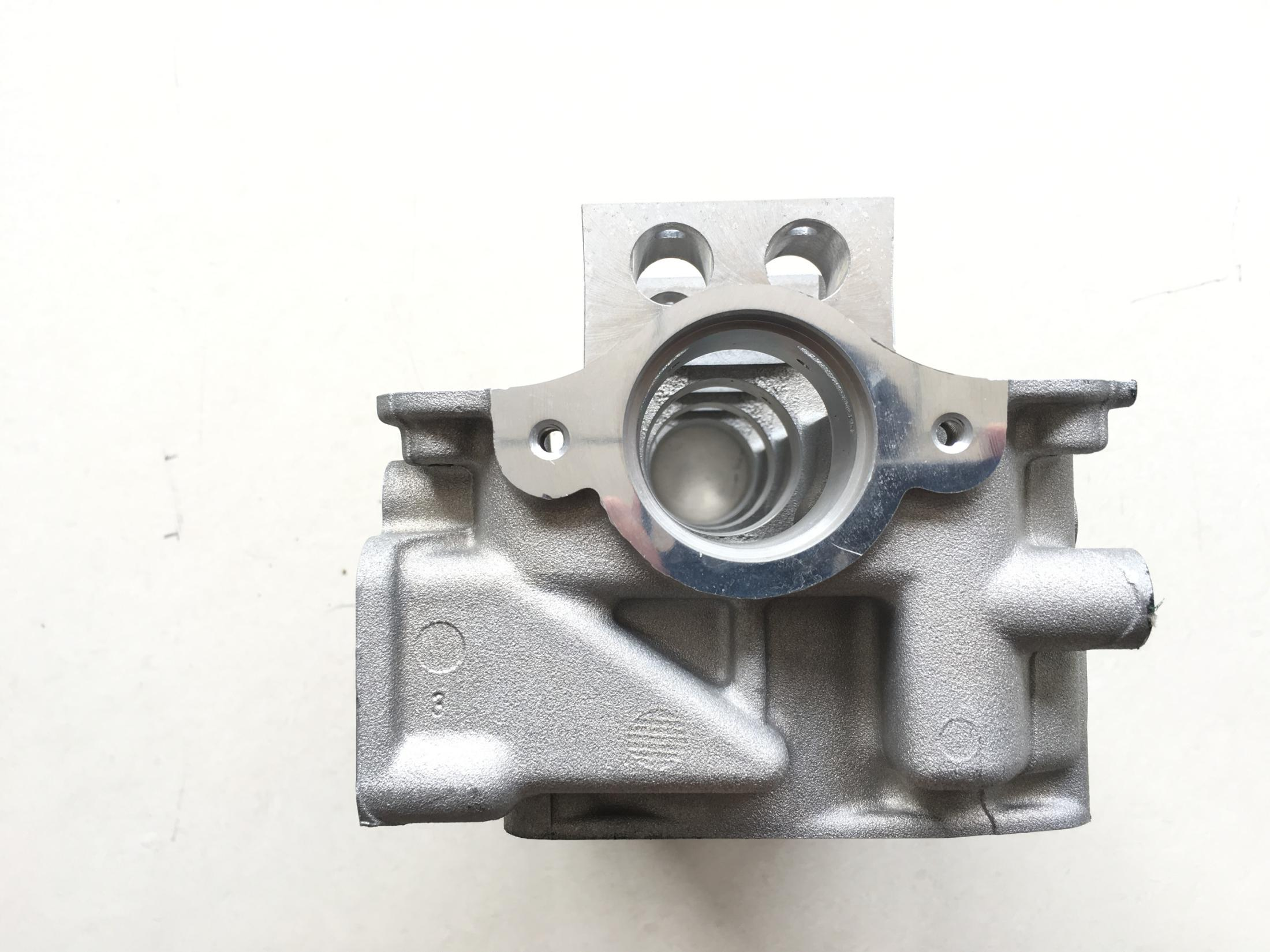
A quick material check helps too. This is an aluminium head, so a magnet will not stick to the casting. That tells you nothing about fitment, but it stops a cast-iron head from being offered as the same part. If the photos and the casting disagree on the port shape or the mounting bosses, the listing is wrong for your engine, whatever the title says.
Bare or Complete: What the Box Should Contain
Start with what the listing says. It describes the head as new, never installed, not welded or reground, and it describes the supply as a factory-built complete assembly in the overview and again in the FAQ. The specification table still carries a generic line, "cylinder head only (bare) — confirm accessories per listing". The included-parts list below and a written confirmation with your order are what settle the scope.
| Item | Bare head | Complete assembly |
|---|---|---|
| Casting with valve guides and seats | Yes | Yes |
| Valves, springs and retainers | No | Yes, if the box says so |
| Camshaft and lifters | No | Often included; confirm |
| Valve stem seals | No | Should be; confirm |
| Head gasket and head bolts | No | No |
| Thermostat, intake and exhaust studs | No | No |
Ask three questions before paying: which of those items are in the box, are the valves and seats new or reused, and is the casting new or a welded repair. If a welded head is offered as new, walk away. A repair in a fire-ring land does not become a new casting because the listing says so.
Which should you order? If your shop cannot machine seats and set up valves, a complete assembly is the safer order. If it can, a bare casting costs less and lets you build to your own clearances. Either way, the written confirmation is the contract, not the listing.
The listing also states the commercial frame: sample orders are accepted, distributor pricing starts at 10 or more pieces, export packaging is used, and a quote is returned within 24 hours. Warranty terms are not stated there, so ask for them in the quotation.
The Chevrolet Engine Cylinder Head Assembly Models 96642708/96642705 page shows four photos of the actual head; use the item list above to confirm what the current offer includes before you order.
If you are still deciding which supply form suits your shop, the bare vs complete head at a glance comparison lays out the labour difference.
What the Inspection Checks Prove — and What They Miss
"Pressure tested" is the most overused phrase in cylinder-head listings. It describes one check, not a condition. Five checks decide whether a head is usable, and each has a blind spot.
| Check | What it proves | What it cannot prove |
|---|---|---|
| Water-jacket pressure test | The internal coolant cavities hold pressure when sealed and charged | Deck flatness, valve sealing, cam-bore wear |
| Deck flatness measurement | The fire deck is flat within the measured limit across the axes checked | Cracks, valve-seat condition, cam bore |
| Valve-seat and vacuum check | The seats seal and are concentric | Water-jacket integrity, deck flatness |
| Cam-bore and lobe inspection | The bore is not scored or misaligned and the lobes are not worn | Coolant leaks, valve sealing |
| Crack inspection with dye penetrant on the chamber, seat and port areas | Surface-breaking cracks in the areas tested, including cracks a visual check can miss | Cracks hidden inside the casting, deck flatness, seat sealing |
In principle, a plate whose cavities match the head's coolant passages is clamped to the deck with a gasket, the jacket is charged with fluid under pressure, and the assembly is checked for leaks. One documented apparatus does exactly that: a test plate matched to the head's cavities, a gasket at the mating face, and fluid admitted under pressure.
A second method applies air pressure, monitors the gauge, and uses a soap solution to show where a leak is. Neither method measures flatness, and neither seals a valve.
A usable record says more than "passed". It should name the method, the pressure or holding condition, how long it held, the result, the date, and the unit or batch it belongs to. Ask for it in that form, and read it before the head is fitted.
- Method used: water jacket, air, or both
- Pressure or holding condition
- Hold time
- Result, and any leak location found
- Flatness measurement with the limit it was checked against
- Valve-seat check result
- Cam-bore and lobe condition
- Crack inspection method and result
- Date and unit or batch reference
If a supplier cannot produce that record, treat "tested" as a claim about a process you cannot see. That does not make the part bad. It means the evidence is not there, and the price should reflect it. Our listing states three of these five checks: the casting is pressure-tested for porosity, the deck is checked for flatness along and across, and the valve seats are checked. It does not state a crack or cam-bore check, so ask for those two explicitly, and for the record in the form above — a statement of inspection and a record of it are not the same thing.
On a higher-mileage 0.8, the cam-bore and lobe check matters as much as the pressure test. A head that passes the jacket test and has a worn cam bore is still the wrong part to fit, and a visual crack check is weaker than dye penetrant on the same areas.
Before You Pay: Fitment, Evidence and Paperwork
Model name is the weakest identifier you can order by. The first steps settle the vehicle, the version and the casting; the last ones settle the evidence and the paperwork that belong with the order.
- Read the number stamped on the old head and photograph it before cleaning.
- Confirm the engine code on the block. The VIN identifies the original build only; after an engine swap it does not describe what is fitted.
- Confirm the ignition version: distributor or coil pack, and the matching end-face bore.
- Compare the casting, ports and mounting bosses with the supplied photos.
- Get the included-parts list in writing, including what is not in the box.
- Ask for the inspection record, not the word "tested", and ask which of the five checks it covers.
- Ask which quality standard the certificate is to, its edition, scope, expiry and site. IATF 16949 is issued to a site, not to a brand.
Stop signs: a welded repair sold as new, a box number that does not match the casting, a supplier who answers "it fits all 0.8" without asking for your number, and a price far below the market for a complete head. Any one of those is cheaper to walk away from than a return freight bill.
On Arrival, and at Fitting
A small aluminium head is light enough to be thrown around in transit, and a bent deck edge is enough to stop a gasket sealing. The list below starts with what to check when the box arrives, then covers the fitting steps that protect the purchase.
- Box and foam intact, with no crushed corners
- Deck edge and port faces free of dents and burrs
- No loose hardware rattling in the box
- Number on the box matches the number on the casting
- Included-parts list matches what is actually in the box
- Gasket, torque-to-yield head bolts and thermostat ordered with the head
- Cooling system checked: radiator, thermostat, water pump and fan
- Block deck checked for flatness before fitting
- Cam timing marks aligned to the manual before the belt or chain goes on
- Cooling system bled after refilling
Photograph the box before you open it and the casting before you fit it. If something is wrong, stop there. A fitted part is much harder to claim on than an unopened box.
At fitting, the parts around the head decide whether it survives. A used gasket has already taken its crush, and torque-to-yield bolts have stretched past the point where they clamp the same way, so both are replaced rather than reused.
Fit a new thermostat, use the coolant specified for the car, and check the cooling system that killed the first head: radiator, thermostat, water pump and fan. Check the block deck, because a warped block will crack a good head.
Torque figures, the tightening sequence, cam timing and valve clearance come from the vehicle's own workshop manual — not from a supplier page, and not from this guide. If your stamped number turns out to be a different one, start from the replacement cylinder heads category rather than from a vehicle name.
Frequently Asked Questions
Is 96642705 the same head as 96642708?
Our listing sells the head under the combined reference 96642708-96642705, but the sources we checked do not document what the second number denotes. We do not treat the pair as interchangeable: ask for the relationship in writing before you order.
What is 96316210?
96316210 is a companion number listed against the same 0.8 F8CV application in aftermarket catalogs. It is not proof of an identical casting. Ask which number is stamped on the unit and whether the supplier treats the two as interchangeable for your engine code.
Does 96642708 fit the Daewoo Tico?
Some listings name the Tico in the same title as 96642708, but this guide could not confirm that the Tico uses the same casting. The 0.8 F8CV family appears under several car names, so do not order from the model name alone. Ask the supplier to match the number stamped on your old head and the engine code before they ship.
Is 96642708 a bare head or a complete assembly?
The listing describes it as a new, factory-built complete assembly in the overview and the FAQ, while its specification table still carries a "cylinder head only (bare) — confirm accessories per listing" line. Confirm the included-parts list in writing with your order, and use the item list in this guide.
Does a pressure test prove the head is good?
No. A water-jacket pressure test proves the coolant cavities hold pressure. It does not measure deck flatness, valve seating or cam-bore wear. Ask for the flatness measurement and the seat and cam-bore results as well, and for the method, pressure and hold time behind the pressure result.
What if the number on the box does not match the casting?
Stop and photograph both before fitting. A mismatch means you cannot tell what you have, and a fitted part is much harder to return. Ask the supplier to explain the difference in writing. If they cannot, treat it as the wrong part.
What does TOSEN check before dispatch?
Our listing states three of the five checks: the casting is pressure-tested for porosity, the deck is checked for flatness along and across, and the valve seats are checked. It does not state a crack or cam-bore check, so ask for those two explicitly, with the record described above.
Conclusion
The checks in this guide are short on purpose. Most of the risk in a 96642708 order sits in three things settled before payment: a number that was never reconciled, a supply form that was never settled, and an inspection claim with no record behind it. Reading the stamped number, confirming the engine code and getting the parts list and the record in writing take less time than a return freight.
Before you order, put your stamped number and engine code against the supplied head. The product page for this head shows what is offered and four photos of the actual casting; the cylinder-head category covers other numbers. If the answers do not line up, ask before you pay, not after the head is fitted.