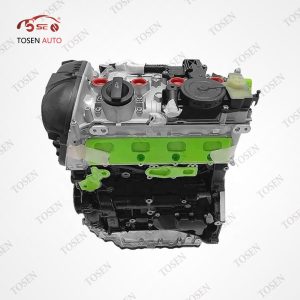
A bare vs complete cylinder head decision comes down to one order line: a bare head ships as the casting itself — the combustion chambers, the ports and the oil and coolant passages — while a complete head adds the valvetrain components the order names. In the Hyundai D4CB 2.5 CRDi head range, that scope is specified per order, not fixed in a catalogue, so the buyer states a bare head or the valvetrain components required with the order.
This guide defines both scopes, compares them side by side, maps teardown findings to a scope decision, and shows how the 22100-4A010 and 22100-4A100 references divide the D4CB range. The D4CB range anchors every example, but the two decisions — which scope, which variant — are the same decisions a buyer faces on any head order, and the closing field list works for either answer.
What “Bare” and “Complete” Actually Mean
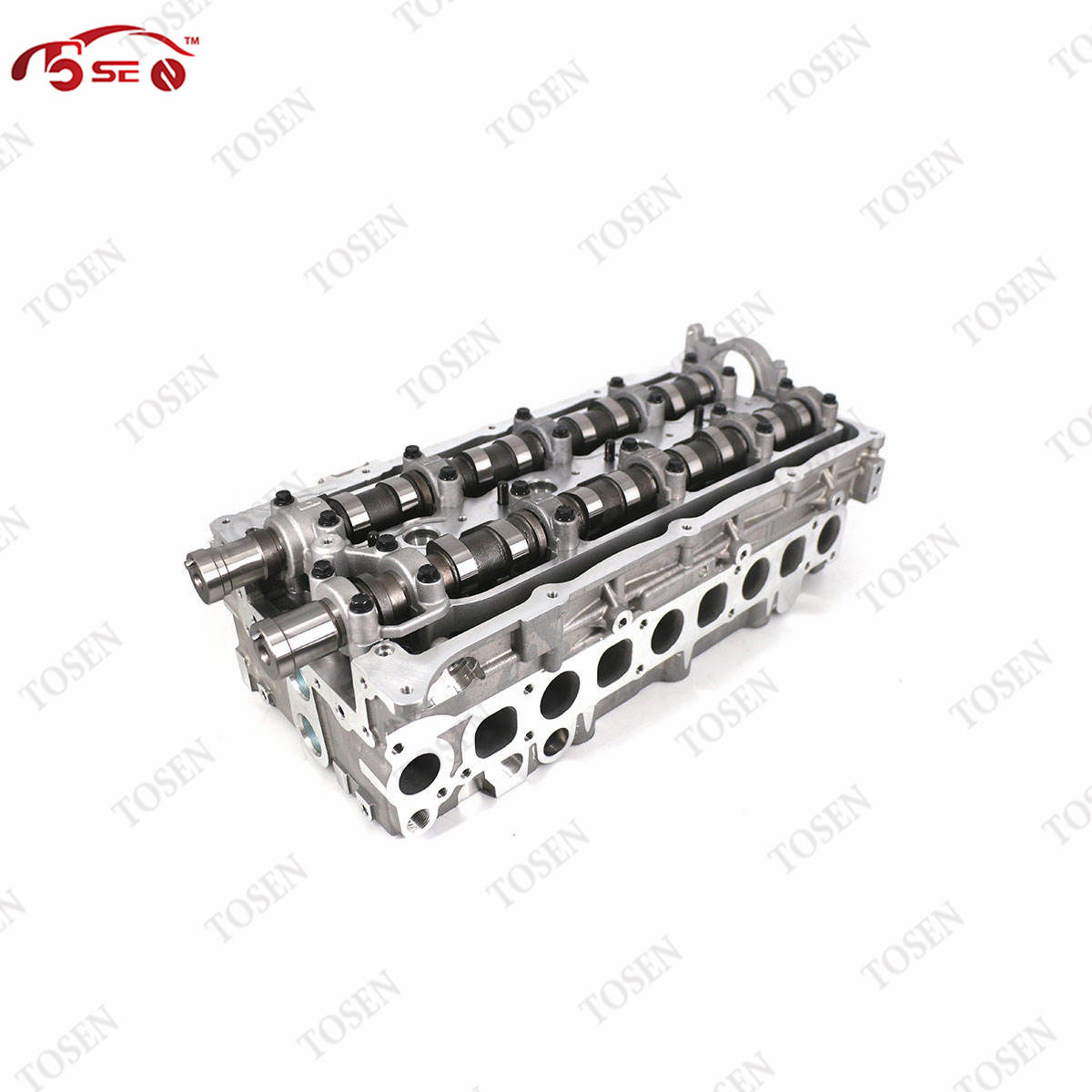
A bare cylinder head is the casting on its own. It seals the top of the engine, carries the combustion chambers and the valvetrain configuration, and routes oil and coolant through passages that must line up with the block. Nothing else ships with it: the buyer reuses the valvetrain components from the engine being rebuilt, or sources them separately.
A complete cylinder head is the same casting supplied with the valvetrain components included — the valve gear the head carries. The component list is not printed in a catalogue because it legitimately varies: two engines with the same casting rarely need the same component list, and a buyer holding usable components orders around them. That is why TOSEN’s D4CB range is quoted against the instruction to specify a bare head or the valvetrain components required with the order — the exact list is confirmed at enquiry time, against the engine named in it. Writing that list is the buyer’s control point, not a gap in the offer: a stated list ships as stated.
One positioning note before the comparison: this is head-level scope. A bare engine, a long block or a short block is a different order at engine level, and choosing the right engine assembly is covered separately. When the rebuild stops at the head, the decision is the one this article maps.
Scope rule: a bare head is the casting; a complete head is the casting plus the valvetrain components the order names — and the reference number alone never tells the supplier which.
Bare vs Complete Head at a Glance
The table below places the two scopes side by side across the points a rebuild workshop actually weighs before writing the order.
| Comparison point | Bare head | Head with valvetrain components |
|---|---|---|
| What ships | The casting: chambers, ports, oil and coolant passages | The same casting plus the valvetrain components named in the order |
| Best-fit situation | Teardown proved the valvetrain sound and reusable | Valvetrain worn, damaged or unproven; or components being renewed as a set |
| What the order line must state | “Bare head” plus the variant reference and identification inputs | The components required with the head, so the supplier scopes the assembly correctly |
| Component sourcing | Buyer reuses or sources the valve gear separately | Supplier confirms the component list against the engine named in the enquiry |
Variant identification does not appear in the table because it is identical for both scopes: the reference, engine code and casting decide which head ships — the scope decision only decides what ships with it.
Which Scope to Order: Three Decision Rules
The scope decision starts on the bench, not in a catalogue. Three rules cover the situations a rebuild workshop meets in practice.
- Inspection passed: the valvetrain components measured within limits at teardown and were set aside in matched, labelled sets. Order the bare head, and write “bare head” on the order line.
- Inspection failed or was never possible: wear, damage or an unknown history means the valvetrain cannot be trusted onto a new casting. Order the head with the valvetrain components required, and name those components in the order line so the supplier scopes the assembly to match.
- Batch consistency: when several heads ship in one order, state the scope explicitly for the batch so every unit arrives on the same scope. Mixed batches force the workshop to reconcile two different orders of components against engines that may be identical.
The three rules share one shape: the bench finding comes first, the order line records it, and the order is fully specified once both are true. A supplier reading “22100-4A100, bare head” dispatches without a query; a supplier reading only “22100-4A100” has to ask which scope — and every query round is a day the engine sits.
Identifying the Correct Variant Before You Order
Scope is only half the order. In the D4CB 2.5 CRDi range, two references divide the head range into variants: 22100-4A010 and 22100-4A100. The references identify variants that should be selected by the original engine and casting — the vehicle model alone does not decide, and ordering by model name is the classic route to receiving the neighbouring variant.
Identification begins with the reference the engine actually carries, recorded from the original head and the engine code. From there the external features separate the variants in a fixed order: the coolant outlet layout is compared first among the external features, followed by the oil and coolant passages and the valvetrain configuration, because those points distinguish the variants that the two references identify.
- Variant reference read from the original head, not from the vehicle model
- Full engine code recorded alongside the reference
- Casting photographs of the original installation captured before the old head leaves the bench
- Coolant outlet layout compared first among the external features
- Oil and coolant passage positions checked
- Valvetrain configuration compared with the recorded details
The reason the check order matters is practical: the coolant outlet is visible without disassembly and settles most mix-ups immediately, while the passages and the valvetrain configuration confirm what the outlet suggested. A buyer who sends all six items with the enquiry gives the supplier everything needed to verify the variant in one pass — and with the scope line from the previous section, the enquiry then states both what ships and what ships with it.
Enquiry Fields That Resolve the Order in One Round
An enquiry that resolves in one round carries five fields — the same set TOSEN’s Hyundai D4CB 22100-4A100 / 22100-4A010 complete cylinder head range asks for. Each field answers one question the supplier would otherwise need to query back.
| Field | What it resolves |
|---|---|
| Full engine code | Confirms the engine the head must match and anchors the variant check |
| Cylinder-head number | States the reference the engine actually carries |
| Casting photographs | Let the supplier review the coolant outlet layout against the original installation |
| Quantity | Sets the batch scope so every unit ships on the same variant and scope |
| Scope line: bare head, or the valvetrain components required | Turns the teardown finding into the exact order scope |
On the supplier side, those fields feed a documented verification workflow: every D4CB cylinder head is inspected against the details of the engine named in the enquiry — reference against engine code, external layout against the photographs, configuration against the recorded details — so the head dispatched is the variant the engine requires rather than a neighbouring one. A buyer sending the five fields gets that verification on the first pass instead of the third.
Frequently Asked Questions
What is the difference between a bare and a complete cylinder head?
A bare cylinder head ships as the casting itself: the combustion chambers, the ports, and the oil and coolant passages that must line up with the block. A complete cylinder head is the same casting supplied with the valvetrain components included, with the exact component list confirmed at enquiry time. The scope is written on the order line per order, so two buyers ordering the same reference can legitimately receive different scopes.
Which scope should I order if the valvetrain passed inspection at teardown?
Order the bare head when the valvetrain components measured within limits and were kept in matched, labelled sets. Write “bare head” on the order line together with the variant reference, because the reference number alone does not tell the supplier the scope. Order the head with the valvetrain components required when the components are worn, damaged or unproven, and name those components so the assembly is scoped to match.
How do I identify the correct D4CB head variant before ordering?
Start with the reference the engine actually carries — 22100-4A010 or 22100-4A100 — recorded from the original head and the engine code, because the original engine and casting decide which variant a given D4CB requires. Then confirm with the external features in order: coolant outlet layout first, then the oil and coolant passages, then the valvetrain configuration. Casting photographs of the original installation support every step.
What should I include in a cylinder head enquiry?
Include five fields: the full engine code, the cylinder-head number, casting photographs of the original installation, the quantity, and the scope line stating a bare head or the valvetrain components required with the order. Those five fields let the supplier check the reference against the engine code, review the coolant outlet layout against the photographs, and confirm the passages and valvetrain configuration — resolving variant and scope in a single round.
Order the Scope Your Bench Proved
The bare vs complete cylinder head question resolves on the bench and in the reference book: the teardown finding sets the scope line, and the original engine and casting set the variant. A buyer who sends the five fields from the previous section has already done the work the supplier needs — the order resolves instead of bouncing.
Confirm your D4CB 2.5 CRDi head variant and scope through the Hyundai D4CB 22100-4A100 / 22100-4A010 cylinder head range, or browse replacement cylinder heads for other engine families.