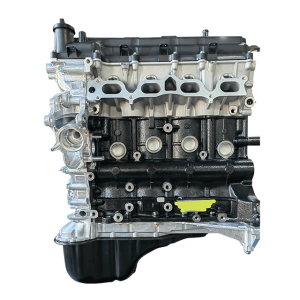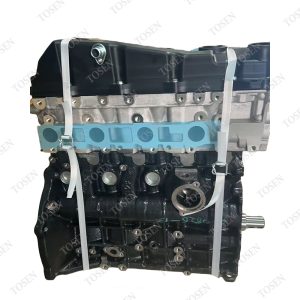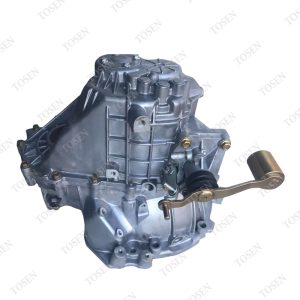
Whether you run a delivery fleet of Hiace vans or rely on a Hilux for work, there comes a time when the original engine has done its duty and a replacement is the most economical way forward. In this guide we break down the four decisions that matter most when buying an engine assembly, so you can order with confidence the first time.
1. Short Block, Long Block or Complete Engine?
Parts suppliers describe engine assemblies in three levels of completeness:
- Short block — the cylinder block with crankshaft, pistons and connecting rods fitted. You reuse your existing cylinder head, oil pan and ancillaries.
- Long block — a short block plus the cylinder head assembly, valve train and often the timing components. It is the most common choice for fleet replacements because it mates directly to your existing intake, exhaust and electronics.
- Complete engine — everything needed to drop in and run, including intake manifold, alternator, starter and sometimes the ECU. Best suited to older vehicles where individual ancillaries are worn.
For most Hiace and Hilux owners, a long block or complete engine assembly delivers the best balance of cost and certainty.
2. Match the Engine Code, Not Just the Vehicle
Toyota’s commercial lineup uses many engines across similar body generations. A Hiace can carry a 2L, 3L, 1RZ, 2RZ, 2KD or 4Y depending on the market and year, and they are not interchangeable without wiring and mount changes. The safest approach is to read the engine code from the plate on the block — usually stamped on the front face or on a tag near the distributor — and order a replacement with the same code.
For example, the 1RZ 2.0 petrol and 2KD 3.0 turbo-diesel share the same chassis but are completely different powertrains. Ordering by engine code removes the guesswork.
3. New, Rebuilt or Used?
Used engines are cheap but carry hidden wear. Rebuilt units depend entirely on the quality of the rebuilder. A factory-new engine assembly from a specialist supplier costs more up front but removes uncertainty about bore wear, ring sealing and oil consumption — which matters when the engine is expected to work every day.
Whichever route you choose, ask the supplier three questions: is the unit 100% inspected before dispatch, what is the warranty, and can you provide photos of the actual unit before shipping?
4. Verify the Supplier’s Quality Process
Serious suppliers operate to ISO 9001 standards and test every unit before packing. TOSEN AUTO, for example, builds engines in its Shaoxing facility in Zhejiang, China, pressure-tests and inspects each assembly, and ships with a 12-month warranty. Asking for evidence of this process — not just claims — is the fastest way to separate real factories from trading desks.
Quick Checklist Before You Order
| Item | What to confirm |
|---|---|
| Engine code | e.g. 1RZ, 2RZ, 2KD, 4Y, 2L, 3L |
| Assembly level | Short block / long block / complete |
| Displacement | Original spec for your market |
| Warranty | Usually 6–12 months |
| Inspection evidence | Test reports or unit photos |
Still unsure which engine fits your chassis? Send your VIN or engine code to our team through the contact page and we will confirm compatibility before you commit.