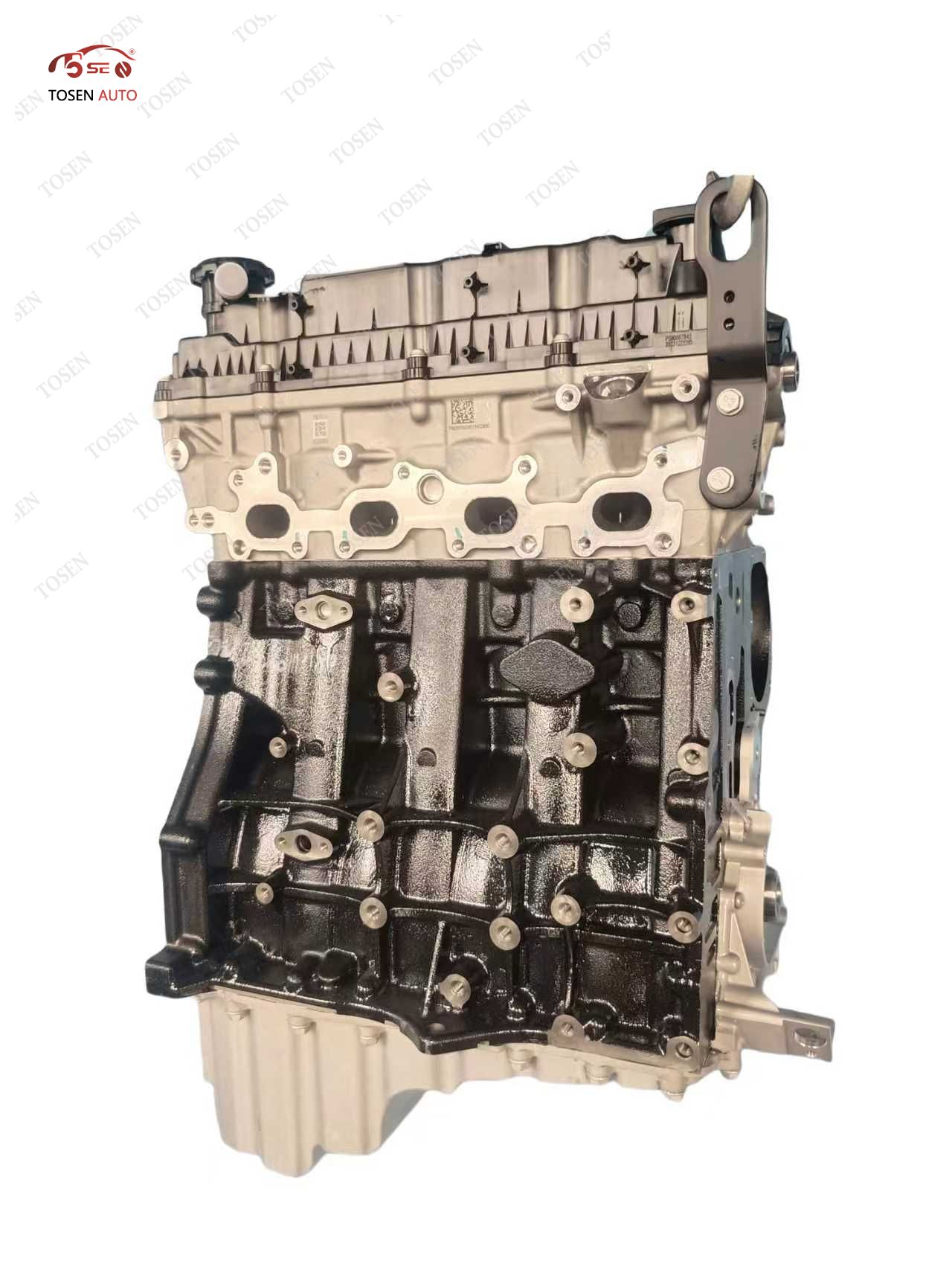
The SQRE4T15C and the 4F25TC1 are two engine codes under which TOSEN supplies complete engine assemblies for replacement projects, and each code identifies a different engine family: the SQRE4T15C is a 1.5-litre turbocharged gasoline engine family used in Chery applications, while the 4F25TC1 identifies a 2.5-litre engine configuration supplied as one replacement unit. Both families are delivered as full engine assemblies, which means the cylinder block, the cylinder head and the internal components travel together in a single consignment. A full litre of displacement separates the two, and the separation continues through the identification path, the configuration checks and the scope of the parts that should be named when the order is placed.
This guide puts the two codes side by side from the buyer’s perspective: what each designation identifies, how the two assemblies compare on the details that decide an order, how each engine is matched to the vehicle it came from, and how to build an enquiry that arrives complete on the first pass.
What the Two Engine Codes Identify
An engine assembly replaces the whole power unit rather than a single component inside it, so the engine code on the vehicle does more work in an assembly order than in a parts order: it identifies the family the replacement must belong to. The SQRE4T15C 1.5L turbo gasoline engine for Chery covers the 1.5-litre turbocharged gasoline family that Chery installed across its model range, recorded as 1498 cm³ in the specifications. The 4F25TC1 2.5L engine assembly covers the 2.5-litre configuration identified by that code, recorded as 2499 cm³, and is supplied as one unit for replacement projects instead of separate components.
Neither code describes a single fixed part number for every installation. The SQRE4T15C family is matched through the engine code rather than through the badge on the bodywork, and the 4F25TC1 family rests on the engine label found on the vehicle rather than on the model name alone. In both families the exact scope of externally fitted equipment — the components bolted to the block and head rather than inside them — is settled when the order is placed, which is why two orders under the same engine code can legitimately differ in what arrives with the engine.
The rule to keep
The engine code identifies the family; the displacement figure confirms it; the installation checks complete it.
An assembly order is correct when the code on the original unit, the displacement in the specifications and the installation details on the vehicle all agree.
Order by the engine code and the engine label, never by the vehicle model name alone.
SQRE4T15C vs 4F25TC1: The Details That Decide an Order
The two families differ first on the numbers that identify them. The SQRE4T15C records a displacement of 1498 cm³ with gasoline fuel and turbocharged induction; the 4F25TC1 records a displacement of 2499 cm³ with the engine code and the product type — engine assembly — as the stated specification entries. The displacement gap alone rules out any thought of substitution: an assembly built around a 1.5-litre turbocharged gasoline architecture cannot serve a project identified by a 2.5-litre code, and the reverse equally holds.
| Detail | SQRE4T15C family | 4F25TC1 family |
|---|---|---|
| Engine code | SQRE4T15C | 4F25TC1 |
| Displacement | 1498 cm³ / 1.5L | 2499 cm³ / 2.5L |
| Fuel and induction | Gasoline, turbocharged | Confirmed through the engine label and the installation details |
| Product type | Engine assembly | Engine assembly, supplied as one unit |
| Family identification | SQRE4T15C marking on the original unit | 4F25TC1 engine label on the vehicle |
| Installation checks | Mounting arrangement, vehicle electronic configuration | Mounting layout, vehicle installation, ECU and emissions configuration |
| Scope items named with the order | Turbocharger, fuel-system parts, further accessories | Ancillary components, electronic control setup, emissions configuration |
| Substitution between families | Not possible — the codes and displacements identify different families | |
Reading down the table, the two columns diverge most where the electronics enter. The SQRE4T15C is a turbocharged gasoline engine, and turbocharged installations place specific demands on the vehicle electronics, so the electronic configuration of the vehicle belongs in the selection from the very first message. The 4F25TC1 carries the ECU and the emissions configuration as named selection inputs, together with the mounting layout and the vehicle installation details, because vehicles built around the same displacement can differ in each of those arrangements. The enquiries therefore converge on the same discipline — record what the vehicle actually carries — while pulling different details onto the order form.
How Each Engine Is Matched to the Vehicle
For the SQRE4T15C, confirmation begins with the engine code on the original unit: the SQRE4T15C marking opens the enquiry, the 1498 cm³ displacement confirms the family, and the mounting arrangement and the vehicle electronic configuration complete the picture. Because a turbocharged engine depends on its control electronics and its fuel delivery, the turbocharger and the fuel-system parts required with the assembly should be named when the order is placed, so the delivered scope matches the installation in the vehicle.
For the 4F25TC1, confirmation starts with the engine label found on the vehicle, which must carry the code 4F25TC1. The displacement figure of 2499 cm³ recorded in the specifications supports the family check. From there the mounting layout, the vehicle installation details and the ECU and emissions configuration determine whether the assembly matches the installation, and the ancillary components needed with the engine are listed at enquiry time to keep the delivery aligned with the job.
- Read the engine code printed on the original unit and record the full string — SQRE4T15C or 4F25TC1 — exactly as it appears on the label.
- Confirm the displacement against the specifications: 1498 cm³ supports the SQRE4T15C family check, 2499 cm³ supports the 4F25TC1 family check.
- Record the installation details the relevant family requires: mounting arrangement and vehicle electronic configuration for the SQRE4T15C; mounting layout, vehicle installation, ECU and emissions configuration for the 4F25TC1.
- List the scope items that travel with the engine — turbocharger and fuel-system parts on the SQRE4T15C side, ancillary components on the 4F25TC1 side — together with the quantity and the delivery destination.
- Full engine code read from the original unit, not inferred from the model name
- Displacement figure checked against the family specification
- Mounting arrangement or mounting layout recorded for the installation
- Electronic configuration details stated — vehicle electronics, ECU and emissions configuration as the family requires
- Scope items and accessories listed with the enquiry
- Quantity and delivery destination included with the request
Assembly Scope and the Enquiry at TOSEN
The scope question deserves its own attention because it decides what the delivered consignment contains beyond the block, head and internals. On the SQRE4T15C side, the turbocharger, the fuel-system parts and any further accessories are agreed as part of the order, and naming those items at enquiry time lets one delivery fit the Chery installation without a second order. On the 4F25TC1 side, the scope decides which externally fitted equipment travels with the engine and which parts stay with the vehicle or are ordered separately, and the ancillary components, the electronic control setup and the emissions configuration all influence how the assembly connects on installation.
TOSEN processes each SQRE4T15C assembly enquiry against the engine code and the vehicle details supplied by the buyer, with the mounting arrangement and the electronic configuration forming the inspection reference for the order. Every 4F25TC1 assembly is checked against the engine label and the installation details supplied with the enquiry, with the recorded mounting layout and the electronic control configuration giving the inspection a written reference. In both cases the accessories named in the request are reviewed together with the engine, and quantities and the delivery destination are confirmed at the same stage, so the quotation and the dispatch rest on the same recorded information.
Get a code-matched quotation: send the full engine code from the original unit, the vehicle details, the required assembly scope, the accessories needed and the delivery destination through the TOSEN enquiry on the SQRE4T15C engine or the 4F25TC1 engine assembly page, and the order is checked against the recorded configuration before dispatch.
Frequently Asked Questions
Can a 4F25TC1 engine assembly replace an SQRE4T15C engine?
No. The SQRE4T15C and the 4F25TC1 identify different engine families: the SQRE4T15C records a displacement of 1498 cm³ with gasoline fuel and turbocharged induction for Chery applications, while the 4F25TC1 records a displacement of 2499 cm³ as a 2.5-litre engine configuration. An engine assembly replaces the whole power unit, so the code on the original unit and the displacement in the specifications must both agree with the replacement before any order is placed.
How is an SQRE4T15C engine confirmed before ordering?
The engine code on the original unit is read first and compared with SQRE4T15C, after which the displacement of 1498 cm³ supports the family confirmation. The mounting arrangement and the vehicle electronic configuration complete the identification, because turbocharged gasoline engines depend on matched electronics and fuel delivery. The turbocharger and the fuel-system parts required with the assembly belong in the specification at the same time, so one delivery covers the whole installation.
What checks does a 4F25TC1 assembly order need?
Confirmation starts with the engine label on the vehicle, which must carry the code 4F25TC1, and the displacement figure of 2499 cm³ recorded in the specifications supports the family check. The mounting layout, the vehicle installation details and the ECU and emissions configuration then settle the match, because vehicles built around the same displacement can differ in each of those arrangements. Ancillary components needed with the engine are listed at enquiry time to keep the delivery aligned with the job.
What should a quotation request for either engine contain?
A complete request carries the full engine code from the original unit, the vehicle details, the required assembly scope and the quantity, together with the delivery destination. Accessories are listed with the enquiry: the turbocharger and the fuel-system parts on the SQRE4T15C side, and the ancillary components, the electronic control setup and the emissions configuration on the 4F25TC1 side. Stating those items at enquiry time lets the quotation cover the complete order in one pass.