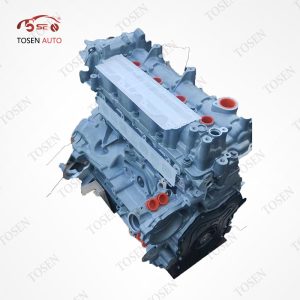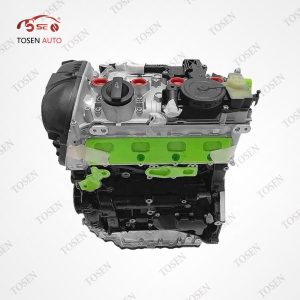
A replacement engine can show pressure on a gauge and still be the wrong unit to release. A repair shop or importer needs to know whose reading it is, how it was produced, which limit was used, and whether the tested engine is the one entering the crate.
An engine oil pressure test before shipping can expose a lubrication-system concern under stated conditions. It does not, by itself, prove oil delivery to every point, correct VIN fitment, complete supplied scope, acceptable compression, leak-free operation, or safe freight protection.
This guide turns the reading into a decision record. You will choose a suitable test mode, control the inputs, judge the curve against exact service data, and tie the result to the unit, packing file, and first-start handoff. Use the same evidence discipline with an engine assembly verification guide when the order also needs code, VIN, or OE-number confirmation.
What an Oil-Pressure Test Proves—and What It Does Not
| Item | Description |
|---|---|
| Direct evidence | Pressure at a named port, oil condition, temperature, speed or load, and time point. |
| Useful signal | Whether the lubrication circuit builds and maintains pressure under the recorded test condition. |
| Does not prove | VIN fitment, supplied accessories, oil flow to every location, acceptable compression, absence of all leaks, or service life. |
| Buyer output | Release, controlled retest, or hold for diagnosis—not a universal quality guarantee. |
Pressure is resistance-related and must be read inside a specific circuit and condition. First Mate's QC example records both pressure and flow while checking top-end oiling and leaks; that separation matters. A supplier sheet showing only “PASS” hides the method, the actual readings, and the risks that another check must control.
Decision boundary
Treat oil pressure as one measured gate. Approve shipment only after the record is traceable and the other release risks have their own evidence.
Choose the Test Method Before Comparing Readings
| Method | Best fit | Evidence produced | Main limit |
|---|---|---|---|
| Mechanical-gauge service check | Installed or sufficiently complete running engine | Direct readings at the specified port, temperature, idle, and stated RPM | Requires the exact service procedure and safe running setup |
| Controlled spin test | Long block or partially equipped engine on a fixture | Pressure build, possible flow/reach checks, rotation, compression, and leak observations | Fixture speed and oil circuit must be documented; it is not a hot in-vehicle test |
| Live-run or dyno test | Complete or test-ready engine with controlled support systems | Pressure across warm-up, speed or load points, plus temperature, stability, power, vacuum, or leaks | More systems are fitted; the tested and shipped configurations must be reconciled |
SRC explicitly separates full dyno hot tests for complete engines from spin tests for long-block content. NAPA's ATK listing gives one spin example at 400 RPM, while Ziptek describes cold-start and hot-load dyno cycles. These methods can all produce useful evidence, but their raw values are not interchangeable. Ask the supplier to state what drove the engine, which oil circuit was complete, and which components were fitted for the test.
Record the Conditions That Make Pressure Comparable
- Match the engine code, serial or supplier tag, purchase-order line, and test date.
- State the assembly condition and every oil-system component fitted to the test setup.
- Record oil grade, batch or container reference, fill quantity or level check, and visible contamination check.
- Identify the mechanical gauge, calibration status, hose, adapter, and exact pressure port.
- Record oil or coolant temperature, and label a cold fixture test clearly when warm operation is not possible.
- Record starter or fixture speed, idle RPM, higher RPM or load point, and the time held at each point.
- Show initial pressure build, stabilized readings, repeat run, and shutdown behavior in consistent units.
- Inspect for hose, adapter, seal, filter, gallery-plug, and external engine leaks before approval.
Toyota service examples begin with oil quality and level, install a gauge at the pressure-switch port, warm the engine, take readings at named speeds, reinstall the switch, and check for leaks. A production fixture may use another valid sequence, but it needs the same discipline. Hot oil and rotating or pressurized equipment require a trained technician, guarding, secure connections, and spill control.
Comparability rule
When two records use different oil, temperature, port, speed, load, or method, compare the completeness of the evidence—not the headline pressure number.
Judge the Curve Against the Exact Service Data
Start with the manual or approved production specification for the exact engine and method. One Toyota LU-1 example calls for at least 29 kPa at idle and 245–490 kPa at 3,000 RPM. A Toyota Dyna example keeps the 29 kPa idle minimum but gives 245–588 kPa at 3,000 RPM. Those examples show why a familiar number is not a cross-engine acceptance chart.
| Record pattern | Check first | Buyer action |
|---|---|---|
| Builds promptly, stabilizes, and meets the exact reference | Identity, oil, temperature, speed/load, gauge, and repeat result | Continue to the remaining release gates |
| Builds slowly after rotation or start | Priming method, oil level/viscosity, filter fill, pickup path, fixture speed, and gauge connection | Hold and repeat only under an approved procedure |
| Below the correct limit at one or more points | Gauge/adapter accuracy, oil temperature, relief system, pickup restriction, pump, clearances, and leaks | Stop the test and escalate for diagnosis |
| High or unstable reading | Oil viscosity/temperature, blocked passage, relief-valve behavior, aeration, sensor port, and gauge stability | Hold; do not average away the variation |
| Pressure passes but flow/reach or leak evidence is absent | Test scope and lubrication observation points | Request the missing supporting check before release |
Acceptance rule
Use the exact engine and method reference. Preserve raw readings and repeats; never replace an abnormal trace with a one-word PASS.
How to Record an Engine Oil Pressure Test Before Shipping
- Photograph the engine code, serial or supplier tag, and purchase-order reference before connecting the gauge.
- Record the test setup, oil, gauge ID, port, temperatures, speeds or load points, raw readings, and repeat result.
- Capture a short unbroken photo or video sequence that shows the same tag, engine, gauge connection, and worksheet.
- Attach supporting compression or rotation, oil-flow or reach, external-leak, cleanliness, and configuration checks that apply to the supplied scope.
- Issue a release, retest, or hold approval with the reviewer, timestamp, reason, and controlled revision number.
- Put the record number on the packing list and crate label, then photograph preservation, protected ports, supports, moisture barrier, and closed crate.
Audit trail
One identifier should follow the engine from quotation and test through packing, receipt, installation, and any warranty review.
Keep corrected records as new revisions. Do not overwrite the original reading or approval history.
Add the Checks Oil Pressure Cannot Replace
| Gate | Evidence to request | Hold when |
|---|---|---|
| Identity and fitment | Engine code, VIN/OE match, tag and interface photos, destination application | Variant, mount, sensor, oil pan, control, or interface remains unresolved |
| Assembly scope | Signed supplied-component list plus tested and shipped configurations | A test used components that are not included, or promised parts are missing |
| Lubrication | Pressure curve, method, conditions, exact reference, repeat, flow/reach or leak check where feasible | Record is incomplete, abnormal, or not tied to the unit |
| Mechanical condition | Compression or controlled rotation, clearances or leak checks appropriate to engine state | Results conflict or a required check is missing |
| Cleanliness and preservation | Clean ports, protected openings, corrosion control, fluid-handling record | Debris, open galleries, moisture, or storage protection is uncertain |
| Packing and handoff | Supports, moisture barrier, crate photos, labels, warranty start, receiving and first-start duties | The buyer cannot reconcile the unit or responsibility boundary |
Supplier examples support this multi-check approach. LKQ pairs pressure with compression, clearances, and protective packaging; NAPA/ATK and First Mate pair it with flow, oil reach, compression, or leak observations. When reviewing engine assemblies and long blocks, request the checks that are feasible for the exact supplied scope and record why any check is not applicable.
Use a Release, Retest, or Hold Checklist
- Release only when the test record identifies the exact engine and purchase-order unit.
- Retest when the method is valid but a connection, condition, unit label, or repeat result is incomplete.
- Hold and diagnose any slow build, low, high, unstable, leaking, or unexplained reading against the exact procedure.
- Confirm that the tested configuration and the supplied component list match.
- Confirm fitment with VIN or OE number, engine code, interface photos, and destination requirements.
- Confirm compression or rotation, flow/reach or leak, cleanliness, preservation, and packing evidence appropriate to the scope.
- Record warranty start, priming and first-start duties, freight inspection steps, and the named release authority.
- Approve the crate only after its label and packing list point back to the accepted test record.
For a vehicle-specific request, review the Geely S160G 1.5 Engine for Automotive Applications only after the code, OE reference, and interfaces match. The product page shows supply context; it does not replace a unit-specific oil-pressure record or a written scope check.
Prepare the fitment and test-evidence request together. Send TOSEN AUTO the VIN or OE number, engine code, required assembly scope, destination, and the evidence you expect before the crate closes. On-page release checklist and existing TOSEN product/category pages.
Frequently Asked Questions
Is the factory oil-pressure switch enough for a pre-shipment test?
Usually not for a decision record. A switch or warning lamp may show only whether a threshold was crossed; a mechanical gauge can record pressure at the specified port and operating points. Follow the exact engine procedure.
Can a bare long block be oil-pressure tested before shipping?
A suitable fixture can spin some long blocks and record pressure or oil reach, but the supplier must document drive speed, fitted oil-system parts, oil, port, gauge, and fixture limits. Do not judge that cold fixture result by an unrelated hot in-vehicle value.
Should every replacement engine show the same oil pressure?
No. Acceptance values and procedures vary by engine, oil, temperature, speed, load, and test method. Ask for the exact OEM or approved production reference used for that engine.
Does a passing factory record remove the need to prime the engine at installation?
No. Follow the supplier's written installation and warranty procedure. Powertrain Products, for example, treats oil priming and confirmation of pressure at first start as installer responsibilities; obtain the terms that apply to your order.
Release the Record, Not Just the Engine
A useful oil-pressure record names the engine, method, oil, gauge, port, temperature, speed or load, raw readings, exact acceptance source, repeat result, and reviewer. It leads to an explicit release, retest, or hold decision.
Keep that record connected to fitment, assembly scope, supporting mechanical checks, preservation, packing, receiving, priming, and first start. The chain matters more than a supplier stamp or an isolated gauge photo.
Confirm fitment and evidence together. Use the on-page checklist, then provide TOSEN AUTO with the VIN or OE number, engine code, required scope, destination, and test-evidence request before shipment approval. Existing TOSEN engine product and category pages.