A wholesale engine warranty can look strong until a workshop asks one practical question: what evidence does the claim team need before it will act? A duration headline does not answer that.
Use this engine warranty checklist wholesale teams can attach to an RFQ. It connects the exact engine, supply scope, warranty trigger, installer duties, evidence, remedy and claim route before money or stock is committed.
The checks below do not create warranty coverage. They help an importer, fleet buyer, rebuilder or repair shop obtain the current written terms for the specific seller, unit, application and destination.
Freeze the warranty version before price comparison
| Item | Description |
|---|---|
| Controlling document | The dated warranty terms or schedule attached to the quotation and accepted order. |
| Warranty trigger | The recorded event that starts the term, such as purchase, shipment, installation or registration. |
| Use class | The agreed private, commercial, fleet, marine, industrial or other application named in the terms. |
Reviewed engine policies do not use one common trigger or one set of terms. Some connect coverage to purchase records, others to documented installation or registration, and application class can change what is offered. Ask the supplier to identify the exact policy version instead of pasting a warranty line into the quote.
| Check | Weak quotation | Purchase-ready record |
|---|---|---|
| Seller and document | Warranty available | Legal seller name, document title, revision date and precedence |
| Covered order | All engines | Invoice line, SKU, condition, product form, quantity and serial rule |
| Start and end | One-year warranty | Trigger event, required proof, deadline and time or usage limit |
| Where and how used | Standard use | Territory, vehicle class, commercial/fleet status and transferability |
| Approval | Contact us if needed | Named channel, response owner and prior-authorization rule |
Approval rule
Do not score warranty offers by duration until every row above is complete. If the supplier will not attach the current terms to the quotation, mark the warranty item open.
Tie coverage to engine identity and supply scope
Coverage must point to the same engine the buyer approved. Record the vehicle identification number (VIN), engine code, old-unit or OE reference, model year, market, transmission, drivetrain and critical interface photos. Then name whether the offer is a short block, long block or complete assembly and whether its condition is new, remanufactured or used.
- Buyer identity set: VIN or chassis reference, engine code, OE or old-label photo, year and destination market.
- Supplier candidate set: proposed code and suffix, serial or unit identifier, condition and fitment assumptions.
- Signed component matrix: included, transferred, optional and excluded parts listed separately.
- Supporting systems: cooling, lubrication, fuel, electrical, intake, exhaust and controls assigned for inspection or replacement under the applicable procedure.
- Evidence boundary: compression, oil-pressure, sealing or other test records name the unit, method, operating condition, result and exception status when those tests are offered.
- No-substitution rule: any version or component change returns to buyer approval before shipment.
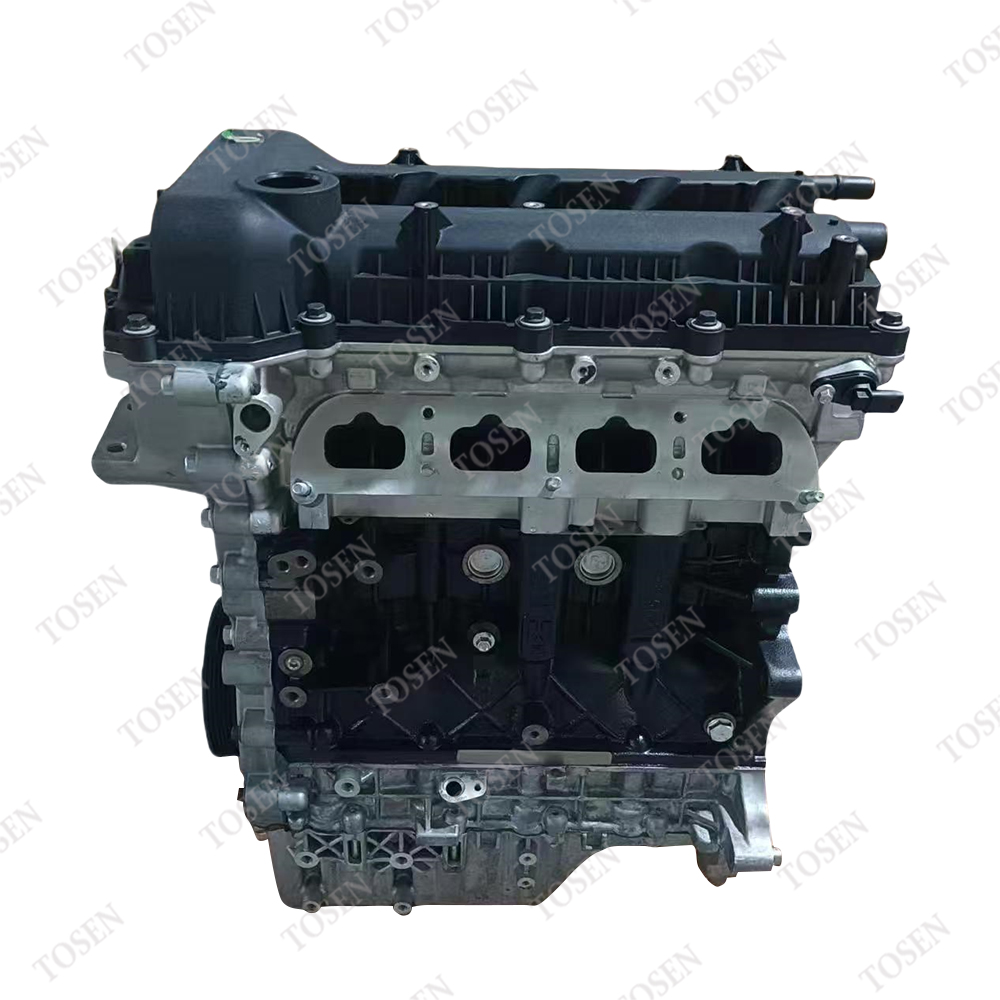
Use TOSEN AUTO catalog pages only as supporting context. The engine assemblies and long blocks category helps a buyer identify available product forms, but its label does not define the included components or coverage for an order.
A specific catalog item can show a real availability example. Factory WholesaleSQRE4T15C Gasoline Engine for Chery1.5L Turbo Charger does not prove fitment, included scope, test results or warranty; those points still belong in the written quotation and warranty schedule.
Turn installation duties into a signed handoff
Engine policies commonly link claim review to installation and maintenance records. The safe buying move is not to copy another provider’s parts list. Ask for the instructions that apply to the exact engine and vehicle, then assign each required action to the supplier, receiving team, installer or fleet owner before installation starts.
- Supplier identifies the engine, product form, warranty version, required installation procedure and evidence set.
- Receiving team photographs the unopened packing, labels, serial reference and visible condition before parts are moved.
- Installer confirms fitment, finds the cause of the original failure and records work on supporting systems.
- Installer follows the engine-specific priming and first-start procedure and records fluids, filters, readings, leaks and warning states.
- Owner follows the stated maintenance schedule, preserves invoices and raises any symptom through the authorized claim channel.
- Name the installing facility and the person who signs the installation record.
- List mandatory new, cleaned, flushed, transferred or inspected components from the applicable procedure.
- Record installation date, vehicle mileage or hours, fluid specifications and filter references.
- Define the first-start stop conditions and who may authorize continued operation.
- Keep the first service and ongoing maintenance requirements with the unit file.
- Do not promise that one generic checklist satisfies every supplier policy or engine application.
Build one evidence pack for every engine
A batch folder is not enough when several engine codes, installers or end users are involved. Give every engine a stable unit key that connects the purchase order line, supplier identifier, crate or seal reference, receiving record, installation invoice and later maintenance. Preserve original files and note who created each record.
| Stage | Keep for each engine | Owner and control |
|---|---|---|
| Quotation | Approved code, condition, product form, component matrix and warranty revision | Buyer freezes the accepted version |
| Pre-shipment | Unit photos, identifier, offered test record, exception closure and packing reference | Supplier signs release status |
| Receiving | Unopened packing, damage notes, labels, engine views and document conflicts | Receiver timestamps before unpacking |
| Installation | Work order, cause-of-failure diagnosis, supporting-system work, fluids, filters and first-start record | Installer signs against the applicable procedure |
| Maintenance | Dated invoices, mileage or hours, fluids, filters and corrective actions | Owner keeps originals and unit key |
| Claim | Symptom timeline, stop-work time, diagnostics authorized, communications and disposition | Claim owner protects evidence and approvals |
Fraser’s registration instructions provide a useful example of record linkage by asking for invoice, serial number, VIN, installation mileage and installation date. That is not a universal form. Use it as a reminder that every required field should resolve to the same physical engine and transaction.
Price the remedy, not just the warranty term
A replacement promise can still leave the buyer carrying diagnosis, removal, freight, duties, fluids and reinstallation. Supplier policies show that labor treatment, application limits, installer status and prior approval can materially change the practical value of coverage. Put each cost and action into the same comparison sheet as unit price and MOQ.
| Question | Write into the quotation | Reason to hold approval |
|---|---|---|
| Valid defect remedy | Repair, replacement, credit or refund; supplier option and sequence | Only “warranty provided” is stated |
| Diagnosis and teardown | Who selects the facility, who pays, and written authorization required | Buyer must dismantle before supplier review |
| Parts scope | Covered internal assembly and treatment of attached accessories | Complete-looking engine implies complete coverage |
| Labor | Eligible operation, rate method, hours, cap, installer qualification and payment proof | “Labor included” has no calculation |
| Freight and core | Direction, payer, packaging, insurance, core deadline and failed-part custody | Return logistics are silent |
| Import and reinstall | Duties, taxes, storage, fluids, consumables and reinstallation owner | Replacement unit is described as the full remedy |
| Downtime | Any agreed support, loan unit or explicit exclusion | Sales discussion creates an undocumented expectation |
Comparison rule
Normalize every supplier response to the same engine identity, use class, covered parts, evidence duties, remedy and cost buckets. Treat blank cells as buyer exposure, not as included coverage.
Engine warranty checklist wholesale buyers can attach to the RFQ
The claim route should work at unit level even when the commercial order is priced by pallet, container or MOQ. Ask the supplier to show how one affected serial is isolated without confusing the rest of the batch. Keep the first report factual and do not authorize removal, teardown or repair until the controlling terms allow it.
- Stop operation when continued use could erase evidence or increase damage; record the time, mileage or hours and observed warning state.
- Protect the unit, fluids, removed parts, packaging and electronic records. Do not alter identifiers or inspection devices.
- Notify the named warranty contact with invoice, unit key, VIN or application reference, symptom timeline and available records.
- Obtain written authorization for diagnostics, teardown, removal, repair, return or replacement before costs are committed.
- Record the supplier decision, required inspection, remedy, cost allocation, shipping instruction and closure evidence.
- Update the serial register and review whether the finding affects another unit, SKU or installation instruction in the batch.
- RFQ identity: engine code, VIN or old-label evidence, year, market, transmission, drivetrain and interface photos.
- Commercial scope: product form, condition, quantity, MOQ, version mix, unit price, currency, validity, payment and destination port.
- Release scope: offered compression, oil-pressure, sealing or other checks with method and unit-linked results when available.
- Packing scope: per-unit identifier, crate or pallet reference, moisture and damage record, and replacement/core return packaging.
- Warranty scope: revision, trigger, term, territory, use class, installer duties, maintenance, exclusions, remedy and all cost buckets.
- Claim scope: contact, response path, prior authorization, evidence, failed-part custody, return freight and escalation.
- Decision: approve, hold for named evidence, or reject with the owner and date.
Close remaining fitment questions before approval. Use the related technical guide and keep any open code, interface or product-form question on the hold list.
Prepare the requested identifiers before opening the inquiry. Send the complete packet through the TOSEN AUTO contact form with VIN, old-engine label or OE number, model year, quantity and destination port, then ask for written fitment, scope, test-evidence and warranty terms for that exact quotation.
Frequently Asked Questions
Does the warranty start when the engine ships or when it is installed?
It depends on the controlling terms. Ask the supplier to name the trigger event, required proof, registration deadline and end condition in the quotation-specific warranty schedule.
Are accessories attached to a long block automatically covered?
Do not assume they are. Several engine policies separate covered internal assemblies from attached accessories supplied for convenience. Use a signed component matrix for included, excluded, transferred and optional parts.
Can a workshop begin teardown before the supplier replies?
Only if the controlling terms permit it. Some policies require prior authorization before removal, teardown, repair or replacement, so record the symptom, protect the unit and obtain written direction first.
How should a distributor manage warranty records for an MOQ order?
Create one batch register and one evidence folder per engine. Link each serial or unit key to the invoice line, approved scope, receiving record, installer, first-start data, maintenance and any claim communication.
Use the checklist before approving the order
A useful wholesale warranty identifies the seller, engine, covered parts, trigger, duties, evidence, remedy and claim authority. Keep those terms with the unit record from quotation through receiving, installation and maintenance. If any field is blank, hold the order until the responsible party answers it in writing.
Request a fitment and warranty proposal from TOSEN AUTO. Submit the VIN, old-engine label or OE number, vehicle year, quantity and destination port. Include this checklist and ask for the current product scope, available test evidence, packing details and written warranty terms. Existing TOSEN contact form.