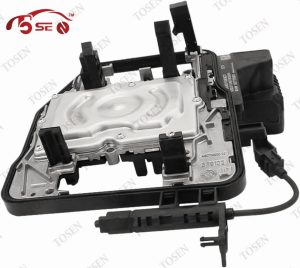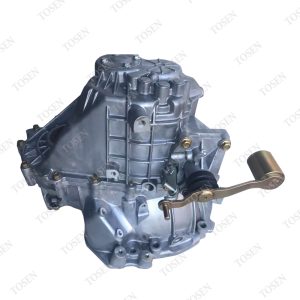
Gearbox shipping crate requirements should define seven things: the exact unit, its shipping condition, the load-bearing supports, the primary restraints, protection for vulnerable interfaces, route-specific materials and handling, and the evidence that follows the package to receipt. A note that says only “wooden crate” does not tell a buyer how the transmission is held, kept dry, identified, measured, or inspected.
Here, fitment means matching the crate, supports, clearances, and handling access to the identified physical unit; it does not establish vehicle interchangeability. Use the requirements below as a packing-request framework. The qualified packer, carrier, and forwarder still need to confirm the design for the actual gearbox, gross weight, route, handling equipment, and exposure. There is no safe universal crate size or fastener schedule for every transmission.
Start With a Seven-Part Crate Specification
| Item | Description |
|---|---|
| Identity | Order, gearbox code or OE number, unit label, configuration, included parts, and case number. |
| Shipping condition | Fluid status, residue containment, capped openings, cleanliness, preservation, and separately packed accessories. |
| Load path | Where the gearbox is supported and how it is positively restrained to the base. |
| Protection | Clearance and guarding for shafts, flanges, pans, selectors, sensors, connectors, cooler ports, and attachments. |
| Route and materials | Carrier acceptance, transport mode, raw or processed wood, exposure, storage, transfers, and handling equipment. |
| Finished package | Measured outside dimensions, gross weight, fork access, orientation, handling marks, and stated stacking status. |
| Evidence and receipt | Interior and exterior photographs, collection condition, arrival comparison, and the discrepancy contact. |
These fields describe different risks. Movement calls for support, restraint, and bracing; protrusion damage calls for clearance and guards; leakage calls for stated fluid condition, closures, liner, and absorbent material; moisture and corrosion call for route-matched enclosure and preservation; wrong-unit and handling errors call for identifiers, marks, measurements, and photographs. An official wood mark does not rate the crate for the load, and a strong base does not prove the gearbox is the ordered unit.
Ask for the specification, not a packing adjective
“Export,” “seaworthy,” “heavy-duty,” and “wooden” need supporting details for this unit and route.
Prepare the Actual Gearbox Before It Meets the Crate
Start with the gearbox that will actually ship. Photograph its readable label or stamped number, all sides of the case, the bellhousing, input and output interfaces, oil pan, selector area, connectors, and any transfer or differential section. Match those images to the order and packing list before accessories hide the view.
- State whether the shipment is a bare gearbox, transaxle, gearbox with torque converter, or an assembly with transfer section and loose accessories.
- Follow the supplier and booked carrier instructions for draining. Record the fluid condition instead of assuming that “dry” means no residue remains.
- Cap or plug openings with compatible closures. Add a heavy liner and absorbent material where the carrier requires residual-fluid containment.
- Clean the exterior enough to reveal leaks, cracks, impact marks, and readable identifiers.
- Remove or separately protect a vulnerable loose control, bracket, cooler fitting, or sensor only under the supplier's packing instructions. List every separate item.
- Record preservation material and removal instructions when the unit may face humidity or storage before installation.
For one major carrier's service, the published transmission instructions require fluids to be drained, the unit to be placed in a heavy plastic bag with absorbent padding, and the load to be restrained by the applicable bands, blocking, bracing, or strapping. Review the current requirements of the carrier you will actually book; the FedEx instructions are an example, not a universal rule.
Separate Support, Restraint, and Component Protection
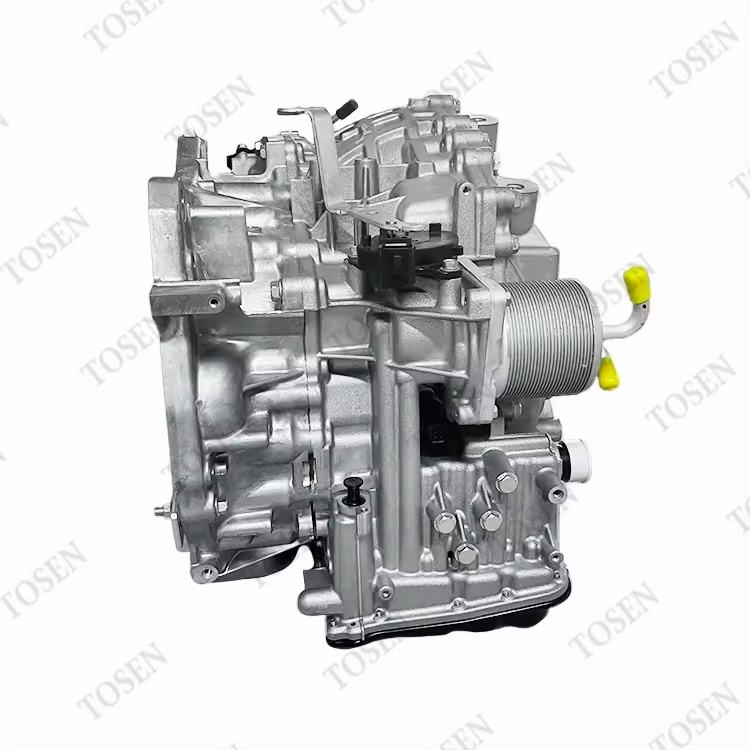
The qualified packer should establish a stable load path from strong case areas into the base, then use positive restraints to prevent movement. Do not let the gearbox rest on a thin oil pan, selector mechanism, sensor, connector, cooler fitting, shaft, flange, or other protruding part. Keep the torque converter or loose accessories retained under their own packing instructions.
| Element | Its job | What to request | What it cannot prove |
|---|---|---|---|
| Supports or cradle | Carry the gearbox and maintain orientation | Contact locations, material, clearance, and actual-load design | That the unit cannot move |
| Primary restraint | Limit lift, slide, rotation, and tip | Band, strap, bolt, or fixture path and protected contact points | That fragile parts have clearance |
| Blocking and bracing | Limit movement and stabilize geometry | Views before closure and packer-confirmed arrangement | Moisture or corrosion protection |
| Outer enclosure | Protect against contact and help contain the load | Panels, frame, closure, access, and damage visibility | Structural capacity without the design basis |
| Cushioning and guards | Protect shafts, flanges, connectors, and finished surfaces | Clearance, non-abrasive contact, and retention | Primary restraint for a dense assembly |
| Barrier or preservation | Control residue, humidity, or corrosion for the stated period | Compatible materials and removal instructions | Impact resistance or load capacity |
Ask the packer to show each function in the open-crate photographs. Straps should not cross an unprotected edge or crush a connector. A shaft protector should not become a support point. Fork pockets and lift access should remain clear after the walls and lid are fitted. Capacity, fasteners, and support geometry must come from the packer responsible for the actual load.
Match Wood, Weather, and Handling to the Route
List every wood component, not only the wall panel. Raw-wood pallets, runners, blocks, braces, and dunnage can fall within phytosanitary rules even when the enclosure uses processed panels. IPPC ISPM 15 covers regulated raw-wood crates, boxes, pallets, and dunnage in international trade, while packaging made wholly from specified processed wood such as plywood can be exempt from that standard. This scope concerns pest risk; it does not certify load capacity.
| Question | Record in the order | Reason |
|---|---|---|
| Where will it travel or transit? | Origin, destination, transit points, and broker/forwarder requirements | Wood and import rules vary by route |
| Which wood is used? | Panels, pallet, runners, blocks, braces, and dunnage | Processed panels do not describe separate raw pieces |
| Which carrier and service? | Written acceptance, weight limits, fork/pallet requirements, labels, and prohibited conditions | A package accepted by one service may be refused by another |
| What exposure is expected? | Sea/air/road, covered or outdoor handling, expected storage, and reopening | The shell, barrier, closure, and preservation must match exposure |
| How will it be handled? | Fork or crane access, entry direction, dock/liftgate needs, and transfer points | Handling equipment changes base and clearance needs |
| Can it be stacked? | Rated condition or a clear non-stack instruction | A flat lid is not evidence of stacking capacity |
For shipments entering or transiting the United States, APHIS says regulated wood packaging must be pest-free, debarked, treated, and marked under ISPM 15. Other destinations and transit routes need their own current check. Ask the packer and broker to resolve the actual wood components before collection, especially when an old crate is repaired or new raw-wood blocks are added.
Measure and Mark the Finished Package
Do not book freight from a bare-unit estimate or a crate copied from another model. Measure the closed package after the supports, accessories, liner, walls, lid, and pallet are complete. Record the scale method and the outside points used for length, width, and height. If a published example lists a package size, treat it only as an example for that assembly and packing method.
| Field | Record | Receiving use |
|---|---|---|
| Outside dimensions | Final length × width × height and units | Plan vehicle, dock, aisle, and storage clearance |
| Gross weight | Loaded crate weight and units | Select handling equipment and compare carrier records |
| Identity | Order, case, gearbox, and packing-list references | Match the package to the expected unit |
| Handling | Fork-entry direction, lift points if engineered, orientation, and center-of-gravity note when needed | Avoid contact with the gearbox or unstable lifting |
| Stacking | Verified rating/condition or non-stackable instruction | Prevent unsupported top loading |
| Compliance and care | Applicable wood mark, weather/keep-dry notice, and approved carrier labels | Check route and visible condition before acceptance |
A gearbox does not have a universal packed size
The same transmission can produce a different envelope when the torque converter, transfer section, accessories, support system, or route protection changes.
Build a Photo Record the Receiver Can Reuse
A useful photo set lets the receiver compare the same unit and package at each handoff. Put the order or case reference in the frame without covering the gearbox label. Use wide views to show the arrangement and close views for restraints, vulnerable interfaces, plugs, accessories, marks, seals, and any pre-existing damage.
- Identify — photograph the unit label, all sides, included parts, and existing condition before packing.
- Support and restrain — record the cradle or supports, every primary restraint, clearances, plugs, guards, liner, absorbent material, and accessory boxes before closure.
- Close and measure — photograph the closed case, seals, marks, dimensions, gross weight record, fork entry, and handling instructions.
- Collect — record the package condition and carrier handoff without implying that one photograph transfers all responsibility.
- Receive — before signing or unpacking, compare case number, labels, seals, stains, wetting, punctures, crushed areas, tilt, and handling marks with the dispatch set.
If the crate arrives damaged, follow the booked carrier's notice and inspection procedure before altering the evidence. After opening, compare the gearbox label, supports, restraints, openings, interfaces, loose parts, and packing list. Keep the package until the supplier and carrier have given the required next steps for a reported discrepancy.
Send One Quote-Ready Packing Checklist
Send the packer, supplier, and forwarder the same data. A transmission quotation should identify the unit before packaging terms are priced, while the freight request should use the final packed measurements rather than an early estimate.
- Vehicle VIN or chassis reference, old-unit label or OE number, gearbox code, model year, drive layout, and clear unit photographs.
- Supply scope: bare gearbox, torque converter, transfer section, differential content, sensors, brackets, cooler fittings, and every separate accessory.
- Required shipping condition: drainage/containment, plugs and caps, cleaning, preservation, accessory packing, and removal instructions.
- Packer deliverables: support and restraint plan, protected interfaces, enclosure/closure, fork or lift access, and stacking status.
- Route fields: origin, destination, transit, carrier/service, broker requirements, expected exposure, and storage period.
- Finished-package record: dimensions, gross weight, unit/order/case references, marks, labels, and exception notes.
- Evidence sequence: pre-pack unit, open crate, closed crate, collection, arrival exterior, and opened-unit comparison.
- Receiving procedure: contact, damage-notice route, inspection timing, and packaging-retention instruction.
For one application example, review the JF011E CVT transmission assembly page only after you have the old-unit identifiers and vehicle details. The product page is a commercial destination; it does not replace fitment confirmation or a shipment-specific packing proposal.
If the exact application is not yet known, browse TOSEN's manual and automatic transmissions category to identify the relevant family, then submit the label and vehicle evidence. Do not select a crate from a family name alone.
When the fleet is still comparing gearbox types, use TOSEN's Manual vs Automatic Transmission: Which Gearbox Is Right for Your Fleet? guide for that separate decision. Return to this checklist after the assembly and route are defined.
Frequently Asked Questions
Does a plywood gearbox crate need an ISPM 15 mark?
Packaging made wholly from specified processed wood such as plywood can be exempt from ISPM 15, but raw-wood pallets, runners, braces, blocks, or dunnage may still be regulated. List every wood component and confirm the actual destination and transit requirements with the packer and broker.
What size crate fits a transmission?
There is no universal size. Measure the finished package for the actual gearbox, included converter or transfer section, accessories, supports, protection, and route. A published example applies only to the configuration and packing method it describes.
Can stretch wrap hold the gearbox to the pallet?
Treat wrapping as containment or weather protection, not the primary restraint for a dense gearbox. Ask the qualified packer to specify positive restraints and supports for the actual load, then show them in open-crate photographs.
Should the gearbox be shipped completely dry?
Follow the supplier and booked carrier instructions. Record the agreed fluid condition, drain as required, cap openings, control residue with compatible containment and absorbent material, and give the receiver the preparation/removal instructions.
Can the core-return crate be reused?
Only after the packer checks its structure, repairs, supports, closures, wood-marking status, and suitability for the returning gearbox and route. A prior successful trip does not prove the crate still fits the new load or remains compliant after repair.
Which photos matter most before the lid closes?
Capture the readable gearbox identity, support points, every primary restraint, protected shafts and connectors, capped openings, accessory boxes, liner and absorbent material, plus any pre-existing damage. These views cannot be recreated after closure.
Use the Specification Before Freight Is Booked
A gearbox crate is ready to quote when the actual unit, shipping condition, supports, restraints, protection, route, materials, packed data, and evidence sequence are all stated. Ask the qualified packer and booked carrier to resolve any exception before collection, then give the receiver the same record for comparison at arrival.
Send TOSEN AUTO the VIN or chassis reference, old-unit label or OE number, gearbox code, vehicle year, drive layout, quantity, destination, and this packing checklist. Ask for fitment confirmation and a shipment-specific packing proposal.