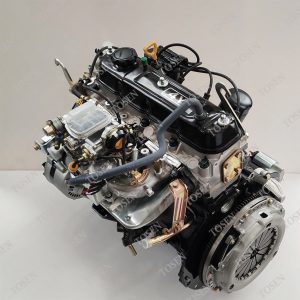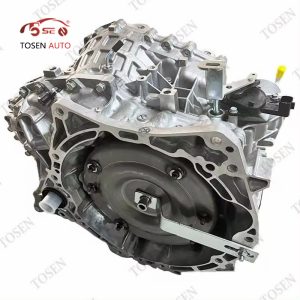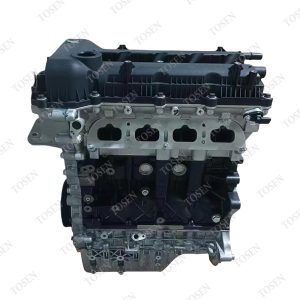
A Toyota Hiace can be parked for weeks because a replacement engine looked right in a listing but failed one code, interface, or supply-scope check. The model name alone is not enough: Hiace generations and markets use different petrol and diesel engine families.
This Toyota Hiace engine replacement guide turns the search into a controlled buyer record. You will freeze the exact identity, choose the required assembly level, compare condition by evidence, define usable test records, and protect the handoff from export crate to first start.
The goal is not to nominate one universal engine. It is to help a repair shop, fleet, remanufacturer, or importer decide when a candidate can proceed, what evidence is still missing, and when the safest answer is to stop.
Identify the Exact Hiace Engine Before Shopping
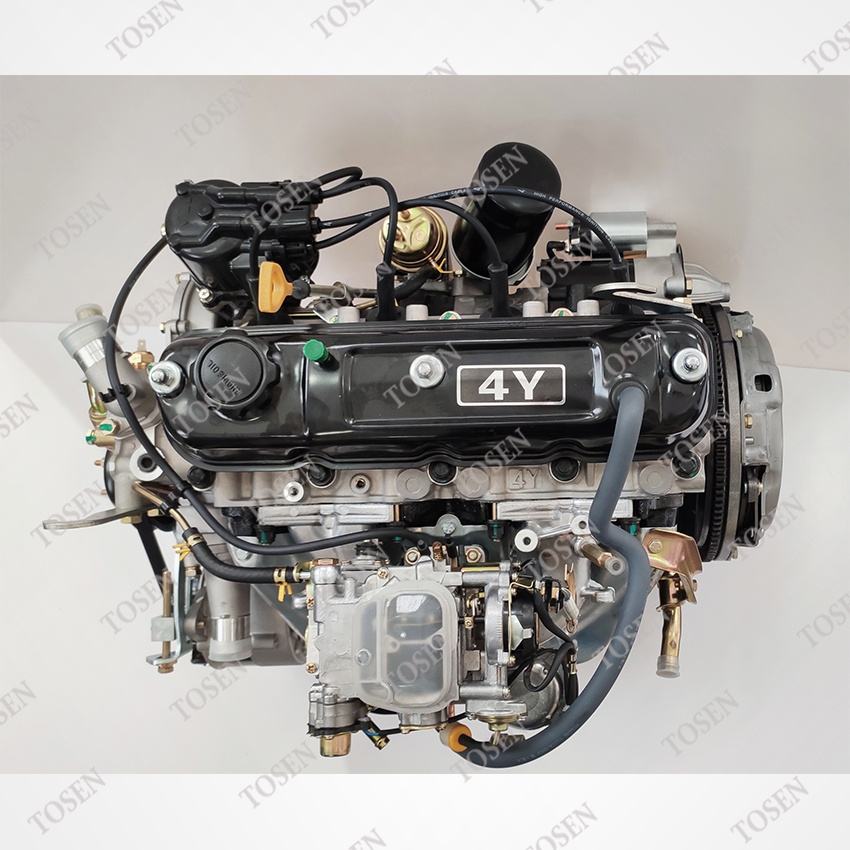
Start with the failed vehicle and old engine, not the closest product title. Hiace applications span distinct families, including Toyota 4Y petrol and Toyota 2KD-FTV diesel examples. Even within one family, the sales market, year, transmission, drive layout, emissions equipment, wiring, sump, mounts, manifolds, sensors, and accessory brackets can change the replacement task.
- Record the full VIN or chassis number, model code, year, sales market, transmission, and two- or four-wheel-drive layout.
- Photograph the old engine label, stamped code, suffix, serial or casting marks, and any OE number on the prior order or service record.
- Capture clear views of the sump, mounts, bellhousing face, intake and exhaust sides, fuel equipment, sensors, wiring connectors, and accessory brackets.
- List the emissions and electronic systems that must remain compatible; do not assume a bare mechanical match will communicate with the vehicle.
- Ask the supplier to return the proposed unit identity, checked references, unresolved conditions, and any required transfer or modification points in writing.
Stop on an identity conflict
A family-level match is a plausibility check, not fitment approval. If VIN/chassis context, engine code, OE reference, or physical interfaces conflict, stop until the conflict is resolved.
Do not use a Toyota 2KD-FTV manual value or a Toyota 4Y product page to approve a different engine family. The technical reference must follow the exact candidate.
Choose Short Block, Long Block, or Complete Assembly
| Option | Supply center | Buyer must verify | Usually suits |
|---|---|---|---|
| Short block | Block and rotating lower assembly | Cylinder head, timing, fuel, intake, exhaust, sensors, accessories, machining and assembly work | A sound, reusable top end and an installer equipped to rebuild |
| Long block | Short-block foundation plus cylinder head and valvetrain/timing content | Exact head/timing content, covers, manifolds, fuel equipment, sensors, pumps, brackets and transfer list | Internal replacement with controlled reuse of external systems |
| Complete engine assembly | Broader assembled package | What 'complete' actually includes, electronics/emissions interfaces, fluids, starter/alternator, installation kit and exclusions | Downtime-sensitive work when the broader package is verified |
The correct choice follows the failure analysis. If overheating, lubrication debris, a damaged head, or a failed supporting system affected more than the lower assembly, the lowest-scope option can move hidden risk into reused parts. Ask the repairer to mark every component as supplied, transferred after inspection, replaced separately, optional, or excluded. Then compare labor, machining, consumables, cleaning, and schedule on the same boundary.
Let the signed BOM control
Product photos and the words short block, long block, or complete engine do not create a universal bill of materials.
Attach the component matrix and exclusion list to the supplier response. If a critical system is blank, treat it as unresolved rather than included.
Compare New, Remanufactured, and Used Engines by Evidence
| Condition | Ask for | Useful strength | Main unknown to close |
|---|---|---|---|
| New aftermarket | Manufacturer identity, build specification, traceability, inspection/test pack and warranty | No prior service wear when the claim is genuine | Variant accuracy, component quality and actual included scope |
| Remanufactured or rebuilt | Core identity, process standard, machining/measurement sheet, replaced parts, final test and warranty | A controlled process can address known wear | Depth and consistency of the process behind the label |
| Used OEM or salvage | Donor identity, recorded mileage if available, provenance, inspection/test results, storage condition and warranty | Original matched assembly may preserve factory interfaces | Unknown service history, storage effects and remaining life |
Condition and assembly scope are separate decisions. A new short block can leave more old systems in service than a remanufactured long block. A used complete assembly can include more parts while carrying greater history uncertainty. Compare the evidence burden and downstream labor instead of ranking the labels by instinct.
- Write the seller's exact condition term into the order and ban silent substitution.
- Connect provenance, build or mileage records, and photos to the proposed unit identifier.
- For remanufactured work, request the inspection, machining, measurement, replacement-part, cleaning, and final-release record.
- For used units, define acceptable storage, external condition, contamination checks, and any test that can be completed before installation.
- Compare warranty trigger, exclusions, evidence duties, remedy, and cost allocation alongside the condition claim.
Ask for Unit-Linked Inspection and Test Evidence
| Field | Minimum entry | Decision use | Red flag |
|---|---|---|---|
| Identity | Unit/serial/code tied to quote and photos | Proves which engine was checked | A sample report with no traceable unit |
| Method and condition | Procedure, build state, temperature/speed or bench condition where relevant | Makes results interpretable | Only the word 'tested' |
| Results | Individual readings or inspection findings | Shows pattern and exceptions | One unexplained pass stamp |
| Reference | Applicable manual, drawing, work instruction or agreed acceptance limit | Prevents a made-up universal threshold | No source for the limit |
| Control | Date, equipment ID/status and approver | Supports release and later review | Undated screenshot or cropped photo |
Toyota's 2KD-FTV repair material contains engine-specific inspection methods and dimensional limits. That is useful evidence for a matching 2KD-FTV operation, but it is not a universal Hiace test sheet. Compression, oil pressure, clearances, sealing checks, and bench procedures depend on the exact engine, build state, equipment, and reference. Ask the supplier or installer to state what applies and why.
- Match every report, label photo, and packing photo to the same unit identity.
- Request raw readings or findings where practical, not only a pass/fail summary.
- Record exceptions, corrective action, retest results, and final release authority.
- Keep sample quality records separate from the production unit's release pack.
- Stop approval when the reference belongs to another engine family or the result cannot be traced to the proposed unit.
Compare the Delivered Replacement Project, Not Unit Price
| Line | Confirm | Evidence | Owner |
|---|---|---|---|
| Engine | Exact identity, condition and signed BOM | Quote revision plus unit record | Supplier and buyer verifier |
| Transfer/supporting work | Fuel, cooling, intake, exhaust, electronics, mounts, consumables and contamination correction | Installer work scope | Installer/buyer |
| Packing and delivery | Crate, protection, seal, named place/term, freight, insurance, duties/tax and notice window | Packing plan and commercial term | Contract-defined parties |
| Schedule | Build/release, dispatch, transit, receipt inspection and installation readiness | Dated plan | Named owners |
| Failure remedy | Diagnosis, parts/unit remedy, labor, freight, duties and reinstallation allocation | Warranty and claim workflow | Contract-defined parties |
- Price every transferred or excluded part that failed, may be contaminated, or cannot be approved for reuse.
- Include installer labor, machining, fluids, filters, seals, cooling and lubrication correction, inspection, storage, insurance, duties, and vehicle downtime where they apply.
- Name the Incoterms rule, place, and version in the contract; the rule allocates delivery tasks, costs, and risks but does not define the engine BOM or warranty.
- Compare offers only after identity, scope, condition, quantity, place, term, and remedy responsibility are aligned.
Use commercial pages after the scope is stable
A broad view of engine assemblies and long blocks is useful only after the repair boundary is written.
Use a related technical guide to close fitment questions; do not let a product thumbnail replace the identity pack.
Control the Handoff from Crate to First Start
- Pre-pack: record unit ID, all sides, protected openings, loose parts, preservation, crate construction and seal.
- Receive: inspect the crate before signing, note visible exceptions, open under control, photograph concealed damage and send notice within the agreed window.
- Pre-install: confirm identity and BOM again, diagnose the original failure, correct contaminated or failed supporting systems and record transferred parts.
- Prime and first start: follow the exact engine and supplier procedure; record fluids, filters, priming, leaks, warning states and applicable readings.
- Close the record: link release, receipt, installer, commissioning and any claim evidence to the same unit and vehicle.
Freight and warranty policies can impose short evidence windows or installation duties. Agree those terms before dispatch. The buyer should know who may sign for the crate, what damage must be noted on the carrier record, who can authorize installation, what supporting systems must be corrected, when the warranty starts, and what remedy is available.
- Keep the crate/seal reference, engine identifier, vehicle record, and purchase order connected.
- Quarantine a damaged or conflicting unit; do not install it to discover whether the issue matters.
- Use the engine-specific service procedure for installation, priming, fluids, filters, and first-start checks.
- Record transferred components, replaced supporting systems, installer identity, dates, readings, leaks, warnings, and corrective action.
- Write the warranty trigger, notice route, diagnosis authority, exclusions, remedy, and labor/freight/reinstallation allocation into the file.
Use the Toyota Hiace Engine Replacement Checklist
- Identity complete: VIN/chassis, model code, year, market, transmission/drive, exact engine code/suffix, old label/OE, electronics/emissions, and interface photos.
- Candidate response complete: proposed unit ID, checked references, fitment conditions, transfer/modification points, and unresolved questions.
- Assembly scope signed: short block, long block, or complete assembly with included, transferred, optional, and excluded items.
- Condition controlled: new, remanufactured/rebuilt, or used with provenance, process or mileage, measurements, replaced parts, inspection/test evidence, and no-substitution term.
- Release pack usable: unit ID, method, operating condition, individual results, applicable reference, date, equipment/control, exceptions, retest, and approval.
- Delivered project aligned: quantity, packing, named place/term, freight, insurance, duties/tax, transfer work, supporting-system correction, delivery window, and downtime plan.
- Handoff protected: pre-pack photos, crate/seal record, receiving inspection, damage notice, quarantine rule, installer record, engine-specific first-start procedure, readings, and corrective action.
- Warranty operational: start trigger, proof, installation deadline/duties, notice route, diagnosis authority, exclusions, remedy, and allocation of labor, freight, duties, and reinstallation costs.
- Decision recorded: proceed, hold for named evidence, or reject with the reason and approver.
Only after this sheet is complete should a buyer evaluate a specific page. A 4Y Engine Assembly for Toyota Hiace Hilux is relevant when the verified vehicle needs that exact family and interfaces; the page does not replace VIN, code, OE, or physical-interface approval.
Choose the next verification path
For a different verified code, review the engine assemblies and long blocks category without treating the category label as fitment proof.
Use the related technical guide to close remaining fitment questions before a commercial decision.
Verify the applicable existing TOSEN page Use the checklist as the working record. When identity, scope, condition, evidence, delivery, and first-start responsibilities are complete, verify the matching TOSEN product, category, or technical-guide page with the exact vehicle and old-engine details. This article checklist plus the existing 4Y product, Engine Assemblies category, and Hiace/Hilux technical guide
Frequently Asked Questions
Is the VIN enough to choose a Toyota Hiace replacement engine?
Not by itself. Use the VIN or chassis record with the exact engine code and suffix, old label or OE number, year and market, transmission and drive layout, emissions/electronics, and physical-interface photos. Stop when those sources conflict.
Does a long block include the turbo, injectors, manifolds, and sensors?
There is no safe universal inclusion list. Those items may be included, optional, transferred, or excluded. The supplier's signed BOM and exclusion schedule should name each critical system and control over the product photo or headline.
Which compression or oil-pressure value should a replacement engine meet?
Use the procedure and limit for the exact engine variant, build state, and test condition. Ask for the unit ID, method, operating condition, individual results, applicable manual or work instruction, date, equipment control, and approver. Do not apply a 2KD-FTV value to another Hiace engine family.
When should a replacement-engine warranty start?
The parties should agree rather than assume. Shipment, receipt, installation, and first start create different practical coverage periods. Record the trigger, proof, installation deadline and duties, notice route, exclusions, diagnosis authority, remedy, and responsibility for labor, freight, duties, and reinstallation.
Make the Replacement Traceable
A defensible Hiace replacement is not approved by the model name, a familiar engine code, or a low unit price. It is approved when one exact vehicle and old-engine identity remains connected to the selected scope, condition, unit evidence, delivered terms, receiving record, installation, first start, and warranty.
Use the checklist to expose missing fields before dispatch or installation. A documented hold is cheaper than discovering a mismatch after the crate is opened or the old systems have been transferred.
Verify the appropriate existing page Finish the identity-to-first-start sheet, then use the applicable TOSEN product, Engine Assemblies category, or related technical guide as the next verification step. This article checklist and the existing TOSEN supply-path pages