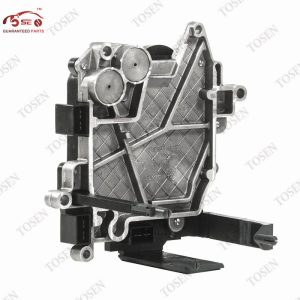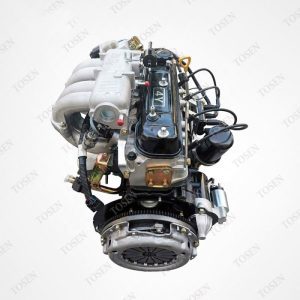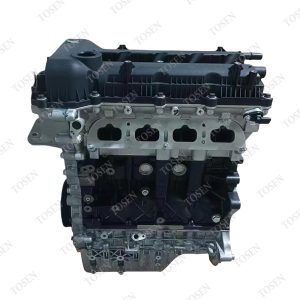
A workshop comparing a 3Y with a 4Y has two separate decisions: which engine configuration suits the vehicle, and which supplied package makes sense for the repair. A larger displacement or a cheaper listing cannot settle both questions.
This 4Y vs 3Y engine comparison separates the confirmed family differences from details that depend on the vehicle and supplier. Use the route matrix to decide what to investigate, then compare fitment, included parts, condition evidence and handover terms. The aim is a shortlist your installer can verify before an engine is shipped, not a blanket recommendation to change engine codes.
4Y vs 3Y engine: what actually differs?
The basic size difference is clear: the 3Y is a 1,998 cc engine family, while the 4Y is 2,237 cc. That is 239 cc, or about 12%, more swept volume. It is not evidence of a 12% gain in power, pulling ability or fuel consumption.
| Check | 3Y | 4Y |
|---|---|---|
| Displacement | 1,998 cc; commonly described as 2.0 litres | 2,237 cc; commonly described as 2.2 litres |
| Basic layout in Toyota Industries data | Four-cylinder OHV | Four-cylinder OHV |
| Fuel and control configuration | Confirm the exact supplied variant | Confirm the exact supplied variant |
| Vehicle power and torque | Use the target application's specification | Use the target application's specification |
OHV means overhead valve. Toyota Industries' catalogue confirms the family figures above, but its listed applications are industrial equipment. Do not use an industrial 4Y power rating as the specification for a Hilux or Hiace. A road-engine comparison needs the correct market, year and fuel-system version.
Keep the comparison within its evidence
A shared family layout does not prove that mounting parts, controls or accessories match. Ask for the exact variant before comparing output or promising a swap.
Which engine is the lower-risk choice for your job?
For a working vehicle, start by comparing a replacement that preserves its confirmed engine configuration. Treat a change from 3Y to 4Y as a separate installation project until the installer has checked the interfaces and requirements. The bigger engine is not automatically the lower-risk purchase.
| Your current situation | First route to compare | What would justify another route? |
|---|---|---|
| Verified 3Y vehicle with reusable external parts | A matching 3Y package or an assessed rebuild | A documented reason to change, with installation scope and approval requirements checked |
| Verified 4Y vehicle with a failed core | A matching 4Y package or an assessed rebuild | Evidence that a different route suits the vehicle and total repair better |
| Unknown code or a previous engine swap | Identify the installed unit before quoting | Agreement between physical identifiers, vehicle records and the installer |
| Damaged external parts as well as the engine | Compare a more fully equipped package | A written parts list showing what reduces additional repair work |
For a fleet buyer, compare downtime, local service support and the condition of parts that would be reused. For a rebuilding shop, compare the inspected core with the proposed machining and replacement work. Neither route wins without that information. If the original failure involved overheating or contamination, include the supporting-system repair in the job before deciding which engine to buy.
What must match before you consider a change?
A VIN or chassis number helps establish the vehicle's original specification. It does not prove what is fitted after an earlier swap. Give the supplier the vehicle record and clear photographs of the installed engine, then have the installer compare the proposed unit against both.
- Record the current engine code, available engine number, vehicle year, model and market. Add the relevant old-part or casting identifiers.
- Confirm carburettor or EFI equipment, ignition arrangement, wiring, connectors and any required control unit. Ask which parts transfer.
- Compare the gearbox connection, flywheel or drive plate, clutch or converter arrangement, starter position and mounting brackets.
- Check the oil-pan shape, oil pickup, intake and exhaust connections, cooling outlets, accessory brackets and available clearance.
- For a specification change, ask the installer to confirm any local road-use, emissions or inspection requirements before ordering.
These are comparison points, not a claim that every item differs between every 3Y and 4Y. A seller's photograph can show useful details, but it cannot replace measurements and part checks for your application. Resolve any mismatch in writing, including who supplies an adapter or replacement external part if one is required.
Hold the order when the match is unresolved
If the seller can name only a broad vehicle family, keep the offer provisional. Ask for the exact configuration and a written match against the identifiers and photographs you supplied.
Can a complete-looking quote hide extra work?
Ask each seller to mark every major part as included, excluded or reused from your vehicle. A photograph of a dressed engine does not establish the supplied contents. Even the word complete may exclude a gearbox, wiring or accessories that your installer needs.
| Item | Description |
|---|---|
| Short-block offer | Usually the lower engine assembly. Confirm the exact internal parts and whether covers, seals or an oil pump are included. |
| Long-block offer | Usually adds the cylinder head and valvetrain. List the timing parts, covers and every external component separately. |
| Dressed or complete-engine offer | May add manifolds, fuel equipment and accessories. Require a bill of materials rather than relying on the label. |
| Gearbox and controls | Do not assume either is included. Match the quote to the transmission and control equipment your vehicle requires. |
For example, compare a bare long-block offer with a package that includes usable fuel equipment. The first price needs the cost of transfers, replacement external parts and the installer's time added before it can be compared with the second. This is a comparison method, not a quoted saving. Have the installer approve which old components are suitable for reuse before the purchase order is finalized.
How should you compare price and test evidence?
Compare condition and evidence before ranking the prices. A cleaned used engine, a rebuilt unit and a new assembly are different offers. Ask what was inspected, machined, renewed or left unchanged, and tie the answers to the unit being supplied.
- Identify the build: record new, used or rebuilt/remanufactured condition and request the inspection or build records appropriate to that claim.
- Identify the tests: request available compression, oil-pressure and leakage results with the engine identifier, method, temperature and operating conditions. Use the correct application manual for limits.
- Price the job: include the engine, missing parts, labour, supporting-system repairs, fluids, freight and any applicable core-return charges.
A running video does not replace a complete test report. If a bare assembly cannot run in its supplied state, ask what bench inspections were performed and what the installer must verify after assembly. Do not compare readings taken under different conditions as though they prove the same result.
- Offer identity: engine code, configuration, condition and included parts.
- Evidence: unit-linked records, unresolved checks and warranty exclusions.
- Job cost: supplied price plus the remaining work and transport obligations.
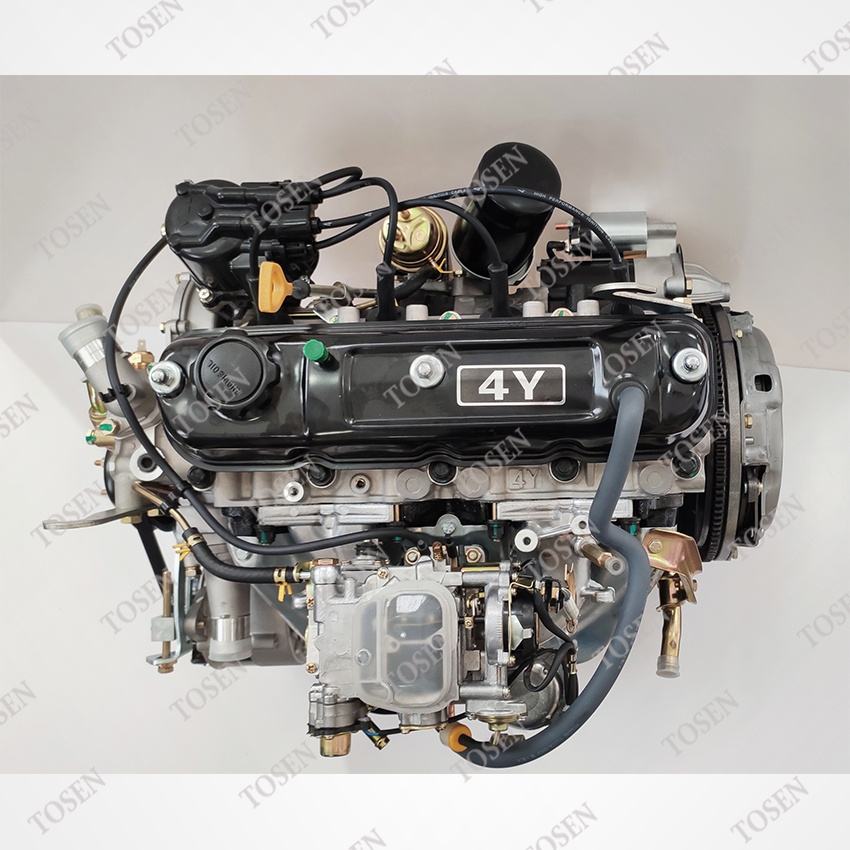
TOSEN has a live 4Y listing. Use its 4Y Engine Assembly for Toyota Hiace Hilux page as a starting point, then request written confirmation of the actual package; the page's scope and condition wording needs clarification for your order.
For wider options, compare engine assemblies and long blocks on the same basis. A listing establishes an enquiry route, not an approved match.
What must the supplier and installer sign off?
Before payment, agree which documents move with the engine and who checks them at each handover. This matters for an importer receiving a crated unit and for a workshop fitting an engine supplied by its customer. Keep the order identifier on the photographs and records.
- Confirm the supplied unit and included-parts list.
- Record the engine secured and protected inside its crate.
- Inspect and photograph the shipment on arrival.
- Record installation checks and the first start.
Ask when the warranty begins: invoice, shipment, delivery or installation. Confirm the applicable period, claim process, labour coverage and any conditions for commercial use. A stated warranty length alone does not answer these questions, especially when the engine spends time in transit or storage.
- Supplier: provide the agreed identifiers, scope, evidence, packing record and written warranty terms.
- Buyer: confirm destination, unloading arrangements and the process for reporting freight damage.
- Installer: correct the original failure's supporting causes and follow the exact engine's service and commissioning instructions.
- Both parties: agree which records are needed before a repair or warranty claim is authorized.
Use the related technical guide to organize the Hiace or Hilux selection questions, then resolve the remaining points with the supplier and installer. Keep those answers with the purchase order so the final comparison survives the handover from purchasing to the workshop.
Questions buyers ask before choosing
Will choosing a 4Y guarantee better fuel economy?
No fuel-economy guarantee follows from the engine code or displacement. Ask for evidence from a comparable vehicle and operating duty; do not compare a seller's general economy claim with a measured result from a different application.
Can an industrial or LPG 4Y be treated as a road-engine replacement?
Not on the family name alone. Have the installer verify the fuel equipment, controls, external parts and applicable road-use requirements for the exact unit; an industrial catalogue entry does not establish that approval.
What if the code on my old engine cannot be read?
Keep the order provisional. Collect the VIN or chassis number, available casting and part identifiers, and clear photographs, then ask the installer and supplier to resolve the identity together rather than guessing from appearance.
Is a test report that only says pass enough?
Ask what was tested, on which identified unit, under which conditions and against which limits. For a bare assembly, distinguish bench inspections from checks that can only be completed after installation; a single pass label does not describe that boundary.
Does an advertised warranty automatically cover the sea-transit period?
Do not assume when its clock starts or what freight damage covers. Ask for the commencement date, storage conditions, damage-reporting process and claim procedure in writing before the engine is shipped.
Choose the documented match
Start with the engine configuration your vehicle and installer can verify. Compare a different specification only when its installation scope is understood. Then compare supplier offers using the same included parts, condition evidence, remaining job costs and handover terms.
Use the comparison checklist for your fitment enquiry. Send TOSEN AUTO your VIN or chassis number, current engine code, old-unit photographs, required assembly scope, quantity and destination. Ask for written configuration confirmation through the product or category enquiry route before placing the order. Keep the supplier's answers with the workshop's approved parts list.