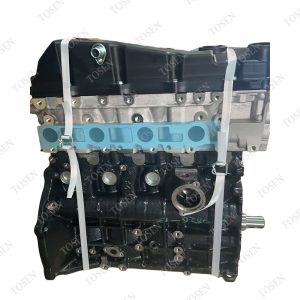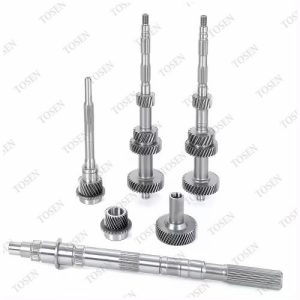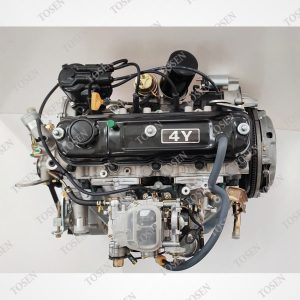
An automatic transmission supplier in China should be compared on the exact unit a workshop can identify, install, commission and support. Start with the old transmission label and vehicle application, then define whether the quote includes the complete assembly, torque converter, valve body or mechatronic, control module, sensors and related parts.
Price comes after that scope. A useful quotation also states the offered condition, the evidence attached to the unit, the fluid and cooler work that remains, any programming or setup, the core arrangement, packing, delivery term and warranty. These fields let an importer, repair shop or fleet team compare like with like.
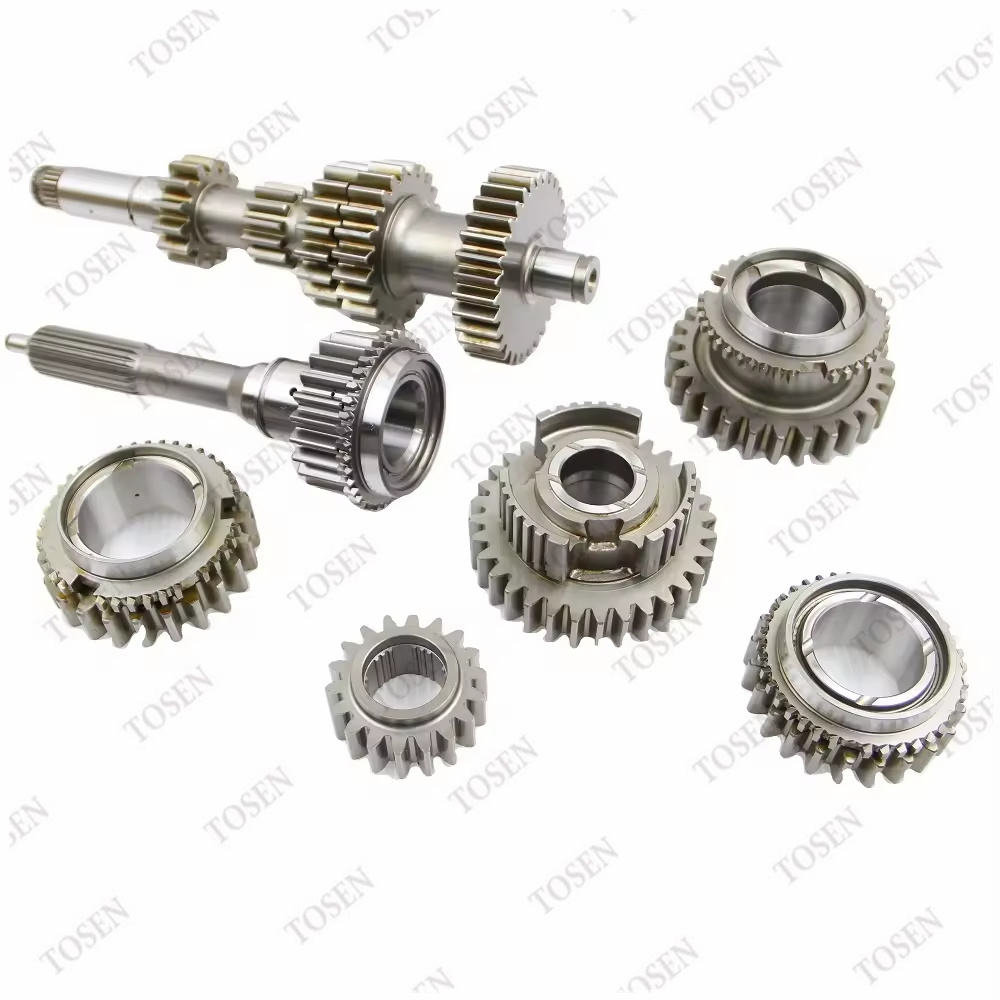
Define the Exact Unit Before Comparing Prices
| Item | Description |
|---|---|
| Complete assembly | The quoted transmission unit. The converter, control hardware, pan, sensors and accessories still need a written inclusion list. |
| Torque converter | A separate order scope unless the quote explicitly includes it with a stepped automatic transmission. |
| Valve body or mechatronic | Hydraulic and, in some designs, electronic control hardware. It is not the same as a complete gearbox. |
| TCM | The transmission control module. Hardware identity and delivered software state both matter. |
| Service parts | Filters, seals, friction parts, solenoids or internal gears supplied for repair rather than complete replacement. |
Write one scope line before requesting a price: product level, condition, exact reference, included hardware and quantity. The 33318-35030 for Toyota Gearbox Spare Parts Supplier in China page is a useful part-level example, but it is not evidence that a complete automatic transmission is included. If two suppliers quote different levels or conditions, keep those offers in separate comparison rows.
First stop rule
Do not compare unit prices until every supplier has named the same product level and condition.
Treat every unlisted converter, controller, sensor, bracket, cooler item or accessory as excluded until the supplier confirms it in writing.
Match the Vehicle, Transmission and Control Identity
Use the physical old-unit label and vehicle data together. For vehicles covered by the US VIN framework, the NHTSA VIN Decoder explains that a VIN has 17 characters and that decoded information is reported by the manufacturer. A VIN is useful application evidence, but it does not replace the transmission label, exact assembly number, drivetrain layout, connectors or control identification.
| Field | What to record | What it prevents |
|---|---|---|
| Vehicle | Full VIN or chassis/application data, model year, market, engine and drive layout | A family match that belongs to a different vehicle configuration |
| Old transmission | Uncropped label photo, complete assembly number, family code and serial or production reference | Suffix, revision or application detail being omitted |
| Interfaces | Bellhousing, mounts, axle/output arrangement, connectors and cooler ports when relevant | A unit that cannot connect to the vehicle hardware |
| Control identity | TCM/mechatronic hardware and software information reported by the vehicle or label | A correct case with an incompatible control package |
| Conflict | Every source that disagrees and the supplier response | A silent assumption becoming the order basis |
- Send clear photographs that show the full label and its location on the old unit.
- Ask the supplier to state which identifier controls the fitment decision.
- Require a written explanation when the quote substitutes a different suffix or assembly number.
- Keep a family label such as JF011E, DQ250 or 722.9 as a routing clue, not as universal interchange proof.
Freeze the Converter, Control and Accessory Scope
- Torque converter: included, excluded, new, remanufactured or reused from the old unit.
- Valve body or mechatronic: installed, shipped separately or transferred from the vehicle.
- TCM: included hardware number, delivered software state and remaining vehicle-side work.
- Sensors, harness, pan, filter, mounts, brackets, cooler fittings and oil lines: list each item.
- Shipping protection: state whether ports, shafts and electrical connectors are capped and supported.
- Consumables: identify what is supplied and what the installer must source to the applicable specification.
Avoid the phrase “complete” unless the quote defines it. The same word can describe a bare assembly with internal hydraulic control, an assembly with a converter, or a prepared package with external control hardware. Ask the supplier to mark included, excluded or reused against every line. For electronics, also record what data or calibration is present and what still needs to happen on the vehicle.
| Quoted scope | Typical included items to confirm | Workshop question |
|---|---|---|
| Bare transmission assembly | Case and internal transmission components | Which converter, control hardware and external parts transfer from the old unit? |
| Assembly with converter | Transmission plus matched or supplied converter | Are the valve body, TCM, sensors and fluid accessories included? |
| Prepared replacement package | Assembly, stated control hardware and selected accessories | Which programming, coding, learning and vehicle-side setup remain? |
Match Test Evidence to the Offered Condition
| Offered condition | Ask for | Do not substitute |
|---|---|---|
| New | Manufacturer or supplier trace, identity photographs, storage condition and stated inspection or test record | A generic catalogue photo |
| Remanufactured | Core identity, work scope, replaced or inspected items, test conditions, result and final serial/label | A broad remanufacturing-process claim |
| Repaired | Original-unit identity, diagnosed fault, repair performed and post-repair result | A remanufactured-unit warranty description |
| Used | Donor identity where available, mileage/provenance if documented, visual condition and stated functional checks | A “low mileage” label without source |
Management-system evidence answers a different question. ISO describes ISO 9001:2026 as a quality-management-system standard, while the IATF lists recognized bodies authorized to conduct IATF 16949:2016 certification activity. Check the legal entity, site, scope, standard edition and issuing body, but do not treat a certificate as proof that the quoted transmission fits or passed a specific test.
- Connect the quotation to the full unit identity and offered condition.
- Connect each claimed test to its method, condition, date and result.
- Connect the report, label and photographs to the same unit or batch.
- Connect the received crate and unit to that shipment record.
Plan Fluid, Cooler and Software Work Before Shipping
- Give the workshop the exact unit identity and proposed replacement scope before ordering.
- Obtain the current service information for that vehicle, market and transmission.
- List the required fluid, cooler, transferred-parts and control tasks beside the supplier scope.
- Confirm the workshop has the tools, data and authority to complete the remaining setup.
- Add unresolved installation items to the quote before comparing whole-job cost.
These tasks are application-specific. A NHTSA-hosted Nissan bulletin requires an external CVT cooler flush after the listed valve-body or CVT assembly work. A separate NHTSA-hosted replacement bulletin requires cooler and line flushing, recording the new transmission serial and QR information, and TCM programming for its listed vehicle. Use those documents as proof that the handoff matters, not as universal instructions for every automatic transmission.
| Work area | Supplier should state | Installer must confirm |
|---|---|---|
| Fluid | Whether any shipping or operating fluid is included and the unit condition at dispatch | The exact vehicle procedure, approved fluid and fill-level method |
| Cooler and lines | Whether the replacement scope includes a cooler, lines, fittings or contamination requirement | Whether the applicable service information calls for cleaning, flow testing or replacement |
| Control/software | Included TCM or mechatronic identity and delivered software state | Programming, coding, adaptation, basic settings or learning for the exact application |
| Transferred parts | Which sensors, brackets, harnesses, converter or accessories are reused | Condition and compatibility of every reused item |
| Final verification | Any supplier test or setup completed before shipment | Leak, code, temperature, level and functional checks required by the service procedure |
Compare Core, MOQ, Warranty and Delivery on One Basis
| Field | Record the same way | Hidden difference to expose |
|---|---|---|
| Price basis | Currency, quantity, condition, included hardware, test, packing and tax basis | A lower unit price with excluded converter, electronics or packing |
| MOQ and pilot | Minimum quantity by exact SKU/condition and whether a sample can convert to bulk | A sample price or scope that cannot be repeated |
| Core | Deposit, eligible part number, condition, return deadline, freight and rejection rules | Cash that remains tied up or a core that cannot be credited |
| Warranty | Period, covered unit, parts/labor/freight/fluid exclusions and claim steps | A long term with narrow practical coverage |
| Delivery | Incoterms rule and version, named place, packing, insurance, lead time and documents | Freight cost and risk transferring at different points |
| Claims | Arrival photos, unpacking time, damage notice, diagnostic evidence and return authority | A claim that fails for missing records |
- Use the same quantity, condition, inclusion list, destination and currency for every quote.
- Ask whether the pilot unit and bulk order use the same acceptance evidence.
- Photograph the old core before packing and record its serial or label.
- State the precise port, terminal, warehouse or delivery point with the trade term.
- Put warranty exclusions and claim evidence beside the price, not in a separate comparison.
The ICC explains that Incoterms 2020 allocate selected obligations, costs and risks and that the named place is critical, but the rules do not replace the sales contract. Keep product identity, warranty, payment, title, inspection and claim terms in the contract or purchase order even when the quote uses a familiar three-letter rule.
Send One Automatic-Transmission Quote Packet
- Attach the VIN or application data, model year, market, engine, drive layout and full old-unit photographs.
- Name the requested product level, condition, exact reference, quantity and every included component.
- Ask for the converter, valve body or mechatronic, TCM, sensors, accessories and delivered software state line by line.
- Request condition-appropriate evidence tied to the unit or batch, plus packing photographs and identifiers.
- List the fluid, cooler, programming, transferred-part and final setup questions from the installer.
- State MOQ or pilot quantity, core terms, warranty, delivery rule with named place, destination port and required documents.
- Require the supplier to mark every exception before issuing the final quote.
Do not place the order while any of these remain unclear
The old-unit identity conflicts with the quoted assembly or control hardware.
The converter, TCM/mechatronic, software state or transferred parts are not defined.
The installation path depends on tools, data or procedures the workshop does not have.
Core, warranty, packing, risk transfer or claim evidence cannot be stated in writing.
Use TOSEN’s Automatic Transmissions — Rebuilt & OEM Gearboxes category to narrow the product family, then attach the exact evidence for the unit.
- For a CVT example, the JF011E CVT Transmission Assembly page shows a complete-assembly starting point.
If the workshop is still deciding between gearbox types, use the manual versus automatic transmission fleet guide before requesting a supplier quote.
Frequently Asked Questions
Is a transmission family code enough to confirm fitment?
No. Use the family code to narrow the search, then match the vehicle application, old-unit label, complete assembly number, drivetrain interfaces and control identity. Ask the supplier to explain any substituted suffix or reference in writing.
Does a complete automatic transmission always include the torque converter?
No. “Complete” is a seller-defined description until the quote lists its contents. Mark the converter, valve body or mechatronic, TCM, sensors, pan, filter, brackets and accessories as included, excluded or reused.
Should every transmission cooler be flushed during replacement?
Do not use one universal rule. Follow the current service information for the exact vehicle, transmission and repair. Some manufacturer procedures require cleaning or flow testing after specified failures or replacement work; other designs or damage conditions may require a different response.
Can the supplier choose the transmission fluid from the family name?
The family name is not enough. The installer should use the current vehicle-specific service information for the approved fluid, fill quantity or level method and operating conditions. Ask the supplier only what arrives in the unit and how it is protected for shipping.
What makes a remanufactured transmission test report useful?
It should identify the unit or batch, state the method and conditions, show the measured result, and connect to the final label and shipment. A generic machine photo or process description does not establish the result for the quoted unit.
How should a core return be compared with a no-core quote?
Compare total cash exposure, return freight, deadline, eligible reference, condition rules and rejection process. A lower unit price can become the higher landed cost if the core is ineligible or the return window cannot be met.
Request a Fitment-Ready Quote
Choose the supplier only after the transmission identity, physical scope, control state, condition evidence, installation work and commercial terms describe one complete job. That comparison protects the workshop from discovering a missing converter, incompatible controller, unresolved cooler task or unusable core arrangement after the crate arrives.
Send a complete automatic-transmission enquiry. Share the VIN or application data, old-unit label or OE reference, required scope and condition, quantity, installation questions and destination port so TOSEN AUTO can confirm fitment and prepare a comparable quote. Existing TOSEN product catalogue and quote-enquiry path.