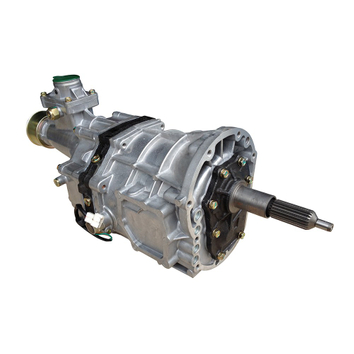
A transmission core return wholesale quote is usable only when it states whether the price is exchange or outright, which old unit qualifies, who pays the return freight, and when credit is issued. Without those terms, a low unit price can leave the importer or repair shop carrying an unexpected deposit, an unusable core, or a missed deadline.
Remanufacturing can keep usable components in circulation, but the commercial result depends on the order-specific policy. ISO's material-circulation guidance includes remanufacturing within a broader circular-economy framework; it does not set any supplier's core value or acceptance rules. Treat the return as its own product-and-logistics workstream, then attach it to the same purchase order as the replacement transmission.
Confirm the Price Basis Before Comparing Suppliers
| Item | Description |
|---|---|
| Core charge | A separately stated amount tied to returning an acceptable used unit under the supplier's written terms. |
| Exchange price | The replacement price that assumes an eligible core will be returned. |
| Outright price | The replacement price with no core-return obligation. |
Ask for both the exchange and outright basis before comparing suppliers. The quotation should show the replacement-unit price, core charge, tax or duty treatment, return-freight allowance, and the method used to issue credit. If the core charge appears only in later terms, the purchasing team cannot compare the same cash timeline across offers.
| Quote basis | Cash position | Core obligation | Best question to ask |
|---|---|---|---|
| Exchange plus core charge | Unit price and core amount paid or held | Return an acceptable core | What earns full, partial, or zero credit? |
| Exchange with later credit | Full or higher amount paid first | Credit follows receipt and inspection | When is the credit memo issued? |
| Outright sale | No refundable core line | No return unless separately agreed | Is this the complete no-core price? |
Price-comparison rule
Compare the maximum cash paid, the expected cash recovered, and the time between them. Keep the core amount separate from the replacement-unit price.
Match the Core Before Accepting the Quote
Do not assume that any transmission from the same vehicle family qualifies. Some programs require the same model and assembly number; others work with defined core groups. Record the rule on the quotation and obtain written approval before sending a substitute. A verbal cross-reference is weak evidence after the old unit has crossed a border.
| Identity field | Evidence to save | Supplier decision needed |
|---|---|---|
| Transmission family | Full case label and OE or assembly number | Exact match or accepted group |
| Configuration | Drive layout, bellhousing, output connections, controller or valve-body scope | Which differences disqualify the core |
| Serial and tag | Readable close-up plus full-unit photo | Whether a missing or damaged tag reduces credit |
| Returned content | Photos of converter, valve body, shafts, sensors and brackets | Which items must remain with the core |
- Send the old-unit label before accepting the exchange price.
- Ask the supplier to identify the eligible model, assembly number, or core group in writing.
- Save both close-up and full-unit photos with the quotation number.
- Record any approved substitute before the purchase order is issued.
Define Complete and Rebuildable in Writing
- List every required subassembly, including the torque converter, valve body, output section, sensors, tags, plugs and retainers where applicable.
- State whether the transmission must remain fully assembled after diagnosis.
- Define how cracks, broken mounting points, welded housings, fire, water, corrosion or internal rust affect credit.
- Separate required core content from vehicle-specific brackets or accessories that the workshop should retain.
- Attach the supplier's deduction matrix or obtain a written exception for known damage.
Published programs do not use one shared definition of rebuildable. A housing defect may trigger a fixed deduction in one program and rejection in another. Photograph known damage before purchase and ask for a written decision while the supplier can still price an outright option. Do not dismantle the unit to prove an internal failure unless the return instructions permit it.
Keep diagnosis and eligibility separate
The workshop may need to inspect the failure, but the supplier decides which disassembly is acceptable for core credit. Agree on that boundary before work begins.
Build the Return Clock Around the Repair
- Record the event that starts the clock: invoice, dispatch, delivery or installation.
- Schedule vehicle removal and diagnosis without stripping required core content.
- Request the RMA, return address, carrier instruction and labels.
- Reserve time for draining, photographs, packing and export documents.
- Dispatch early enough for the supplier to receive the core by the stated deadline.
- Track supplier receipt, inspection result, deductions and credit date.
Clarify whether the deadline is based on dispatch or supplier receipt. For consolidated or ocean freight, that distinction can decide whether an otherwise acceptable core arrives late. If the vehicle will remain in service or the return lane is slow, request an extension before placing the order and attach the approval to the purchase record.
- Clock start and end dates
- RMA and exact receiving address
- Approved carrier or consolidator
- Required forms inside and outside the crate
- Inspection period and credit-memo timing
- Named contact for exceptions
Drain, Crate and Ship Without Losing Credit
- Drain under the applicable workshop and environmental procedure
- Refit plugs, caps, pan and converter retainer as instructed
- Photograph labels, openings, damage and required components
- Secure the unit in the approved crate, pod or pallet
- Attach the RMA, documents and correct shipping label
- Book the approved carrier and record pickup condition
- Track delivery and preserve the signed receipt
Used transmission and gear oils require controlled handling. U.S. EPA guidance covers container condition, labeling, spill prevention, separation from incompatible waste and stricter state requirements. Apply the rules for the workshop and shipping lane; draining the core does not replace local environmental or carrier instructions.
- Who supplies and owns the return container
- Which plugs, straps, brackets and dunnage must be reused
- Who pays freight, accessorial charges and insurance
- Which carrier and service level are approved
- Who carries loss or damage before and after pickup
- How a leaking, damaged or refused shipment is handled
Compare the Whole Transaction, Not the Unit Price
| Cost field | Exchange offer | Outright offer | Evidence to attach |
|---|---|---|---|
| Replacement unit | Exchange price | No-core price | Supplier quotation |
| Core cash exposure | Charge or withheld credit | None unless separately agreed | Invoice line and currency |
| Reverse logistics | Drain, packing, handling and freight | No return freight | Carrier quote and workshop cost |
| Deductions | Condition-dependent | Not applicable | Written acceptance matrix |
| Credit timing | Days from receipt/inspection | Not applicable | Policy or purchase-order term |
| Other value | Returned to supplier | Buyer may sell or rebuild locally | Real local offer, if available |
Use the maximum cash paid as the starting point, then subtract only the credit supported by the accepted condition and return plan. Keep uncertain deductions as a range instead of assuming full credit. For a fleet or wholesaler, also record how many days the charge remains outstanding and which cost center carries it.
A lower exchange price can cost more
Choose the exchange option only when the expected credit, return freight, timing and eligibility are better than the outright price or a local core alternative.
Assign Cross-Border Responsibility Before Dispatch
- Name the exporter, importer of record and customs broker for the return leg.
- Agree on the goods description, part and serial identifiers, condition, origin and declared value.
- Confirm who prepares permits, invoices, packing lists and any repair or returned-goods documents.
- Check the destination and transit rules for residual fluid, used parts and packaging materials.
- Allocate duties, taxes, inspections, storage, demurrage and rejected-core freight.
- Write the route for a core that customs, carrier or supplier refuses.
Customs treatment depends on the lane, origin and transaction. U.S. Customs and Border Protection, for example, publishes a specific process for certain goods sent abroad for repair or alteration and emphasizes serial identification and supporting forms. That is an example of why a broker should review the actual shipment, not a universal procedure for transmission cores.
Make the rejected-core route explicit
Before dispatch, decide whether an ineligible core will be returned, held, recycled or abandoned, and who pays each outcome. Do not leave this choice until storage charges begin.
Use One Core-Return Sheet from Quote to Credit
| Field | Agreed term | Owner | Evidence or date |
|---|---|---|---|
| Quote basis | Exchange or outright; core amount and currency | Purchasing | Quotation / PO |
| Eligible identity | Model, assembly or group; approved substitute | Workshop + supplier | Labels and photos |
| Condition | Required components, damage and disassembly limits | Workshop | Pre-return photos |
| Return clock | Trigger, deadline, RMA, address and extension | Purchasing | Authorization |
| Freight | Container, carrier, payer, insurance and risk point | Warehouse / logistics | Tracking and receipt |
| Credit | Inspection, deductions, memo and reconciliation | Accounts | Credit date and amount |
- Attach the sheet to the purchase order before payment.
- Give the same version to receiving and the installation workshop.
- Update it with return photos, tracking and supplier receipt.
- Close it only after deductions are explained and the credit is reconciled.
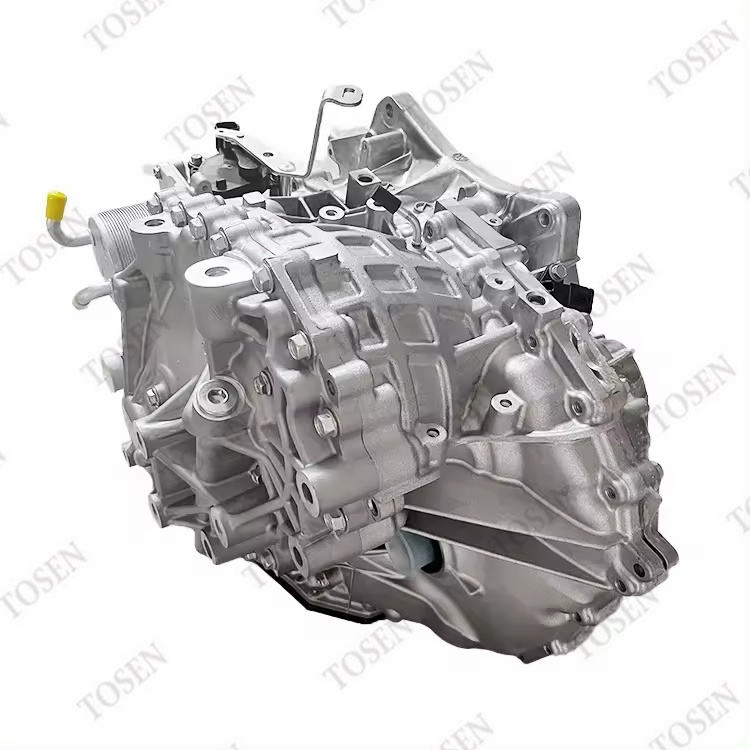
Start the commercial enquiry with the exact unit. The JF011E CVT transmission assembly is one current product example.
The manual and automatic transmissions category shows the wider supply scope.
If the fleet is still choosing a driveline, use the manual versus automatic transmission fleet guide for that separate decision. Then send TOSEN the VIN, old-unit label or OE number, model year, quantity, destination port, and the core terms that need written confirmation.
Frequently Asked Questions
Does every remanufactured transmission require a core return?
No. The quotation may use an exchange price with a core obligation, an outright price with no return, or another written arrangement. Ask for both price bases and the separate core amount before comparing offers.
Can I return a different transmission from the same vehicle family?
Only when the supplier approves that identity or core group in writing. Send the old-unit label, OE or assembly number, serial tag and configuration photos before purchase; a similar vehicle name is not enough.
Can the workshop open the failed transmission before returning it?
Follow the supplier's written disassembly rule. Some programs reduce or deny credit for a stripped unit, so obtain approval before diagnosis removes required internal parts or subassemblies.
What if the core will not be ready before the deadline?
Request a written extension before the original window expires. Include the expected removal date, freight route and supplier receipt date, and compare the outright option if the revised return is still uncertain.
Can a fleet bank several cores and return them together?
Only if the supplier's program allows core banking, group eligibility or consolidated returns. Record the unit-to-order mapping and make sure consolidation does not miss the receipt deadline.
Is an outright purchase better for an international buyer?
It can be when reverse freight, customs work, credit delay or eligibility risk exceeds the exchange saving. Compare both options using the whole-transaction cost table and a broker-reviewed return route.
Put the Core Terms on the Purchase Order
Choose an exchange offer only after the core amount, eligible identity, required components, return clock, freight, deductions and credit timing are written beside the replacement price. If any part of that return path is uncertain, compare the complete outright price before committing cash or moving the old unit.
Request a fitment-confirmed transmission quote Send TOSEN the VIN, old-unit label or OE number, model year, quantity and destination port. State whether you need exchange and outright options, then ask for any applicable core terms in writing before ordering. On-page transmission core-return checklist