A cylinder head casting number tells you which casting family the part belongs to — and nothing beyond that. It places the enquiry in the right family. The order itself is confirmed by further inputs: the OE reference, the full engine code, and photographs of the features a number cannot prove. All three are checked together before the part ships.
That is why the same family can hold heads that are not interchangeable, and why a vehicle model name is the weakest identifier in the set. This guide separates the casting number from the OE reference and the engine code, walks through finding and reading the mark on a physical head, and closes with the enquiry fields that confirm fitment before you order replacement cylinder heads.
What a Cylinder Head Casting Number Identifies — and What It Cannot
A cylinder head casting number identifies a casting — a particular head design or revision — and the same number can appear on many engines. It is read from the physical part, usually as raised characters formed in the casting or as a stamped mark, and its job is to route the head to the family it was cast for.
That is where its authority stops. The number does not identify one physical engine the way an engine serial number does, it does not name the orderable service part the way an OE reference does, and it says nothing about what ships with the head. The number locates the family — every other question about the order is answered by other evidence.
What the number does and does not tell you
Identifies: the casting family or revision — the same number may appear on many engines
Does not identify: one physical engine, the supplied scope, or fitment by itself
Read it from the physical head — never from the vehicle model name
Casting Number, OE Reference, Engine Code: What Each One Identifies
Three identifier systems touch every cylinder head order, and buyers who conflate them tend to send the wrong one — or only one. The table below separates them on the same axes: what each identifies, where each lives, and what each cannot prove on its own.
| Item | Description |
|---|---|
| Casting number | Identifies a casting or revision on the physical head — the same number may appear on many engines. Lives in raised or stamped marks on the head itself. Cannot prove unit history, supplied scope or fitment. |
| OE reference | Names the orderable replacement part within a numbering system — for example 6190499 or 7701473353. The quotation is written against this reference. Cannot describe the physical head you removed. |
| Engine code | Identifies the engine family or type the head must match. Read from the engine data plate or the block stamping; derivable from the VIN when the plate is missing. Cannot name the replacement head on its own. |
One order uses all three together. The casting number read from the removed head puts the enquiry in the right family; the OE reference names the replacement the quote is written against; the engine code keeps the order on the right variant inside that family. An engine serial number is a different mark again — it identifies one physical engine, not the family — and it is not one of the three order identifiers. On the reference side, one Renault cylinder head in TOSEN's range legitimately carries four OE references — 7701459516, 7702252718, 7702128409 and 7702164346 — because references issued across markets and revisions can name the same component. Any one of them anchors the quotation; the engine code stops the order landing on the neighbouring variant.
How to Find and Read the Number on a Head
The mark is found by inspection, not inference. Casting numbers sit on accessible surfaces of the head, and the position varies by engine family — so the reliable method is to check the candidate surfaces in order. Formats vary too: some heads carry a short alphanumeric group, others a long sequence with letter prefixes, so no digit count marks a casting number on its own. On enquiry forms the same mark is usually called the cylinder-head number or the original head number.
- Check the exhaust side of the head first — the most common position for cast and stamped marks — then the spring or intake side, the end faces near the timing drive, and the top surface under the valve cover.
- Clean the surface gently with degreaser and a rag, then read raised cast-in characters with raking side light. Avoid wire wheels or blasting: they erase shallow stamped digits. Photograph the mark once it is readable.
- Photograph the number together with the combustion face and the oil and coolant passages — the photographs carry the features a number cannot prove.
- Copy the full sequence of digits exactly as it appears, in groups. Long sequences often mix foundry codes, date codes and revision digits with the reference, and guessing the split is how a date code gets sent as a head number — send the complete sequence and let the supplier isolate the reference.
- Read the full engine code from the engine data plate or the block stamping, and send it with the number in your first message. When the plate is missing, the engine code can be worked out from the VIN — that step has its own guide.
Why the Same Number Can Still Be the Wrong Head
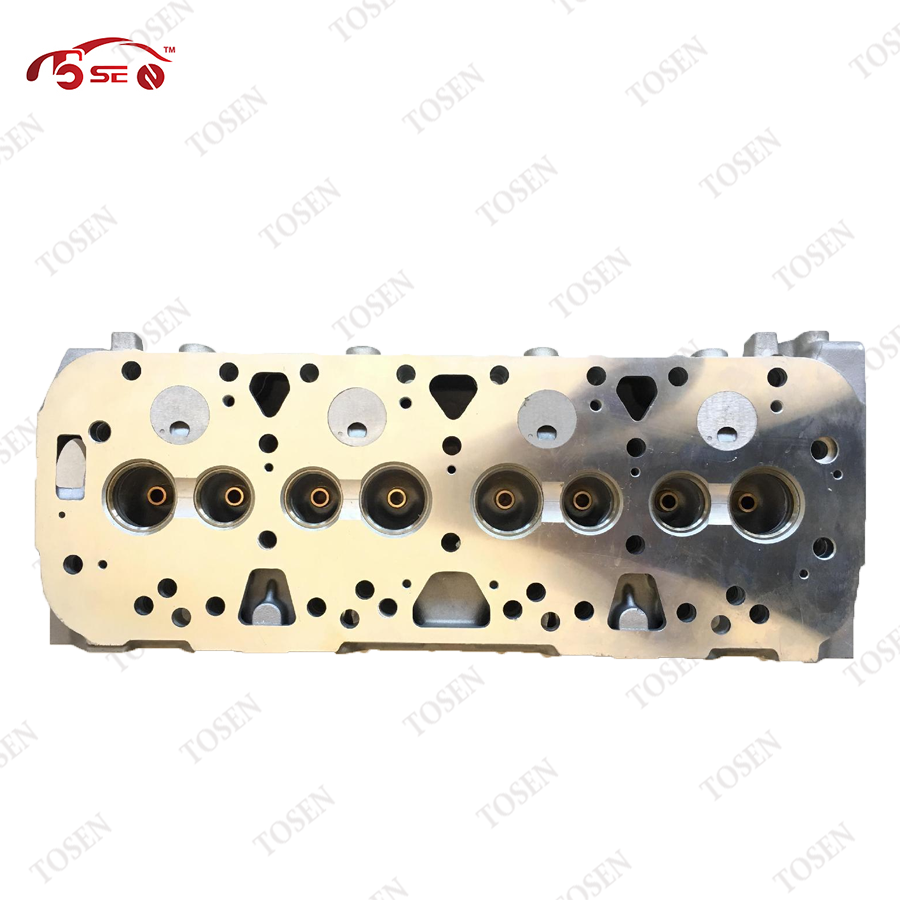
The family is only the starting point — a family is not a single usable part. Inside one family, machining, drillings and component configuration can differ from one revision or production run to the next, and those differences never change the cast mark. What the head actually is lives in features the number cannot express: what the combustion face carries, where the passages open, which attachment points are drilled. So the safe order compares the physical features, not the mark alone.
| Comparison point | What to compare between the removed head and the replacement |
|---|---|
| Combustion face | Chamber form and the sealing surface, photographed on both parts |
| Oil and coolant passages | Position and size of every opening that must line up with the block |
| Attachment points | Bolt-hole positions that locate the head on the engine |
| Camshaft arrangement and sensor openings | The valvetrain layout and the openings the engine's sensors expect |
That set is a working procedure, not a generic list. The 6190499 Cylinder Head page tells buyers to compare the casting, the combustion face, the oil and coolant passages and the attachment points, and the bare Renault 7701473353 page adds the camshaft arrangement and sensor openings — the same four points this article walks through, in the order a supplier's quotation check actually follows.
The Hyundai D4CB 2.5 CRDi family shows the neighbouring-variant risk in a documented form: the EngineTeam application bulletin PI0013 splits the D4CB cylinder head into separate versions — one version carrying OE references 22100-4A010 and 22100-4A040, another carrying OE 22100-4A100 — and those references are selected by the original engine and casting, never by the vehicle model name. Ordering a D4CB head by model alone is the classic route to receiving the neighbouring variant. The same discipline applies to every family: the vehicle model starts the conversation, the head number and the engine code carry it, and the comparison features close it.
Verify Before Ordering: The Enquiry That Confirms Fitment
Verification ends in the enquiry, because the enquiry is where the identifiers meet a supplier who can cross-check them. Each field resolves one thing the others cannot: the first three decide fitment, the last three decide how the order is fulfilled. A complete enquiry earns a fitment confirmation on the first pass; a partial one bounces between missing inputs.
- Full engine code — anchors the engine family the head must match
- Original head number, transcribed from the physical part — carries the mark the supplier isolates the orderable reference from
- Casting photographs covering the number, the combustion face and the passages — let the supplier compare the features that decide fit
- Quantity with the batch rule stated — every unit in the order ships on the same variant and the same scope
- Scope line — a bare head, or the valvetrain components required with the order
- Destination port — sets the packing protection and the shipping documents
What comes back is the confirmation itself: TOSEN matches the reference against the engine code and your casting photographs before dispatch, inspects the head against the recorded comparison points, and ships only when every point agrees. A buyer who sends all six fields has already done the supplier's work — the order resolves instead of bouncing. Keep the recorded match on the quotation: it is your proof the head was confirmed before ordering.
Frequently Asked Questions
Can I identify the head from a cracked or overheated core?
Yes. The casting number survives cracks and overheating, and it anchors identification the same way. Core condition does not change which replacement family the engine needs — it changes the scope conversation, because a head damaged by overheating is exactly the case where the old valvetrain should not be trusted onto a new casting. Read the number, photograph it, and state the damage in the enquiry.
Do V-engines need left and right head wording?
Many V6 and V8 engines use heads that are specific to one bank, even when the two look similar. Record which bank the removed head came from, and photograph any L or R mark on the casting. A pair order should state both banks explicitly, so the batch ships as a matched pair rather than two heads of the same side.
Does SOHC or DOHC change identification?
It is part of it. The camshaft arrangement is one of the comparison features a supplier checks, because two heads in the same family can carry different valvetrain layouts. Record the arrangement beside the number, and make sure the photographs show the camshaft position and the sensor openings the engine expects.
What if the number is unreadable or missing?
The photographs can carry the enquiry alone. Shoot the combustion face, the oil and coolant passages, the attachment points and the camshaft arrangement, and send them with the full engine code. The supplier's comparison work replaces the missing mark — the number speeds the match, but the features prove it.
What makes a casting photograph usable for fitment confirmation?
Readability and coverage. Shoot the number close enough that individual digits are sharp, then pull back for the full combustion face, the passages and the camshaft arrangement. Raking light reads raised characters better than a direct flash. Three or four photos in one message beat one perfect shot of a single feature.
What should the supplier check before dispatch?
Three things: the reference matched against the engine code and your casting photographs; the physical head inspected against the recorded comparison points — combustion face, passages, attachment points, camshaft arrangement; and packing that protects the casting in transit. Ask for the inspection practice in writing with the quotation, and treat a supplier who will not confirm it as a finding in itself.
Send the Numbers, the Photographs and the Scope
The verification comes down to three identifiers working together: the casting number places the family, the OE reference names the replacement, and the engine code keeps the order on the right variant. The comparison photographs prove what the numbers cannot. Capture all of them, state the quantity, the scope line and the destination in the same enquiry, and the fitment confirmation follows.
Send the full engine code, the original head number, casting photographs, the quantity, the bare-or-valvetrain scope line and the destination port to TOSEN for a fitment confirmation and quotation, or browse the cylinder head category for your engine family.