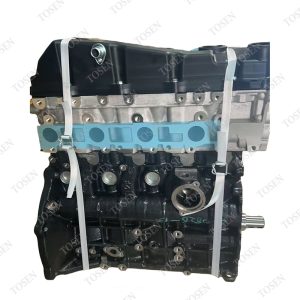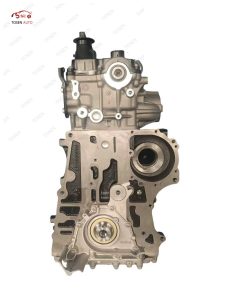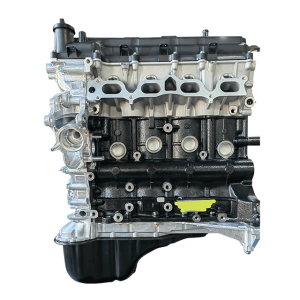
A replacement engine can share the right model name and displacement yet still leave a repair bay blocked by the wrong sensors, oil pan, emissions hardware, or accessory layout.
The engine code vs VIN question matters because the identifiers describe different things. The VIN points to the vehicle's original factory configuration. The code, tag, or number on the engine tells you what is physically installed now.
Repair shops, fleet buyers, rebuilders, and importers need both records, plus a written interface and assembly check. This guide turns those inputs into a repeatable fitment pack, a conflict-resolution process, and a supplier-ready request that can be approved, clarified, or rejected before freight and installation costs begin.
Engine Code vs VIN: Two Identifiers, Two Jobs
Use the VIN to establish the vehicle's original configuration, then use the physical engine code or number to identify the unit in front of you. Under the US VIN framework, positions 4 through 8 form the vehicle descriptor section and must make engine type decipherable, but the manufacturer controls how those attributes are placed. An eighth-character engine convention is common in North America; it is not a safe universal decoder for every make, market, or model year.
| Identifier | Best evidence source | What it proves | What it cannot prove alone |
|---|---|---|---|
| Full VIN | Vehicle plate, certification label, registration, manufacturer decoder | The specific vehicle and its original factory attributes | Which engine is installed after a swap or prior repair |
| Engine code | Stamp, tag, under-hood label, manufacturer service data | The engine family or variant recorded on the current unit | Every external interface or included accessory |
| Engine number | Serial or identification stamp on the block | The traceable physical engine unit | A direct fit without application and BOM checks |
| Casting or OE number | Raised casting, part label, parts catalog | A component design or referenced assembly | The identity and condition of the whole engine |
Decision rule
Decode the full VIN with manufacturer-specific data, photograph the installed engine identifier, and stop the order if the records disagree.
Build the Identity Stack Before Asking for Price
Send evidence that another person can recheck. A typed code alone is easy to transpose, and a cropped engine photo rarely shows the interfaces that affect the quote. Keep the complete alphanumeric string, its physical location, and the surrounding component in the same record.
- Capture the full VIN from the vehicle plate or certification label. Keep all 17 characters together and confirm them against registration records when available.
- Decode the VIN with manufacturer or authoritative market-specific information. Record the resulting engine type, model year, market, and any relevant option or emissions data.
- Clean the engine identification area carefully, then photograph the code, tag, or number straight on and in context. Record uncertain characters rather than guessing.
- Photograph the under-hood or emissions label, intake and exhaust sides, oil pan, front cover, bellhousing area, mounts, sensors, harness connectors, turbo hardware, and accessory layout.
- Record the vehicle application, transmission, drive type, production date, fuel system, prior replacement history, quantity, destination, and the assembly level you want quoted.
- Full VIN or chassis number
- Readable engine-code or engine-number photo
- OE and casting references where visible
- Vehicle, transmission, drive, emissions, and market details
- Photos of both engine sides and known reusable parts
Stop and Reconcile Any VIN-to-Engine Conflict
A VIN-to-engine mismatch is not proof that either record is false. The vehicle may have received a previous replacement, a market-specific equivalent, or a long block that reused original external parts. It can also be a simple reading error. Do not order until the supplier explains which configuration is being matched and which components must transfer.
| Conflict | Possible explanation | Verification | Ordering action |
|---|---|---|---|
| VIN decode and engine stamp differ | Prior replacement or swap | Service history, current wiring, mounts, controls, and emissions equipment | Quote the installed configuration or a documented return-to-original plan |
| Stamp is unreadable | Corrosion, grime, damage, or hidden location | Manufacturer location guide, careful cleaning, tag or label, casting and OE references | Hold approval until the family and interfaces are supported |
| Same family, different suffix | Generation, fuel, turbo, emissions, or market variant | Parts catalog, production date, sensors, covers, injectors, and ECU requirements | Require a written interchange or transfer list |
| Seller photo and listing disagree | Representative photo or incorrect stock record | Unit-specific photos, serial, BOM, and pre-shipment confirmation | Reject visual matching as final proof |
- No unexplained VIN-to-engine mismatch
- No guessed or silently corrected character
- No market interchange accepted without interface review
- No supplier approval based only on model, displacement, or photograph
Match the Interfaces and the Written BOM
After identity is stable, compare the physical interfaces and the written bill of materials. The same engine family can appear in several vehicles or markets with different external parts. A compatible long block may be the right solution, but only when the transfer plan is explicit and the original components are serviceable.
| Check | Evidence to request | Risk if missed |
|---|---|---|
| Block, head, and production family | Code, serial, casting/OE references, production range | Internal or structural mismatch |
| Oil pan, front cover, sump, and mounts | Unit-specific photos and transfer list | Chassis interference or mounting rework |
| Intake, exhaust, turbo, and fuel system | Part numbers, port layout, injector and turbo specification | Power, plumbing, or calibration problems |
| Sensors, reluctor, harness, and ECU | Connector photos, sensor count, control-system requirement | No-start, faults, or unplanned electronics work |
| Emissions and market equipment | Emissions label, EGR/catalyst provisions, destination requirement | Noncompliance or incompatible controls |
| Assembly scope | Written included-parts and exclusions list | Unexpected transfers, ancillary parts, labor, and downtime |
- Price the complete installed package: engine, transfers, seals, fluids, supporting-system work, freight, duty, labor, and downtime.
- For available commercial options, compare engine assemblies and long blocks only after the same identity and BOM fields are normalized.
- Put every exception in the quotation: reused intake or exhaust parts, sensors, harnesses, mounts, flywheel or flexplate, turbo, accessories, and calibration work.
Carry the Identity Through Testing, Freight, and First Start
The fitment pack should remain attached to the same serial, engine number, or supplier job reference through shipment. Generic factory claims cannot prove which unit was tested or whether damage occurred before, during, or after freight. Agree on evidence and reporting windows before payment.
- Supplier confirmation: record VIN, engine code/number, OE cross-reference, BOM, condition, and unit or job identifier.
- Test pack: state the inspection or test method, acceptance limits, actual results, date, and link to the approved unit.
- Crate record: photograph preservation, openings, restraints, moisture protection, crate condition, labels, and the unit identifier before dispatch.
- Receipt inspection: inspect before signing where possible, note visible damage on the carrier record, and preserve photographs inside the stated claim window.
- Installation and first start: document pre-lube, supporting-system checks, fluids, initial oil pressure, leaks, temperatures, fault codes, and the installer.
- Claim file: keep authorization, evidence, failed parts, labor and freight terms, warranty start date, and communication in one record.
- Test or inspection results tied to the shipped unit
- Pre-shipment crate and preservation photographs
- Written delivery-damage inspection and reporting window
- Warranty start date, exclusions, labor/freight position, and authorization steps
- First-start procedure and records required to preserve coverage
Turn the Checks Into a Supplier-Ready RFQ
Choose an offer only when the identity, interfaces, BOM, evidence, logistics, and warranty tell one consistent story. A supplier response that simply repeats the model name or engine family is not a fitment approval.
| Outcome | Conditions | Next action |
|---|---|---|
| Approve | VIN and installed code are reconciled; interfaces and BOM match; unit evidence and terms are complete | Obtain the final signed quotation and preserve the approved evidence pack |
| Clarify | Identity is likely but one interface, suffix, inclusion, test, or warranty field remains open | Request a written answer and unit-specific photo or record |
| Approve a long-block transfer plan | Core family matches and differences are limited to documented reusable external components | List every transferred part and inspect its serviceability before shipment |
| Reject | Identity conflict is unexplained, fitment relies on appearance, or scope and responsibility remain ambiguous | Do not convert uncertainty into installation work or return freight |
- Full VIN or chassis number, vehicle application, production date, transmission, drive type, fuel and emissions details
- Engine code/number photos, OE and casting references, current-engine history, and both-side interface photos
- Required assembly level, written BOM, exclusions, transfers, quantity, destination, and delivery deadline
- Condition, test or inspection request, crate requirements, warranty terms, first-start requirements, and claim contact
If the application is relevant, review the Geely S160G 1.5 Engine for Automotive Applications and ask for confirmation against this pack.
For Toyota applications, the related technical guide shows how to structure an engine-assembly check before requesting a quote.
Request written fitment confirmation Send TOSEN AUTO the VIN/chassis number, engine code or number photo, OE reference, application, required assembly level, quantity, destination, and interface photos. On-page engine fitment RFQ checklist
Frequently Asked Questions
Is the eighth VIN character always the engine code?
No. In the US VIN framework, engine type must be decipherable from the vehicle descriptor section at positions 4 through 8, but the manufacturer can determine character placement. Use a decoder or reference for the exact make, market, and model year.
Should I order a replacement engine by VIN or engine code?
Use both. The VIN establishes the vehicle's original factory configuration, while the physical code or number identifies the engine installed now. A supplier should also confirm application details, interfaces, and the quoted assembly scope.
What if the engine code does not match the VIN record?
Stop the order and investigate. Check service history, current wiring and controls, emissions equipment, mounts, transmission interface, and visible OE or casting references. The vehicle may have had a previous replacement or market-specific conversion.
Does the same engine code guarantee a direct fit?
Not by itself. The same family can use different oil pans, covers, sensors, fuel systems, turbo hardware, emissions equipment, mounts, and accessories. Require unit-specific photos and a written included-parts and transfer list.
What photos should I send an engine supplier?
Send the full VIN or certification label, a clear engine-code or engine-number photo, under-hood or emissions label, both sides of the installed engine, oil pan, front cover, bellhousing area, mounts, sensors, harness connectors, turbo hardware, and reusable accessories.
What records should arrive with a replacement engine?
Ask for identity and BOM confirmation, unit-linked inspection or test results, pre-shipment crate photos, written warranty and reporting windows, and the first-start records required to preserve coverage. The exact pack depends on condition and supplier terms.
Make Both Identifiers Work for the Same Decision
The VIN and engine code are complementary, not competing answers. Use the VIN to establish the original vehicle specification, the physical code or number to identify the installed engine, and the interface and BOM review to confirm what can actually be supplied and installed.
When the records conflict, stop and reconcile them. When they agree, carry that identity through the test pack, crate record, delivery inspection, warranty, and first-start file.
Send a fitment-ready inquiry Share the full VIN/chassis number, engine code or number photo, OE reference, application, assembly scope, quantity, destination, and interface photos with TOSEN AUTO for written confirmation. On-page engine fitment RFQ checklist