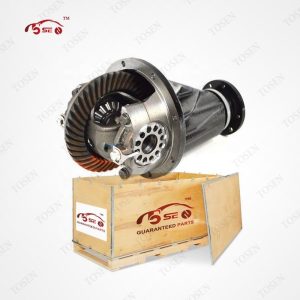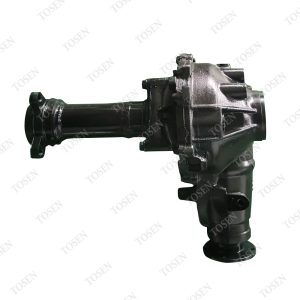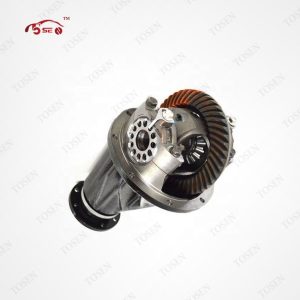
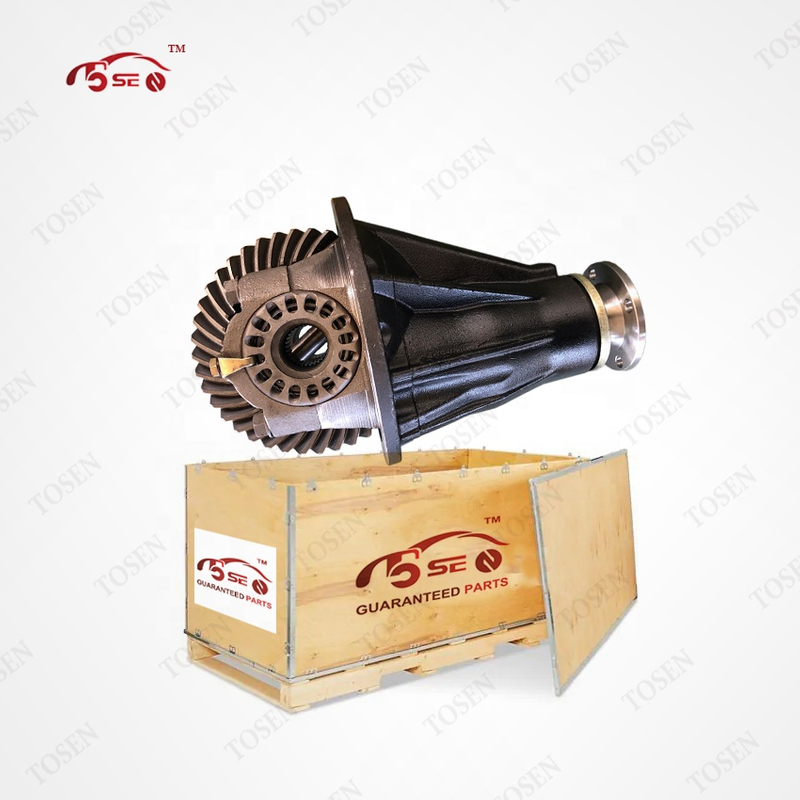
If you are looking at a Toyota 10:41 differential, you have probably seen those four numbers on an axle tag, a used part, or a supplier listing, and wondered what they actually mean. The short answer is simple: 10:41 is the tooth ratio of the crown wheel and pinion set inside the axle, and it works out to a 4.10:1 final drive ratio. This guide explains how to read that ratio, which Toyota models used it, when you need a full assembly instead of a bare gear set, and the checks you should run before you spend money on a replacement.
What Does “10:41” Mean on a Toyota Differential?
The ratio comes from two gears working together. The pinion is the small gear that the drive shaft turns, and the crown wheel (also called the ring gear) is the large gear bolted to the carrier. On a 10:41 set, the pinion has 10 teeth and the crown wheel has 41 teeth. Divide the crown wheel by the pinion, and you get the final drive ratio:
41 teeth ÷ 10 teeth = 4.10:1
That number tells you the drive shaft spins 4.1 times for every full turn of the axle. A higher ratio like 4.56 (the 9:41 set) multiplies torque more, so the vehicle pulls a heavy load from a stop with less strain, but the engine runs faster at highway speed. A lower ratio such as 3.9 keeps engine speed down on the open road but gives up some pulling power. Toyota chose different ratios for different jobs, which is why you will find 9:41, 10:41, and 10:43 sets in the same model family.
The quickest way to confirm a ratio is to count the teeth. With the cover off, count the teeth on the crown wheel and the teeth on the pinion, then divide. You can double-check your math with the Spicer gear ratio calculator, which does the division for you and explains how the result changes driving behaviour.
You can see the exact unit we supply for this application on our Differential 10 41 for Toyota product page, which lists the 10:41 fitment and the tested configuration.
Which Toyota Models and Years Used the 10:41 Ratio?
The 10:41 (4.10) ratio is part of the Toyota light-truck family, so it appears on vehicles that share the same axle family: the Hiace van, the Hilux pickup, and parts of the Land Cruiser range. It is the kind of ratio you expect to meet on a Hiace used as a delivery van, a Hilux that works on farms and building sites, or an older Land Cruiser doing daily heavy-duty work. TOSEN’s own listings show the 10:41 unit supplied for the Hiace and Hilux lines, with related ratios like 9:41 and 10:43 offered in the same axle family.
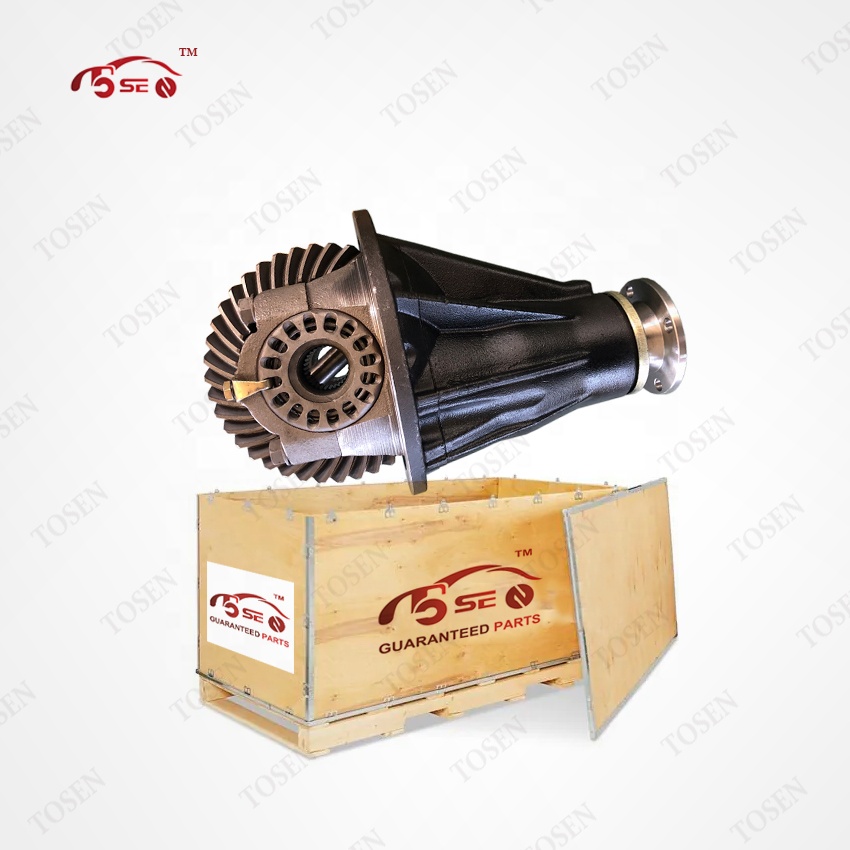
But “fits a Hiace” is not precise enough for a part that has to be correct to the last spline. The same model name can carry different axle codes by year and market, and a front differential is never the same as a rear one. Before you order, collect three facts: the VIN of the vehicle, the model year, and the axle code from the tag on the differential housing. The build plate in the door frame also lists the axle code in most markets, so you can compare the tag on the housing with the plate on the vehicle. If the tag is missing or rusty, a photo of the old differential is the next best proof.
Two more details hide inside the axle and they must match. The spline count on the pinion can differ between builds (in this family you will see 27-tooth and 29-tooth pinions), and the carrier bearing bores differ between axles. A listing that only says “10:41” does not carry that information, which is exactly why the VIN and axle code matter more than the model name.
Full Differential Assembly or Just the Crown Wheel and Pinion Set?
The second decision is how much of the axle you buy. If the housing, carrier, bearings, and seals of your axle are in good shape, a matched crown wheel and pinion set may be all you need. If the old unit was noisy, lost teeth, or ran with worn carrier bearings, a complete assembly removes the guesswork and most of the labour risk.
| What you buy | What is included | What you reuse or must check |
|---|---|---|
| Crown wheel and pinion set | Matched gear pair only | Housing, carrier, bearings, seals, shims — all must be serviceable |
| Complete differential assembly | Housing, carrier, gears, bearings, seals, ready to bolt in | Usually just the axle tubes and drive shaft flange |
Whatever option you choose, remember that a crown wheel and pinion always work as a matched pair. The two gears are lapped and tested together at the factory, so a crown from one set and a pinion from another will not mesh correctly even if the tooth counts match. A reputable supplier sells them as a set, and a careful fitter sets the backlash and the tooth contact pattern with shims before the first full load is applied. For an idea of the range available, browse our differential assemblies and gear sets category.
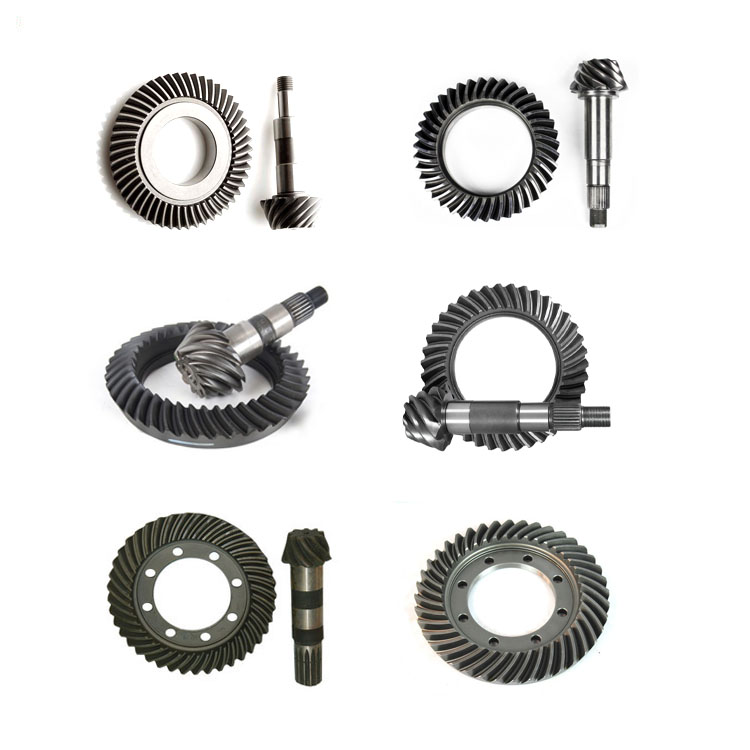
How to Verify Fitment and Quality Before You Buy
A 10:41 differential is a mechanical part that either fits and runs quietly or causes a second teardown. Run this checklist with the seller before you commit:
- Axle identity. Send the VIN, model year, and whether the unit is for the front or rear axle.
- Teeth and ratio. Count the crown wheel and pinion teeth, or match the axle code, so the ratio is 4.10 and not a close relative.
- Housing and splines. Confirm the bolt pattern, the pinion spline count, and the flange style against your drive shaft.
- Backlash and contact. Ask how the set was checked. A proper job measures backlash with a dial indicator and checks the tooth contact pattern with marking compound.
- Bearings and seals. On a gear-set-only purchase, inspect the carrier and pinion bearings for wear before you reinstall anything.
- Heavy-load duty. For a Hiace or Hilux that works loaded, insist on a brand-new unit that has been tested, not a salvaged unknown.
On the supply side, the 10:41 for Toyota is available as a brand-new, 100% tested unit, so you are not gambling on a pulled core. The original product specification covers the 10:41 ratio with a 12-month warranty and neutral packing for export, and the same unit is what we ship to workshops and importers. For a deeper look at how ratios and tooth counts change performance across the range, see our related technical guide on differential ratios and crown-and-pinion sets.
Three signs of a risky listing are worth knowing. A seller that cannot state the ratio, the spline count, or the axle family probably does not know the part. A price that looks like a bargain for a “complete” assembly should make you ask which bearings and seals are included. And any supplier that promises a silent diff but will not explain how the gears were tested is asking you to carry the risk.
Frequently Asked Questions
What does 10:41 mean on a Toyota differential?
It is the tooth ratio of the gear set: 10 teeth on the pinion and 41 teeth on the crown wheel, which works out to a 4.10:1 final drive ratio.
Is a 10:41 the same as a 9:41 or a 10:43?
No. 9:41 is about 4.56:1 and 10:43 is about 4.30:1. They belong to the same Toyota light-truck axle family but give different torque multiplication and highway speed, so the ratio must match your axle code.
Can I change the crown wheel and pinion without changing anything else?
Only if the housing, carrier, bearings, and seals are serviceable. The gears must be a matched pair, and the backlash and tooth contact pattern must be set correctly with shims.
Is the 10:41 for the front or rear axle?
On Hiace and Hilux applications it is normally the rear axle, but front and rear units are never interchangeable. Confirm with the axle code and a photo of the old part.
How do I know a listed 10:41 fits my exact vehicle?
Send the VIN, model year, axle code from the tag, and a photo of the old differential. Those details decide the housing, spline count, and bearing bores.
Will a 10:41 hold up under heavy loads?
Yes, when it is a brand-new, tested unit with sound bearings and seals. The 4.10 ratio is a common working ratio for loaded light trucks, but the warranty and test record matter just as much as the ratio.
Get a Fitment-Confirmed Quote
Submit your VIN, old-part label / OE number, model year, quantity, and destination port to receive a fitment confirmation and a quote. Send a photo of the old differential and the axle tag if you have them. This closes the loop: the same identifiers that prove the ratio become the records used to ship the correct 10:41 unit for your Toyota.
References
- Spicer — Gear Ratio Calculator: spicerparts.com/calculators/gear-ratio-calculator
- Quaife — Crown Wheel and Pinions: quaife.co.uk/quaife-products/crown-wheel-pinions
- Isuzu — Download Catalogues (axle and gear identification reference): isuzucomlen.com/uploads/33261/files/Download-Catalogues.pdf