A rattle, rising oil level, warning lamp or sudden loss of power can put a workshop under pressure to name the failed part immediately. That pressure is exactly when evidence gets lost and an expensive engine decision becomes difficult to defend.
A list of Land Rover 204DTD common problems cannot diagnose one vehicle. The useful question is which observation needs which check, what the result rules in or out, and whether the original core remains a sound repair or rebuild candidate.
This guide builds that chain from safe triage and engine identity through workshop evidence, replacement scope, warranty, receiving and first start. It is a decision tool for qualified workshops and buyers, not a substitute for the applicable JLR workshop information or a technician's inspection.
Land Rover 204DTD common problems: start with a stop-or-diagnose gate
Treat the first decision as an operating-risk gate, not a parts guess. If oil pressure is absent or uncertain, mechanical noise is severe, coolant or oil is being lost quickly, the engine has overheated, or metal is found in a relevant fluid or filter, stop and let the responsible technician set the recovery and inspection plan. Do not keep running the engine to collect a better video or clear a warning.
| Observation | Immediate decision | Evidence to preserve |
|---|---|---|
| Severe knock, rattle or sudden mechanical noise | Stop; avoid repeat starts until assessed | Cold/start context, operating conditions, scan record, oil and filter evidence |
| Oil-pressure warning or measured pressure concern | Stop; verify with the applicable workshop method | Warning history, oil level/condition, leaks, filter and measured result |
| Overheating or rapid coolant loss | Stop and inspect the cooling system and engine consequences | Temperature history, leak location, coolant/oil condition, pressure-test record |
| Warning lamp, reduced power or regeneration concern without severe mechanical signs | Use a technician-directed diagnostic plan | DTCs, freeze-frame/live data, journey pattern, service history |
| Smoke, rough running or oil-level change | Do not assign a cause from appearance alone | When it occurs, fluid trend, DTCs and targeted test results |
Gate output
Write one of three states on the job: stopped for recovery, safe only for a named controlled test, or safe for normal operation after assessment. If the state is unknown, it is not approval to continue driving.
Confirm 204DTD identity before parts or price
Use 204DTD as the start of identification, not the final match. Current application material associates the code with the 2.0-litre Ingenium diesel family, while supplier listings also show related code and power variants. JLR service actions state exact model, engine, model year and sometimes VIN ranges, which is a useful reminder: evidence that applies to one vehicle group is not a universal statement about every 204DTD.
- Photograph the engine-code marking and record every character exactly.
- Record VIN, model, build date, market, power output and drivetrain configuration.
- Photograph intake, exhaust/DPF connections, fuel hardware, wiring, mounts, sump and accessory positions before removal.
- List the ECU, emissions hardware, turbo, injectors, manifolds, sensors and accessories intended for transfer or replacement.
- Record readable OE, casting and major-component references from the original unit.
- Ask the technician and supplier to state the match, assumptions, missing evidence and exclusions in writing.
| Item | Description |
|---|---|
| Code-only lead | A possible application that still lacks vehicle and configuration evidence. |
| Conditional match | A proposed unit subject to named missing photos, references or measurements. |
| Approved match | A written fitment statement tied to the recorded VIN/configuration and exact quoted scope. |
Build the diagnostic evidence chain in order
- Preserve the complaint. Record when the symptom began, load and temperature, journey pattern, recent service or repair work, fluid changes and any overheating or warning history.
- Confirm engine and vehicle identity, then select the applicable JLR diagnostic and workshop information. A public bulletin is background evidence, not the procedure for every VIN.
- Capture non-destructive evidence first: DTCs, freeze-frame and relevant live data, oil and coolant level/condition, external leaks, filter or debris findings, and safe electrical or air-path checks.
- Choose mechanical tests that answer a named question. The technician may need oil-pressure, compression/leakage, timing-correlation or controlled inspection evidence, but method, conditions and limits must come from the applicable information.
- Issue a route statement: identified system repair, core still suitable for rebuild evaluation, core unsuitable, replacement evaluation justified, or one more named check required.
The FAI AJ20D4 bulletin is useful for understanding relationships among lubricant integrity, DPF regeneration, fuel dilution, carbon contamination, timing-chain control and diagnostic indicators. It is aftermarket guidance. Use it to frame questions for the technician, not to replace JLR procedures or to turn one oil smell, rattle or DTC into a diagnosis.
Evidence rule
Every test request should name the question, method, result, reference limit, limitation and decision changed. A folder of scan screenshots without that explanation is not yet a repair-or-replace case.
Match symptom patterns to checks, not conclusions
| Observed pattern | Possible system to investigate | Professional evidence | What the result changes |
|---|---|---|---|
| Cold-start rattle, timing-correlation DTC or unstable timing data | Timing chain, guides, tensioner, lubrication or control | Applicable scan correlation, oil/pressure evidence and controlled mechanical inspection | Targeted timing-system work, deeper core inspection or stop decision |
| Oil level rising, fuel odor in oil, repeated regeneration concern | DPF operating pattern and possible fuel dilution | Service/journey history, scan data, oil sample/condition interpreted by a technician | Aftertreatment/operating-cause correction and assessment of lubrication consequences |
| Oil leak near engine/transmission or timing-cover areas | External seal or cover leak; source must be located | Clean inspection, leak trace and vehicle-specific service information | Seal/cover repair versus evidence of a wider lubrication problem |
| Low power, rough running, smoke or emissions faults | Air path, EGR, boost, fuel, compression or aftertreatment | DTC/live data, leak checks, fuel/air evidence and mechanical results | System repair, transferred-part action or core evaluation |
| Low compression, abnormal oil pressure, debris or structural damage | Internal wear or damage | Repeatable measured results, filter/debris record, borescope or teardown measurements | Rebuild feasibility, machine scope or replacement decision |
JLR's H057 action addressed a specific rear-cover/lower-timing-cover leak concern on a narrowly identified diesel vehicle. It proves that such a leak pathway can exist; it does not prove that every oil leak, model year or 204DTD has that cause. Apply the same discipline to timing, DPF and air-path claims.
- Do not clear codes before saving the original record.
- Do not compare test numbers without method, temperature, speed and reference context.
- Do not condemn the core until retained systems and the original failure mechanism are considered.
- Do not authorize emissions-system deletion or control bypass as a diagnostic shortcut.
Use a repair-or-replace decision matrix
| Route | Use it when | Evidence before approval | Main uncertainty |
|---|---|---|---|
| Targeted system repair | The core evidence is acceptable and a defined external/control/timing concern is repairable | Cause, affected parts, applicable procedure and post-repair verification plan | Hidden consequential damage |
| Rebuild original core | Identity is correct and block, head, crank and other critical parts are measurable and repairable | Teardown measurements, machine/parts scope and written reapproval triggers | Scope can grow after disassembly |
| Replacement long block or engine | Core is unsuitable, delay is unacceptable, or a correctly matched unit creates a clearer controlled scope | Fitment record, condition, included parts, test/inspection evidence, warranty and transferred-system plan | Excluded systems and installation work |
| Inspect further | Tests conflict or structural condition remains unknown | One named next check and its decision threshold | Downtime continues but prevents blind commitment |
| Stop project | Vehicle condition or approved economics no longer support major work | Whole-vehicle assessment and cost ceiling | Prior diagnostic cost is sunk |
Compare routes at the same first-start-ready condition. A rebuild quote that excludes teardown discoveries, a bare replacement that reuses the failed turbo or contaminated oil path, and an installed service are not equivalent. Add removal, cleaning, transferred parts, fluids, programming, freight, core return and commissioning responsibilities before comparing cost or downtime.
Hold gate
If the original cause, core condition, fitment record or installed scope is unresolved, approve the next evidence step—not the engine purchase.
Normalize long-block and complete-engine scope
| Item | Description |
|---|---|
| Bare engine | Often block and cylinder-head core only; the exact seller list controls. |
| Long block | Normally an assembled block-and-head core, but timing, sump, fuel and other components vary by offer. |
| Complete engine | A commercial label that still needs a line-by-line inclusion and exclusion list. |
| Supply and fit | A service scope that should define transferred parts, installation materials, commissioning and warranty ownership. |
| Current offer example | Published scope signal | Buyer follow-up |
|---|---|---|
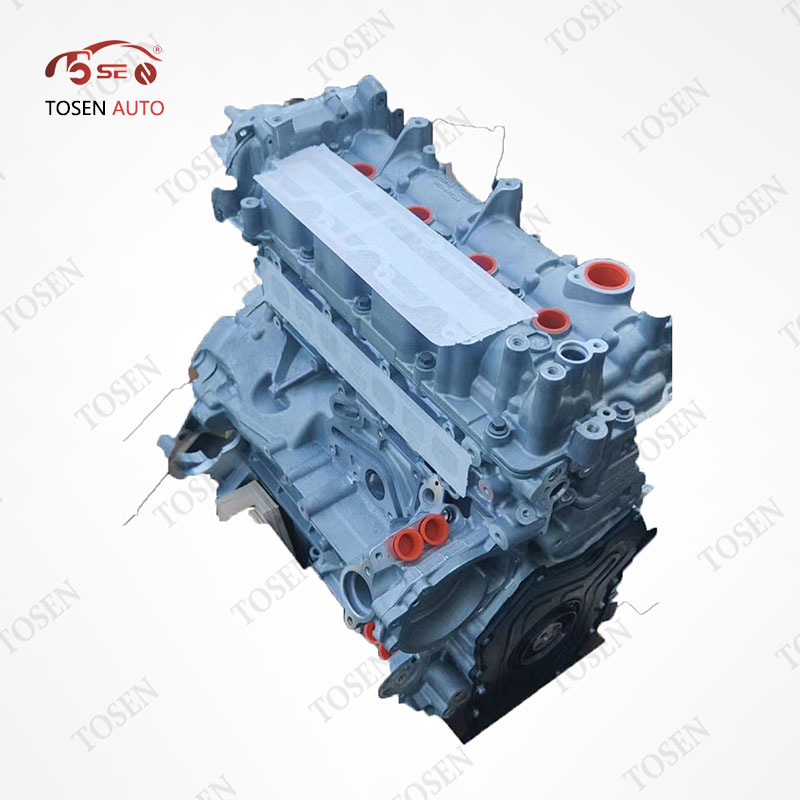
| TOSEN AUTO 204DTD rebuilt long block | Matching product and authentic product imagery | Confirm current included parts, exact fitment, condition record, warranty and delivery terms in writing |
| Magip rebuilt long block | Timing and high-pressure fuel pump listed; old core required | Confirm the exact supplied hardware, return condition, deadline and freight |
| Stocko remanufactured exchange engine | Bare block-and-head scope; power variants; exchange core and warranty stated | Confirm configuration, excluded parts, claim start and return terms |
| Engine Trust replacement listing | Bare unit; existing ancillaries transferred | Define which retained systems are inspected, corrected, replaced and warranted |
Use the verified TOSEN AUTO 204DTD rebuilt long block page as a real commercial option only after diagnosis and identity are documented. The authentic image below shows the listed TOSEN product; it does not prove fitment, included accessories or test results for a specific order.
Review the wider engine assemblies and long blocks category by the same first-start-ready scope, not by product label alone.
Audit the supplier offer and warranty
- Written VIN/configuration match with assumptions and exclusions
- Condition label and seller's inspection or test record for the supplied unit
- Included, excluded and transferred-component list with part photos where useful
- Core-return condition, deadline, freight payer and deposit/refund terms
- Warranty start event, duration, covered parts and installer requirements
- Labor, removal/refit, fluids, programming, freight and consequential-cost treatment
- Claim notification deadline and required photos, scan data, pressure/priming records and failed-part retention
- Crate, preservation, shipping, receiving-inspection and damage-reporting process
| Warranty field | Question to settle before purchase | Evidence to retain |
|---|---|---|
| Start event | Shipment, delivery, installation, first start or invoice date? | Written terms and dated receipt/commissioning record |
| Covered scope | Which supplied parts and failure modes are covered? | Offer, serial/engine ID and inclusion list |
| Installer duties | Which cleaning, priming, fluids, programming and retained-system checks are mandatory? | Installer checklist, invoices and measurements |
| Costs | Are labor, removal/refit, diagnostic time and freight included or excluded? | Written allocation and approval contacts |
| Claim path | How fast must the buyer notify and what evidence is required? | Claim procedure, photos, scan/test data and retained parts |
Use the related engine assembly selection guide to structure photos and scope questions, but replace Toyota-specific details with the 204DTD identity record. Do not let a general checklist override the seller's current written terms or the technician's vehicle-specific requirements.
Control receiving and first start
- Receive: photograph every crate side, seals, labels and visible impact before moving or signing without notation.
- Identify: compare supplied engine/serial references, configuration and included parts with the approved offer.
- Preserve: record storage conditions, covers and corrosion protection; report damage or mismatch within the written deadline.
- Prepare: correct the original failure cause and inspect or replace every retained system named in the installation plan.
- Commission: the responsible installer records priming, fluids, first pressure, scan data, leaks, temperatures and initial operating checks using applicable procedures.
- Release: supplier and installer receive the required record; unresolved items remain open under the same job number.
- Crate and delivery-condition photos
- Engine/serial and configuration match
- Included/excluded/shortage record
- Transferred-system correction record
- Specified fluids, filters and installation materials
- Priming and pre-start sign-off
- First-start pressure, scan, leak and temperature evidence
- Warranty registration and document handoff
One evidence file
Keep diagnosis, quote, fitment approval, shipment, receiving, installation and first-start evidence under one job number. That continuity is more useful in a claim than a late reconstruction from messages and memory.
Frequently Asked Questions
Does a cold-start rattle prove the 204DTD timing chain has failed?
No. Record when the noise occurs and stop repeated starts if mechanical integrity is uncertain. A technician should use applicable scan, lubrication and mechanical evidence before assigning the chain, tensioner, guides or another source.
Can a rising oil level confirm DPF-related fuel dilution?
It is a reason to stop guessing and investigate. Service history, journey pattern, DPF/regeneration data and oil condition or analysis may be relevant, but the responsible technician must interpret them in the vehicle's context.
Is a 204DTD long block a complete engine?
Not automatically. Current offers differ: some list timing or fuel hardware, some are bare block-and-head assemblies, and some transfer vehicle ancillaries. Approve the seller's written included/excluded list, not the label.
What should be sent for a 204DTD fitment check?
Send the exact engine marking, VIN and build details, market/power configuration, clear photos, OE or casting references, retained-system plan, required assembly scope and delivery destination. Ask for assumptions and exclusions in the written reply.
Turn the evidence into one written decision
The useful response to a 204DTD problem is not a longer fault list. It is a controlled chain from safe triage and exact identity to measured evidence, core suitability, installed scope and handoff responsibility.
Keep that chain under one job number. It lets the workshop explain why repair, rebuild, replacement or further inspection was chosen and gives the supplier a fitment request that can be answered precisely.
Prepare a fitment-confirmed 204DTD request Use the checklist above, then send TOSEN AUTO the engine code, VIN/build details, photos, required assembly scope and delivery destination for written confirmation. On-page 204DTD diagnosis, fitment and RFQ checklist