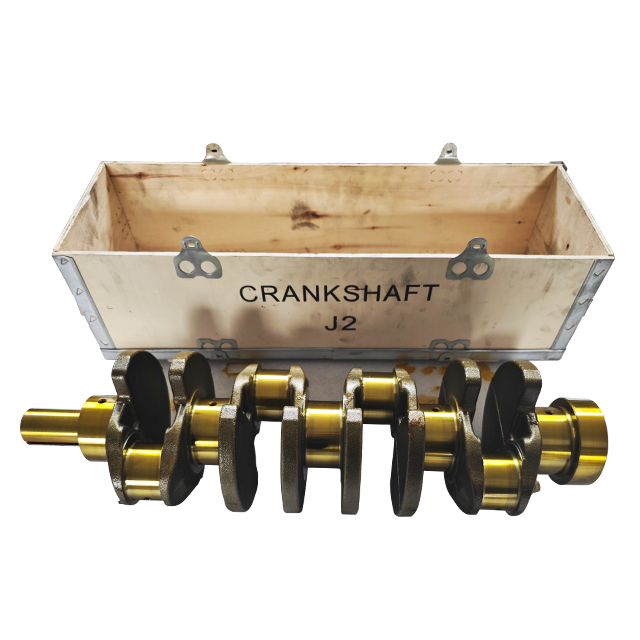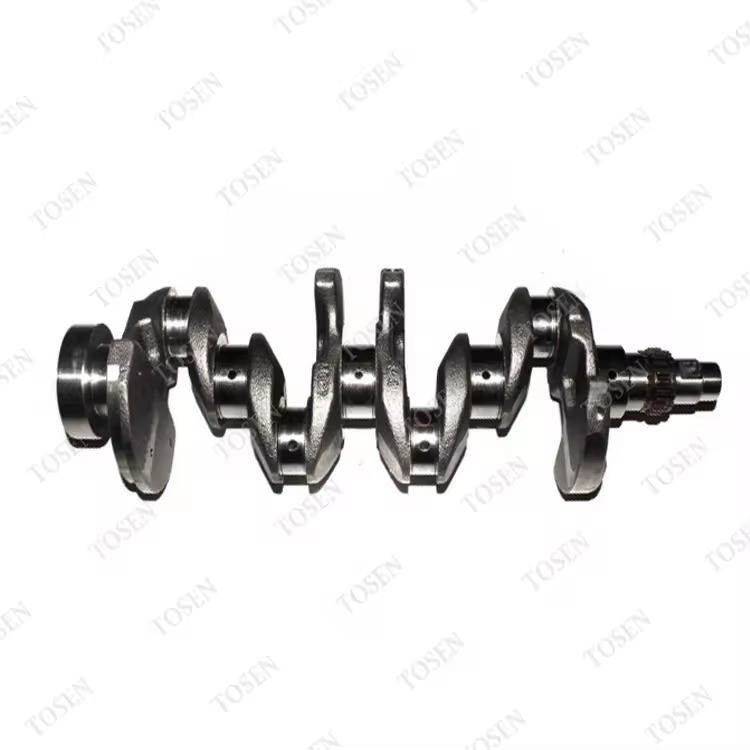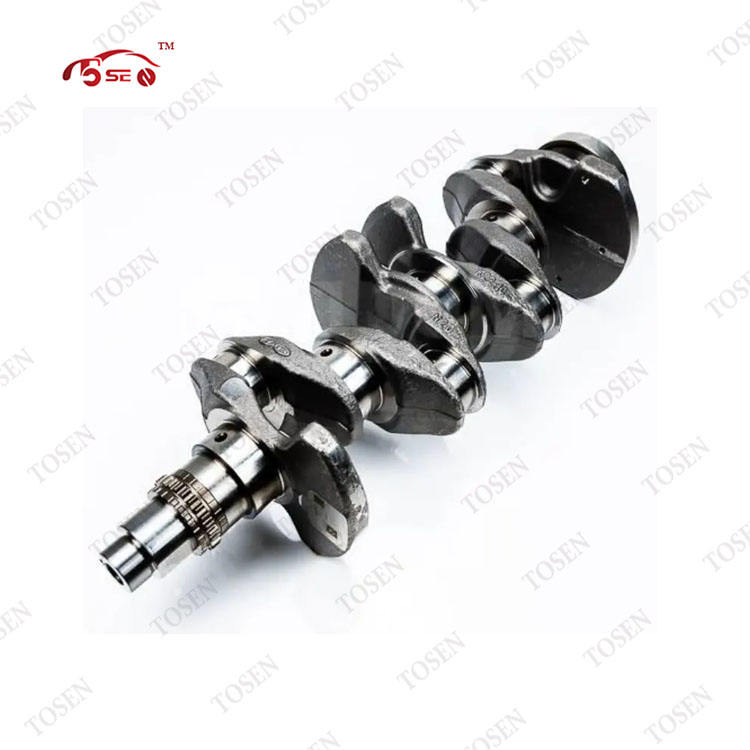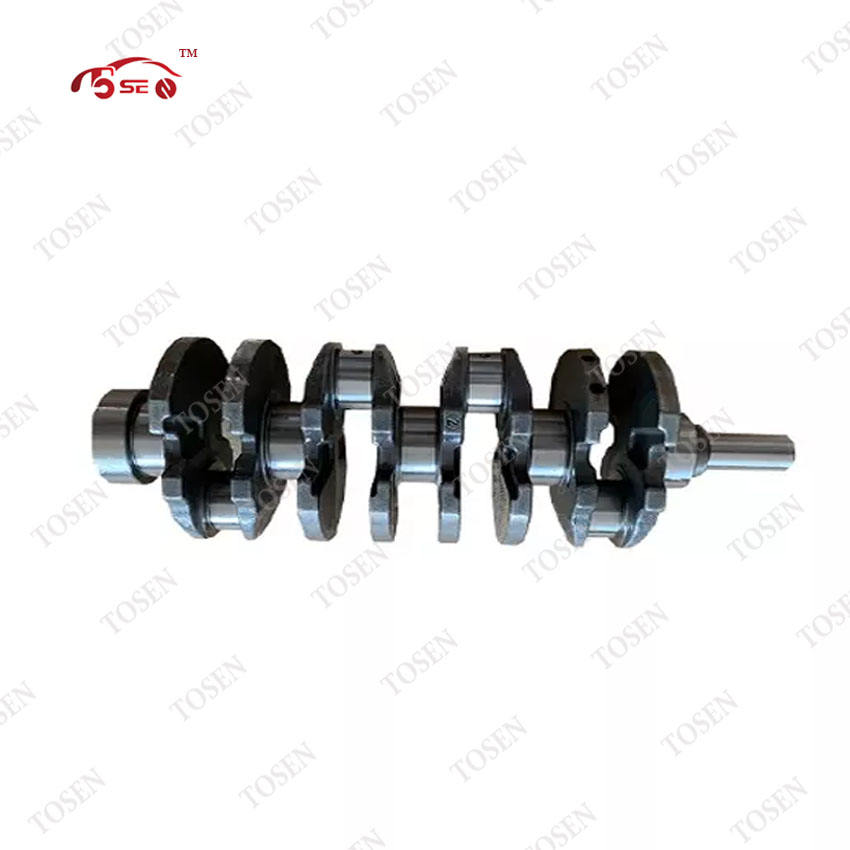
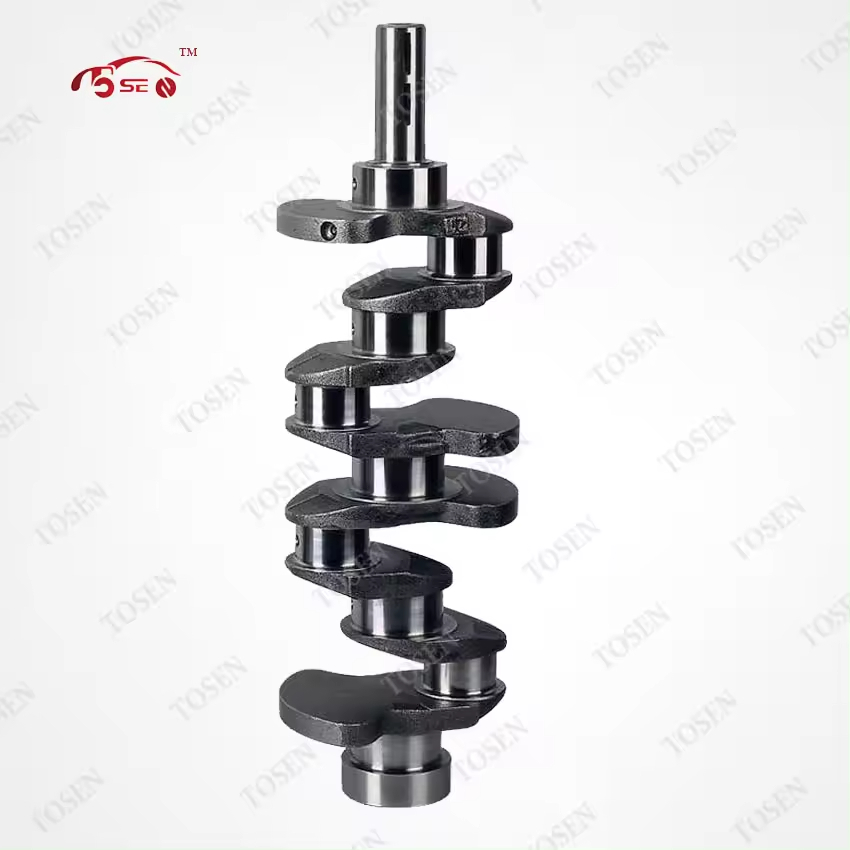
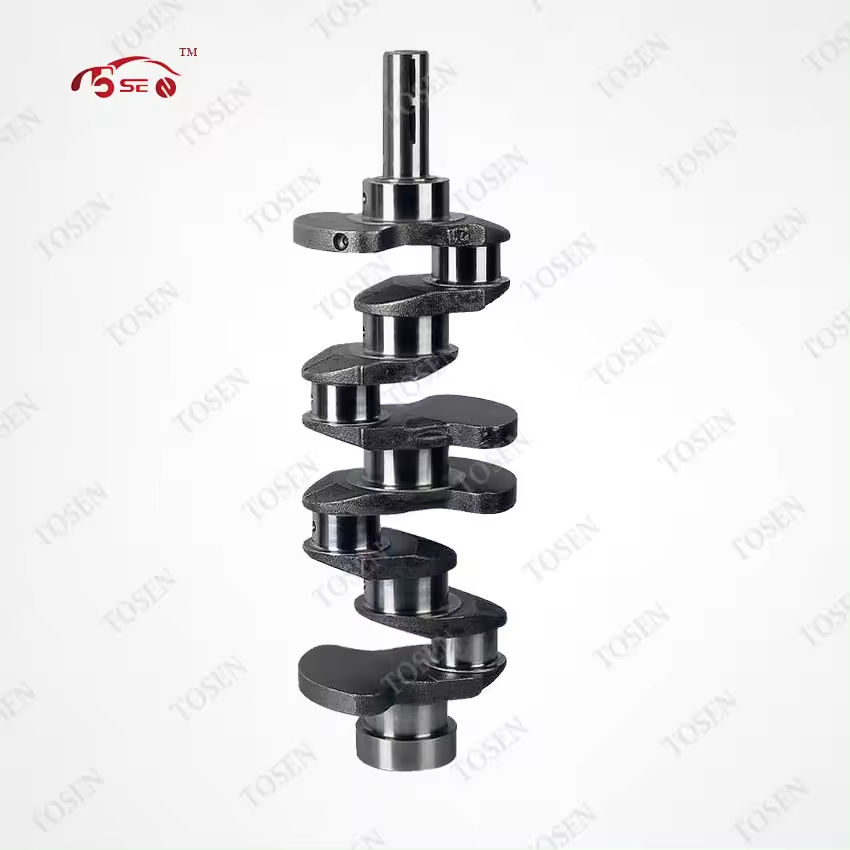
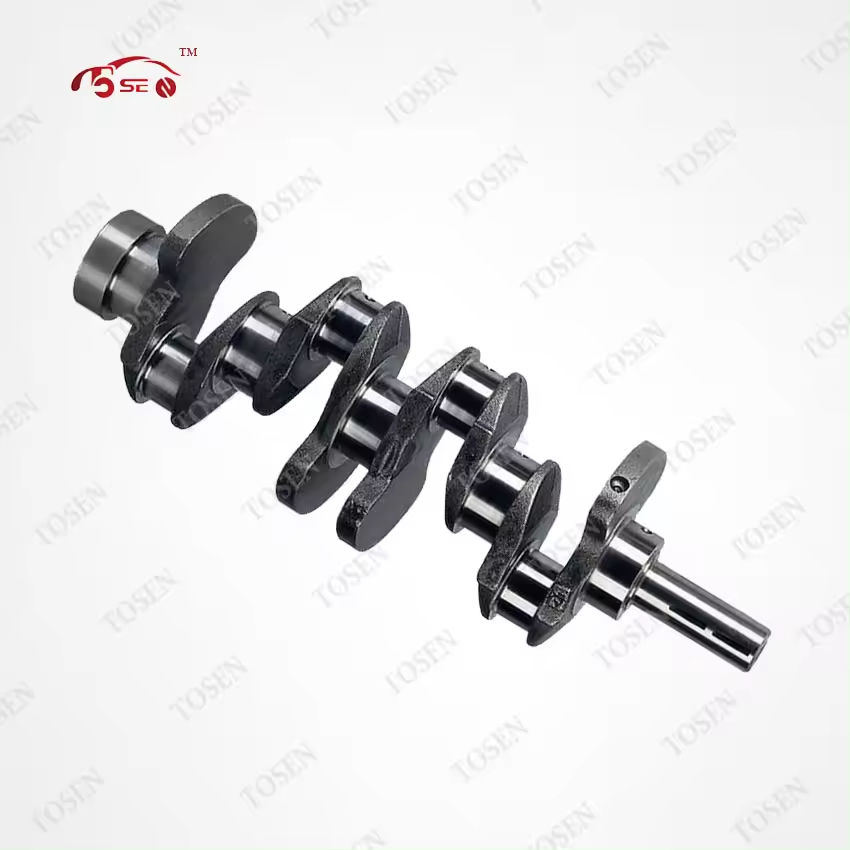
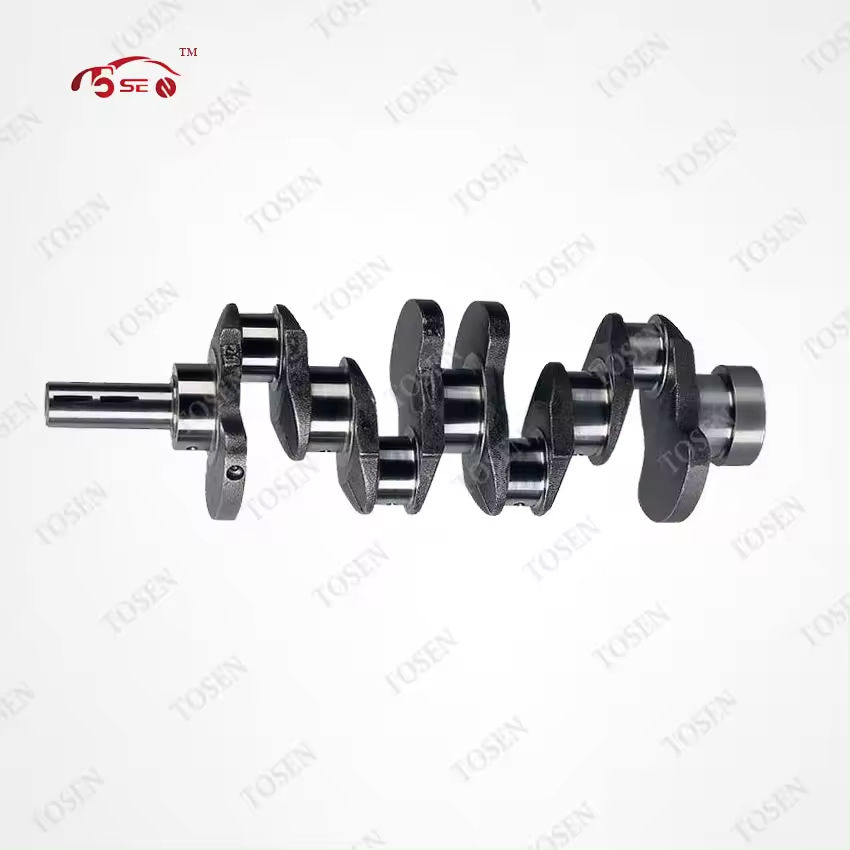
crankshaft 13401-22020 13411-7830071 For Toyota Corolla
The 13401-22020-13411-7830071 crankshaft is an OEM-spec replacement crankshaft for crankshaft 13401-22020 13411-7830071 for toyota corolla – tosen auto. TOSEN AUTO supplies it forged from alloy steel with induction-hardened journals and 100% inspected before dispatch, ready to install. This page gives you the full specification, compatibility, failure symptoms, installation notes and maintenance guidance so you can confirm fitment and source with confidence — no marketing fluff, only the technical facts you need to make a buying decision.
Product Overview
The 13401-22020-13411-7830071 crankshaft is an OEM-spec replacement crankshaft for crankshaft 13401-22020 13411-7830071 for toyota corolla – tosen auto. TOSEN AUTO supplies it forged from alloy steel with induction-hardened journals and 100% inspected before dispatch, ready to install. This page gives you the full specification, compatibility, failure symptoms, installation notes and maintenance guidance so you can confirm fitment and source with confidence — no marketing fluff, only the technical facts you need to make a buying decision.
Product Specifications
| OEM Part Number | 13401-22020-13411-7830071, 13401-22020, 13411-7830071 |
|---|---|
| Part Type | Crankshaft |
| Application | crankshaft 13401-22020 13411-7830071 For Toyota Corolla – TOSEN AUTO |
| Condition | Brand new, 100% tested, never installed |
| Supplied With | crankshaft only (bare) — confirm accessories per listing |
Compatibility & Fitment
Confirm fitment by the OEM part number and the engine code, not by the vehicle model alone. The same vehicle platform often runs several engine codes over its production life, each requiring a different crankshaft. Cross-check the OEM number stamped on your original part before ordering — ordering by model name is the single most common cause of receiving a wrong part. If you are unsure, send us the OEM number and engine code and we will confirm fitment before you commit.
Technical Background — What a Crankshaft Does
The crankshaft converts the up-and-down motion of the pistons into rotational torque that drives the transmission. Each connecting rod attaches to a crankpin journal offset from the main journal axis; the distance of that offset sets the engine’s stroke. Counterweights opposite each crankpin balance the rotating assembly so the engine doesn’t shake itself apart. Because the crank sees the full combustion load of every cylinder, every firing stroke, its journals and fillets are the most highly-stressed machined surfaces in the engine — which is why journal hardness, fillet geometry and bearing oil film are the three things that decide whether a crank survives 100,000 km or a million.
Material & Manufacturing
This crankshaft is forged from chromium-molybdenum alloy steel and induction-hardened on the journal surfaces and fillet radii. Forging aligns the metal grain along the crank’s load paths — the critical advantage over cast crankshafts, which crack at the fillet under diesel combustion loads. After rough machining, the main and rod journals are induction-hardened to HRC 55–60 while the core remains tough at HRC 25–32, producing a hard-wearing surface over a shock-resistant core. Every journal is then finish-ground to OEM diameter and polished to a mirror finish (Ra < 0.2 µm) so the bearing film survives high RPM. Each crankshaft is 100% inspected for journal runout (< 0.04 mm), stroke equality between cylinders, thrust-wall squareness and oil-hole cleanliness. A crankshaft failing any check is scrapped — we do not regrind diesel cranks to undersize, as the resulting fillet geometry cannot carry the same load.
When to Replace the Crankshaft
A crankshaft rarely fails without warning. Replace it when you observe any of:
- Low oil pressure that worsens as the engine warms — worn main journals bleed the bearing oil film.
- Deep knocking from the bottom end — a rod or main bearing has worn through, the journal is no longer round.
- Metallic debris in the oil — bearing material and journal steel in the pan; the crank must be measured and usually replaced.
- Vibration at speed — a crank that has overheated and warped, or lost a counterweight, will imbalance the rotating assembly.
- Rebuilt engine that won’t hold oil pressure — the most common hidden cause; the old crank was reused past its tolerance.
Full diagnosis in our engine failure symptoms guide.
Installation Notes
- Measure every journal with a micrometer before assembly. If any journal is out of round or undersize, the crank is scrap — do not install it.
- Check bearing oil clearance with Plastigauge against the new bearings. Replace bearings to match the journal size grade.
- Lubricate bearings with assembly lube, not engine oil, for first start. Prime oil pressure by cranking with the fuel cut before start-up.
- Torque the harmonic damper bolt to spec — an undertightened damper keyway will fret and destroy the crank nose.
- Replace the rear main seal, thrust washers and oil pump at the same service; reusing them on a new crank risks an early failure.
Maintenance & Service Life
A well-maintained forged crankshaft outlasts the rest of the engine. The three things that kill cranks early are: extended oil-change intervals (abrasive particles score the journals), low oil pressure (the bearing film collapses and the journal welds to the bearing), and overheating (which warps the crank and drops oil pressure). Stick to the manufacturer’s oil-change interval with the correct grade, address any low-oil-pressure warning immediately, and the crank will give a full service life. On a rebuild, always measure the journals — never reuse a crank on faith.
Typical Applications & Use Case
This crankshaft is used in engine rebuilds after a bearing failure, in scheduled high-mileage overhauls, and in remanufactured long-block programs for overseas distributors. Common scenarios: a taxi or fleet engine that has dropped oil pressure and scored a rod journal; a 4×4 diesel that has been run low on oil off-road; a generator or pump engine that has run continuously past its bearing life. In each case the crank is replaced alongside the bearings and the oil pump, never in isolation — the root cause of the bearing failure must be fixed or the new crank fails the same way within weeks.
Quality Assurance & Inspection
Every crankshaft is 100% inspected before dispatch. Each journal is micrometered for diameter, taper and out-of-round; runout is checked on V-blocks across the centre mains; stroke equality between cylinders is verified; the thrust faces are checked for squareness; and the oil galleries are pressure-flushed and confirmed clear. The fillet radii are inspected for cracks (the single most common failure origin). A dimensional report is retained per batch. We do not ship a crank that has not passed every check — a single undersize journal or a cracked fillet means the crank is scrapped, not reworked.
Why Choose This Crankshaft
- OEM-spec build — correct geometry, tolerances and material for the 13401-22020-13411-7830071 application, not a generic part.
- 100% inspected (runout, tolerance, finish) before dispatch.
- Factory-direct B2B pricing from TOSEN AUTO; sample orders accepted for qualification.
- Flexible MOQ and export packaging for overseas distributors.
FAQ
Q: Can I regrind a worn crank instead of replacing it?
A: Regrinding reduces journal diameter and changes the fillet radius, requiring undersize bearings. We supply new cranks only — for diesel loading, a reground crank is not a reliable long-term fix.
Q: Does the crank include the bearings and gear?
A: No, the crankshaft is supplied bare. Reuse or replace bearings and the timing gear separately, matched to the journal size grade.
Q: What is the MOQ?
A: Samples (1–5 pcs) accepted; distributor pricing from 10+ pcs.
Q: How do I confirm this crankshaft fits my engine?
A: Send us the OEM part number and your engine code — we verify fitment before quoting. Do not order by vehicle model alone.
Get a Price on the 13401-22020-13411-7830071 Crankshaft
Send your OEM number and target quantity — we will confirm fitment and return a factory-direct quote within 24 hours.
Related: All crankshafts
| OEM Part Number | 13401-22020-13411-7830071, 13401-22020, 13411-7830071 |
|---|---|
| Part Type | Crankshaft |
| Application | crankshaft 13401-22020 13411-7830071 For Toyota Corolla – TOSEN AUTO |
| Condition | Brand new, 100% tested, never installed |
| Supplied With | crankshaft only (bare) — confirm accessories per listing |
Shipping Information
All orders are shipped via international freight forwarders with full tracking. Standard lead time is 15–25 business days depending on destination. Express shipping options available for urgent orders.
Returns Policy
Products are inspected before shipment and packed to international standards. In case of shipping damage or manufacturing defect, please contact our support team within 30 days of receipt with photos for assessment.