Truck synchronizer parts cover three distinct components inside one synchronizer position: the synchronizer ring, the synchronizer cone and the sliding sleeve. The ring is the friction and timing element of the position, the cone provides the conical friction surface the ring works against, and the sleeve is the moving part that completes the engagement once the speeds match. Truck gearbox rebuilds routinely call for one of the three rather than all of them, so the selection begins with knowing which component has failed and which reference number identifies it. This guide sets out the role of each part in a single shift, the wear points that expose each one at teardown, and the details a synchronizer parts enquiry must carry before an order is placed.
Quick rule: the synchronizer ring handles the friction and timing work, the synchronizer cone provides the friction surface the ring presses against, and the sliding sleeve completes the engagement once the rotating members reach a common speed. All three are matched to a rebuild through the gearbox model and the synchronizer position first, with the geometry and the markings of the removed part confirming the order.
How One Shift Uses All Three Parts
The ring, the cone and the sleeve work as one synchronizer assembly at every gear position, and a single shift puts all three to work in sequence. Tracing that sequence shows why each part exists and why the three are ordered separately under separate references.
- The shift begins at the synchronizer position. The synchronizer ring, the friction and timing element of the position, is pressed against the mating cone during the shift, and the friction between the two reduces the speed difference between the rotating members.
- The synchronizer cone provides the conical friction interface the ring presses against. The friction work brings the rotating members toward a common speed before the engagement teeth take over, which is why the ring and the cone form one friction pair inside the assembly.
- The sliding sleeve is carried on its matching hub and shifted axially by the engagement arrangement when the gear is selected. The teeth of the sleeve connect the hub to the gear being engaged, completing the engagement that the synchronizer elements have prepared.
- The teeth at the sleeve carry the torque once the gear is engaged, and the position returns to rest until the next shift. Wear at any of the three parts shows up in the shifts made at that position before it shows up anywhere else.
Synchronizer Ring vs Cone vs Sleeve: Side-by-Side Comparison
The table below places the three parts next to each other: the role each one plays in the shift, the wear points found at teardown, and the selection basis that ties the order to the position being serviced.
| Part | Role in the shift | Typical wear points | Selection basis |
|---|---|---|---|
| Synchronizer ring | Friction and timing element; pressed against the mating cone to reduce the speed difference and to time the moment the sleeve engages | Cone profile, engagement teeth and overall dimensions of the removed ring | Reference number first, ring geometry second, with the gearbox model and the synchronizer position recorded with the order |
| Synchronizer cone | Conical friction interface; provides the surface the mating ring presses against so the speeds converge before the engagement teeth take over | Friction surface, inspected at teardown when shifts begin to clash or grind at the position | Gearbox model and the synchronizer assembly being serviced, with the mating ring dimensions checked as part of the same pair |
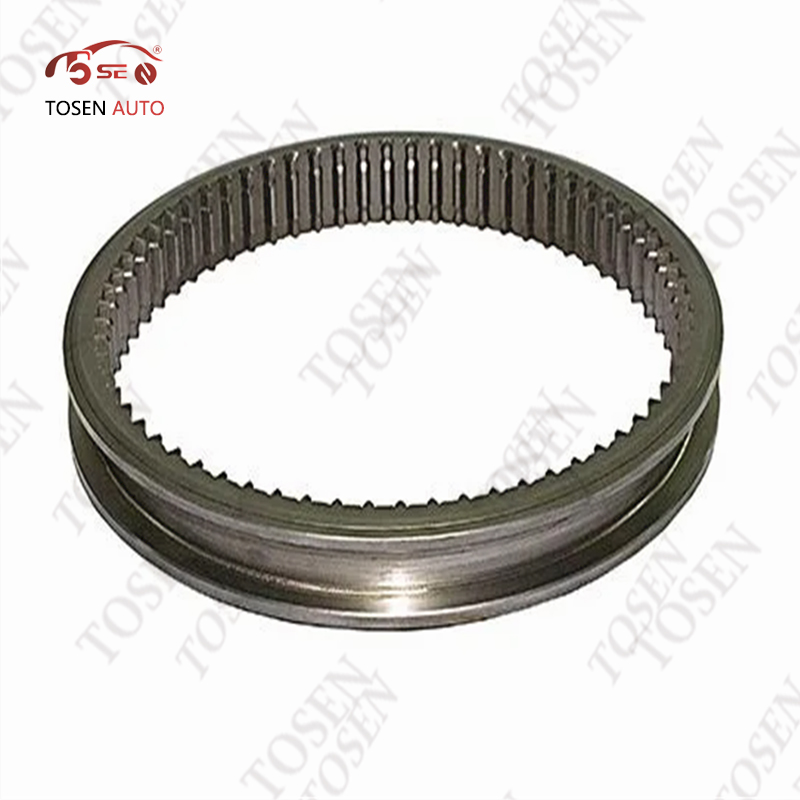
| Sliding sleeve | Moving engagement component; slides on its hub so the teeth connect the hub to the gear and complete the engagement | Engagement teeth and the sliding surfaces | Gearbox model and gear position, internal teeth against the hub splines, external teeth against the engagement arrangement, sleeve length |
Positions inside the same gearbox differ, which is why the synchronizer position belongs in every order from the first message. ZF truck gearboxes carry a cone at each synchronizer position, each with its own geometry, and the planetary section of a ZF truck gearbox takes a planetary cone distinguished by inside and outside diameters, height and engagement geometry. Truck transmissions carry a synchronizer at each position, so the gearbox assembly identification recorded at teardown names the exact position an order serves.
How to Tell Which Part the Rebuild Needs
A teardown of the affected position gives the answer, because each of the three parts fails in its own way and leaves its own marks. The checklist below covers the checks that separate a ring order from a cone order or a sleeve order.
- Teardown the affected synchronizer position first, because each position in a truck gearbox carries its own cone geometry, ring geometry and sleeve dimensions.
- Inspect the ring and the cone together, since the two form one friction pair; shifts that begin to clash or grind at a gear position point to a friction pair that no longer matches speeds cleanly.
- Check the cone friction surface for wear beyond service condition, and review the mating ring in the same pass rather than ordering the cone alone.
- Examine the sleeve separately: sleeve wear shows at the engagement teeth and at the sliding surfaces, and the internal teeth must match the hub splines before a replacement is ordered.
- Record the reference numbers from the removed parts. A Mercedes-Benz truck ring can carry reference 9472600945 together with ZF cross-reference 0073301185, and either number identifies the same ring for ordering.
- Match every part through the gearbox model and the synchronizer position first, then confirm with the component markings, the measured dimensions and photographs of the mating components.
Ordering Each Part: References and Enquiry Details
Ring enquiries are led by the reference number, with the geometry of the removed ring confirming what the number promises. A Mercedes-Benz truck position is covered by the 9472600945 synchronizer ring, which carries the Mercedes-Benz reference and the ZF cross-reference 0073301185 on the same component. Two references on one component are common where a gearbox family appears under different documentation, and either number identifies the ring for ordering. ZF positions are covered through references such as the 1316304170 ZF synchronizer ring, where the cone profile, the engagement teeth and the dimensions of the original are compared with the replacement before the order is completed.
Cone enquiries carry the gearbox model and the synchronizer assembly being serviced, because the cone profile and the ring dimensions of the mating parts form one friction pair and the engagement teeth are counted in the same pass. The ZF truck synchronizer cone is selected this way, and a position associated with the planetary section of a ZF truck gearbox takes the planetary synchronizer cone, matched through inside and outside diameters, cone profile, height and engagement geometry measured from the original component.
Sleeve enquiries open with the gearbox model and the gear position, because every synchronizer position carries its own sleeve dimensions. The sliding sleeve for Scania transmissions is matched this way: the internal teeth are counted against the hub splines, the external teeth against the engagement arrangement, and the sleeve length is measured from the original part because it sets how far the sleeve travels on the hub. The sleeve, the hub and the remaining synchronizer parts operate as one assembly, so a sleeve order is checked against the hub it will work with.
Across all three parts, the enquiry itself stays consistent: the gearbox code, the part number or the component markings, the dimensions and the quantity, with the gear position and photographs of the mating components completing the record. On that basis TOSEN verifies the part against the gearbox being rebuilt and issues a quotation tied to the exact position under repair.
Frequently Asked Questions
What is the difference between a synchronizer ring and a synchronizer cone?
The synchronizer ring is the friction and timing element of the position: pressed against the mating cone during a shift, it reduces the speed difference between the rotating members and times the moment the sleeve engages. The synchronizer cone provides the conical friction surface the ring works against. The two form one friction pair inside the assembly, so a rebuild that finds one of the two worn inspects the other in the same pass before the order is completed.
When does a sliding sleeve need replacement?
Sleeve wear shows at the engagement teeth and at the sliding surfaces, and a worn sleeve affects every shift made at its position. The internal teeth must match the hub splines, the external teeth must match the engagement arrangement, and the sleeve length sets how far the sleeve travels on the hub. A teardown that finds worn teeth or worn sliding surfaces calls for a replacement matched to the gearbox model and the gear position, because a sleeve dimensioned for one position will not serve another.
How are truck synchronizer parts matched to a gearbox?
Every synchronizer part is matched through the gearbox model and the synchronizer position first, because each position carries its own cone geometry, ring geometry and sleeve dimensions. The reference number or the component markings from the removed part anchor the order, and the measured dimensions together with photographs of the mating components confirm the match before the order is completed.
What should a synchronizer parts enquiry include?
An enquiry carries the gearbox code, the part number or the component markings, the dimensions and the quantity, together with the gear position and photographs of the mating components. A ring enquiry adds the original ring number, a cone enquiry adds the synchronizer assembly being serviced, and a sleeve enquiry adds the tooth counts and the sleeve length. With those details TOSEN verifies the part and quotes the delivery for the gearbox being rebuilt.
Send the gearbox code, the synchronizer position and the original component markings to TOSEN for a synchronizer parts quotation, and the rebuild plan keeps all three parts of the position covered.