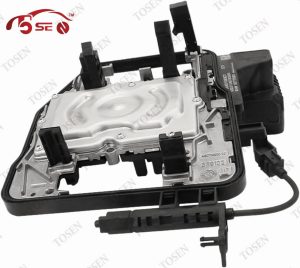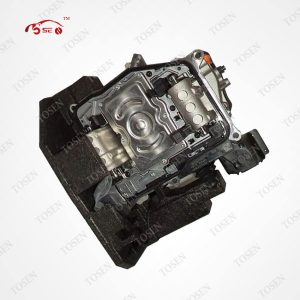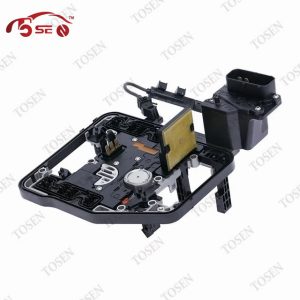
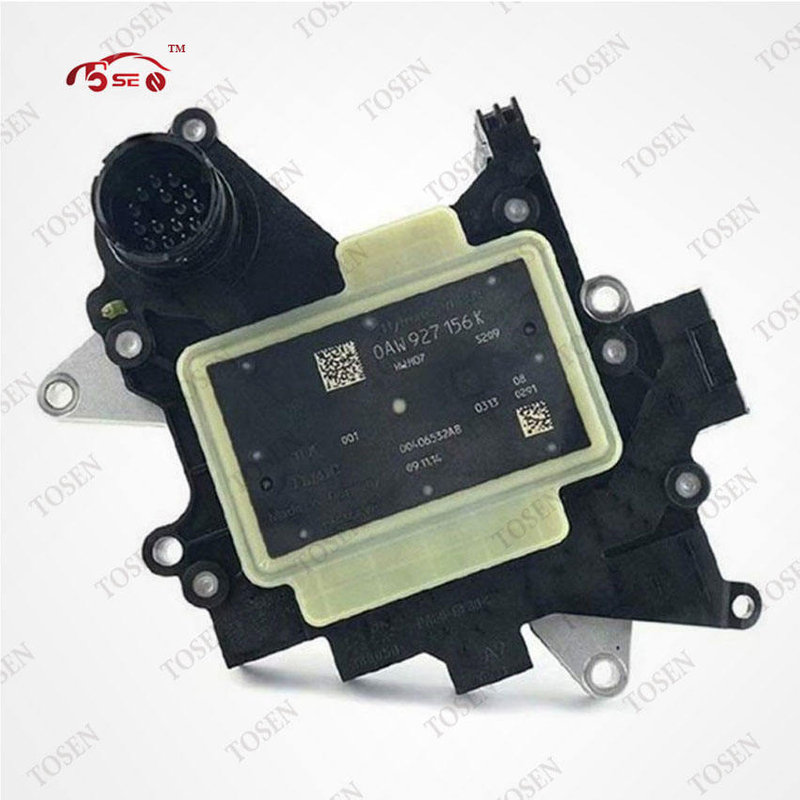
The 0AW927156K Audi control module is the electronic brain of the 0AW automatic transmission found in many Audi A4, A5, A6 and A7 models. When gear shifts turn rough, the car goes into limp mode, or a diagnostic scan flags a mechatronic fault, this control unit is often the part on the repair order. This guide is a compatibility checklist: it walks you through the part-number details, the programmed-versus-blank question, the valve-body boundary, the bench-test evidence you should demand, and the settings you must complete after fitting. Read it before you quote a customer or place an order, and you will avoid the two most common mistakes — buying the wrong suffix and assuming the unit is ready to run.
What the 0AW927156K Actually Does in the 0AW Gearbox
The 0AW transmission is a modern 8-speed automatic used across the Audi A4 (B8), A5 (8T), A6 (C7) and A7 (4G8) generations. Inside it, the control module sits on the valve body and does three jobs at once: it reads signals from the gearbox and engine sensors, decides when to shift, and drives the solenoids that move the clutch packs and valves. Because it both thinks and actuates, it is often described as part of the “mechatronic” assembly — electronics and hydraulics in one unit.
When the module starts to fail, the symptoms are fairly consistent. Drivers report hard or delayed shifts, hesitation between gears, a flashing gear indicator, or the car locking into a single gear with a warning on the dash. A scan will usually show stored transmission faults, sometimes with pressure or solenoid codes. None of these symptoms proves the module is dead by itself — the valve body, wiring, and even the battery can cause similar faults — which is why the checklist below starts with identification before it moves to replacement.
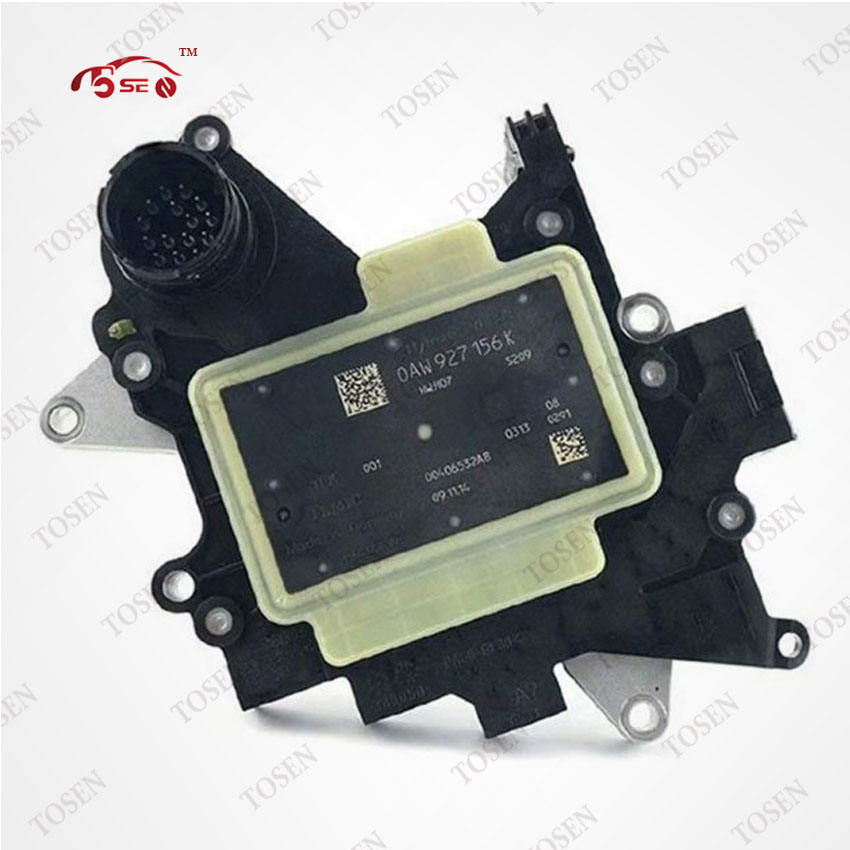
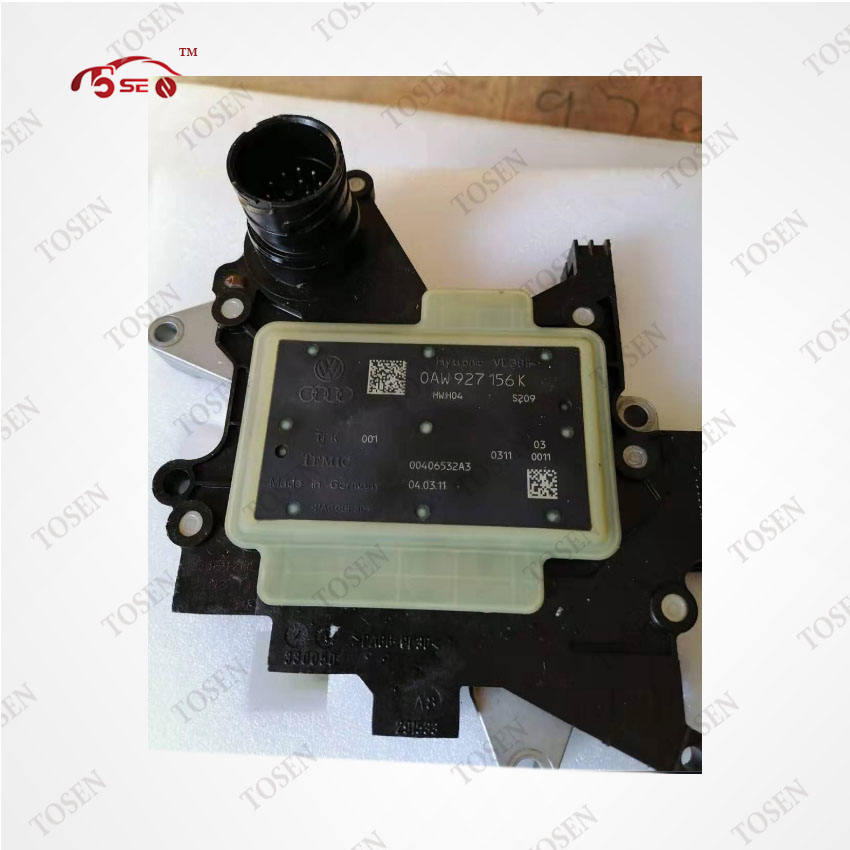
The exact unit built for this application is listed on our 0AW927156K Control Unit Module for Audi A4 A5 A6 A7 page, where the supplied configuration and fitment details are shown.
Does the Part-Number Suffix Matter — and Can You Swap It?
The 0AW927156K is one member of the 0AW927156 family. Related numbers such as 0AW927156AA, 0AW927156AB and 0AW927156AC exist, and sellers often list them as interchangeable. In most fitted cases they are, but “most cases” is not “every case,” and the difference usually comes down to the software version and the vehicle year the unit was calibrated for.
Here is the practical rule that workshops use: the base prefix 0AW927156 identifies the transmission family and connector layout; the suffix identifies the calibration generation. A later suffix is generally backward-compatible in the connector sense, but the module must carry the correct software for the car’s ECU, engine type and year, or the car will report mismatches. This is why a supplier that confirms by VIN is worth more than a listing that says “fits all.” If you are replacing an AA or AB unit, do not assume a K unit drops in with zero work — verify the vehicle data first.
You can compare the range we stock by browsing our transmission control units and mechatronics category, which groups the 0AW family alongside related DSG and CVT control modules.
Programmed or Blank: Know What You Are Buying
The single most important question in this checklist is whether the module ships programmed or blank. A blank unit has no vehicle software — it will not run the gearbox until it is coded and flashed, which needs special diagnostic equipment and the correct software file. A programmed unit is intended to be plug-and-play for a stated application, or at least ready for the final adaptation steps that most aftermarket TCUs need.
Some sellers also raise the topic of component protection and theft protection. On many VW/Audi control units, a used or blank module will not simply “adopt” to a new car without the protection being removed or the unit being coded with the correct values. If you are buying for a repair shop, ask explicitly: does this unit come programmed for the 0AW family, and what happens on first fit — plug in and drive, or plug in and code?
Cloning is the other option on the market. A clone copies the data from the customer’s original module onto a new one, which preserves the original coding and avoids the component-protection dance. It is the cleanest route when the original unit is still readable. The right answer depends on your workshop’s tools and the customer’s car, so price the decision before you promise a plug-and-play outcome.
Is the Valve Body Included, and Does It Matter?
The 0AW control module and the valve body are physically joined in many mechatronic designs, but they are not always sold as one part. Some suppliers sell the module alone, expecting you to bolt it onto the existing valve body; others sell a complete mechatronic unit with the valve body and solenoids attached.
This boundary matters for two reasons. First, the module alone cannot fix a valve-body problem — if solenoids are worn or the hydraulic plate is damaged, a new module will still shift badly. Second, bench testing is usually done on the complete assembly, so a module sold alone has a narrower test story than a unit tested as a working mechatronic. If the failure scan showed pressure or solenoid faults, lean toward the complete assembly. If the fault is clearly in the electronics, the module alone may be the cheaper and sufficient fix.
Confirm the valve-body inclusion in writing before ordering, because it changes both the parts count on the invoice and the labour plan in the workshop.
Bench-Test Evidence You Should Demand Before You Pay
An electronic control unit is one of the few parts you cannot visually inspect and know it works. That makes bench-test evidence the core of the buying decision. A responsible supplier tests the module on a rig — powering the unit, simulating sensor inputs, and watching the solenoids respond — before it is packed. Some suppliers can show shift-simulation data or test logs that prove the unit communicates and actuates.
Ask for three things: proof the unit powers up and communicates, proof the outputs (solenoid drivers) respond, and a statement of how the unit was tested (bench rig, vehicle, or both). If the seller cannot describe a test, treat it as a risk flag. The same logic applies to repair shops installing the part: a unit that was never tested is a unit that can fail on the customer’s bay, at your cost.
For the full background on how TCU and mechatronic units are categorized and what testing means in practice, see our related technical guide on transmission control units.
Basic Settings and Adaptation After Installation
Even a correctly programmed and bench-tested module usually needs a final step after installation: basic settings, sometimes called adaptation. The module learns clutch and gear positions, torque settings and shift parameters against the actual mechanical condition of the gearbox. Skipping this step is a common cause of “the new unit still shifts badly” complaints — the module is fine, but it has not been adapted to the car.
The procedure normally runs through the diagnostic tool: clear the fault memory, run the basic-settings routine for the mechatronic, take the car through a road test, and then re-read the adaption values. Make sure the person installing the unit has the tool and the software for the 0AW family. Audi workshop documentation describes the sequence for transmission control modules, and the same verification method used for other automatic-transmission electronics is a useful cross-reference when you review supplier claims.
What the Warranty Should Cover — Including Software
Control modules fail in two ways: hardware and software. A hardware failure is a dead component — no power, no communication, a burned driver. A software failure is trickier: the unit works, but it was shipped with the wrong calibration, or it fails to adapt after fit. Both can ruin a job, so the warranty should be explicit about both.
Before you buy, confirm the warranty period and exactly what it covers. Does it cover a unit that will not adapt after installation? Does it cover a wrong-software shipment? What does the supplier require as proof — bench-test photos, the old module, a diagnostic scan? The answers define how much risk you are carrying. A seller that offers a clear, written warranty on the supplied unit — including the software state — is easier to work with than one that only guarantees “arrived in one piece.”
Frequently Asked Questions
Can 0AW927156K replace 0AW927156AA or 0AW927156AB?
Usually yes, because the family shares the base prefix and connector layout, but the module must carry software matched to the vehicle’s year and ECU. Confirm by VIN before ordering rather than assuming any suffix works.
Does the 0AW927156K need programming after installation?
If you buy a unit programmed for the 0AW family, it should run after the basic-settings routine is completed. A blank unit needs coding and flashing with the correct software, which requires diagnostic equipment. Always confirm the programming state before purchase.
Is the valve body included with the control module?
It depends on the listing. Some sellers ship the module alone, others a complete mechatronic assembly with valve body and solenoids. Confirm inclusion in writing, because it changes the parts cost and the workshop labour plan.
How can I verify a TCU was bench tested?
Ask for proof the unit powered up, communicated, and drove its solenoid outputs on a test rig, and ask how the test was performed. A supplier that can describe or show test evidence carries less risk than one that cannot.
What if the new module still shifts badly after installation?
Run the basic-settings/adaptation routine and re-check the fault memory before blaming the part. If it still fails, the issue may be the valve body or the calibration — both reasons to keep the warranty terms clear from the start.
Get a Fitment-Confirmed Quote
Submit your VIN, old-part label / OE number, model year, quantity, and destination port to receive a fitment confirmation and a quote. This closes the loop: the same identifiers that prove compatibility — the 0AW927156 suffix, the programming state, and the valve-body boundary — become the records used to ship the correct control module for your Audi A4, A5, A6 or A7.
References
- Transmission control module installation instruction (0AW/automatic transmission electronics, PDF): cloudfront instruction file 225740-01K-IN
- Mercedes Medic — Valve body and conductor plate repair reading (automatic transmission electronics verification methodology): mercedesmedic.com — 722.9 7G-Tronic valve body conductor plate
- GMS Spares — 0AM927769D product reference (cross-supplier part-number verification practice): gmsspares.com.au — 0AM927769D