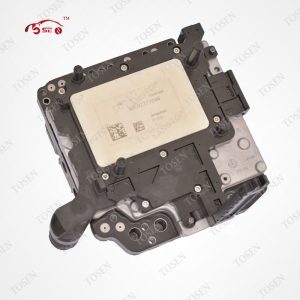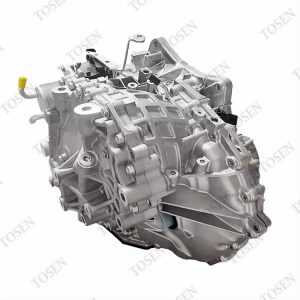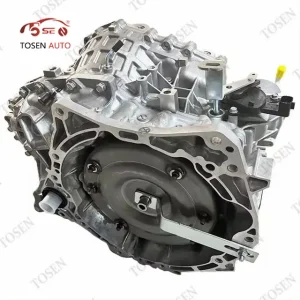
The 722.8 TCM CVT is the transmission control module for the Mercedes-Benz Autotronic continuously variable transmission, fitted to the W169 A-Class (2004–2012) and the W245 B-Class (2005–2011). Unlike most Mercedes automatics, the control unit is integrated with the valve body inside the transmission housing, so a fault is rarely a simple “swap a black box” job. This guide walks through how to confirm fitment, what the real choice between repair and replacement looks like, and the checks that protect you before and after the unit is fitted.
Does the 722.8 TCM Drop into Your W169 A-Class or W245 B-Class?
Fitment for the 722.8 transmission control module is decided by three identifiers that must all agree: the vehicle’s VIN, the transmission code stamped on the case, and the OE reference printed on the old TCU. The 722.8 is the Mercedes Autotronic CVT — a transverse, front-wheel-drive unit with a push-belt and a chain-driven oil pump. It was only ever installed in the W169 A-Class and the W245 B-Class, so the question is not “which model” but “which suffix of OE number”, and that is where most wrong-shipments happen.
Two OE references dominate the W169 / W245 722.8 TCU market: A1695451032 (the Mercedes in-house reference, where the W169 chassis code is embedded) and A0034462410 (the part that also appears on the mechatronic label). The hardware and software index letters that follow these numbers — letters such as the suffix after the base number — determine which software calibration the unit ships with. Two TCUs with the same base number but different suffixes are not freely interchangeable: a later suffix on a 2011 W169, for example, will not behave correctly in an early 2005 W245.
The safe way to order is to give the supplier the full VIN, the exact OE string as printed on the old TCU’s label (including the suffix letters), and a clear photo of that label. With those three, a competent supplier can confirm whether the unit they ship will match your transmission code, your engine calibration, and your immobiliser. If the listing only shows the base number without asking for the suffix, treat that as a risk flag.
To see the exact unit built for this application, review our Good Price Reliable 722.8 TCM CVT for Mercedes Benz W245 W169 product page, which lists the W245 / W169 fitment and the supplied configuration.
Repair or Replace: What Are You Actually Deciding Between?
The 722.8 is unusual in Mercedes’ range because the TCU is not a separate, dry-box computer that can be unclipped and replaced in minutes. It lives inside the transmission, submerged in MB 236.20 automatic transmission fluid, on the same assembly as the valve body, the pressure regulator, and the speed sensors. That single fact shapes the repair-versus-replace decision.
Bench repair means sending the old mechatronic unit to a specialist lab. The lab opens the unit, replaces the failed solder joints or surface-mount components on the TCM PCB, and returns the same physical part with the original software intact. The appeal is that the unit keeps its original VIN coding and component protection pairing, so the immobiliser handshake is preserved. The risks are turnaround time, the chance the mechatronic plate is also damaged, and the fact that a 15-year-old PCB may have other weak joints that fail a few months later.
Replacement means buying a pre-supplied unit. There are three flavours on the market, and they are not equivalent:
- Blank / unprogrammed. The hardware is new, but the unit has no vehicle software. It must be SCN-coded (Software Calibration Number) to the target car using Mercedes-Benz online diagnosis, and the immobiliser / component protection must be matched. This is the cheapest route on paper, but it needs dealer-level tooling to finish the job.
- Pre-coded to a generic calibration. Some suppliers ship a unit with a base calibration already loaded. It will run, but the calibration is not specific to your exact vehicle, so shift quality and torque converter lock-up behaviour may not match the original.
- Cloned from the old unit. The supplier copies the EEPROM / flash data from your old TCU onto a known-good PCB, preserving the original coding. This is the closest behaviour match to the original, but it depends on the old unit still being readable, and the cloning service is an extra step.
The choice between these routes is really a choice about who handles the coding and who carries the software risk. A workshop with STAR / XENTRY can finish a blank unit in-house. A dealer-only shop will usually prefer a pre-coded or cloned unit so the install ends at the mechatronic connector. For context on how a TCU and mechatronic unit relate to each other across Mercedes and VW Group transmissions, see our transmission control units and mechatronics category.
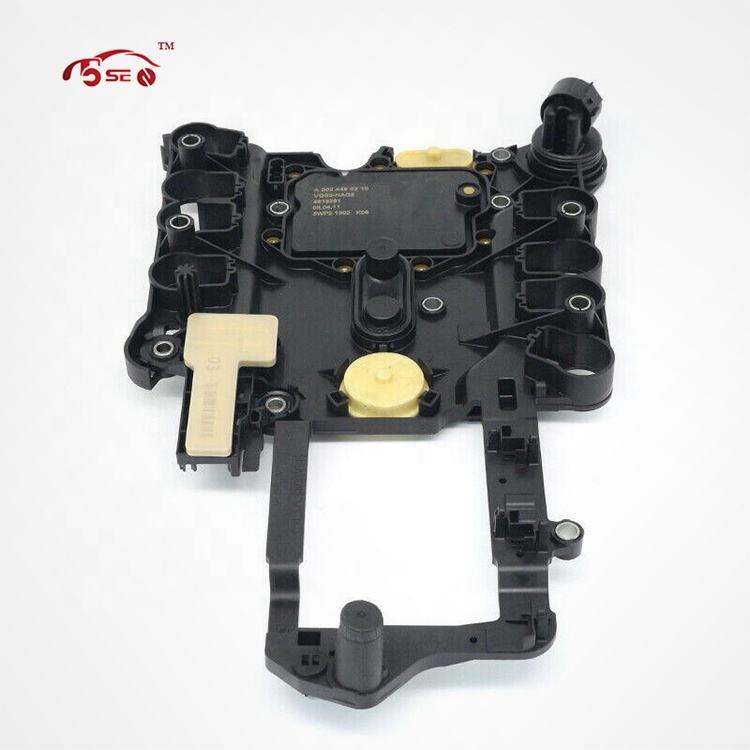
Where the 722.8 Failure Lives — The Conductor Plate and Mechatronic Interface
The 722.8 mechatronic is a sealed unit, but it is also a hot, vibration-loaded, fluid-bathed assembly. The failure modes that recur across the W169 and W245 fleet are well documented, and they cluster in the same places.
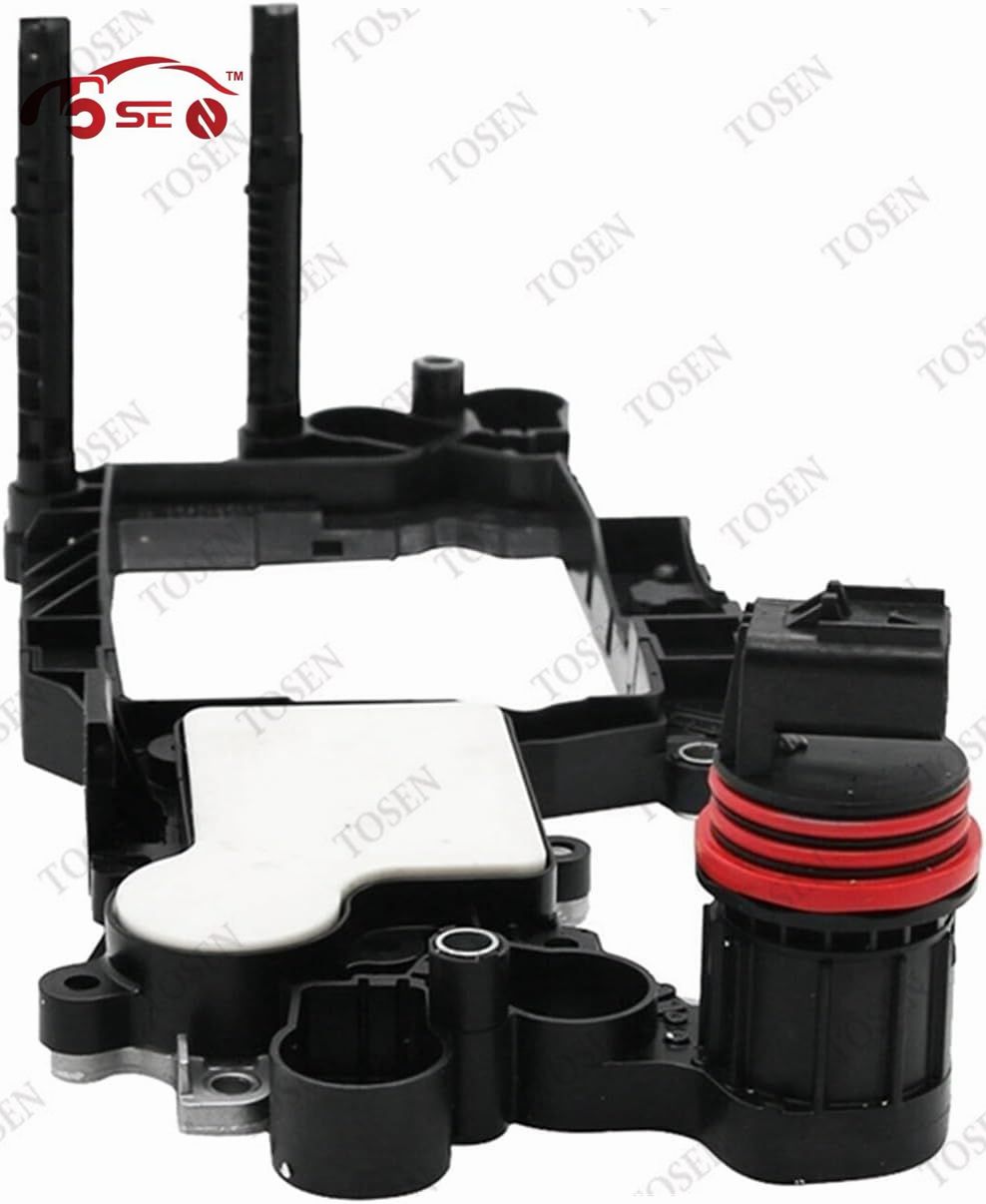
First, the conductor plate — the plastic sensor carrier that holds the primary, secondary, and output speed sensors. MercedesMedic’s guide to the 722.9 7G-Tronic valve body and conductor plate (a closely related Mercedes mechatronic) explains why this plate is the single most failure-prone part of the assembly: the sensors are surface-mounted on a flex circuit that sits in the transmission fluid, and any contamination — especially fine metal debris from a worn pump or variator bearing — shorts the sensor signals. The same physical arrangement exists in the 722.8, which is why a “speed sensor code” on a 722.8 is rarely fixed by replacing a single sensor; the plate itself usually has to come out and be cleaned, or the mechatronic replaced.
Second, the TCM PCB. Heat cycling of the submerged PCB causes solder joint fatigue, and the result is intermittent no-communication, limp mode, or a stored fault for the auxiliary pressure regulator. Independent fault databases for the 722.8 list P0722 (output speed sensor), P0793 (intermediate shaft speed sensor), and P0841 (pressure sensor plausibility) as the codes most often traced back to the mechatronic. GearBoxList’s 722.8 specification page also notes that control board failure is the single most common problem with this CVT, because the board is mounted inside the transmission housing and suffers from overheating.
Third, the valve body itself. The 722.8 is sensitive to fluid cleanliness; if the MB 236.20 ATF is not changed at the recommended 50,000 km interval, the valve body clogs with wear debris and the bearing life falls. A mechatronic replacement without addressing the contamination upstream is a short-term fix.
This is why the repair-versus-replace decision is not really “PCB fix or new PCB”. The unit you receive — repaired or supplied — has to come with a clean conductor plate, verified speed-sensor signals, and a pressure test on the regulator. That is what a credible bench report covers.
Bench Testing and Pre-Dispatch Verification
A bench-tested TCU is not just “the unit powers up”. A real bench test on a 722.8 mechatronic covers the four outputs that matter: solenoid current draw on each of the four outputs (primary, secondary, clutch, and torque converter lock-up), pressure regulator response, speed-sensor signal shape, and communication with a STAR / XENTRY emulator. The cloudfront instruction file 225740-01K-IN documents the generic handling and test procedure for transmission control units, including the pre-power checks (no short circuits on the harness pins, no fluid ingress on the connector, correct pinout against the OE drawing) that should be on a bench report before a unit is packed.
Ask the supplier for the bench report, not just a “tested” sticker. A credible report names the test rig, the serial of the donor unit, the four solenoid readings, and the conclusion. If the supplier cannot or will not produce that report, walk away, because the same fault you are trying to fix is the one a skipped bench test would let through.
For a deeper look at how a TCU, a mechatronic, and a DSG / CVT unit differ in service, our related technical guide walks through the control-unit families and the test points each one exposes.
Install, Basic Setting, and Where the Responsibility Line Falls
A supplied 722.8 mechatronic arrives drained of fluid and ready to drop onto the transmission. The mechanical install is not complicated, but two steps afterwards decide whether the unit will run cleanly.
The first is fluid fill and level. The 722.8 takes MB 236.20 and holds roughly 6.5 litres for a full fill (4 litres for a partial drain-and-fill with the converter). The level is checked with the engine running at a specified temperature, through a dedicated fill port — not the dipstick. Get this wrong and the variator never reaches full line pressure, which is the same fault that originally damaged the old mechatronic.
The second is the software / coding step. A blank unit has to be SCN-coded to the target vehicle using Mercedes online diagnosis; a cloned or pre-coded unit still needs the component protection handshake to be relearned. Whoever performs this step is on the hook for any software fault that appears after the install. That boundary is the responsibility line and it should be agreed in writing before the crate is opened.
Warranty on a mechatronic unit typically covers the supplied assembly against defects in materials and workmanship, and it does not cover software issues introduced during coding, or damage from contaminated fluid. The supplier is responsible for the bench test and the mechanical condition of the unit; the installer is responsible for the coding and the post-install fluid service. A clear allocation of those two lines is the single biggest protection a buyer has.
Frequently Asked Questions
Will any 722.8 TCM fit my W169 A-Class or W245 B-Class?
No. The base OE number is not enough; the suffix letters on the label select the software calibration. Match the full OE string from your old TCU (including the suffix) to the supplied unit, and confirm with the supplier against the VIN before shipping.
Does a replacement 722.8 TCM come pre-programmed?
It depends on the supplier. Blank units require SCN coding with Mercedes online diagnosis. Pre-coded units ship with a generic calibration that may not match your exact vehicle. Cloned units carry the data copied from your old TCU and behave the most like the original. Ask the supplier which of the three you are buying before you pay.
Is the valve body / mechatronic plate included with a replacement TCU?
On the 722.8, the TCM is part of the mechatronic, so a “TCU only” is not a real option. A replacement mechatronic includes the TCM, the conductor plate with sensors, the valve body, and the pressure regulator as a single assembly. The transmission itself is reused.
Do I need to code the new 722.8 mechatronic to my car?
Yes. Even a cloned unit needs the component protection handshake to be relearned, and a blank or pre-coded unit needs full SCN coding. This step requires STAR / XENTRY or an equivalent Mercedes online diagnosis tool and is the installer’s responsibility, not the supplier’s.
What is the warranty boundary between the supplier and the installer?
The supplier covers the supplied mechatronic against defects in materials and workmanship, supported by a bench test report. The installer covers the coding, the fluid service, and any damage from contaminated ATF. Agree this split in writing before the crate is opened.
Get a Fitment-Confirmed Quote
Submit your VIN, old-part label / OE number, model year, quantity, and destination port to receive a fitment confirmation and a quote. The same identifiers that prove fitment are the ones we use to ship the correct 722.8 TCM CVT for your W169 A-Class or W245 B-Class.
References
- MercedesMedic — 722.9 7G-Tronic valve body and conductor plate guide: mercedesmedic.com (722.9 conductor plate)
- GearBoxList — Mercedes 722.8 CVT specifications and common faults: gearboxlist.com/mercedes/722-8
- Transmission Control Unit handling and bench test instructions (225740-01K-IN): cloudfront.net (225740-01K-IN)