JF011E CVT failure symptoms can point to fluid-temperature protection, electrical or hydraulic control faults, or internal mechanical damage. Judder, delayed engagement, whining, RPM flare and reduced performance choose the next checks; none of them identifies a failed transmission by itself.
Repair shops and fleet buyers should preserve the operating conditions, diagnostic data and vehicle identity before comparing repair or replacement quotes. The useful question is not “Which weak part does this symptom name?” but “What recorded finding changes the repair scope?”
Use this as a discussion guide for a qualified transmission workshop. Follow the service information for the exact vehicle, year, market and installed CVT.
Decide Whether to Stop Driving and Arrange Inspection
Arrange recovery when control is uncertain
Stop safely if the vehicle loses drive in traffic, engages violently, cannot maintain a predictable speed, displays a transmission-temperature warning, or the workshop advises against further use. Do not repeat a road test just to reproduce a severe symptom.
Reduced performance does not always mean the belt has failed. A Nissan bulletin for specific 2011–2015 Rogue and Rogue Select vehicles begins by checking fluid level and type, coolant concentration and diagnostic counts before it branches to control-valve or cooler work. That example is limited to the vehicles and conditions named in the bulletin; it shows why the workshop must check applicability before choosing a repair.
- Record the first warning message and the road conditions when it appeared.
- Note whether the CVT was cold, fully warm, climbing, cruising or moving away from a stop.
- Save any recent fluid-service invoice and the product used.
- Describe loss of drive, judder, noise or engagement behavior without guessing at the failed part.
Match JF011E Symptoms to Workshop Checks
Start with when the behavior occurs. A complaint that appears only after a long hot pull is a different diagnostic branch from a cold delayed engagement or an RPM flare during light acceleration. Ask the technician to connect the symptom to stored data, fluid findings and the applicable test procedure.
| Observed behavior | Condition and data to record | Workshop checks to discuss | What the observation does not prove |
|---|---|---|---|
| Judder, shake or repeated bumps | Speed, throttle, temperature, lock-up state and stored codes | Road-test reproduction under the applicable procedure; code and live-data review; fluid and control assessment | Judder alone does not distinguish control-valve, torque-converter and internal causes. |
| Delayed Drive or Reverse engagement | Cold/warm state, delay length, engine speed and whether engagement is harsh | Fluid level/condition, code scan, pressure/control assessment and linkage or range information | A pause does not automatically require a complete CVT. |
| Engine RPM rises but road speed does not follow | Load, commanded/observed ratio, temperature and warning state | Diagnostic data, hydraulic pressure/control evaluation and mechanical inspection where indicated | RPM flare alone does not identify the belt, pump or valve body. |
| Whine, rumble or changing mechanical noise | Vehicle speed versus engine speed, load, direction and source area | Road test and workshop localization; fluid/debris inspection when appropriate | A phone recording cannot locate a bearing or prove pulley damage. |
| Reduced power after sustained load | Fluid temperature or warning, route/load, fluid service and cooling condition | Check model-specific protective logic, fluid/cooling conditions, codes and counts | Heat-related protection is not universal proof of mechanical failure. |
Preserve the first scan before codes are cleared. If a source names a common JF011E wear area, treat it as a hypothesis for the workshop, not a remote diagnosis of the vehicle in front of you.
Build a Useful Diagnostic Record Before Authorizing Work
- Identify the installed unit. Record the VIN or chassis number, vehicle model/year/market, drivetrain, transmission label and relevant OE references.
- Write the complaint as an observation. Include cold or warm state, speed, load, throttle, warning message and when the behavior starts or clears.
- Preserve the scan. Save stored and pending codes, available freeze-frame data and relevant transmission live data before clearing anything.
- Name the applicable service information. The workshop should record the model-specific procedure or bulletin and why it applies.
- Record findings and limits. Include fluid level/condition, electrical checks, control or pressure findings and any physical inspection, then state what remains uncertain.
- Connect the proposed work to the findings. The quote should explain why it covers wiring, a control valve, an internal rebuild or a complete assembly.
A code is part of the record, not the whole diagnosis. The same code family can enter a different repair flow on a different vehicle or transmission generation. Ask the workshop to show the application boundary and the finding that advances the branch.
Minimum fields for a comparable quote
Vehicle and CVT identity; complaint and operating conditions; codes and saved data; applicable procedure; measured or observed findings; proposed repair scope; transferred parts; supporting fluid/cooler/calibration work; warranty and exclusions.
Define the Repair Scope: Control Work, Rebuild or Complete CVT
One NHTSA-hosted Nissan flow chart gives a concrete example for its listed vehicles and DTC: the technician removes the control valve and inspects the CVT belt. Evidence of belt slippage sends the repair to CVT assembly replacement; an acceptable belt sends it to control-valve replacement. This is an example of evidence changing scope, not a universal JF011E instruction.
| Finding pattern | Scope to price | Questions before purchase |
|---|---|---|
| External wiring, connector or sensor issue is located | Targeted electrical repair | What was tested, and how will the repair be verified afterward? |
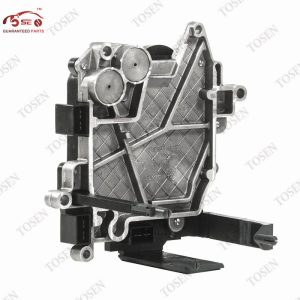
| Control-valve or solenoid fault is supported and internal mechanical condition is acceptable | Control-valve repair or replacement | Which valve-body version applies, what setup is required, and what internal condition was checked? |
| Internal wear or damage is localized and a qualified rebuild is practical | Defined rebuild scope | Which hard parts and wear parts are measured or replaced, and how is the unit tested? |
| Belt/pulley damage, widespread debris or extensive internal damage is confirmed | Complete CVT replacement | What supporting cooler, fluid, converter, programming or adaptation work is included? |
Compare Repair, Rebuild and Replacement as Complete Jobs
| Option | Best fit when | Quote must define | Main uncertainty |
|---|---|---|---|
| Targeted repair | A specific external or control fault is located and the retained mechanical condition is acceptable | Parts, labor, setup, fluid and verification | Uninspected internal wear can remain. |
| Rebuild | Internal damage can be measured and a capable rebuilder can define the scope | Hard-part inspection, wear parts, converter/control work, test method and warranty | Scope can expand after disassembly. |
| Remanufactured replacement | Downtime and predictable supplied scope matter, and the old unit can be exchanged | Included components, core terms, test description, fitment and warranty | Quality and inclusions vary by supplier. |
| New replacement | A verified new unit is available and its cost fits the vehicle plan | Exact condition, configuration, inclusions, fitment and warranty | Availability and price may dominate the decision. |
- Compare total vehicle downtime, not only bench labor.
- List every transferred or retained component and its condition.
- Add fluid, cooler cleaning or replacement, seals, mounts and required setup to each quote.
- Compare warranty start, exclusions, labor coverage, core terms and claim evidence.
- Consider the engine, chassis, corrosion, intended use and expected service life without applying a universal vehicle-value percentage.
Use the same scope table for every supplier. A lower price is not comparable when it omits the converter, control work, cooler service, calibration or freight that another quote includes.
Prepare the Replacement and Installation Handoff
- Send the full VIN or chassis number, vehicle model/year/market, drivetrain and clear photos of the installed transmission label and interfaces.
- State the diagnosis and requested scope. Separate a complete assembly from a valve body, converter or other component.
- Get the supplied-parts list in writing. Identify what transfers from the old unit and whether a core return is required.
- Have the installer define the correct fluid, cooler-circuit cleaning or replacement, seals and any programming, calibration or adaptation work for the application.
- Agree on packing, freight, arrival inspection, warranty evidence and the procedure for a damaged or incorrect unit before dispatch.
- VIN/chassis and old-unit label agree with the quoted application.
- 2WD/AWD configuration and external interfaces are confirmed.
- New, remanufactured or other condition is stated plainly.
- Included converter, valve body, sensors and external parts are listed.
- Installation and post-install verification requirements are assigned to the workshop.
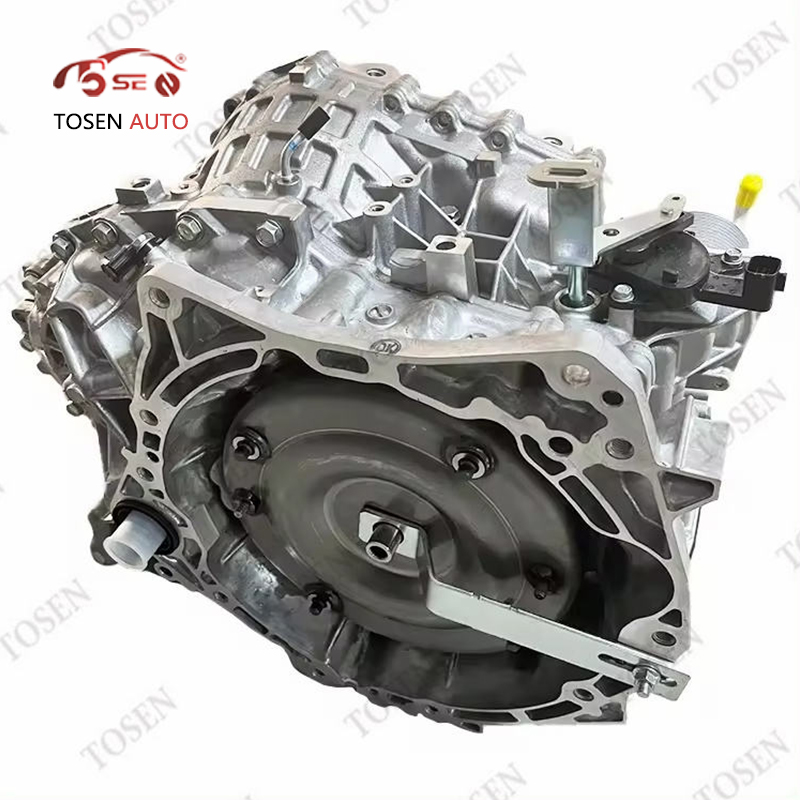
Use the existing JF011E CVT transmission cross-application guide for the family-name and fitment details.
Compare the quoted unit with the JF011E CVT Transmission Assembly page before preparing a purchase inquiry.
A manufacturer procedure for specified Rogue applications shows why cooler flushing can be part of the supporting work after valve-body or CVT replacement; the installer must determine whether that requirement applies to the actual vehicle.
Prepare a fitment-confirmed JF011E inquiry Send TOSEN AUTO the VIN, old-unit label or OE reference, vehicle/year/drivetrain, diagnosis, required scope, quantity and destination port. Ask for written fitment, supplied-parts and installation requirements before ordering. On-page diagnosis and fitment checklist
Frequently Asked Questions
Does JF011E judder mean the belt has failed?
No. Judder is a complaint that can enter several diagnostic branches. Record the operating condition and codes, then have the workshop follow the applicable procedure and inspect the indicated systems before choosing a part.
Can a valve-body repair solve delayed engagement or ratio concerns?
It can when testing supports a control-valve, solenoid, sensor or hydraulic-control fault and the retained mechanical condition is acceptable. Ask what evidence excludes belt, pulley or wider internal damage.
Does reduced power when the CVT is hot require replacement?
Not automatically. Some model-specific service information describes fluid-temperature protection and starts with fluid, cooling and diagnostic checks. The workshop must verify whether that information applies to the exact vehicle.
Should the workshop clear the codes before quoting?
Ask it to save the initial scan and available operating data first. Clearing codes can remove context that helps reproduce the complaint and select the correct service branch.
Is RE0F10A always interchangeable with any JF011E?
No. The names can identify the same transmission family, but application variants can differ. Confirm the VIN, old-unit label, drivetrain, interfaces and configuration before ordering.
What should a replacement quote include beyond the CVT?
It should state included and transferred components, fluid, cooler-circuit work, seals, setup or adaptation, freight, core terms, warranty and post-install verification. Compare the same fields across suppliers.
Make the Next Decision from the Findings
Treat the symptom as the start of the decision, not the conclusion. Record when it occurs, preserve the scan, follow the applicable service information and choose the smallest repair scope supported by the findings. If replacement is justified, carry that same diagnosis into fitment, supplied-parts and installation requirements.
If the vehicle needs a different application, use the automatic transmissions category to compare other available assemblies before preparing the inquiry.
Request fitment confirmation after the scope is clear Prepare the VIN, old-unit label or OE reference, vehicle/year/drivetrain, diagnosis, required assembly scope, quantity and destination port for TOSEN AUTO. On-page diagnosis and fitment checklist