The 722.9 and the 722.6 are two automatic transmission families used in Mercedes-Benz vehicles, and the two designations mark different generations of gearbox hardware rather than versions of one unit. The 722.9 is a seven-speed automatic transmission marketed by Mercedes-Benz as 7G-Tronic and fitted across a wide range of models and production years. The 722.6 designation belongs to an earlier Mercedes-Benz automatic transmission family with its own control hardware and its own set of reference numbers. Because components are matched to one transmission family, a buyer who sources control parts for a Mercedes-Benz gearbox must first establish which family the vehicle carries and then order against the numbers printed on the original components. This guide explains what separates the two families, how the 722.9 control system is organised, and which checks prevent a wrong-family or wrong-version order.
What the 722.9 and 722.6 Designations Identify
The 722.9 is a seven-speed automatic transmission, known in Mercedes-Benz marketing material as 7G-Tronic. The family was fitted across a wide range of Mercedes-Benz models and production years, which is exactly why the model name on the boot lid tells a buyer very little: two vehicles that share a model name can carry different transmission hardware, and the valve body and control components changed over the production run even within the 722.9 family itself.
The 722.6 is a separate and earlier Mercedes-Benz automatic transmission family. The important point for a parts buyer is not the age of the design but the numbering logic: every control component in the Mercedes-Benz parts system is specified for one transmission family. A conductor plate or a servo module listed for the 722.9 seven-speed automatic matches only vehicles running that transmission, so the same article cannot serve a repair on the other family. Ordering a 722.9 component for a vehicle that carries the 722.6, or the reverse, produces a part that will not match the valve body, the connector arrangement or the selector mechanism found on the vehicle.
Family-level identification is therefore the first gate in any Mercedes-Benz transmission parts enquiry. Once the family is confirmed, the buyer moves to version-level checks, because hardware revisions inside one family create a second layer of matching work that is just as important as getting the family right.
How the 722.9 Control System Is Organised
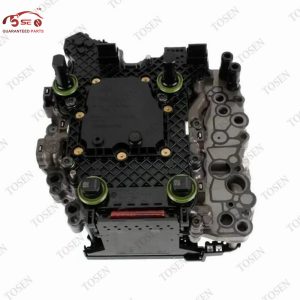
Inside the 722.9 transmission, the electrohydraulic control system splits the work between several components, and understanding that split is the fastest way to order the right part. The 722.9 7G-Tronic conductor plate carries the electrical and hydraulic interface between the transmission control unit and the valve body. The plate houses the speed sensors and the connector that feeds transmission data to the controller, and it provides the conductor paths that link the controller to the shift solenoids and the pressure regulators mounted on the hydraulic unit. A conductor-plate fault typically shows up as interrupted or implausible speed signals, disturbed shift quality and stored transmission fault codes, which is why the assembly is a common repair item on this gearbox family.
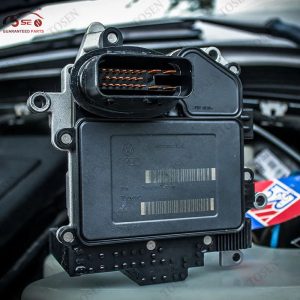
Gear selection itself is handled by a separate component. The A0002701852 Intelligent Servo Module is an electrohydraulic shift actuator for the 722.9: the module receives a shift request from the transmission control unit and moves the selector mechanism to engage the commanded gear. The Intelligent Servo Module carries the electronic servo function only, while the hydraulic control and clutch actuation stay with the valve body and the transmission control unit. The practical consequence is that a shift fault traced to the servo mechanism is repaired by replacing the ISM, not the whole controller, and not the valve body.
This division of labour also explains why a diagnostic scan should come before a parts order. A stored speed-signal or solenoid-circuit fault points the workshop toward the control interface carried by the conductor plate, while a fault isolated to the selector mechanism points toward the servo module. Buying the cheaper of the two components first, without the scan, is a common way to end up with a shelf full of parts that did not fix the car.
Which Components Differ Between the Two Families
On the 722.9 side, the two components that generate most replacement demand are the conductor plate and the Intelligent Servo Module. The conductor plate sits inside the valve body assembly, so replacing it involves opening the hydraulic unit and renewing the associated seals, and the transmission fluid service is normally planned at the same time. The correct plate is confirmed by matching the complete Mercedes-Benz module number on the original component and the VGS identification, together with the controller generation and the electrical connector layout, because the valve body and conductor-plate hardware changed over the production run. The Intelligent Servo Module is confirmed by matching the reference number on the original module label, then comparing the connector pattern and mounting arrangement against the removed unit.
On the 722.6 side, the components carry their own family-specific numbers, and none of the 722.9 references cross over. A workshop that quotes an A0002701852 module number or a 722.9 conductor-plate number for a vehicle running the other family will be quoted, and shipped, a part that does not fit. The only reliable bridge between the two families is the vehicle itself: the component label on the removed unit, the vehicle identification number and the transmission code, supplied together in the enquiry, let a supplier confirm the family and the version before anything is dispatched.
Where the transmission is being repaired as a mechatronic assembly, the wiring configuration should be confirmed as well, so that the hydraulic and electronic components are matched together rather than ordered piecemeal. This matters most for buyers who combine a conductor plate with other valve-body items in one shipment, because a mismatched controller generation turns two correct parts into one unusable set.
Buyer Checklist for Mercedes-Benz Transmission Components
Whether the enquiry concerns a 722.9 conductor plate for the 722.9 transmission or a servo module, the same sequence of checks protects the order:
- Read the reference number on the original component before anything else. The number on the label is the primary check; the vehicle model name is not a substitute for it.
- Compare the connector layout and the mounting arrangement against the removed unit. Two components that share a transmission family can still differ in connector pattern and controller generation.
- Send the vehicle identification number together with the transmission code, so the supplier can confirm the family and the hardware version on record before quoting.
- State the coding or programming requirements of the workshop. Transmission electronics may require coding or adaptation after fitting, and the scope of that work should be agreed before the part is dispatched.
- Plan the full replacement scope. A conductor plate replacement involves opening the valve body assembly, renewing the associated seals and, where required, a transmission fluid service, so the workshop schedule and the parts list should cover the complete job.
- Request a sample unit for qualification when the order is part of an export volume, so the hardware version can be verified against the original component before a larger commitment is made.
TOSEN supplies 7G-Tronic control hardware through a factory-direct channel and inspects each assembly against the part number, the connector arrangement and the sensor and solenoid interface before dispatch, which removes the most common mismatch risks when the checklist above has been followed.
Frequently Asked Questions
Are parts from the Mercedes-Benz 722.9 and 722.6 transmissions interchangeable?
Parts from the 722.9 and 722.6 transmissions are not interchangeable, because each transmission family uses its own control hardware and its own set of reference numbers. A conductor plate or servo module specified for the 722.9 seven-speed automatic matches only vehicles running that transmission family, and a repair on the other family requires components ordered against that family’s own part numbers. Confirming the family first, through the component label and the vehicle identification number, prevents a wrong-family order before payment is made.
How can a workshop confirm whether a vehicle carries the 722.9 or the 722.6 transmission?
Confirmation starts with the reference numbers stamped on the original components, supported by the vehicle identification number and the transmission code supplied in the parts enquiry. The vehicle model name alone is not a reliable check, because Mercedes-Benz fitted a wide range of models across many production years and two vehicles sharing a model name can carry different transmission hardware. A supplier that receives the component label together with the vehicle details can verify both the transmission family and the hardware version before dispatch.
What does the conductor plate do inside the 722.9 transmission?
The conductor plate carries the electrical and hydraulic interface between the transmission control unit and the valve body in a 722.9 gearbox. The plate houses the speed sensors and the connector that feeds transmission data to the controller, and it provides the conductor paths that link the controller to the shift solenoids and pressure regulators on the hydraulic unit. A failing plate commonly produces interrupted or implausible speed signals, disturbed shift quality and stored fault codes, so a diagnostic scan should confirm the fault sits on the control interface before the plate is replaced.
Is the A0002701852 Intelligent Servo Module a complete transmission control unit?
The A0002701852 Intelligent Servo Module is not a complete transmission control unit. The module is an electrohydraulic shift actuator that receives a shift request from the transmission control unit and moves the selector mechanism to engage the commanded gear, while the hydraulic control and clutch actuation remain with the valve body and the control unit. A 722.9 shift fault traced to the servo mechanism is therefore repaired by replacing the Intelligent Servo Module as a targeted fix rather than the whole controller.