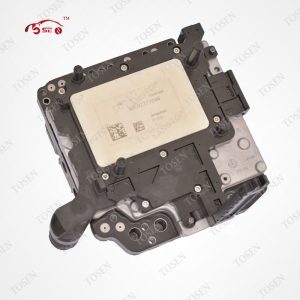
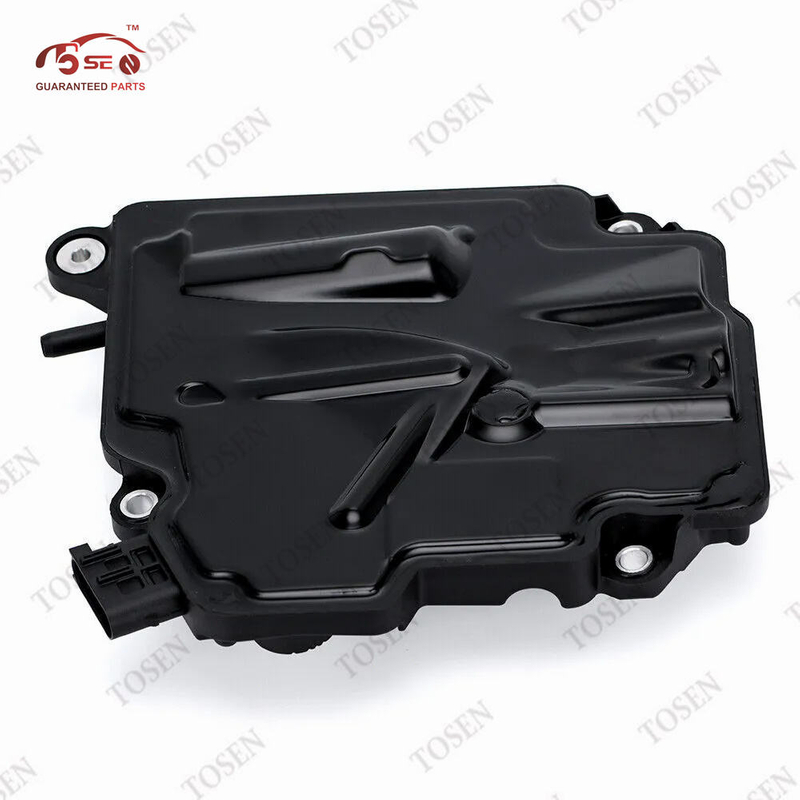
The A0002701852 TCU for Mercedes 722.9 is one of the most asked-about transmission control units in the 7G-Tronic parts market. It sits inside a transmission family that Mercedes built in three generations, so the same-looking module can behave differently depending on the VGS version and the software state it carries. This guide walks you through how to identify your VGS version, what “blank”, “programmed” and “bench tested” really mean, which failure symptoms point to the TCU or its conductor plate, and the checks to run before you spend money on a replacement.
Which Mercedes 722.9 VGS Version Uses the A0002701852 TCU?
The 722.9, sold as the 7G-Tronic and built around the internal code NAG2, entered production in 2003 and spread across almost every Mercedes passenger range. Under that single transmission code, Mercedes fitted three generations of the control unit, each known as a VGS version. Early units, identified as VGS1, were built mainly in the 2004 to 2008 window and carried a higher failure rate; repair notes for VGS1 typically call for replacing both the valve body and the conductor plate together. The second and third generations, VGS2 and VGS3, changed the failure pattern, and the conductor plate plus TCU can usually be handled as the repair set.
You identify the version by reading the number printed on top of the unit, normally on the Siemens VDO sticker, so a unit that simply reads VGS 2 or VGS 3 tells you which generation you are dealing with. That generation, plus the exact OE suffix stamped on your old part, decides whether a replacement such as the High-Quality TCU (Transmission Control Unit) A0002701852 for Mercedes Benz 722.9 is a straight swap or needs coding. Public listings cross-reference the A0002701852 against A0002701652, A0002701752 and A0044460310, which is a sign that suffixes are related, but “related” is not “identical”. Fitment should always be confirmed by the OE number on your own part, the VGS version, and the VIN of the car, never by model name alone.
Blank Module or Programmed Unit: What Are You Really Buying?
The biggest mistake in the 722.9 parts market is ordering a TCU without knowing its software state. A blank, or “virgin”, unit carries no vehicle identity and must be coded to the car, a step that on 722.9 is normally done as SCN coding with a dealer-level diagnostic tool. A used unit from a scrap car is often the worst option, because 722.9 modules are married to the original vehicle, and the marriage protection has to be cleared before the module will accept the new car. Some repair specialists can re-virgin a used module, but that is a separate service with its own cost and risk.
So the first question to ask any seller is direct: is this unit virgin and ready to be coded, or does it arrive with software already written? The answer changes your labour plan, your tooling needs, and your risk. A new factory-built unit such as the ones TosenAuto lists under transmission control units and mechatronics avoids the used-carriage risk, but it still needs the coding step completed on the vehicle or on a bench that can write the module. Never assume a new part is “plug and play” for 722.9 just because the connector fits.
Mechatronic and Conductor Plate Failure Symptoms You Should Not Ignore
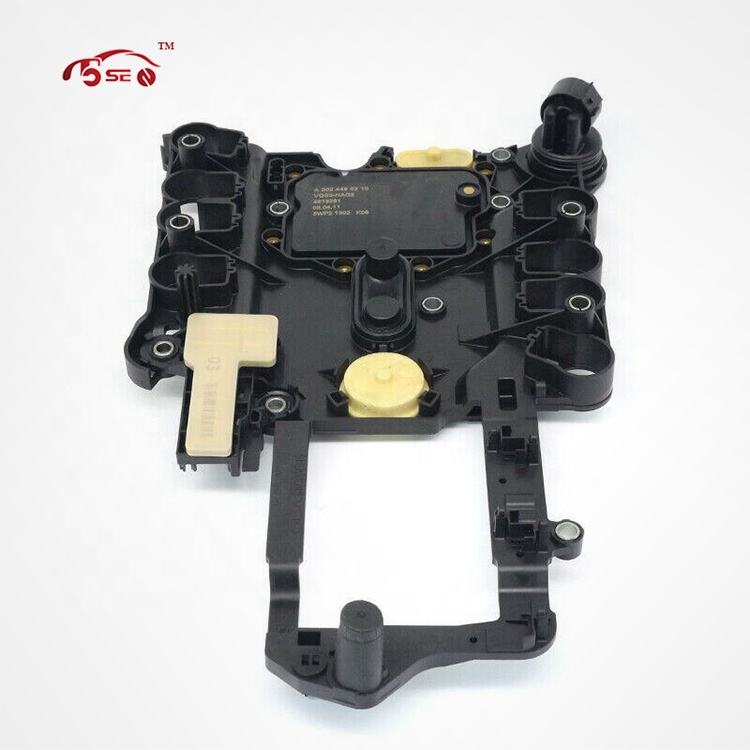
Before you buy any control unit, confirm the diagnosis. On the 722.9, the TCU sits on top of the conductor plate, and the speed sensors live inside that plate. When a sensor fails you cannot replace it on its own; the whole conductor plate comes out. That is why so many 722.9 repairs end up replacing the conductor plate together with the TCU, especially on VGS1 units. The classic symptoms are a gearbox stuck in second gear, limp-home mode, no shift into higher gears, a hard limit around 40 mph, erratic or jolting shifts, and engine revs climbing with no forward motion.
The scanner gives you a much sharper picture. Fault codes such as 0717 or 0718 point to the Y3/8n1 turbine speed sensor, while 2200, 2201, 2767 and 2768 point to the Y3/8n2 internal speed sensor, and 0722 or 2207 point to the Y3/8n3 output speed sensor. When these codes appear, the fault is usually hardware, not software. It is worth knowing that a software update can make shifts feel smoother on a healthy unit, but it will not resurrect a dead conductor plate. Industry sources on the 722.9 conductor plate are consistent on this point: once the sensor signal is lost, the hardware has to change.
Bench Testing, Installation, and Basic Settings After Fitment
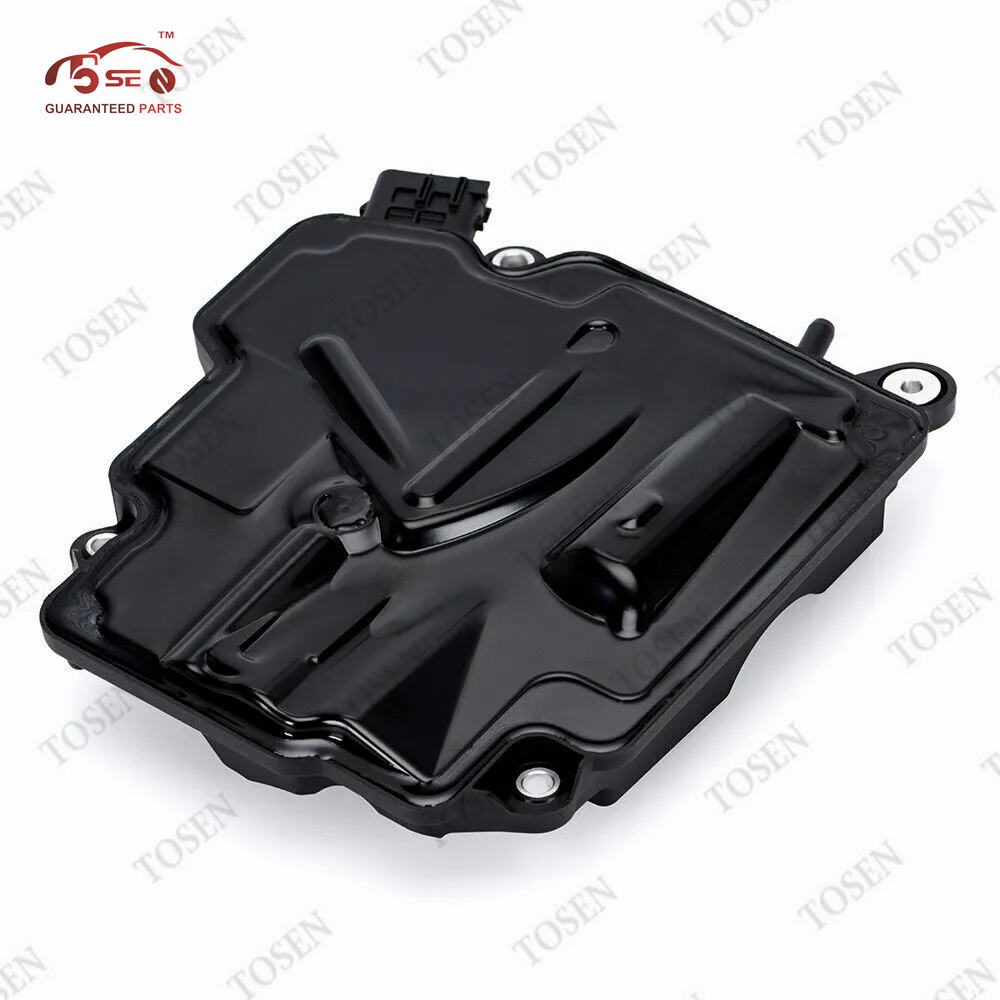
Because the 722.9 control unit can be coded, read, and adapted on a bench, a reputable supplier should be able to tell you the state of the unit before it ships. That is what “bench tested” means in practice: the module has been powered up, scanned, and verified against expected behaviour rather than sent out on faith. When you order, ask whether the unit was bench tested, what the test showed, and whether the software state is blank or written. TosenAuto states its A0002701852 units are brand new, 100% tested, and never installed, which closes the “is this a returned core” question before it starts.
After the physical swap, the job is not finished when the bolts are tight. The module should be coded to the vehicle, the transmission should complete its basic settings or adaptations, and the fluid level and shift quality should be re-checked. The exact sequence follows the diagnostic tool you are using, which is why the seller should always provide the software-state information up front. For a plain-language walkthrough of how TCUs, mechatronics, and valve bodies relate on this family, see our related technical guide. Reading it before you quote the job will save you from ordering the wrong scope of parts.
How TosenAuto Confirms A0002701852 Fitment Before You Pay
The difference between buying a TCU and buying the right TCU is the confirmation step. TosenAuto is a factory-based B2B supplier of engines and drivetrain components, and the A0002701852 unit is supplied from the transmission control unit range as a brand-new, factory-built, fully inspected part. Because fitment mistakes on 722.9 cost more in labour than in parts, the ordering process is built around identification: you give the VIN, the old-part label or OE number, and the model year, and the fitment is confirmed before anything is dispatched.
That identification step also fixes the scope problem. On 722.9 you need to know whether the valve body and conductor plate are part of the deal or separate, because the answer changes the price and the repair plan. A straight answer on inclusions, a 12-month warranty, wood-crate packing for sea freight, and confirmation of the software state are the checks that separate a factory-built unit from a used-core gamble. Repair shops that only re-flash used modules can work in some cases, but a new inspected unit removes the “someone else’s failure history” variable entirely.
Frequently Asked Questions
Can I substitute A0002701652 or A0002701752 for the A0002701852?
These OE suffixes are related and appear together in many cross-reference tables, but related is not identical. The VGS version and the vehicle software level decide the correct suffix. Match the OE number stamped on your original unit first, then confirm with the VIN before ordering. Ordering by model name alone is the most common cause of a wrong TCU.
Do I need to program the A0002701852 TCU after installation?
In nearly every 722.9 application, yes. The module must be coded to the vehicle, and on this transmission that normally means SCN coding of a virgin unit. If the unit you buy is pre-programmed, confirm it is written for your vehicle’s software level. A used module from another car must be re-virgined before it will accept the new vehicle.
Is the valve body or conductor plate included with the TCU?
Not automatically. The TCU, the conductor plate, and the valve body are separate scope items on the 722.9, and the repair set depends on your VGS version. Ask the supplier to state exactly what is included before you pay, and send your VIN and old-part photos so the scope can be confirmed.
How do I know if the TCU or the conductor plate is the problem?
Scan the transmission first. Codes for the Y3/8n1, Y3/8n2, or Y3/8n3 speed sensors point to the conductor plate, because the sensors live inside it and cannot be replaced separately. Software updates rarely fix a lost sensor signal, so hardware replacement is normally the cure.
Is software failure covered by warranty?
That depends on the supplier’s warranty terms. Hardware defects are normally covered, while coding errors, incorrect VIN data, or installation mistakes usually sit with the installer. Confirm the warranty scope and what documentation you must keep before you order.
Get a Fitment-Confirmed Quote
Submit your VIN, old-part label / OE number, model year, quantity, and destination port to get a fitment-confirmed quote for the A0002701852 TCU. The supplier confirms the VGS version, the software state, and the exact scope of the repair set before you commit, so you are not ordering a mystery module.
References
- MB Medic — Mercedes 722.9 7G-Tronic Valve Body & Conductor Plate guide: mercedesmedic.com
- ECU.eu — VGS / NAG2 (7G-Tronic) 722.9 transmission control unit data and error patterns: ecu.eu
- TOSEN AUTO original product listing — A0002701852 TCU for Mercedes 722.9: tosenauto.com