Cylinder-head bolt reuse depends on the instructions for the exact fastener and engine. If those instructions require new bolts, inspection does not cancel that requirement. Where reuse is expressly allowed, the workshop must apply the specified inspection criteria and the correct tightening procedure before installation.
A torque-plus-angle instruction alone does not answer the reuse question. Identify the bolts, read the replacement or reuse notes, and obtain the complete tightening instructions before fitting a new cylinder head. A familiar-looking bolt or an isolated torque value leaves too much unresolved.
A tightening angle is not a reuse instruction
An angle specifies how far a fastener is turned during a tightening stage. Yielding describes a material response: the fastener has been stretched beyond its elastic range and retains permanent deformation. These are different descriptions, so seeing an angle in the manual is not enough to classify the bolt or authorize its reuse.
GM bulletin 15-NA-069 illustrates the distinction. It separates torque-plus-angle tightening from torque-plus-angle-to-yield, and requires replacement of fasteners tightened by its yield method. The bulletin covers named 2008–2016 GM passenger cars and trucks; its general comments about other fasteners remain subject to the applicable Service Information.
Use that distinction to read the procedure carefully, not to issue a blanket “all angle bolts are reusable” rule. A single-use instruction can settle the decision without any further attempt to infer the bolt’s material behavior. Likewise, a torque-only line does not override another note requiring replacement.
Use the outcome stated by the applicable instructions
Find the actual replacement or reuse instruction before deciding what to do with the removed set. The three outcomes below lead to different preparation work.
| What the instructions establish | What the workshop needs next | What does not settle it |
|---|---|---|
| New fasteners required | The correctly specified new bolt set and its applicable tightening instructions | A clean appearance or an acceptable-looking length on the used set |
| Reuse expressly permitted under stated conditions | The required history, inspections and measurements, followed by the applicable procedure | A general online statement that this style of bolt can be reused |
| Fastener identity, history or instruction is unresolved | Clarification of the exact hardware and service requirements before fitting | Guessing from engine size, head appearance or another vehicle’s torque value |
Keep an inspection route conditional on permission to use it. A measured length is useful only when it is the measurement the applicable procedure calls for, taken between the specified points and compared with the correct limit. Do not invent a common length tolerance or a number of allowed reuses for all head bolts.
Match the fastener to the complete tightening procedure
Treat fastener identity and tightening conditions as one package. A replacement head, the old bolt set and an unrelated torque chart can each look plausible while describing different combinations.
- Identify the engine, head and fastener set. Record the exact engine code and relevant variant, the replacement head reference and the bolt or kit reference. State whether the hardware is the original bolt type or a different aftermarket assembly. Do not infer bolt identity from the cylinder-head casting number alone.
- Confirm the hardware the procedure expects. Check the specified bolt positions and any different lengths, washers or other associated parts. Ask which parts come with the actual head or kit. Similar threads or a bolt that can enter a hole do not, by themselves, establish that the set matches the required assembly.
- Apply any permitted reuse checks to the actual bolts. First locate the express reuse conditions. Have the workshop verify the required history and inspection items, including any specified damage checks and dimensional measurements. Record the measurement points, units and applicable limits rather than replacing them with “looks good.” If the required conditions cannot be established, obtain clarification or the correctly specified new fasteners.
- Read every tightening condition together. Obtain the sequence or position diagram, all torque and angle stages, any loosening or waiting stages, the specified thread and under-head surface condition, lubricant or sealant where required, and the tools needed to follow the procedure. Retain any separate instructions for different bolt groups. A value without these conditions is incomplete service information.
The lubricant is part of the tightening instruction, not an interchangeable workshop preference. NASA’s Fastener Design Manual explains that friction at the threads and beneath the bolt head or nut affects the torque relationship. That supports checking the specified surface conditions; the aerospace manual does not supply an engine’s head-bolt torque or authorize a lubricant substitution.
Leave physical installation with the qualified technician using the applicable engine and fastener instructions. If the vehicle manual and a different fastener kit appear to conflict, resolve the combination with the responsible technical source before assembly rather than mixing the torque from one instruction with the lubricant or stages from another.
Record the fastener decision before fitting the head
Before the head goes onto the engine, the workshop should be able to state the bolt decision and the procedure it will use. A short record makes a missing item visible without turning an uncertain bolt into an approved one.
- Matched references. Engine/variant, head reference, fastener or kit reference, and any distinct bolt groups.
- Replacement or reuse requirement. The exact applicable instruction, including single-use notes or express conditions for reuse.
- Actual inspection results, if reuse is allowed. Required history, observations and measurements with their units, measurement points and applicable limits.
- Complete tightening information. The source and revision, sequence, all stages, surface/lubrication conditions and required tools.
- Parts and questions still outstanding. Correct new fasteners if required, associated hardware and any unresolved conflict before installation.
When comparing replacement cylinder heads, keep the head’s supplied components separate from the fastener decision. Confirm whether bolts or a bolt kit are included in the actual offer and identify them separately; a “complete head” description does not establish which tightening procedure applies.
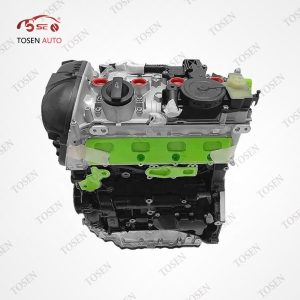
Use the same list when discussing a head from TOSEN AUTO’s catalogue. Ask for the actual supplied scope, while the workshop confirms the engine-specific fastener requirements.
Frequently Asked Questions
Can a new bolt be reused if it was tightened and removed before the engine ran?
Engine running time alone does not answer that question. State which tightening stages were completed and follow the applicable single-use or reuse instructions. Do not assume that a bolt remained unused merely because the engine was never started.
Can an aftermarket stud kit use the original head-bolt torque?
Do not transfer the value by assumption. Verify the exact kit’s compatibility and instructions, including its lubricant, washers and tightening method, and resolve its use with the engine and gasket requirements. A different fastener assembly needs its own applicable instruction.
Settle the bolt requirement before installation
Settle the exact fastener requirement and obtain the whole tightening procedure before installation. Where reuse is allowed, keep the actual required inspection results with that decision; where replacement is required, source the correctly specified new set.
Take the fastener checklist into your TOSEN AUTO cylinder-head enquiry, and clarify the supplied parts before the workshop schedules fitting.