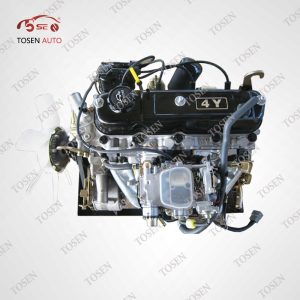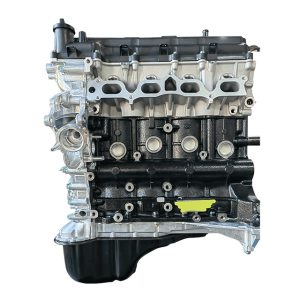
Before cranking a replacement long block, confirm its present oil condition, the priming procedure for that exact engine, and how the workshop will verify oil delivery. A previous factory test and a correct sump level answer different questions; neither alone establishes that the installed oil circuit is ready for its first rotation.
Pre-lubrication starts before the starter is used. Some engines have an approved external pressure-filling method, others use a pump-drive tool or a specified no-start cranking sequence. Identify the applicable method and its prerequisites before choosing a tool or disconnecting anything.
A tested engine can still need its oil circuit primed
Treat assembly lubricant, sump oil and a primed oil circuit as three separate conditions. The first protects surfaces during assembly, the second provides an oil reserve, and the third concerns delivery through the lubrication system. Oil visible on a part does not tell the installer how much is in the sump or whether the installed circuit has been charged.
| Condition | What it tells you | What still needs checking |
|---|---|---|
| Assembly coating or residual oil | Some surfaces have oil or assembly lubricant on them. | The required service fill and the engine-specific priming procedure. |
| Correct oil level in the sump | The reservoir is filled to the specified checking condition. | Whether the filter, pump and galleries have been prepared as instructed. |
| Priming completed by the applicable method | The specified preparation and its completion checks have been performed. | Restoration of connections and the separate first-start instructions. |
Volkswagen Technical Tip 13-20-01TT, originally issued in 2020, notes that replacement-engine prefill can vary. Its useful general warning is to establish lubrication before starting; its particular cranking sequence must not be transferred to another engine. A test record describes the engine at the test, while shipping, storage and installation may leave a different fluid or component arrangement.
Match the priming method to the engine before turning it
Use the engine identity and installed configuration to select the instructions. Match the engine code, replacement-assembly identification, oil-system components and current procedure revision. Resolve differences between vehicle service information and supplied-engine instructions before proceeding; combining the convenient parts of two methods can omit an essential step.
- External pressure filling. The applicable instructions must identify the connection, approved tool, oil and completion check. A nearby threaded opening is not enough to identify a safe feed point.
- Oil-pump drive tool. This depends on an accessible, suitable pump drive and the correct tool. It is not an alternative that can be assumed for every long block.
- Specified no-start cranking. This still rotates the engine. Confirm that the manufacturer permits it and specifies the preparation, method of preventing combustion, monitoring and starter duty cycle.
The Chevrolet Performance L8T long-block instructions, part 19433751, identify a preferred preluber method and a separate alternative. The SP350/385 instructions, part 19417631, describe access through the distributor for a pump-drive tool. These examples show why architecture matters; their oil grades, quantities and timing are not general replacement-engine specifications.
Write down the authorized method before beginning work. If the matching instructions are unavailable, obtain them while the engine remains uncranked rather than experimenting with repeated starter operation.
Check the oil supply path before the first crank
Check the actual installed oil path, including parts transferred from the old engine. A long-block label does not establish whether the sump, pickup, pump, filter housing, cooler or turbo oil lines are supplied, transferred or already prepared. Use the assembly list and installation instructions to establish which checks apply.
- Present fluid condition. Identify shipping or preservation fluids and any required removal. Verify the specified engine oil, fill quantity and level-checking method; do not infer them from residue or packaging.
- Pickup, pump and filter arrangement. Confirm the correct parts, seals and filter are installed and the required preparation has been completed. Follow the instructions on filter filling rather than assuming every filter should be filled by hand.
- Transferred oil-carrying components. Address contamination or damage from the previous failure before reconnecting components. Confirm the cleaning or replacement requirements for retained oil lines, cooler and related parts.
- Ports, plugs and connections. Account for transport protection and the connections used for priming. Identify the correct sealing and tightening instructions for anything that will be removed or restored.
- Observation and unintended-start controls. Prepare the specified gauge, diagnostic reading or other completion check. For any authorized cranking method, establish the exact no-start precautions and safe vehicle condition before operating the starter.
Keep this inspection separate from the later running check. A warning lamp, a full dipstick or a report packed with the engine cannot replace a missing installation prerequisite.
Plan the observation and stop point before using the starter
Decide what counts as completed priming before performing the procedure. The method may require a particular pressure observation, evidence of oil delivery or another specified response. The expected signal, instrument connection and permitted duration belong to the matching engine instructions; there is no single pressure or number of cranking cycles suitable for all long blocks.
- Record the starting condition. Note the engine identity, procedure revision, oil used, selected method and observation point. Confirm that the required preparation is complete.
- Perform only the authorized sequence. Observe the specified response and respect equipment or starter limits. Do not substitute a running oil-pressure specification for a priming completion criterion.
- Stop when the expected response is absent or a fault appears. Do not extend cranking indefinitely, increase pressure experimentally or allow combustion to see whether the problem clears. Have the installer investigate the setup and oil-supply path under the applicable diagnostic procedure.
- Restore and recheck. Complete the required plug, hose, filter and electrical restoration, then verify the final oil level as instructed before moving to the separate first-start procedure.
A priming observation establishes only the check actually performed. Record it in those terms; a pressure reading alone does not prove that every bearing, clearance or retained component is sound.
Keep a short first-start handoff with the engine
Use a blank workshop record to keep preparation distinct from first combustion and break-in. Complete it with actual work and observations, leaving unresolved items visible to the technician taking over:
- Engine and instructions: Assembly identity, installed oil-system arrangement, procedure title and revision.
- Preparation performed: Oil specification and fill, relevant retained parts, selected priming method and equipment.
- Observed result: Observation point, actual reading or response, applicable completion criterion and any fault investigated.
- Next action: Connections restored, final level checked, technician/date and the first-start or break-in instructions still to follow.
Frequently Asked Questions
Can I start the engine to obtain an electronic oil-level reading?
Do not start an unprepared replacement engine just to discover whether it contains enough oil. BMW Service Information B11 02 20 specifically warns against this approach for its replacement engines; use the applicable pre-start filling and checking procedure for your engine.
How long can the engine stand after priming?
There is no single waiting-time rule for all assemblies. If installation is delayed or the oil system is reopened, check the supplied storage and first-start instructions to determine whether the preparation must be repeated.
Prepare the lubrication plan before authorizing the first crank
Keep the engine-specific procedure beside the installed assembly and complete the readiness checks before using the starter. If the job is still at the parts-selection stage, compare engine assemblies with the engine identity and supplied-component list in hand.
Use the TOSEN AUTO catalogue to prepare assembly-scope questions, then give the installer the instructions and actual lubrication record for the selected engine.