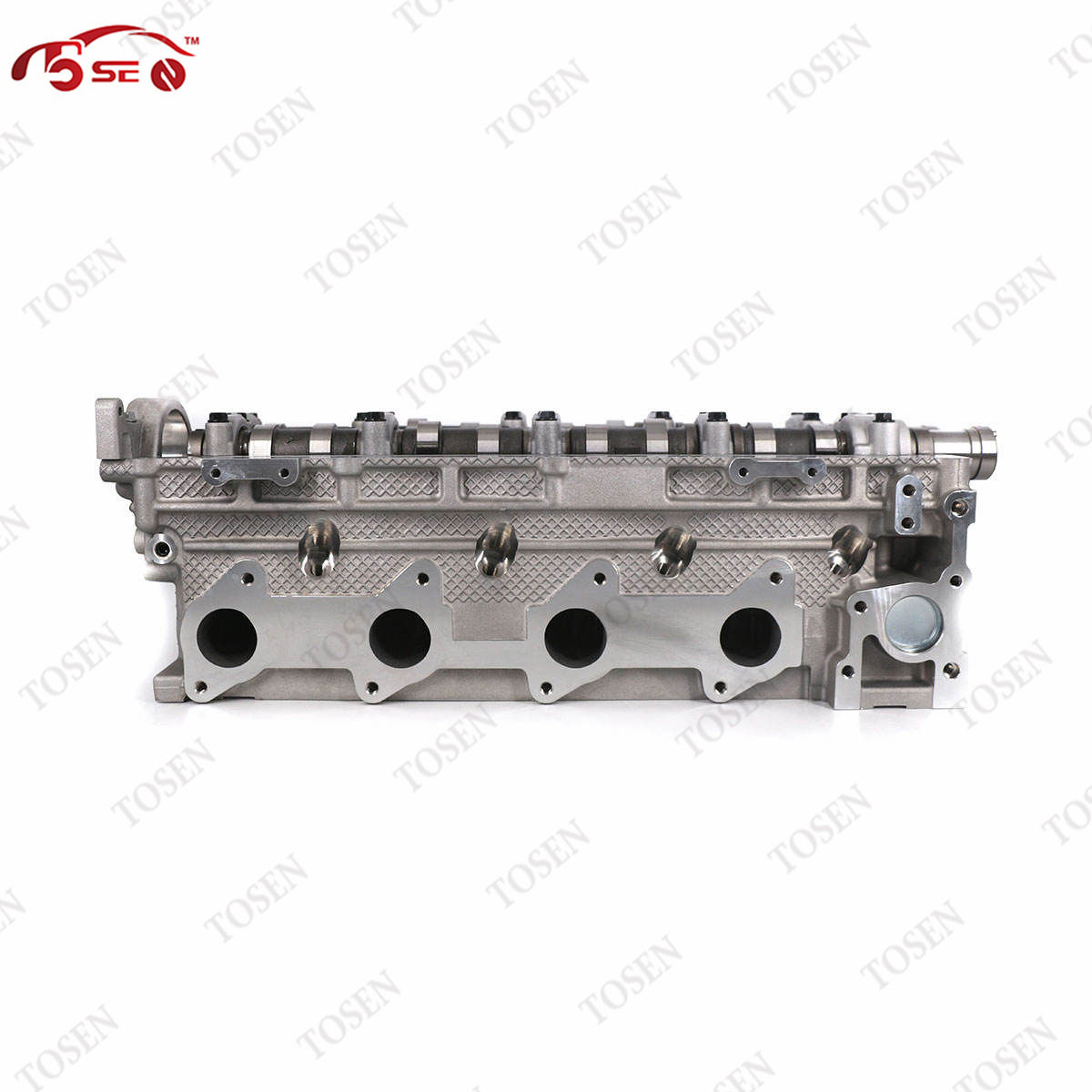
The Hyundai D4CB 22100-4A100 cylinder head is the replacement head reference for one of the variants that make up the cylinder-head range serving Hyundai D4CB 2.5 CRDi diesel engines. The reference names one head variant inside a range that the 22100-4A010 and 22100-4A100 references divide between them, and the engine a shop is rebuilding decides which variant the order needs. This practical guide walks through what the 22100-4A100 reference identifies, what the head does on the engine, the checks that confirm the correct variant before an order is written, the head gasket decision that belongs to the same job, and the fields a quotation request for this part should carry.
What the 22100-4A100 Reference Identifies
Hyundai built the 2.5 CRDi D4CB diesel in more than one head configuration, and the parts market mirrors that split. Within the 22100-4A100 cylinder head range for the D4CB 2.5 CRDi that TOSEN supplies, the 22100-4A010 and 22100-4A100 references identify head variants, and the original engine together with its casting selects between them. Aftermarket catalogues for the same engine family list a further reference, 22100-4A040, which underlines the same point: one engine family, several heads, and a reference number that has to be read from the engine itself and its casting.
Reference rule: one engine, one reference. The head variant is decided by the original engine and its casting, recorded from the head the engine actually carries together with the engine code.
| Reference | Where it appears | How to treat it |
|---|---|---|
| 22100-4A010 | Variant reference within the D4CB 2.5 CRDi head range TOSEN supplies | Confirm against the original engine and casting before ordering |
| 22100-4A100 | Variant reference within the same head range | Confirm against the original engine and casting before ordering |
| 22100-4A040 | Aftermarket catalogue version listing for the same engine family | Verify against the engine before treating it as the required reference |
Buyers who need other diesel head references in volume can browse the wider replacement cylinder heads category, where each listing carries its own reference set and application notes.
What the D4CB Cylinder Head Does on the Engine
The cylinder head closes the top of the D4CB block and does four jobs at once. It forms the roof of the combustion chambers together with the pistons. It carries the valvetrain configuration the engine was built with. It routes oil and coolant through internal drillings. And it clamps onto the block through the head gasket, which sets both the seal and the working clearance between the head and the rotating assembly — the reason gasket thickness is measured, not guessed, on this engine.
- Forms the combustion chambers above the cylinders
- Carries the valvetrain configuration for the engine
- Routes oil and coolant through passages that must line up with the block
- Seals against the block through the head gasket
Those four jobs explain why the range divides into variants in the first place. The internal drillings have to align with the block, the valvetrain configuration has to match the engine, and the external routing — most visibly the coolant outlet layout — has to line up with the hoses and fittings already on the engine. A head with the right reference for one D4CB engine can differ from its neighbour in exactly those places, which is why the comparison sequence in the next section checks them in a fixed order.
A rebuild that runs deeper than the head — into the block, or towards a complete replacement unit — follows a different selection path. The engine assembly selection guide on this site covers that engine-level decision separately.
Confirming the Correct Head Before Ordering
The variant check for a D4CB head is a bench job with a set sequence of operations. Work through it before the order line is written, not after the crate arrives.
- Record the reference and the engine code. Read the reference from the head the engine actually carries, together with the full engine code, and write both down before anything is cleaned or exchanged.
- Photograph the casting. Casting photographs belong to the enquiry itself, because the supplier reviews the external features against them when the order is checked.
- Compare the distinguishing features in order. Start with the coolant outlet layout, the clearest external difference, then compare the oil and coolant passages, then the valvetrain configuration.
- Name one reference in the enquiry. A single head reference per enquiry keeps the order on one variant instead of a mixture, and gives the supplier one clean target to check against.
The sequence matters because the differences between variants are physical, not just numbers on paper. Two references tell a buyer nothing until they are matched against the head that came off the engine, and the photographs taken in step two are what make that matching possible on the supplier side.
The Head Gasket Does Not Follow the Head Reference
A new head does not decide its own gasket. On the Hyundai 2.5 L D4CB diesel, head gasket selection follows the piston protrusion measured on the engine at top dead center, not the head reference. AERA Technical Committee material for 2008–2011 D4CB 2.5 L diesel engines (bulletin TB021325) describes three gasket grades, marked on the gasket edge with notches, each tied to a protrusion band and a thickness band:
| Grade | Edge notches | Piston protrusion at TDC | Gasket thickness |
|---|---|---|---|
| A | 0 | .056–.117 mm (.002–.005 in) | .920–.980 mm (.036–.039 in) |
| B | 1 | .117–.178 mm (.005–.007 in) | .970–1.030 mm (.038–.041 in) |
| C | 2 | .178–.240 mm (.007–.009 in) | 1.020–1.080 mm (.040–.043 in) |
The same AERA bulletin warns that skipping the protrusion measurement and fitting the wrong grade can end in piston-to-head contact or piston-to-valve contact. The practical consequence for a buyer is simple: measure the protrusion on the engine, match the measurement to its band in the table, then use the grade and notch count printed for that band wherever the gasket is bought. The head reference alone does not carry that information, so the gasket decision is made on the engine, not on the head order.
Quality and Inspection for a D4CB Head
Every D4CB head is inspected against the details of the engine named in the enquiry before it ships. The checks mirror the bench sequence above:
- The stated head reference is checked against the engine code
- The coolant outlet layout is reviewed against the photographs of the original installation
- The oil and coolant passages are compared with the recorded details
- The valvetrain configuration is compared with the recorded details
The purpose of the four checks is to make sure the dispatched unit is the variant the named D4CB 2.5 CRDi engine requires, rather than a neighbouring variant from the same range.
Frequently Asked Questions
What is the Hyundai D4CB 22100-4A100 cylinder head?
The Hyundai D4CB 22100-4A100 cylinder head is the replacement head for one variant of the D4CB 2.5 CRDi diesel engine family, within a range that the 22100-4A010 and 22100-4A100 references divide into variants. The casting encloses the combustion chambers, supports the valve gear, and carries the oil and coolant drillings that have to align with the block. The original engine and its casting decide which variant a given D4CB requires, so the reference is recorded from the head the engine carries.
Is the 22100-4A100 head the same part as the 22100-4A010 head?
The 22100-4A100 and 22100-4A010 references identify separate head variants within the D4CB 2.5 CRDi range, and the original engine with its casting determines which one applies to a given engine. The variants are told apart by physical comparison: the coolant outlet layout first, then the oil and coolant passages, then the valvetrain configuration. Aftermarket catalogues list a further reference, 22100-4A040, for the same engine family, which is one more reason the reference is recorded from the original head and confirmed by physical comparison before ordering.
Does a new D4CB cylinder head come with the head gasket?
Head gasket selection on the D4CB follows the piston protrusion measured on the engine at top dead center, not the head reference. AERA Technical Committee material for 2008–2011 2.5 L D4CB diesel engines describes three gasket grades — A, B and C — marked with zero, one or two notches on the gasket edge, each tied to a protrusion band and a gasket thickness band. The gasket is therefore chosen from the protrusion measurement and specified with that grade wherever it is bought, because the wrong grade risks piston-to-head or piston-to-valve contact.
What information does TOSEN need to quote a D4CB head?
A quotation request for the D4CB 2.5 CRDi head range carries the full engine code, the cylinder-head number, casting photographs and the quantity, together with the scope instruction — a bare head or the valvetrain components required with the order. One head reference is named per enquiry, which keeps the order on a single variant. The engine code and photographs also drive the dispatch checks, so a complete request shortens the path from enquiry to a verified unit.
Ordering the Head Without Guesswork
Three things make a D4CB head order land right: the reference recorded from the engine itself, the gasket grade measured on the engine, and an enquiry that states both together with the scope and quantity. The D4CB 2.5 CRDi cylinder head for Hyundai product page takes enquiries for both head references in the range, and the variant check runs against the engine code and casting photographs supplied with the request.
Request a D4CB 22100-4A100 quotation with the engine code, the cylinder-head number, casting photographs, the quantity and the scope instruction — and measure the piston protrusion before the gasket is bought, so the grade comes from the engine rather than a guess.