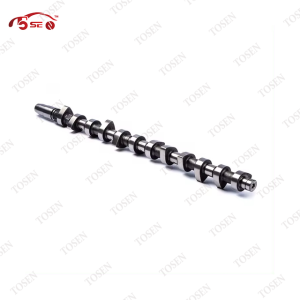
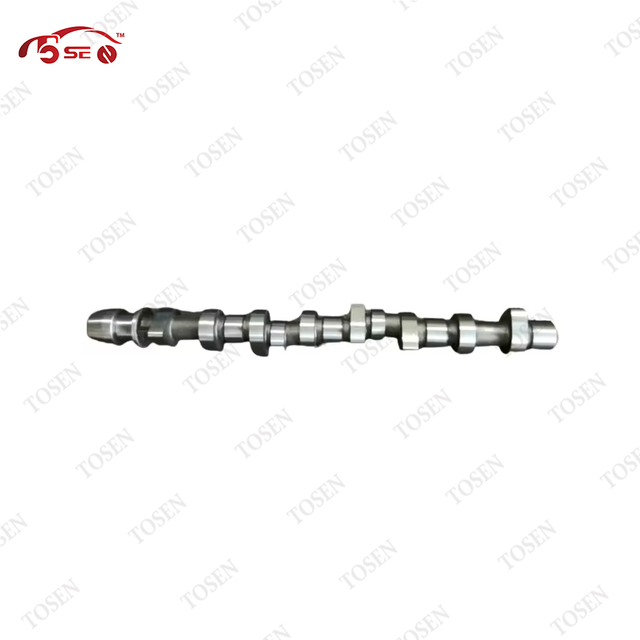
The 13501-54050 Toyota 2L camshaft is the single overhead cam that opens and closes the eight valves of the 2,446 cc 2L indirect-injection diesel. For decades this engine powered Toyota Hiace vans, Hilux pickups and Chaser saloons, and it still earns a living in fleets and workshops that keep the old trucks on the road. A worn camshaft is easy to miss because the symptoms — a rough idle, one weak cylinder, hard cold starts — look like fuel problems. This guide explains which models and engine codes the 13501-54050 fits, how to cross-reference the OE number, what material and hardness to expect, and the inspection values you should demand before you commit to a purchase.
Which Toyota Models and Engine Codes Use the 13501-54050 Camshaft?
Fitment starts with the engine code, not the model name. The 13501-54050 is made for the naturally aspirated Toyota 2L — a 92.0 mm bore by 92.0 mm stroke, four-cylinder, SOHC, eight-valve diesel with indirect injection. The same 2,446 cc family also produced the 2L-T turbocharged version, and the L family expanded upward into the 2.8L 3L and the 2L-based 5L. Those engines use different camshafts with different part numbers, so the first check is always the code stamped on the block.
Within the 2L applications, the 13501-54050 covers a wide footprint of light commercials and saloons. Toyota fitted the 2L to the Hiace van and bus (H50, H60 and H70 series), the Hilux pickup (N50 and N60), the Chaser and its badge-engineered relatives, and a number of 4×4 and import-only models that shared the L-family drivetrain. Because the same engine code spans many bodies and years, a supplier should confirm the exact application from your VIN before building a crate — model name alone is not enough.
The turbo trap is real. A 2L camshaft will physically rotate inside a 2L-T head, but the turbo engine needs different lobe timing to cope with forced induction. Fitting the wrong profile costs power and risks detonation under load. If your old part label or parts catalogue shows a 13501-54040 or a 13511 series number, stop and verify — you may be looking at a 2L-T or a different L-family variant rather than a 2L. You can review the exact unit we build for this application on our Camshaft 13501-54050 for Toyota Hiace, Hilux and Chaser 2L Diesel product page.
How Do You Cross-Reference the OE Number Before You Order?
The part number is the second layer of the fitment check. 13501-54050 is a Toyota part-group number: the leading 13501 prefix identifies the camshaft group in Toyota’s parts numbering system, and the trailing digits pin down the exact application. Cross-reference tools and aftermarket catalogues list the same number with different manufacturer prefixes, so the core check is that the five- and six-digit core — 13501-54050 — appears on your old part, your invoice, and the supplier’s listing.
Keep three numbers in one line when you compare listings: the OEM number 13501-54050, the Toyota part group (13501, Camshaft), and the engine code. If a seller only lists “fits Toyota diesel” without the 13501-54050 number, treat it as a blank that needs proof, not a bargain. Established aftermarket catalogues cross-reference OE numbers against the models and engines they serve, and they are the right place to check whether a supplier’s substitution claim is real. The same discipline applies across the L family — 13501-54060 and the 13511 series belong to other 2L-era variants, so do not let a “similar” number slide into your order.
When you are sourcing beyond a single camshaft, the logic holds for the whole rotating assembly: verify the OE number, the engine family, and the material before you compare prices. Our engine crankshafts and camshafts category groups these parts the same way, so the number you verify on the camshaft maps cleanly onto the crank and bearing parts you may need in the same build.
Forged or Cast? Material and Hardness on the 2L Camshaft
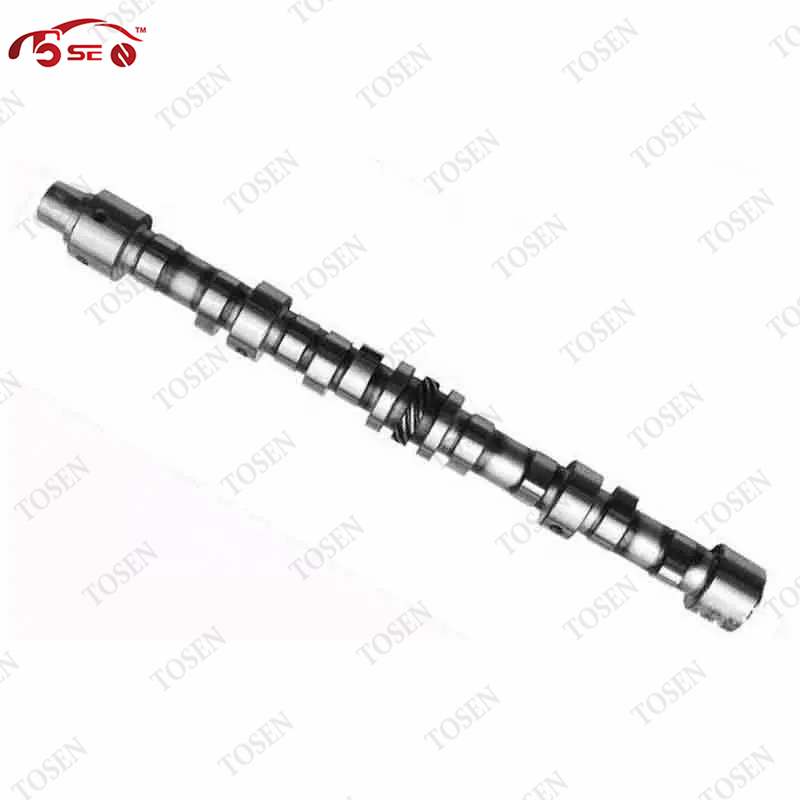
The 2L valvetrain uses flat tappets that press against the cam lobes in a narrow contact band. That design is simple and reliable, but it makes lobe material and surface hardness the difference between a cam that lasts and one that wears a flat spot in months. The replacement 13501-54050 is typically machined from forged chromium-molybdenum alloy steel, with the lobes and journals induction-hardened to resist the sliding wear of the tappet face. The journal areas must also stay concentric, because the cam runs directly in the cylinder head bores.
Why does the forging question matter to a buyer? A forged blank starts with grain flow that follows the shape of the part, which makes it stiffer and more fatigue-resistant under the alternating loads of valve-spring pressure. A cast cam can be cheaper, but the buyer should know what material is actually being quoted. Ask the supplier directly: forged or cast, and which alloy. If the answer is vague, that is a signal to ask for the inspection record instead of assuming OEM-grade material.
Hardness testing is a quick reality check. The lobes and journals of a hardened cam should show values typical of induction-hardened steel, while the core of the blank stays tough enough to resist shock. You do not need to run the test yourself — you need the supplier to show the reading on the inspection sheet. A cam that shows no hardness data at all has no proof it was heat-treated, which is exactly the failure that kills flat-tappet diesels.
Journal Size, Lobe Lift and What to Demand on an Inspection Report
When you are at the Decision stage, the inspection report is your evidence. For a 13501-54050, the values that matter are the journal dimensions, the lobe lift, and the overall straightness. Published 2L data frames what “in spec” means: the cam journals measure around 35 mm at the front and roughly 28 mm on the remaining journals, with lobe heights in the mid-50 mm range — but the exact figure you act on is the one on the master drawing, not a remembered number.
What you should demand is a report that states the actual measured values against the 2L master profile. Look for four things: journal runout under a small total indicator reading, lobe lift within a tight tolerance of the master 2L profile, surface finish free of grinding chatter, and overall straightness within limit. If a seller cannot produce these numbers, you are buying faith instead of data — and for a camshaft, data is cheap relative to a repeat teardown.
The inspection record also sets the baseline for any later warranty question. Keep the report with the invoice, because it proves the cam shipped within the agreed limits. If the part is ground instead of new, the same report must show how much was removed from the lobes and journals and whether the hardness layer survived the grind. A cam that has been ground through its hardening is a cam that will wear out fast in a 2L.
For the wider selection logic — how the camshaft fits into choosing an entire engine assembly for the same vehicle family — see our related technical guide on choosing the right engine assembly for Toyota Hiace and Hilux.
Regrind or Replace — and the Bare Camshaft Parts Boundary
A mildly worn 13501-54050 can be reground if enough hardness remains and the wear is within grinding limits, but this only works when the damaged layer is thin. Deep lobe wear, a flat spot that removes the hardened surface, or a bent cam kills the regrind option. For most buyers the arithmetic is simple: a new camshaft costs a fraction of the labour and downtime that a second failure causes, so when in doubt, replace rather than rescue.
The 13501-54050 is supplied as a bare camshaft — the lobes and journals come machined and hardened, but the part does not include cam bearings, the timing gear, or seals. Plan the surrounding parts into the same order. The 2L is an interference engine, so the timing belt, belt tensioner and idlers should be renewed in the same service, and the valve clearances set to the 2L cold specification with the correct shims or tappet adjustments after assembly. A high-quality diesel engine oil with adequate anti-wear additives is recommended for the first start so the flat tappets bed in against the fresh lobes correctly.
Rust Protection, Crating and What to Check on Arrival
A camshaft crossing the ocean arrives in a wooden crate, and the part inside should be oiled or VCI-protected so the machined lobes and journals do not corrode during transit. Rust on a precision ground surface is not cosmetic — it pits the journal and destroys the hardness layer that the 2L depends on. Ask the supplier how the cam is protected before it is packed, and confirm the crate is built for sea freight rather than a domestic carton.
On arrival, inspect before you sign. Photograph the crate and the camshaft while the carrier is present, check for moisture, dents, and any sign the box was dropped, and note the condition on the delivery document. Keep the inspection report and the shipping photos together — they protect you if the cam arrives damaged, and they complete the paper trail that started with the OE number and the fitment confirmation.
Frequently Asked Questions
Will the 13501-54050 fit my 2L-T or 3L engine?
No. The 13501-54050 is made for the naturally aspirated Toyota 2L. The 2L-T turbo engine and the 3L and 5L variants use different camshaft part numbers and lobe profiles. Confirm the engine code on the block before ordering.
Is the 13501-54050 camshaft forged or cast?
Quality replacements are machined from forged chromium-molybdenum alloy steel with induction-hardened lobes and journals. Ask the supplier for the material grade and the inspection record to confirm what you are buying.
Can a worn 13501-54050 be reground instead of replaced?
Only if the wear is light and the hardened surface remains intact. Deep lobe wear, pitting, or a bent cam removes the hardening layer and ends the regrind option. For most buyers a new camshaft is cheaper than a second teardown.
What parts do I need alongside the bare camshaft?
The 13501-54050 ships as a bare cam — no bearings, gear, or seals. Plan cam bearings, the timing belt with tensioner and idlers, and seals into the same order, and set valve clearances to the 2L cold specification after assembly.
What inspection values should a supplier provide?
Ask for measured journal runout, lobe lift against the 2L master profile, surface finish free of grinding chatter, and overall straightness, plus a material and hardness statement. Keep the report with your invoice as the warranty baseline.
Get a Fitment-Confirmed Quote
Submit your VIN, old-part label / OE number, model year, quantity, and destination port to receive a fitment confirmation and a quote. The same identifiers that prove your engine is a 2L become the records we use to pack and ship the correct 13501-54050 camshaft — protected for the crossing, and matched to the inspection standard your workshop expects.
References
- AMC Aftermarket Parts Catalogue — camshaft and crankshaft OE cross-reference data: enginepartsuk.net (AMC catalogue)
- Nason 23111-2G200 New Product Memo — forged vs cast material context for engine shafts: nason.com.au (product memo)
- Extra Mile Camshaft & Engine Parts catalogue — journal and lobe inspection guidance: extra-mile.us (camshaft catalogue)