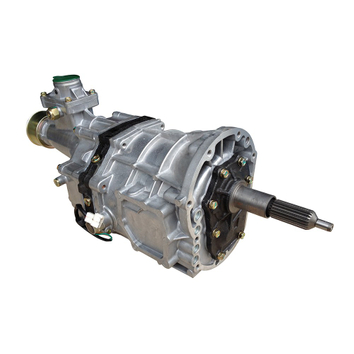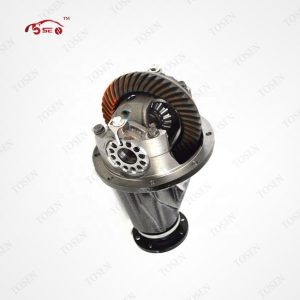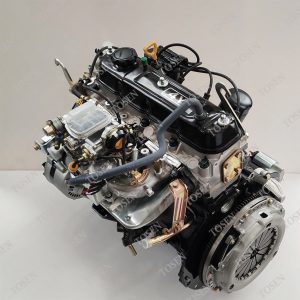
A rebuild estimate and a replacement quote can look comparable while describing two very different finished jobs. A repair-shop owner or fleet buyer may approve the lower figure, then discover that machining, transferred parts, freight, downtime or warranty duties were never on the same sheet.
A sound 1RZ engine rebuild vs replacement decision starts before price. First prove the engine identity and the condition of the original core. Then define what each option includes, what the installer must supply and which evidence supports the promised condition.
This guide turns those checks into one decision record. It will help you decide whether to rebuild, replace or pause for more inspection, then prepare a qualified request instead of asking suppliers to guess from a vehicle name.
1RZ engine rebuild vs replacement: which route is defensible?
Choose a rebuild when the original assembly is correctly identified, the core remains usable, a capable shop can measure and machine it, and the quote defines what happens if teardown reveals more damage. Choose replacement when the core is unsuitable, downtime or parts uncertainty is unacceptable, and a correctly matched unit has a clearer tested scope and warranty boundary. If those facts are missing, the defensible choice is to hold.
| Route | Use it when | Evidence needed before approval | Main uncertainty |
|---|---|---|---|
| Rebuild | The original core is measurable and repairable | Identity record, teardown findings, measurements, machine-work and parts plan | Scope can expand after disassembly |
| Replacement | The core is unsuitable or a defined unit reduces project uncertainty | Fitment record, condition, inclusion list, test/inspection record and warranty | Transferred systems and installation work may be excluded |
| Inspect further | Tests conflict or structural condition is unknown | Named next inspection and decision threshold | Downtime continues, but prevents a blind commitment |
| Stop the project | Vehicle or business case no longer supports major engine work | Whole-vehicle condition and approved cost ceiling | Sunk diagnostic time |
Decision gate
Approve only a route that identifies the engine, ends at the same first-start-ready condition and names who owns each unresolved risk.
Prove which 1RZ you have before pricing either option
Do not treat 1RZ, 1RZ-E and every vehicle carrying an RZ-family engine as one interchangeable item. Toyota published separate manual and diagnostic material for related variants. A supplier application list is a lead to verify, not fitment approval.
- Photograph the engine-code stamping and record every character, including any suffix.
- Record VIN or chassis number, model code, build year, market and steering position where relevant.
- Photograph intake, fuel, ignition, wiring, mounts, sump, manifolds and accessory positions before removal.
- List the transmission, retained ECU or control hardware and any emissions equipment that must remain compatible.
- Record visible casting or part references from the original unit and ask the workshop which are decisive.
- Require the seller or rebuilder to return a written match statement with assumptions and exclusions.
| Item | Description |
|---|---|
| Identity record | The vehicle and engine evidence supplied before quotation. |
| Conditional match | A proposed fitment that still depends on missing photos, measurements or part references. |
| Approved match | A written match to the documented configuration and quoted assembly scope. |
What evidence can rule a rebuild in or out?
- Preserve the complaint and operating history. Record overheating, lubrication loss, abnormal noise, prior repairs and the conditions in which the fault appeared.
- Confirm identity and select the applicable Toyota repair manual before interpreting measurements. The manual family separates engine-mechanical, fuel, cooling, lubrication and service-specification work.
- Record non-destructive findings first: fluids, debris, leakage, cooling-system condition and any safe, appropriate pressure or compression results chosen by the technician.
- After teardown, document the block, head, crankshaft, cylinders, threads and sealing surfaces with measurements, photos and the relevant service limits.
- Issue a scope decision: reusable as measured, repairable with named machining/parts, unsuitable for the proposed rebuild, or awaiting another defined check.
A Toyota service-specification page gives a compression value inside a specific 1RZ/2RZ manual context. That is useful as an example of documentation, not permission to compare every cold, slow-cranking or differently configured test to one internet number. Ask for all-cylinder results, test conditions and the cited manual page. If the engine cannot be run safely, the report should state the limitation and the alternative inspection.
A rebuild quote needs a change rule
State which teardown findings are included, which trigger written re-approval, and which make the core unsuitable. Without that rule, a rebuild estimate and a fixed replacement quote are not comparable.
Compare the total installed job, not the first price
Put the rebuild and replacement offers into the same columns. The comparison ends only when the vehicle reaches the same agreed handoff: installed, filled, checked and ready for the controlled first start. Keep quoted amounts separate from allowances so uncertainty remains visible.
| Scope line | Rebuild plan | Replacement plan | Proof or owner |
|---|---|---|---|
| Base work or unit | Teardown, cleaning, inspection and approved machining/parts | Quoted unit condition and assembly contents | Rebuilder or supplier scope sheet |
| Cylinder head and timing | Measure, repair and replace as authorized | Confirm whether fitted and which parts are new, reused or excluded | Bill of materials and inspection record |
| Transferred components | Inspect and refit original external systems | Inspect and transfer every excluded system | Installer checklist |
| Cooling and lubrication controls | Correct the cause and clean retained systems | Correct the cause and clean retained systems | Workshop record |
| Logistics and downtime | Core transport, machine-shop queue and parts lead time | Unit freight, customs, receipt inspection and installation | Named dates and allowances |
| Warranty exposure | Workmanship, parts and comeback terms | Unit, freight, labor and installer-duty terms | Written warranty and claim path |
- Use one currency, tax basis, delivery point and validity date.
- List fluids, seals, gaskets, hoses, filters and retained-part work instead of writing “miscellaneous.”
- Show expected downtime and a separate contingency for uncertain findings.
- Name who approves additions and who pays repeat removal or freight if a covered defect is accepted.
- Reject totals that omit a required line rather than assuming it is included.
Match replacement scope to the parts you can safely retain
| Item | Description |
|---|---|
| Short block | Lower-engine scope; confirm the exact rotating, timing and sealing parts included. |
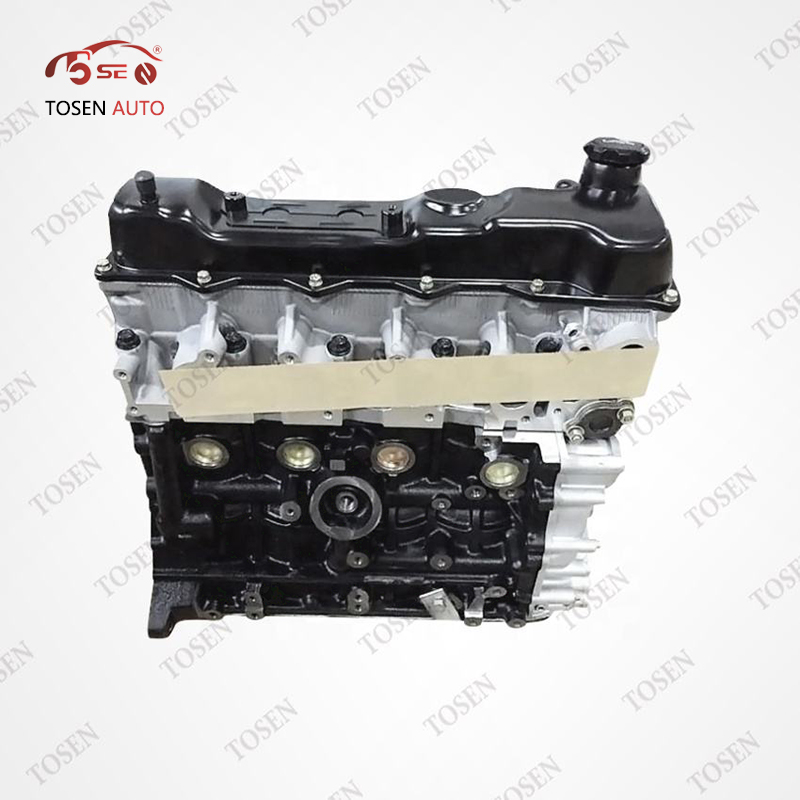
| Long block | Block-and-head scope; confirm valvetrain, timing, covers and every external exclusion. |
| Complete assembly | Seller-defined broader package; demand a photographed bill of materials rather than assuming turnkey fitment. |
| Scope | Can fit when | Installer must verify | Typical decision risk |
|---|---|---|---|
| Short block | The head and upper systems are serviceable and their work is controlled | Head condition, timing scope, machining compatibility and transferred parts | Large retained-work burden |
| Long block | A preassembled head/block reduces internal assembly work | Manifolds, fuel/ignition, sump, mounts, sensors, accessories and control compatibility | Label may hide external exclusions |
| Complete assembly | More external systems are needed or their condition is uncertain | Every pictured/included part, wiring/control match and shipping configuration | “Complete” can still be seller-specific |
TOSEN AUTO has a current 1RZ engine long block product page. Competitors also describe exact 1RZ packages as long blocks or bare long blocks. These pages prove that relevant commercial options exist; they do not prove your fitment or a universal bill of materials. The verified 1RZ product path replaces the spreadsheet's unrelated Audi landing-page plan.
Use the engine assemblies category to compare broader supply scope, then attach your identity record and request a written included/excluded list.
Audit the rebuilder and replacement supplier on the same sheet
| Audit field | Rebuild offer | Replacement offer |
|---|---|---|
| Condition basis | Which parts are inspected, measured, machined, restored or replaced? | Is the unit new, rebuilt/remanufactured, reconditioned or used, and who performed the work? |
| Unit record | Core identity, teardown photos and measurement sheet | Serial/markings, unit photos, scope sheet and available inspection/test record |
| Process control | Applicable specifications, machine operations and final checks | Supplier inspection, preservation, packing and release checks |
| Warranty start | Completion, installation or another stated event | Shipment, delivery, installation or another stated event |
| Covered costs | Parts, labor, removal/refit and repeat machining | Unit, labor, freight, duties and repeat removal/refit |
| Claim path | Notification time, evidence and cure decision | Notification time, evidence, return authority and freight instruction |
- Read the actual condition description; do not upgrade “used” to “rebuilt” in your own records.
- Ask for the quoted unit's evidence, not only a sample certificate or generic factory photo.
- Verify current certificates separately if certification affects approval; record scope and expiry.
- Put exclusions beside the responsibility owner: seller, rebuilder, installer, freight carrier or buyer.
- Require written approval before disassembly, return shipping or corrective work on a claimed unit.
The U.S. FTC guide for rebuilt and remanufactured auto parts is a useful disclosure benchmark where applicable: prior use and the extent of reconstruction must not be misrepresented. Marketplace sellers publish different warranty and packaging statements for 1RZ units. Treat each statement as a term to verify, not proof that every unit or seller follows the same process.
Control the handoff from crate arrival to first start
- Before shipment — agree unit identity, scope, preservation, crate marks, document set and delivery point.
- At receipt — photograph every crate side and label before opening; record visible impact, moisture, tilt or missing pieces.
- Before installation — quarantine exceptions, compare the unit with the approved identity/scope record and inspect retained systems.
- Before first start — follow the applicable installer and manual requirements; record fluids, pre-start checks, warnings and responsible technician.
- After initial operation — record observations, leaks/warnings, corrective action and the warranty-notification decision.
- Do not discard packing or alter a damaged unit before the carrier/supplier response is recorded.
- Confirm the cause of the original failure is addressed; a different engine does not repair a contaminated or defective retained system.
- Use photos and measurements for exceptions instead of vague notes such as “looks wrong.”
- Keep unit, installer and vehicle records under one job number.
- If a stop condition appears, preserve evidence and follow the written notification path before more operation.
This is a responsibility process, not a first-start procedure. The qualified installer chooses the safe technical steps from the correct Toyota information and the unit supplier's written requirements. The buyer's job is to ensure those steps, observations and exceptions are traceable.
Build the 1RZ decision and RFQ record
- Identity — VIN/chassis, model code, build year/market, engine stamping and suffix, transmission and retained controls.
- Current condition — complaint/history, safe test results, teardown status, photos, measurements and the applicable manual reference.
- Decision request — ask separately for a rebuild plan and the suitable replacement scope, or state which route has already been ruled out and why.
- Scope — require included/excluded parts, machining or inspection, transferred-component work, fluids, logistics, installation and first-start responsibilities.
- Evidence — request the quoted unit/core record, condition basis, available test/inspection documentation, preservation and packing evidence.
- Commercial terms — price basis, MOQ if relevant, lead time, delivery term, warranty start, exclusions, covered costs and claim procedure.
- Approval rule — identify mandatory fields, who can approve changes and the maximum uncertainty allowance before re-approval is required.
Send a qualified 1RZ inquiry
Attach the identity photos and completed scope fields. Use the 1RZ engine fitment guide to check engine-code and application details.
Use the Toyota Hiace and Hilux engine assembly guide to review scope questions. A useful supplier reply should close evidence gaps, not simply repeat a model list.
Frequently Asked Questions
Can one compression test decide whether a 1RZ should be rebuilt?
No. The technician needs the correct manual context, test conditions, all-cylinder results and other evidence about the engine's structure and systems. If the engine cannot be tested safely, the report should state that limitation and the next inspection.
Is a 1RZ long block a complete engine?
Not automatically. A long block generally covers the block and cylinder-head assembly, but timing parts, sump, manifolds, sensors, fuel or ignition parts and accessories can vary. The seller's written inclusion and exclusion list controls.
Does replacement remove the need to diagnose the original failure?
No. The retained cooling, lubrication, intake, fuel, control or accessory systems can still contain the cause or consequences of the failure. The installer should identify and correct relevant retained-system issues before the replacement is operated.
What should a 1RZ warranty comparison include?
Compare the start event, duration, covered parts, labor, freight, removal/refit costs, exclusions, installer duties, notification deadline and required evidence. A duration by itself is not a complete warranty comparison.
Make the evidence travel with the engine
A rebuild can be the stronger plan when the original core is measurable, repairable and supported by a controlled scope. A replacement can be stronger when the core is unsuitable or a correctly matched unit creates a clearer path. Neither label wins without evidence.
Keep the identity record, inspection findings, installed-scope comparison, supplier terms, arrival photos and first-start record under one job number. That file protects the decision when work crosses the rebuilder, supplier, carrier and installer.
Prepare a fitment-confirmed request Use the checklist above, then send TOSEN AUTO the engine code, VIN or chassis details, photos, required assembly scope and delivery destination for written confirmation. On-page 1RZ decision and RFQ checklist