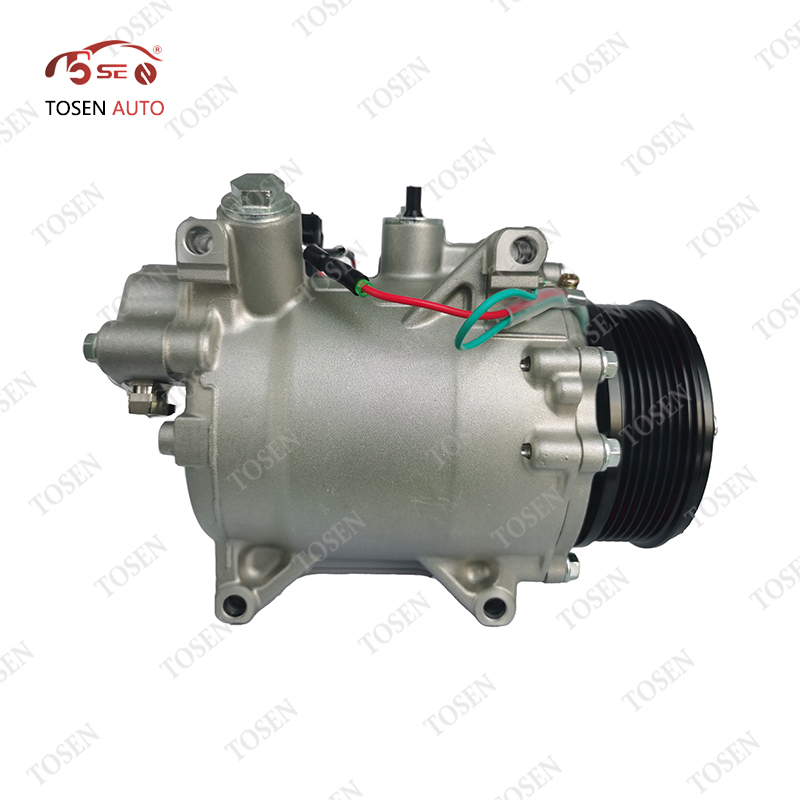
The 38810-RZY-A01 Honda CRV AC compressor is one of several OE numbers used on the Honda CR-V’s four-cylinder air conditioning system. When the factory compressor seizes, leaks at the front seal, or stops engaging, you need a replacement that matches the original in every detail. This guide explains how to confirm fitment by model year and engine, which refrigerant and compressor oil the system expects, what to check on the pulley and ports, and how to keep your warranty valid after the unit arrives.
Which Honda CR-V Applications Use These Three OE Numbers?
The 38810-RZY-A01, 38810-RL5-A01, and 38810-RWC-A02 are genuine Honda-listed compressor part numbers that the aftermarket treats as one replacement family. Honda’s own OEM parts catalogue lists them under the compressor section, and parts suppliers cross-reference them as alternates for the CR-V L4. That is why a single listing can legitimately carry all three numbers — they are not three different compressors, but three OE codes that point at the same physical unit on many CR-V builds.
The model year and engine decide the exact variant you need. The same family of OE numbers has appeared across several Honda four-cylinder applications over the years, and the CR-V fitment is the one these codes are most often quoted for. Do not trust the model name alone. The safest identifier is the OE number printed on the label of the old compressor, because the label does not lie and the model name sometimes does.
Here is the confirmation order we recommend before you buy:
- Photograph the label on the old compressor (OE number, serial, any date codes).
- Write down the vehicle VIN and model year.
- Note the engine code (CR-V L4 petrol in this case).
- Compare the old OE number against the three codes in this article.
- Send all of it to the supplier for a fitment confirmation.
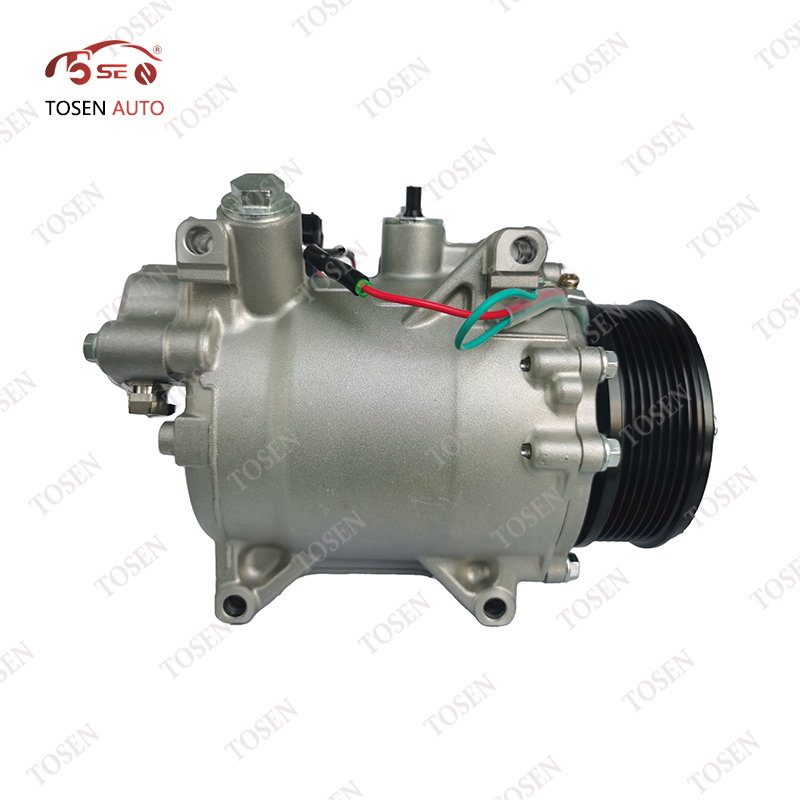
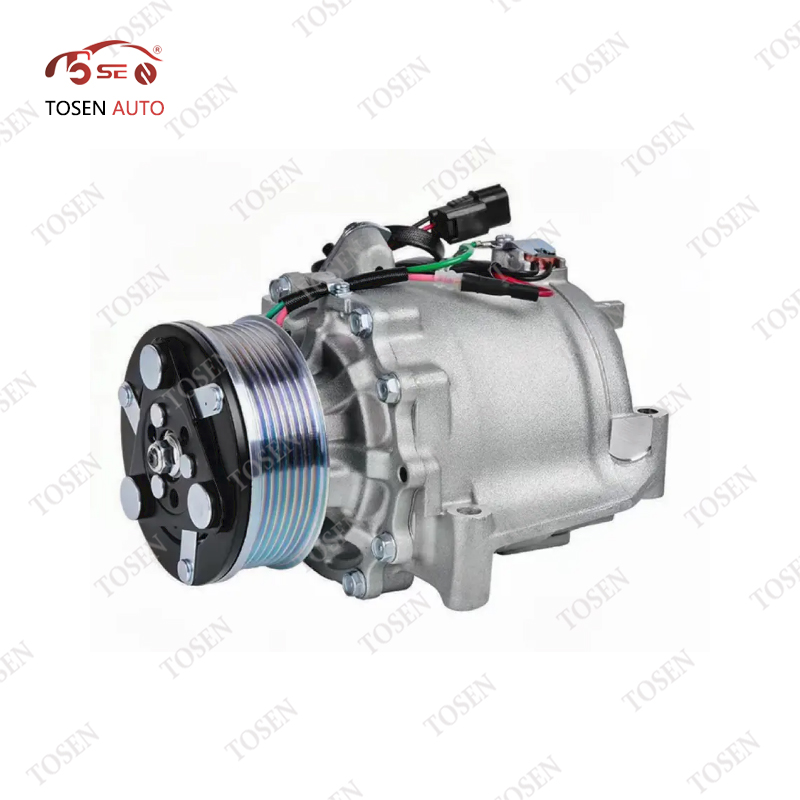
You can see the exact unit that carries all three codes on our Car Air Conditioning Compressor Auto A/C Compressor 38810-RZY-A01,38810-RL5-A01,38810-RWC-A02 Honda CRV CR-V L4 product page, which lists the supplied configuration and the fitment it covers.
R134a or R1234yf: Which Refrigerant Does This System Use?
These OE numbers belong to the R134a era of the Honda CR-V. The seals inside the compressor and the oil it is charged with are matched to the refrigerant the system was built for, so the replacement must stay within the same refrigerant family. Trade application guides — such as the Mopar A/C Compressors Application Guide and the Highgate Air compressor catalogue — both tell technicians to confirm refrigerant type, oil, and pulley specification before installing a replacement compressor. That is not paperwork; it is how you avoid a compressor that runs one month and locks up the next.
R1234yf is the newer refrigerant that Honda adopted on later model years. If the vehicle is an older R134a CR-V, the compressor should be an R134a unit. If a previous owner converted the system, say so when you order — a conversion changes the oil and the fittings, and a supplier can only confirm the right unit when the refrigerant history is known. Never assume a compressor listed as R134a will work on a converted R1234yf system without confirming it first.
Our replacement A/C compressors category covers the wider range we supply for Honda and other brands, so you can see the scale of the programme behind this single SKU.
Pulley Grooves, Port Interface, and the Clutch Question
Before you order, check the three physical points that decide whether the unit bolts in: the pulley, the ports, and the clutch.
Pulley grooves. Count the grooves on the old pulley and match them on the replacement. A multi-groove serpentine pulley (the CR-V uses a 7-groove-style pulley) must line up with the belt on your vehicle. One groove off means belt slip, poor cooling, and a ruined belt. The groove count is the quickest way to tell a visually similar compressor apart.
Port interface. The compressor has a suction port and a discharge port that connect to the vehicle’s A/C lines with O-ring seals. The port size, position, and sealing surface must match the line fittings on the car. A port mismatch forces adapter hacks that leak refrigerant and cause the very compressor failure you are trying to fix.
Clutch included or not? This is the question that surprises most buyers. Some listings ship a complete assembly with the electromagnetic clutch and pulley fitted; others ship the bare compressor body. If your old clutch is worn, ordering a complete assembly saves a second parts order and a second labour bill. If the clutch is good, a bare unit costs less. Confirm which one you are buying before you pay — “compressor” alone does not answer this.
Our related technical guide walks through these verification points step by step, including how to read an OE number and what a proper fitment confirmation should look like.
Compressor Oil, Precharge, and the System Flush Question
The compressor you receive is not empty. It ships with a precharge of refrigeration oil — the exact PAG oil type and amount depend on the system, and they are chosen so the compressor arrives lubricated and ready to run. Ask the supplier for the oil type and precharge figure in writing. If you add oil on top of the precharge without knowing what is already inside, you can overcharge the system, and overcharging is a leading cause of early compressor failure.
The flush question is simpler: if the old compressor failed internally, the system is dirty. Failed compressors throw metal debris and old oil into the lines, the condenser, and the receiver-dryer. Installing a new compressor into that system is the fastest way to kill it — the debris circulates and scores the new unit within days. Standard practice is to flush the lines and condenser, and to replace the receiver-dryer or accumulator, because flushing cannot always clean it. Factor that labour into your quote so the new compressor gets a clean start.
A compressor that fails with a seized piston or a burnt clutch is usually not the compressor’s fault — it is a symptom of a dry, dirty, or overcharged system. The replacement unit deserves a clean system, and a clean system is also the best protection for your warranty.
Warranty: What Can Void Coverage (and How to Protect Yourself)
Every A/C compressor warranty has two exclusions that matter to buyers: contamination and installation error. Understand both before the unit ships, not after a claim.
Contamination. If the system was not flushed and old debris kills the new compressor, the failure is usually classed as contamination and falls outside the parts warranty. This is why the flush step above is a warranty protection, not just a best practice.
Installation error. Wrong oil type, wrong refrigerant charge, a loose belt, a misaligned clutch, or a missing O-ring all count as installation errors. They show up as a seizure or a leak, and they void coverage because the part itself was never defective.
Protect yourself with paperwork. Keep the photograph of the old label, the order confirmation with the OE number, the invoice, and any test readings from the first run. If the supplier offers a defined warranty boundary in writing — what is covered, from which point it starts, and which records are required for a claim — that written agreement is worth more than any verbal promise.
Set the responsibility line before purchase. Agree in writing whether the warranty starts from shipment or from first start, and what documentation a claim requires. A supplier who can state this clearly is one who has handled claims before and structured the warranty to be fair to both sides.
How TosenAuto Confirms Fitment and Prepares Your Order
Our process is built around the identifiers that actually decide fitment. When you submit your VIN, the OE number from the old-part label, the model year, and the engine code, we confirm the exact variant before anything is packed. The same identifiers that prove fitment become the shipping record, so the crate matches the request and the label photograph stays with your file.
We cover all three OE numbers on one SKU, which removes the guesswork of cross-referencing between suppliers. The unit ships in a wooden crate built for sea freight, protecting the pulley, the ports, and the machined surfaces on the long route to your market. For a repair chain or a distributor ordering against a contract, the two things that matter most are a confirmed fit and a clean arrival — and both are handled before the order moves.
Compared with ordering a single genuine unit with long lead times from an OEM dealer, or a local reman unit that is not exported, this route gives a cross-checked fitment, an inclusive listing, and an export-ready crate in one step.
Frequently Asked Questions
Do the 38810-RZY-A01, 38810-RL5-A01, and 38810-RWC-A02 interchange?
They are OE codes from the same compressor family for the Honda CR-V L4. Suppliers list them as alternates for each other. Confirm with the old-part label and VIN before ordering, because years and markets can still differ in detail.
Does the replacement compressor include the clutch?
It depends on the listing. Some units ship as a complete assembly with clutch and pulley; others ship the bare compressor body. Confirm which version you are buying before payment so you are not left ordering a clutch separately.
Is this compressor for R134a or R1234yf?
These OE numbers belong to the R134a era of the CR-V. Confirm the vehicle’s current refrigerant and any conversion history with your supplier before ordering, since the oil and fittings differ between the two systems.
What compressor oil does it ship with, and how much?
The unit arrives with a factory precharge of the correct PAG oil for the system. Ask the supplier for the oil type and precharge amount in writing so you do not overcharge during installation.
Do I need to flush the A/C system before installing?
If the old compressor failed internally, yes — flush the lines and condenser and replace the receiver-dryer or accumulator. Old debris will otherwise damage the new compressor quickly, and the failure will be classed as contamination.
What does the supplier need to give me a quote?
Send your VIN, the OE number from the old-part label, the model year, the quantity, and your destination port. Those details allow a fitment confirmation and a freight-appropriate quote in one step.
Get a Fitment-Confirmed Quote
Submit your VIN, old-part label / OE number, model year, quantity, and destination port to receive a fitment confirmation and a quote. This closes the loop: the same identifiers that prove the compressor fits become the records used to ship the correct 38810-RZY-A01, 38810-RL5-A01, or 38810-RWC-A02 unit for your Honda CR-V.
References
- Mopar Repair Connect — A/C Compressors Application Guide (PDF): moparrepairconnect.ca
- Highgate Air — Compressors for Cars catalogue, Edition 13 (PDF): highgateair.com.au
- HondaPartsNow — OEM A/C Compressor catalogue: hondapartsnow.com