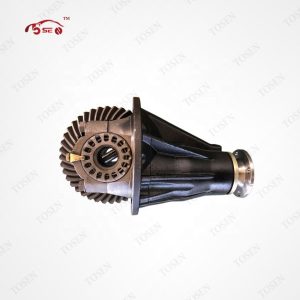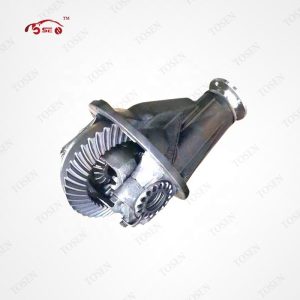
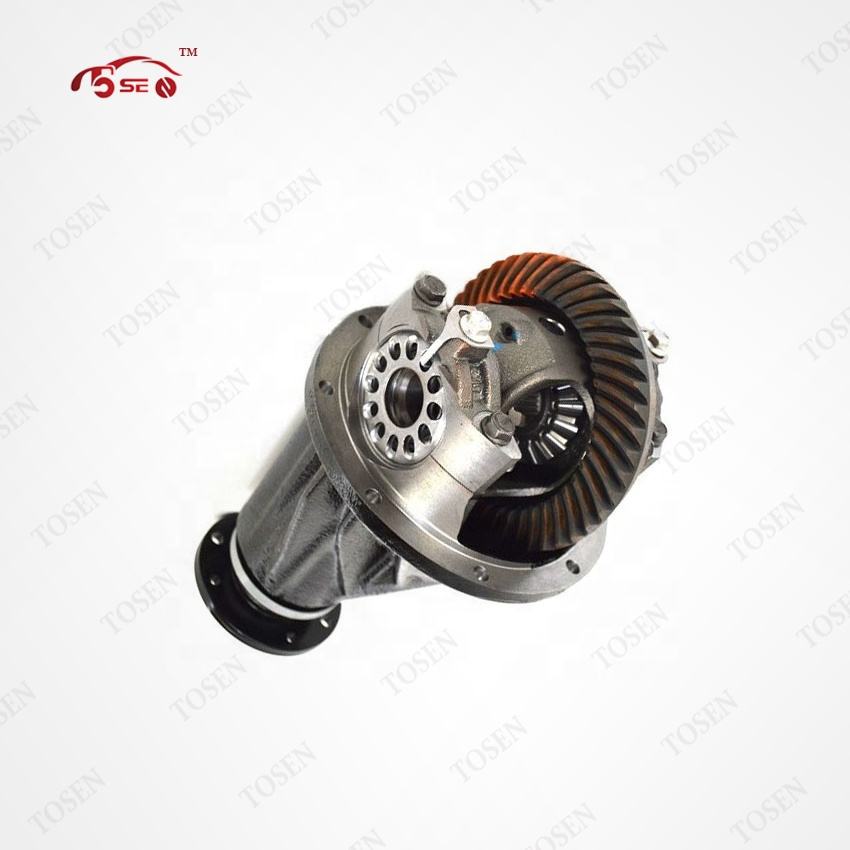
A whining noise from the rear differential comes from four places: worn crown wheel and pinion teeth, a setup error in backlash or bearing preload, a worn pinion or carrier bearing, or gear oil that is low, contaminated or the wrong spec. The noise tracks vehicle speed and reacts to throttle, and that behavior is what separates it from a wheel bearing or a cupped tire, the two most common false alarms. Tracing the rear differential whining noise causes starts with a road test, not a purchase.
This guide follows the order a workshop actually uses. First the road observations that localize the noise, then the causes inside the axle, then what the gear oil reveals, and finally the choice between a gear set and a complete assembly. It closes with the evidence package – axle tag, tooth-count stamp, old-part photos, VIN – that turns a confirmed diagnosis into a replacement order that fits the first time.
What Rear Differential Whining Actually Is
| Item | Description |
|---|---|
| The noise | A sustained whine or howl that rises and falls with vehicle speed. It is not a knock, a click or a clunk – those point to other parts. |
| Where it comes from | The crown wheel and pinion mesh and the bearings that support it: pinion bearings, carrier bearings, and the gear teeth themselves. |
| Its signature | Load sensitivity. Throttle changes the force on the gear teeth, so differential noise changes between acceleration and coasting. |
| What speeds it up | High mileage, heavy loads, towing, and gear oil that is low, contaminated or the wrong specification. |
The whine usually starts faint. It appears in a narrow speed band, grows as the months pass, and gradually spreads to more speeds. That slow progression is wear at work: as gear teeth or bearing races lose their finished surfaces, the mesh gets noisier. A noise that appeared suddenly after a gear set was replaced points somewhere else – to setup, not wear – and that distinction matters for who owns the repair.
Two false alarms imitate this noise closely: a worn rear wheel bearing and a cupped tire. Both also track vehicle speed. The difference is in what they respond to – a wheel bearing changes when the vehicle sways side to side, a tire changes with the road surface or after rotation, and neither reacts to throttle the way a differential does. The next section turns those differences into a repeatable test sequence, because naming the right part before ordering is what saves the real money.
Road Observations That Localize the Noise
| When you notice it | What it usually points to | What it rules out | What it means for the repair |
|---|---|---|---|
| Whine grows under steady throttle | Crown wheel and pinion drive side, or excessive backlash | Wheel bearings and tires – they do not respond to load | The problem is inside the differential: gear set or assembly path |
| Whine appears only when you lift off, coasting or engine-braking | Coast-side gear teeth, or pinion bearing preload | Wheel bearings and tires | Inside the differential: bearing service or gear set, depending on findings |
| Steady howl at cruise speed that eases when you back off | Worn pinion bearing | Wheel bearings and tires | Bearing-path repair; catch it before the gear teeth suffer |
| Pitch or volume changes when you sway gently left and right | Wheel bearing on the loaded side | The differential – its noise does not move with side-to-side load | A wheel bearing job, not a differential order |
| Noise moves to a different corner after rotating the tires | A cupped or unevenly worn tire | The differential and the wheel bearings | Tires or alignment; no parts order for the axle |
| Noise changes with the road surface (coarse vs smooth asphalt) | Tire tread | The differential and the wheel bearings | Tires; no parts order for the axle |
Run the tests in one session on a quiet road. Hold a steady speed where the noise is loudest, then apply light throttle, then lift off completely and coast in gear. Sway gently left and right at the same speed – gentle inputs, repeated two or three times. A pattern that repeats every time is trustworthy; a one-off change is not. Write down what you hear at each step, because the exact combination – louder on throttle, unchanged when swaying, same on both road surfaces – is what names the part.
The table earns its place before any spending. A wheel bearing and a tire are a fraction of a differential order, and a wrong diagnosis buys the wrong part twice. If the observations point inside the axle, the sections that follow cover what is actually worn, what the gear oil adds, and how to order the replacement so it fits the first time.
Causes Inside the Differential
Worn crown wheel and pinion teeth are the classic cause on high-mileage axles and vehicles that tow. As the tooth surfaces wear, the mesh loosens and the gears sing. There is no oil or additive that puts metal back on a tooth: once wear is the confirmed cause, the repair is a new gear set with fresh bearings and seals, set up correctly. Caught early, only the bearings may be worn – a far smaller job.
| Item | Description |
|---|---|
| Drive side | The face the pinion pushes on under throttle. Wear here whines on acceleration. |
| Coast side | The face that carries the load when you lift off. Wear here – or loose pinion bearing preload – whines on deceleration. |
Setup error is the cause to suspect when the whine appears right after a gear set was replaced. The crown wheel and pinion must mesh within tight tolerances: backlash, tooth contact pattern, pinion depth and bearing preload all have to be set and measured with the right instruments. Even small errors make the gears whine and shorten their life. This is also where the responsibility line sits: if the noise existed from the first drive after installation, setup is the first suspect, and the shop that set the gears owns it; a unit that ran quietly and later grew noisy points to wear instead. Recorded setup values and photos of the contact pattern settle the question without argument.
Pinion and carrier bearing wear behaves differently from gear wear. The pinion bearings commonly show their age first, as a steady howl at cruise speed that eases off-throttle; carrier bearings add a rumble that also tracks speed. Replacing worn bearings and resetting the preload can arrest the damage – but only if the gear teeth have not yet suffered. That is why the road observations matter: they tell you which family you are in before anything is opened.
Gear oil is rarely the noise itself, but it is the accelerator behind every family above. Low oil, water contamination or the wrong specification strips the lubricating film, and heat plus metal-to-metal contact follow. The next section shows what the drained oil reveals. One safety note while you schedule the work: a whine that deepens into a growl or grind means metal is coming off in sizeable pieces, and a differential left to fail can seize and lock the axle. Plan the repair and avoid loaded runs until the axle is verified.
What the Gear Oil Tells You
Draining the oil is the cheapest window into the axle, and on most units the magnetic drain plug does the reading for you. A light coating of fine metallic paste is normal for a high-mileage axle – it is the residue of ordinary wear. Metal flakes or chips are not: they mean a bearing or gear tooth is coming apart, and the replacement path is live. Oil that looks milky or chocolate-brown has water in it, usually through a vent, a seal or deep wading – and the ingress has to be found before it destroys the next unit too.
When you refill, use the exact specification the axle calls for, including the friction modifier if the unit is a limited-slip type. Viscosity and additive requirements are model-specific – there is no universal gear oil, and a wrong grade can create the very noise you are chasing. Fresh, correct oil in a healthy axle is prevention; that much is true.
What oil evidence changes about the order
Fine paste only: normal wear. Keep observing; the road-test pattern still decides.
Flakes or chips: bearing or gear distress confirmed. Move to the repair-path decision below.
Milky oil: find and fix the water ingress, or the replacement suffers the same fate.
The honest limit: fresh oil can quiet gear noise for a while, but it does not repair worn teeth or bearings. A temporary hush is not a fix.
Gear Set or Complete Assembly After Diagnosis
| Repair path | What you need | Best when | Trade-off |
|---|---|---|---|
| Crown wheel and pinion set, with new bearings and seals | A sound housing and a shop that can set backlash, preload, pattern and pinion depth | The case and axles are verified good and setup capability is in-house | Setup time on the lift, and the setup itself becomes your responsibility |
| Pre-verified complete assembly | The axle code, tooth count and fitment confirmation from the supplier | Downtime is expensive, or no local setup capability exists | Higher parts cost than a gear set alone |
| Used or remanufactured axle | Trust in the source's verification history | Budget rules and the application is common | Verification history is often the thinnest of the three |
The choice follows your situation, not a universal winner. The gear-set path assumes two things: the housing is sound, and someone will set the two adjustments that decide whether the axle runs quiet – backlash and preload, with the contact pattern proving the mesh. If either assumption fails, the gear set becomes the most expensive option in hindsight, because a mis-set unit whines from the first drive and wears out early. Fleets and importers weighing downtime usually land on the complete assembly: it swaps setup risk for parts cost, and the vehicle goes back to work in one visit.
If you choose a complete assembly, ask what was verified before it ships. On a tested unit, the supplier should be able to show the tooth counts stamped on the ring gear, the backlash and the contact-pattern check – the same values a good shop would record on installation. That documentation is what separates a pre-verified assembly from a boxed hope. Our differential assemblies and gear sets cover the common light-truck platforms, in complete units and in gear sets.
Each ratio has its own fitment checks. The ratio-specific guides walk each application – the Hiace 9:41, Toyota 10:41, NPR 8:43 and 7:41, NQR 10:41, Land Cruiser 11:41 and the Fuso 6×40 – through tooth counts, axle codes and the exact evidence a supplier needs before quoting.
What to Send for a Fitment-Confirmed Replacement
- A photo of the axle tag bolted to the differential cover
- The tooth-count stamp on the ring gear, or the counted teeth if the unit is already out
- Photos of the old part: front face, spline ends, and any tag or stamp
- The VIN, or the OE part number from the old label
- Vehicle model, year, and which axle position (front or rear)
- Quantity needed and the destination port
Each item settles one specific wrong-shipment failure mode. The axle tag and tooth-count stamp kill the wrong-ratio order – the costliest mistake in cross-border parts trade, because a 10:41 and a 9:41 can look identical in a photo. Spline photos kill the wrong-spline order. A VIN or OE number kills the wrong-carrier order, and naming the axle position kills the wrong-side order. A noise description settles none of these.
This is the same fitment discipline the application guides apply – the Hiace 9:41 ordering guide walks it step by step for the most common application – compressed into one list here. Cross-border returns are slow and expensive, which is why the confirmation happens before the invoice: send the evidence, get the match confirmed, then order.
Send the list with your VIN or OE number and destination port, and the match gets confirmed in writing before anything ships.
Frequently Asked Questions
Is it safe to keep driving with a whining rear differential?
For a short period, with two conditions: the noise is still a whine rather than a growl or grind, and the repair is scheduled. A whine that deepens into grinding means metal is coming off in pieces, and a differential left to fail can seize and lock the axle. Avoid loaded runs and towing until the axle is verified.
Will changing the differential oil stop the whine?
Sometimes it quiets the noise for a while, but it does not repair worn teeth or bearings – a temporary hush is not a fix. Change the oil with the exact specified grade anyway, because fresh, correct oil is what protects whatever you do next. If the whine returns or persists, the wear is already there.
Why is the whine louder when my truck is loaded or towing?
Load increases the force pressing the gear teeth together, so a worn mesh gets louder exactly when it works hardest. Fleets should treat a load-sensitive whine as a scheduling signal: verify the axle before the next loaded run, because that is when a weak unit fails.
The whine started right after a gear-set replacement. Is the new set defective?
Setup is the first suspect, not the parts. If backlash, contact pattern, pinion depth or bearing preload were set outside tolerance, the gears whine from the first drive – while a defective gear usually announces itself later. Ask the installing shop for the recorded setup values and a photo of the contact pattern; those two items settle the responsibility question.
Do I need a complete assembly or just the gears?
It depends on the housing and your shop. A sound housing plus in-house setup capability favors the gear set with new bearings; expensive downtime or no setup capability favors a pre-verified complete assembly. The comparison earlier in this guide walks the three paths side by side.
Can I check the ratio myself before ordering?
Yes, in two ways: read the tooth-count stamp on the ring gear (a 9:41 stamp means 9 pinion teeth and 41 ring gear teeth), or photograph the axle tag on the differential cover. Either one confirms the ratio before you contact a supplier – and both belong in the evidence package you send for the quote.
From a Verified Noise to a Confirmed Order
Name the cause before you order the part. The road observations tell you which family you are in – gear wear, setup error, bearings or oil – and the drained oil confirms it. From there the path is short: choose gear set or complete assembly by your housing and your shop, then send the axle tag photo, tooth-count stamp, old-part photos and VIN so the replacement is confirmed to fit before it ships. One road session and one evidence package are what stand between a whine and a first-time-fit order.
Send your axle tag photo, tooth-count stamp, old-part photos, VIN or OE number, model year, quantity and destination port for a fitment-confirmed replacement quote.