Audi Multitronic judder at launch is a shudder or vibration felt in the car during the first moments of acceleration from standstill, in the phase where the transmission applies its forward or reverse clutch and builds variator clamping pressure. On a Multitronic continuously variable transmission the launch is not a gear step: the control module commands the clutch application and regulates the clamping pressure continuously, so judder that appears exactly at launch directs attention to the control chain — the controller, its software and adaptation data, and the sensor inputs behind its commands. This guide explains how the 01J and 0AW Multitronic generations manage the launch phase, which four checks separate a control-module problem from the rest of the chain, and what a workshop should record when ordering a replacement such as the 01J927156JG Multitronic control module or the 0AW927156K transmission control unit.
Quick summary: launch on a Multitronic gearbox is a controlled event, not a gear change. The transmission control module reads input and output shaft speed, selector position and variator pressure, then commands the hydraulic control unit that applies the forward or reverse clutch and sets the clamping pressure. The module also carries the transmission’s control software and adaptation data, so tracing launch judder means checking the transmission generation, the complete controller number with its suffix, the coding state and the sensor inputs — in that order — before any part is ordered.
How a Multitronic Gearbox Manages the Launch Phase
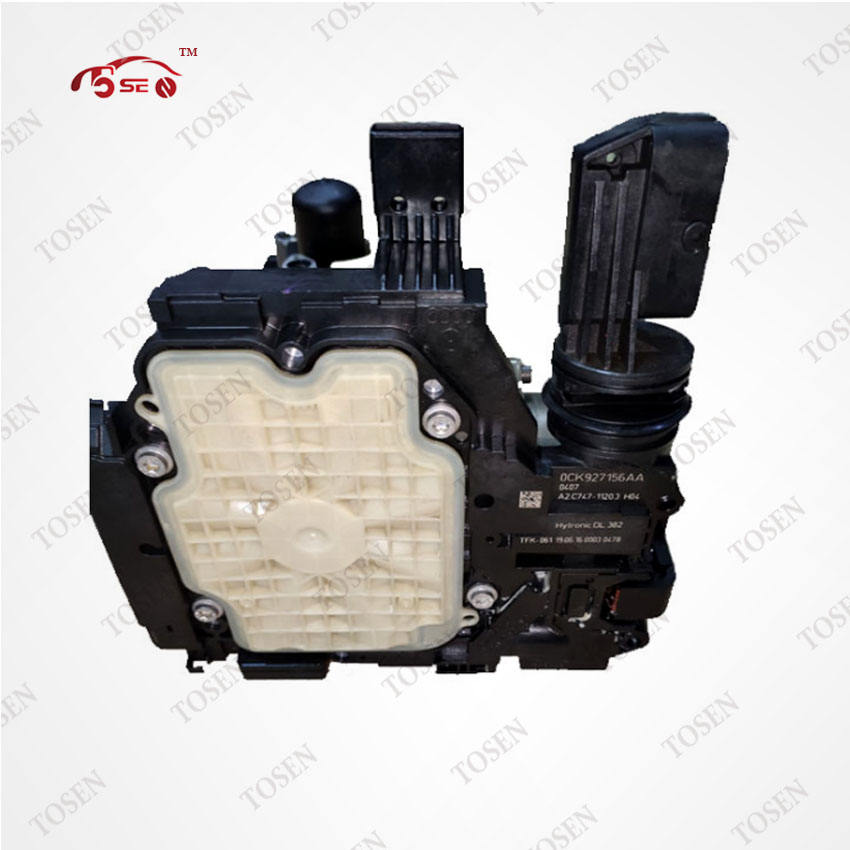
The Audi Multitronic is a continuously variable transmission: instead of stepping through fixed gears, it changes ratio continuously through its variator. The transmission control module is the electronic control unit that reads the gearbox sensor signals — input and output shaft speed, selector position and variator pressure — and then drives the hydraulic control unit that sets the variator ratio and applies the forward and reverse clutch. Because the ratio is varied continuously rather than through fixed gear steps, the module’s output regulates variator clamping pressure instead of selecting discrete gears.
Two commanded actions therefore run together every time the car moves away from standstill. The module commands the clutch application that connects the engine to the driveline, and at the same time it regulates the clamping pressure that holds the variator in position. A smooth launch depends on both commands staying matched to what the gearbox is actually doing, and the data behind that matching lives in the module itself, because the controller carries the transmission’s software and adaptation data for the gearbox it serves.
Launch judder felt through the car at that exact moment tells a workshop something specific: the handover from standstill to driven ratio is not running as commanded. The symptom does not say which layer is at fault, and that is the point of the checks below — the same felt shudder can come from a controller that does not match its transmission, from coding or adaptation that was never completed, or from sensor inputs the module cannot rely on.
What Launch Judder Suggests About the Control Chain
The launch chain on a Multitronic runs from sensor data, through the control module’s software, to the hydraulic control unit, and out to the clutch and the variator. A fault at any layer can arrive at the driver’s seat as the same shudder, so a useful diagnosis works from the cheapest evidence outward: first the paperwork and labels, then the software state, and only then the hardware. Ordering a controller before those layers are separated is the most expensive way to run the check, because a second wrong controller reproduces the same symptom a second time.
| Check | What it confirms | What it tells the judder diagnosis |
|---|---|---|
| Transmission generation, 01J or 0AW | Which Multitronic generation the vehicle carries; the 0AW family is a distinct generation from the earlier 01J unit | A controller from one family is not a substitute for the other, so a generation mismatch fails before anything else is tested |
| Complete controller number, including the suffix | The exact controller version — the JG suffix on the 01J927156JG module and the K suffix on the 0AW927156K unit are part of the identification | Two modules that share a base number but end in different letters are not interchangeable in every application |
| Coding and adaptation state | That the replacement module carries control software and adaptation data corresponding to the transmission and vehicle | A controller fitted without coding or adaptation is not calibrated for the gearbox it is running, and launch behavior shows it |
| Sensor input chain | That input and output shaft speed, selector position and variator pressure data reach the module consistently | Commands formed from missing or contradictory sensor data cannot be trusted even when the module itself is sound |
Each check is evidence a workshop can record in a job file: the transmission code read from the vehicle, the label photographed from the original controller, the coding record from the installation, and the sensor readings saved from the diagnostic session. A supplier asked to quote a replacement can then verify the order against all four records instead of guessing from a symptom description.
Four Checks That Isolate the Control Module
- Confirm the Multitronic generation first. Read the transmission code on the vehicle before anything else. The 01J code identifies the earlier Multitronic family and the 0AW code a distinct generation, and each generation carried its own controller hardware and software revisions. A controller from one family is not a substitute for the other, so the generation decides which parts catalogue the enquiry lives in.
- Read the complete number on the original controller label. Quote the full string including the letter suffix — 01J927156JG for the earlier family, 0AW927156K for the later one. The suffix marks the controller version apart on these units, and two modules that share the 01J927156 base number but end in different letters are not interchangeable in every application. Compare the electrical connector pattern and the mounting arrangement against the removed unit at the same time, because connector and mounting layout are part of module selection alongside the number itself.
- Verify the coding and adaptation state. Fitting a replacement Multitronic controller is generally not complete until the unit has been coded or adapted to the vehicle, because the module stores control software and adaptation data tied to the transmission and vehicle it serves. Where launch judder appears shortly after a controller change, the coding record is the first document to pull — before anyone orders a second part on the strength of the symptom alone.
- Walk the sensor input chain. The module forms its clutch and pressure commands from input and output shaft speed, selector position and variator pressure data, so each input belongs in the verification. Confirm that every reading is present and consistent with what the car is doing during the launch attempt, because the module can only command the launch as well as the data it receives.
One habit keeps the sequence honest: write down what each check actually found, not what it was expected to find. The Multitronic family was built over a long production run and carried several hardware and software revisions, so two vehicles that share a model name can be fitted with different transmission control hardware — the label read from the car, not the model name, is the fact the order is built on.
Ordering the Replacement Controller Once the Diagnosis Points to the Module
When the four checks place the fault on the control module, the enquiry is a document, not a sentence. Multitronic controllers are supplied as new components through a factory-direct supply channel, and each unit is checked against the reference number and connector arrangement before dispatch — which only works when the order carries the right records:
- Quote the complete reference number printed on the original module label, including the JG or K suffix, exactly as it reads — the full string, not the shorter base number.
- Include the transmission code and the vehicle VIN, so the generation and the individual car are both pinned down before the unit is picked.
- State the workshop’s coding or programming requirements in the enquiry, so the scope of the installation work is clear before the module is dispatched.
- Compare the electrical connector pattern and mounting arrangement against the removed unit before confirming the order, because connector and layout are part of the identification.
- For a distributor or workshop building inventory, ask for a sample unit first, so the hardware version is checked against the original before the full quantity ships.
With those records, the supplier’s pre-dispatch check has something to check against, and the controller that arrives is the one the job file describes — whether the diagnosis ends at the 01J927156JG Multitronic transmission control module for the earlier generation or the 0AW927156K control module for the later one. Vehicles running either generation are served under Transmission Control Units, where the full controller range is listed for quotation.
Frequently Asked Questions
What does judder at launch mean on an Audi Multitronic transmission?
Judder at launch on an Audi Multitronic transmission is a shudder felt while the car accelerates from standstill, during the phase when the transmission control module applies the forward or reverse clutch and regulates variator clamping pressure. Because a Multitronic launch is a continuously controlled event rather than a gear step, the symptom directs the diagnosis at the control chain: the transmission generation, the complete controller number with its suffix, the coding and adaptation state, and the sensor inputs behind the module’s commands.
Can the wrong controller suffix cause judder at launch?
A controller with the wrong letter suffix can disturb launch behavior, because on the 01J927156JG and 0AW927156K modules the suffix is part of the identification and distinguishes the controller version. Two modules that share the 01J927156 base number but end in different letters are not interchangeable in every application, and a controller that does not match the transmission does not carry the software and adaptation data the launch phase relies on. Reading the complete label number, including the suffix, prevents that mismatch before dispatch.
Are 01J and 0AW Multitronic control modules interchangeable?
The 01J and 0AW Multitronic control modules are not interchangeable. The 0AW family is a distinct Multitronic generation from the earlier 01J unit, and each generation carried its own controller hardware and software revisions, so a module from one family does not substitute for the other. A workshop tracing launch judder should confirm which generation the vehicle carries from the transmission code, then match the complete controller number — 01J927156JG for the earlier family, 0AW927156K for the later one — before a replacement is ordered.
What should a workshop send when ordering a Multitronic control module?
A workshop ordering a Multitronic control module should send the original module label with the complete reference number including the letter suffix, the vehicle VIN, the transmission code and the required quantity, together with the workshop’s coding or programming requirements. Each unit is checked against the reference number and connector arrangement before dispatch, and a distributor or workshop building inventory can request a sample unit to check the hardware version against the original before committing to a full order.
Tracing launch judder on a Multitronic gearbox? Confirm the generation, quote the full controller number with its suffix, and send the VIN, transmission code and coding requirements with the enquiry — so the correct 01J or 0AW control module is verified and quoted the first time.