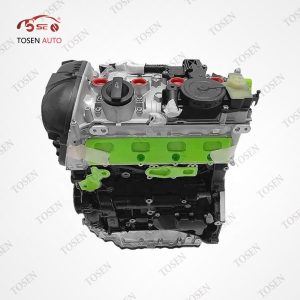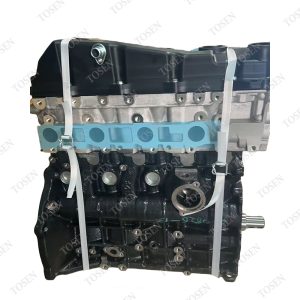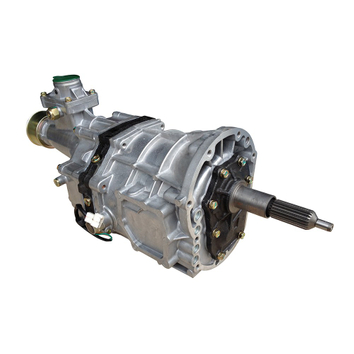
A cheap engine becomes expensive the moment the crate opens and the workshop finds the wrong sump, missing sensors, or an undefined warranty. Importers need more than a product photo and an engine-family name.
Choosing a complete engine assembly supplier China buyers can rely on means controlling one evidence chain. The vehicle identity must connect to the written bill of materials, exact-unit release records, commercial terms, crate, receiving inspection, first start, and claim route.
This guide turns that chain into a supplier audit and quote checklist. It shows what to verify, which weak substitutes to reject, and what to send so procurement, logistics, and the installer can approve the same engine scope.
Freeze the Supply Scope Before Comparing Suppliers
| Item | Description |
|---|---|
| Short block | Lower assembled engine; confirm the crank, pistons, bearings, oil pump, and covers in writing. |
| Long block | Usually adds the cylinder head and valvetrain, but external systems commonly transfer from the old engine. |
| Complete engine assembly | A more complete package whose manifolds, fuel system, turbo, sensors, harness, accessories, and controls still need a written boundary. |
| Quote field | Answer required | Weak substitute | Buyer action |
|---|---|---|---|
| Condition | New, used, rebuilt, or remanufactured with definition | New-looking or refurbished | Ask which parts and processes justify the condition |
| Included parts | Line-by-line BOM or marked assembly drawing | Complete or as pictured | List every manifold, pump, cover, sensor, bracket, and accessory |
| Exclusions | Written excluded and transferred components | Standard exclusions apply | Price transfers and inspect reusable parts before approval |
| Interfaces | Vehicle-specific connection and mounting review | Same model or displacement | Confirm sump, mounts, bellhousing, controls, fuel, and emissions interfaces |
Scope rule
Compare engine assemblies and long blocks only after every quote uses the same condition, supplied BOM, exclusions, and transfer plan.
If a photo and the written BOM disagree, the signed BOM and approved exception list must be corrected before payment.
Audit the Supplier Before Discussing MOQ
- Match the quotation, business registration, bank beneficiary, website identity, and contract party.
- Confirm the factory address and whether the seller owns machining, assembly, testing, packing, or only sourcing and export.
- Request a live video walkthrough or independent audit that follows material receipt, work order, measurement, assembly, testing, quarantine, and dispatch.
- For any ISO 9001 or IATF 16949 claim, verify organization name, site, certificate number, scope, issuer, accreditation route, and validity.
- Ask who creates the BOM, who signs release, and which serial or job number links records to the shipped unit.
- Review a redacted sample of a real inspection pack, nonconformance record, packing record, and claim response.
- Confirm production capacity with recent work-order evidence and lead-time performance, not a catalog number alone.
Three proofs, three questions
Legal proof answers who signs and receives payment.
Quality-system proof answers how the organization controls work.
Unit-release proof answers what happened to this engine. None replaces the other two.
ISO explains that ISO 9001 is a quality-management-system standard and that independent certification bodies, not ISO, certify organizations. Treat a certificate as one audit input. A useful supplier still has to show that its certified site and scope cover the work in your quotation, then provide product and release evidence for the exact unit.
Build a Fitment Evidence Pack
- Capture the full VIN or chassis number from the vehicle and confirm the year, model, market, transmission, drive type, fuel, emissions configuration, and production date with authoritative data.
- Photograph the installed engine code or number in context. Add the old-unit label, OE numbers, casting references, and any prior replacement history.
- Photograph both sides of the engine, sump, front cover, bellhousing area, mounts, manifolds, turbo, injectors, sensors, harness connectors, flywheel or flexplate, and reusable accessories.
- Reconcile conflicts. A VIN can describe the original factory build while the current engine may be a prior replacement. Require a written explanation and interchange or transfer plan.
- Freeze the approved application, engine identity, interfaces, BOM, and exceptions in the quotation. Do not rely on chat messages after payment.
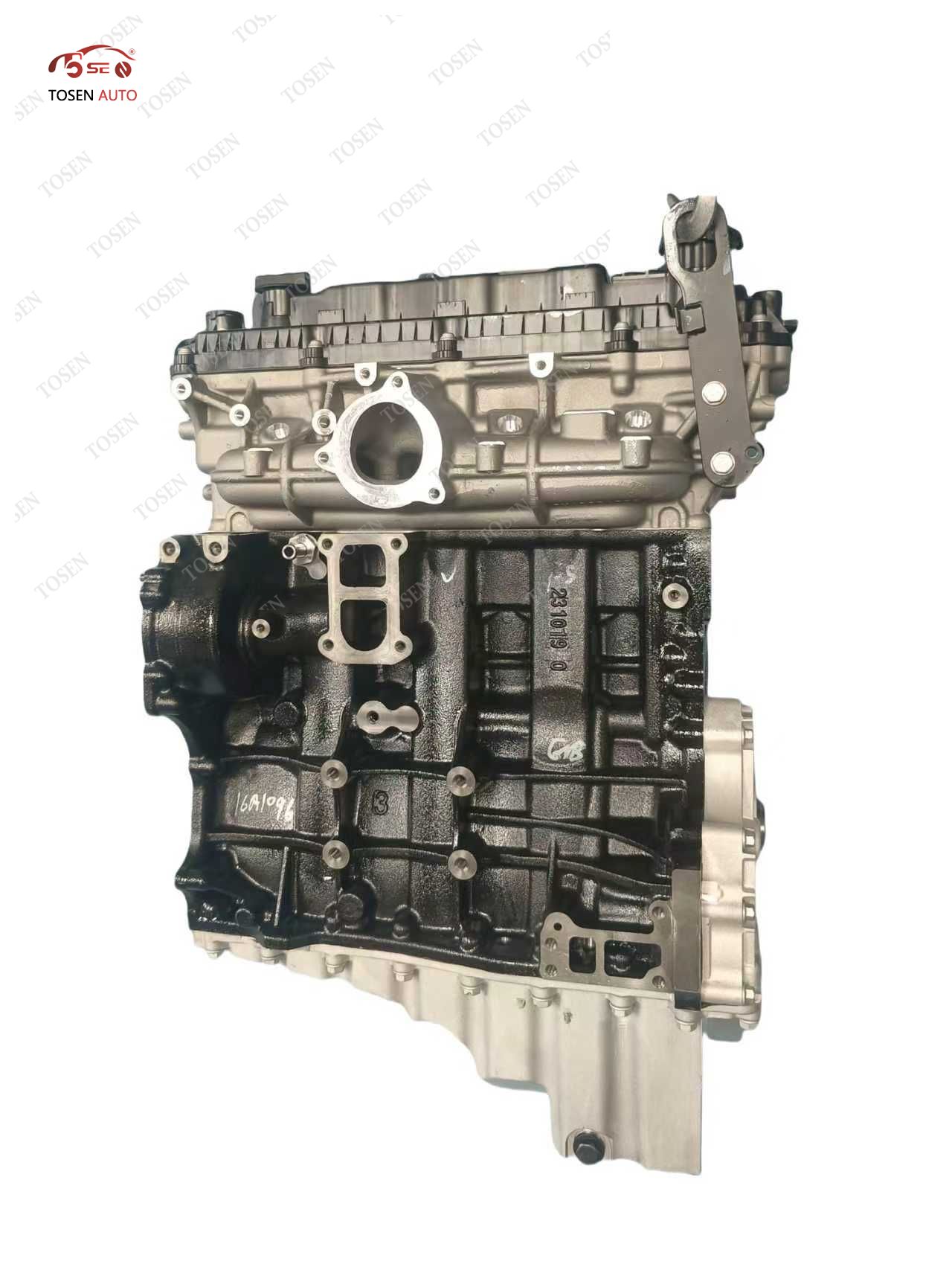
- Full VIN or chassis number and vehicle application
- Readable engine-code or engine-number photo
- OE, casting, label, and production references where available
- Both-side interface photos and required accessory list
- Written handling of every suffix, market, control, or emissions difference
A related technical guide can help organize a Toyota Hiace or Hilux check, but no guide proves a specific order. The supplier must confirm the actual evidence pack and identify which parts transfer. Never force a match because one character, model name, displacement, or photograph looks close.
Demand a Unit-Specific Test and Release Pack
| Record | Fields to require | Weak substitute | Stop condition |
|---|---|---|---|
| Identity and visual release | Serial/job, date, inspector, all-side photos, tag and seal | Stock photo or factory video | No link to the quoted engine |
| Compression or leak-down | Method, setup, correct manual limit, cylinder results, variance, unit ID | Pass or tested | No actual results or wrong application specification |
| Oil-pressure or running check | Fluid, temperature, speed/load point, limit, actual result, leaks/noise/faults | Oil pressure OK | Unknown conditions or no unit traceability |
| Dimensional and sealing checks | Characteristics, tools, calibration status, limits, results, repair disposition | QC inspected | Critical exception has no approved disposition |
| Final release | BOM revision, open issue status, preservation, release signature, crate link | Ready to ship | Open nonconformance or mismatched BOM |
- Use the correct service specification for the exact engine and test condition.
- Request raw readings or photos where they materially support the result.
- Record any rework, retest, substituted component, and final disposition.
- Tie the approved release pack to the invoice, packing list, and crate label.
Do not demand the same test or numeric limit for every new, used, rebuilt, and remanufactured engine. The condition, build process, and available test setup change the evidence plan. Ask the supplier to propose applicable checks, then verify the method and acceptance basis before the unit enters production or final release.
Normalize MOQ, Price, and Lead Time
| Field | Quote must state | Normalization check | Risk if open |
|---|---|---|---|
| Condition and BOM | Exact condition, revision, inclusions, exclusions, transfers | Same supplied scope | False price comparison |
| MOQ and sample | Sample quantity, production MOQ, mixed-SKU rule, sample credit | Same order pattern | Unexpected minimum or surcharge |
| Price basis | Currency, quantity break, validity, tax/duty treatment | Same currency and quantity | Expired or incomplete price |
| Lead time | Start trigger, production days, inspection hold, dispatch window | Same readiness definition | Schedule begins at different events |
| Packing and freight | Crate type, dimensions/weight, preservation, named Incoterm and place | Same delivery point and risk split | Freight and handling shift to buyer |
| Payment and warranty | Deposit/balance trigger, documents, start date, exclusions, claim costs | Same cash and coverage basis | Commercial exposure hidden after payment |
Price decision
Calculate a comparable landed and installed scenario, including transfer parts, seals, fluids, freight, duty, receiving, labor, and downtime.
A low MOQ is not useful when the sample has a different BOM, packing method, or warranty from the production order.
TOSEN AUTO's live engine assemblies and long blocks category and the 4F25TC1 2.5L Turbocharged Engine Assembly page can establish a commercial starting point. They do not confirm fitment, MOQ, final price, lead time, or warranty for a particular shipment. Put those items into the written RFQ and compare the returned answer on one basis.
Control Crating and Receiving Inspection
- Preserve: drain or protect fluids as agreed; cap openings; protect machined and electrical surfaces; control moisture.
- Restrain: use approved lifting and base points; prevent engine and accessory movement; protect protruding parts from contact.
- Identify: show engine serial/job, crate number, gross/net weight, center of gravity or lifting marks where needed, and document list.
- Verify the crate: determine whether covered raw wood or dunnage requires ISPM 15 treatment and marking for the route; do not assume every plywood crate has the same scope.
- Record dispatch: photograph all engine sides, protection, restraints, closed crate, labels, seal, and loading condition.
- Receive: inspect before signing where possible, note visible damage, open within the agreed window, preserve photos/video, packing, and carrier records.
- Crate drawing or packing specification and actual material
- ISPM 15 applicability and legible mark when required
- Preservation, moisture control, opening caps, and restraint points
- Pre-shipment photographs tied to unit and crate numbers
- Carrier inspection, concealed-damage, and notification procedure
ISPM 15 reduces pest risk from covered raw-wood packaging in international trade; it is not an engine-protection standard. The buyer still needs adequate preservation and restraint. Confirm the destination's current rules with the freight forwarder or importer and keep the mark and packing evidence in the shipment file.
Lock the Warranty and First-Start Boundary
| Term | Answer required | Evidence to retain | Risk if open |
|---|---|---|---|
| Coverage start | Shipment, receipt, installation, or first-start date | Dated delivery and installation records | Coverage expires earlier than expected |
| Covered remedy | Parts, replacement unit, agreed freight, labor, and limits | Signed warranty and quotation | Buyer funds removal, return, and reinstallation |
| Installation duties | Pre-lube, cooling/oil/fuel system work, parts replaced, installer qualification | Checklist, receipts, photos, measurements | Claim denied for undocumented preparation |
| First-start record | Oil pressure, leaks, temperature, faults, timing, shutdown limits | Video/data sheet tied to unit | Root cause cannot be separated |
| Claim route | Notice window, stop-use rule, pre-authorization, failed-part retention, response time | Case number and communications | Work destroys evidence or adds cost without approval |
- Give the installer the approved BOM, fitment pack, release pack, and warranty before work starts.
- Inspect supporting systems that could repeat the original failure.
- Stop and notify the supplier when a stated shutdown or claim trigger occurs.
- Keep removed parts, fluids or filters when the supplier's process requires them.
A long warranty period does not compensate for an unusable remedy. Compare the full claim path: who diagnoses, who authorizes work, who pays freight and labor, what evidence is required, and how quickly the supplier must respond while the vehicle or shop bay is down.
Send a Quote-Ready RFQ
- Buyer and project: company, contact, destination country and port, delivery point, required date, quantity, and repeat-order forecast.
- Vehicle: full VIN or chassis number, year/model/market, transmission, drive, fuel/emissions configuration, production date, and prior replacement history.
- Engine: code/number photo, old label, OE/casting references, both-side interface photos, current failure, and reusable parts.
- Supply: new/used/rebuilt/remanufactured condition, required assembly level, BOM, exclusions, transfers, and approved exceptions.
- Evidence: unit-linked inspection/test plan, acceptance basis, actual-result pack, serial/job traceability, and release authorization.
- Commercial: sample policy, MOQ, price breaks, currency, validity, payment, lead-time trigger, packing, named Incoterm/place, and document set.
- Logistics and warranty: preservation, crate, ISPM 15 where applicable, dispatch/receipt process, coverage start, remedy, exclusions, first-start requirements, and claim route.
| Outcome | Conditions | Next action |
|---|---|---|
| Approve | Identity, BOM, unit evidence, terms, packing, and warranty are complete | Sign the controlled quotation and retain the evidence pack |
| Clarify | One interface, test, MOQ, trade, or claim field remains open | Request a written answer and revised quotation |
| Approve transfer plan | Core engine matches and differences are limited to documented reusable externals | List and inspect every transferred part before dispatch |
| Reject | Unexplained identity conflict, photo-only fitment, generic release, or ambiguous responsibility | Do not convert uncertainty into return freight or installation work |
Request written fitment confirmation and a quotation Send TOSEN AUTO the VIN or chassis number, old-engine label or engine-code photo, OE number, vehicle year and application, required assembly scope, quantity, destination port, and interface photos. Review the 4F25TC1 2.5L Turbocharged Engine Assembly or the related technical guide only as a starting reference; the written response must confirm your exact scope. On-page complete-engine RFQ checklist
Frequently Asked Questions
What should a complete engine assembly include?
There is no safe universal accessory list. Require a written BOM that marks the block, head, timing parts, covers, sump, manifolds, fuel system, turbo, pumps, sensors, harness, brackets, accessories, controls, exclusions, and transferred parts.
Can a supplier confirm fitment from the VIN alone?
Not reliably in every case. Use the full VIN or chassis number with the installed engine code or number, OE and casting references, production and market details, transmission, emissions configuration, and interface photos. Investigate any conflict before ordering.
What is a reasonable MOQ for an engine assembly order?
MOQ is supplier-, product-, and packing-specific. Ask separately for a sample quantity, production MOQ, mixed-SKU rule, quantity breaks, and whether the sample BOM, test pack, crate, and warranty match the production order.
Which engine tests should I request?
Request tests appropriate to the condition and build: identity and visual release, dimensions or sealing checks, and compression, leak-down, oil-pressure, or running evidence where applicable. Each result needs the correct method, specification, actual value, date, and unit identifier.
Does an ISO 9001 certificate prove the engine quality?
It can support a quality-system audit when the organization, site, scope, issuer, accreditation route, and validity are verified. It does not replace the BOM, fitment approval, or exact-unit inspection and release records.
Does every wooden engine crate need an ISPM 15 mark?
ISPM 15 applies to covered raw-wood packaging and dunnage in international trade, while processed-wood exclusions can apply. Confirm the actual crate material and current destination rules with the importer or forwarder; also specify preservation and restraint separately.
When should an engine warranty start?
The contract must state whether coverage starts at shipment, receipt, installation, or first start. Also define duration, remedy, exclusions, labor and freight treatment, installer duties, first-start evidence, notice window, and pre-authorization before payment.
Make the Quote Carry the Evidence Chain
A useful engine quotation connects one vehicle and installed-engine record to one BOM, one released unit, one commercial basis, one crate record, and one workable first-start and claim process. If any link is missing, clarify it before price approval.
Keep the same controlled file through supplier release, receipt, installation, and warranty. That makes fitment decisions recheckable and gives procurement, logistics, and the workshop the same boundary.
Send a fitment-ready inquiry Share the VIN or chassis number, engine-code or old-label photo, OE reference, vehicle year and application, required assembly scope, quantity, destination port, and interface photos with TOSEN AUTO for written confirmation and a quotation. On-page complete-engine RFQ checklist