A Mitsubishi Pajero rear differential that howls on the highway or clunks when you take off is usually telling you the ring and pinion, the bearings, or both are worn out. Whether you run a repair shop that fixes Pajeros every week or you import parts for a fleet, the risk is not the price of the part — it is ordering the wrong unit. This guide walks you through the fitment and ratio checklist you need before you buy: which Pajero 2.8 or 3.0 rear differential fits, how to read the gear ratio from the axle tag, and what to check so the replacement runs quiet for years.
Which Pajero Rear Differential Fits Your 2.8 or 3.0?
The Pajero family covers many engine generations, and the rear differential is not universal across them. The 2.8 diesel (4M40) and the 3.0 V6 (6G72) were built in different eras, with different axles, and the rear differential housing, splines, and carrier bearings are not automatically interchangeable. Fitting a unit by model name alone is the single most common cause of receiving the wrong part.
Three identifiers settle fitment, and you should collect all three before you quote:
- VIN of the vehicle — this locks the build, the market, and the axle option.
- Old-part label or OEM number stamped on the differential tag or the old housing. This is the most reliable identifier of all.
- Model year and engine code (for example 4M40 for the 2.8 diesel, 6G72 for the 3.0 V6). The same platform ran several engine codes over its production life, and each can use a different differential.
When the vehicle is a 4×4, also record which axle you are replacing — front and rear units are built differently. A reputable supplier asks for the OEM number and engine code, not just the model name, before it confirms anything.
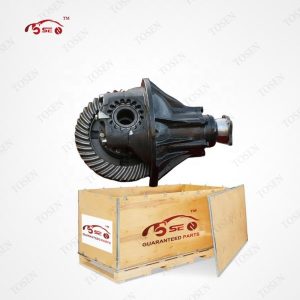
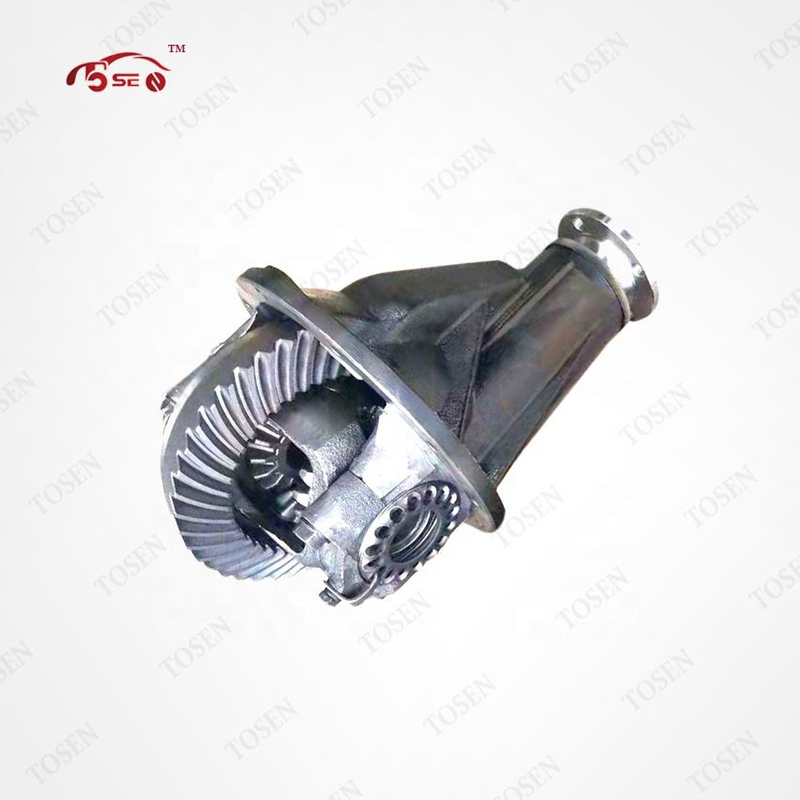
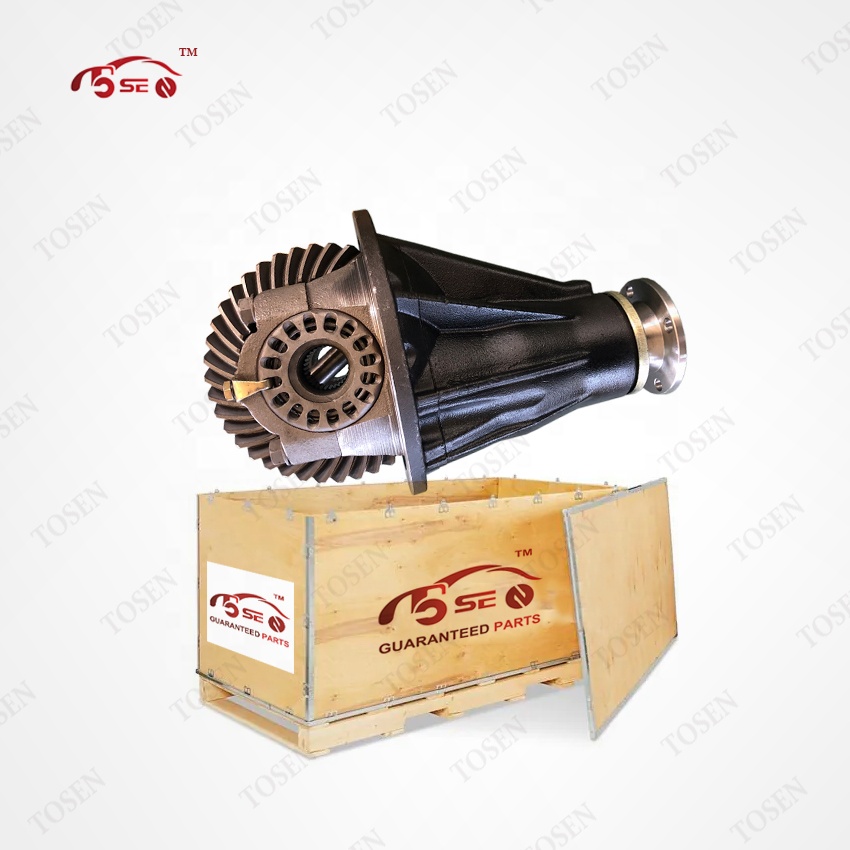
You can see the exact unit built for this application on our Rear Differential Assembly for Mitsubishi Pajero for Mitsubishi Pajero 30T 28T page, which lists the fitment and the supplied configuration. Cross-check your OEM number against the listing before you commit.
Find the Ratio: Read the Axle Tag and Count Teeth
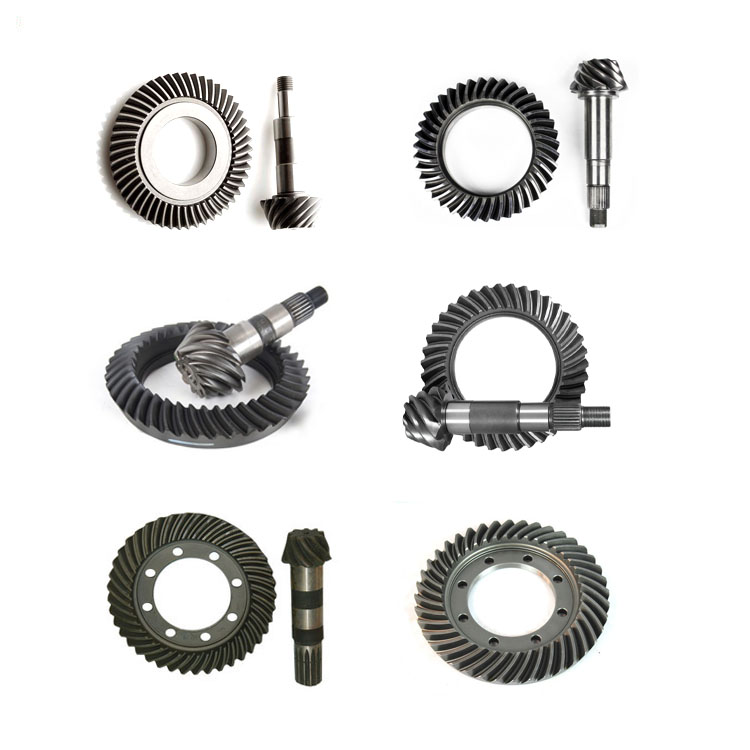
The gear ratio is the number of teeth on the ring gear (the large crown wheel) divided by the number of teeth on the pinion. A set stamped 41/10 gives a 4.10 ratio, meaning the driveshaft turns 4.10 times for every turn of the rear wheels. Pajero axle tags and differential housings often carry a stamped code such as 9:41 or 10:41 — the first number is the pinion tooth count and the second is the ring gear tooth count. If the tag is gone or unreadable, the only certain way is to count the teeth on both gears by hand. Count twice. A one-tooth error changes the ratio and makes the unit unusable.
Why does the ratio matter so much? It decides engine speed at highway speed, pulling power, and speedometer accuracy. Buy the wrong ratio and the vehicle drives wrong, the ABS/TCS logic is confused, and on a 4×4 the front and rear axles fight each other. Before you order, verify the ratio with a free tool such as the Spicer gear ratio calculator — enter your known tooth counts and it confirms the ratio and the RPM effect you can expect.
If you only need a ratio refresh, it is possible to buy the crown wheel and pinion set alone. But the set must be matched as a pair — never mix a new crown wheel with an old pinion from a different set, because the tooth contact pattern will not be correct. We cover the full range of differential assemblies and gear sets in our Differentials category, so you can compare a complete assembly against a bare set before you decide.
Front vs Rear Axle: Make Sure the Ratio Matches
On a 4×4 Pajero, the front and rear differential ratios must be identical. When you replace one axle with a different ratio, the front wheels try to turn at a different speed from the rear. On pavement the result is driveline wind-up, binding in corners, premature transfer-case wear, and in the worst cases a snapped half-shaft. This is why shops replace both axles or confirm the ratio of the opposite axle before installing the new unit.
Matching means more than the ratio. The housing must bolt up to the same axle housing, the pinion flange must suit your driveshaft, and the side splines must match the axle shafts. If you are unsure whether your Pajero uses a 2.8 or 3.0 axle configuration, check the opposite axle tag first — it carries the same stamped code. For a deeper explanation of how crown and pinion sets work and why the tooth count decides the behaviour of the whole axle, read our related technical guide on differential ratios.
Backlash, Tooth Contact and Bearings: The Inspection Checklist
A new or rebuilt rear differential must meet three checks before it is installed, otherwise it will howl or fail early:
- Backlash — the small clearance between the ring gear and pinion teeth. It is set with a dial indicator against the ring gear, and the correct figure is a manufacturer-specified range, not a guess. Too tight and the gears overheat; too loose and they clunk and wear fast.
- Tooth contact pattern — the paint-mark test shows where the pinion teeth meet the ring gear teeth. A wrong pattern makes the differential howl under load and overheat the housing.
- Bearing preload and condition — the pinion and carrier bearings must be set with correct preload. Worn bearing journals on an old carrier let the gears move and destroy the set.
This is the point where a complete assembly beats a box of loose gears. Quality suppliers such as Quaife explain in their crown wheel and pinion engineering notes why hardened tooth faces and correct gear set-up are what make a differential last. On our Pajero rear differential, the ring and pinion are forged alloy steel with induction-hardened tooth faces, the carrier is inspected for bearing-journal wear, the case is crack-tested, backlash and tooth-contact pattern are set to OEM spec, and new bearings are used with correct preload. Each assembly is run-in and noise-checked before dispatch, and the set-up values are recorded per unit.
Noise and Wear Symptoms: When to Replace the Whole Assembly
Learn to read the four classic failure signals so you can tell the buyer exactly what the fault is — and what the fix must include:
- Howling under load that disappears on overrun — worn or badly set ring and pinion tooth contact. The gear set is finished or was never set up correctly.
- Clunking on take-up — excessive backlash from worn gears or a failing carrier bearing.
- Whine at a fixed speed — pinion bearing failure; the debris it sheds then runs through the whole carrier.
- Recurring axle seal leak — a worn bearing journal has grooved the seal surface. Fitting a new seal alone will not fix it.
Any of these means the internals are worn, not just one part. This is where we differ from listers who sell loose used gears: we do not sell a bare crown wheel and pinion out of a used housing. We supply the complete rear differential assembly, factory-built, with the backlash, pattern, and preload already set and recorded. That removes the set-up work from your workshop and from your warranty risk. If the unit howls after installation, the set-up record shows whether it left our factory correctly adjusted.
Frequently Asked Questions
How do I find the ratio of my Mitsubishi Pajero rear differential?
Read the stamped code on the axle tag or differential housing (for example 9:41 or 10:41). The first number is the pinion tooth count, the second is the ring gear count; divide the ring number by the pinion number to get the ratio. If the tag is gone, count the teeth on the old ring and pinion by hand.
Will a rear differential from a 3.0 Pajero fit my 2.8 Pajero?
Not automatically. The 2.8 (4M40) and 3.0 (6G72) used different axles and housings over their production life. Confirm by the OEM part number stamped on the old differential and by the VIN before ordering — never by model name alone.
Should I buy a complete differential assembly or just the ring and pinion?
If the bearings, carrier, or housing show wear, buy the complete assembly. A bare ring and pinion set only makes sense when the existing bearings and carrier are verified in good condition, and the new pair is set up correctly. For most Pajero repairs where the unit was noisy, the complete assembly is the safer choice.
What happens if the front and rear ratios on my 4×4 do not match?
The axles fight each other. The result is driveline wind-up, binding in corners, extra wear on the transfer case, and possible snapped half-shafts. Always match the ratio of the opposite axle when replacing one side.
Who is responsible if the differential howls after fitting?
Ask for the set-up record: the backlash, tooth-contact pattern, and bearing preload values recorded at the factory. If a unit left the factory correctly set and was fitted properly, a sudden howl points to an installation issue such as incorrect bearing preload on refit. A supplier that records and shares these values makes the responsibility question easy to answer.
Get a Fitment-Confirmed Quote
You now have the full checklist: VIN, old-part label or OEM number, model year, engine code, axle position, and the ratio stamped on the tag or counted on the teeth. Submit your VIN, old-part label/OE number, model year, quantity and destination port to get a fitment-confirmed quote. We confirm the fitment and ratio before building the crate, pack each unit for sea freight with wooden-crate protection, and supply factory-direct with sample orders accepted for qualification.