When a Land Cruiser differential starts whining on the overrun or after a hard off-road season, the first question a buyer asks is usually about the 11:41 ratio — what it means, which axle it belongs to, and how to order the right part the first time. This guide walks you through the ratio math, the front-versus-rear axle question, the housing and spline checks that prevent wrong shipments, and the exact inspection points a differential shop should run before installation. By the end, you will know whether you need a crown wheel and pinion set or a complete assembly, and what paperwork protects you if a part arrives damaged or noisy.
What Does “11:41” Mean on a Land Cruiser Differential?
The numbers in 11:41 are simply the tooth counts on the two bevel gears inside the differential. The pinion gear has 11 teeth, and the crown wheel (the larger ring gear) has 41 teeth. Divide the crown wheel count by the pinion count — 41 ÷ 11 — and you get the axle ratio of 3.727:1. That is the number a shop quotes when it says the truck runs a “3.73 rear end.” In other words, the driveshaft turns about 3.73 times for every full turn of the axle.
Tooth counts matter more than names, because the same ratio can be written several ways, and nearby ratios look similar at a glance. Keep this quick reference handy:
| Gear set | Ratio (crown ÷ pinion) | Common use |
|---|---|---|
| 9:41 | 4.556:1 | Lower-speed, heavier-pull applications |
| 10:41 | 4.100:1 | Mid-range work and off-road setups |
| 11:41 | 3.727:1 | Land Cruiser highway and mixed use |
| 10:43 | 4.300:1 | Torque-biased heavy-duty fitments |
If you are not sure what ratio your axle actually has, do not guess from the model year alone. Count the teeth on the old crown wheel and pinion, or read the axle code from the build plate. Free gear-ratio calculators, like the one from Spicer Axle, use the same division so you can double-check your math before you order. A set labeled 11:41 from one supplier must match the tooth count of the original part, or your speedometer, gear shifts, and axle load behavior will all change.
Front or Rear Axle — Which 11:41 Set Does Your Land Cruiser Need?
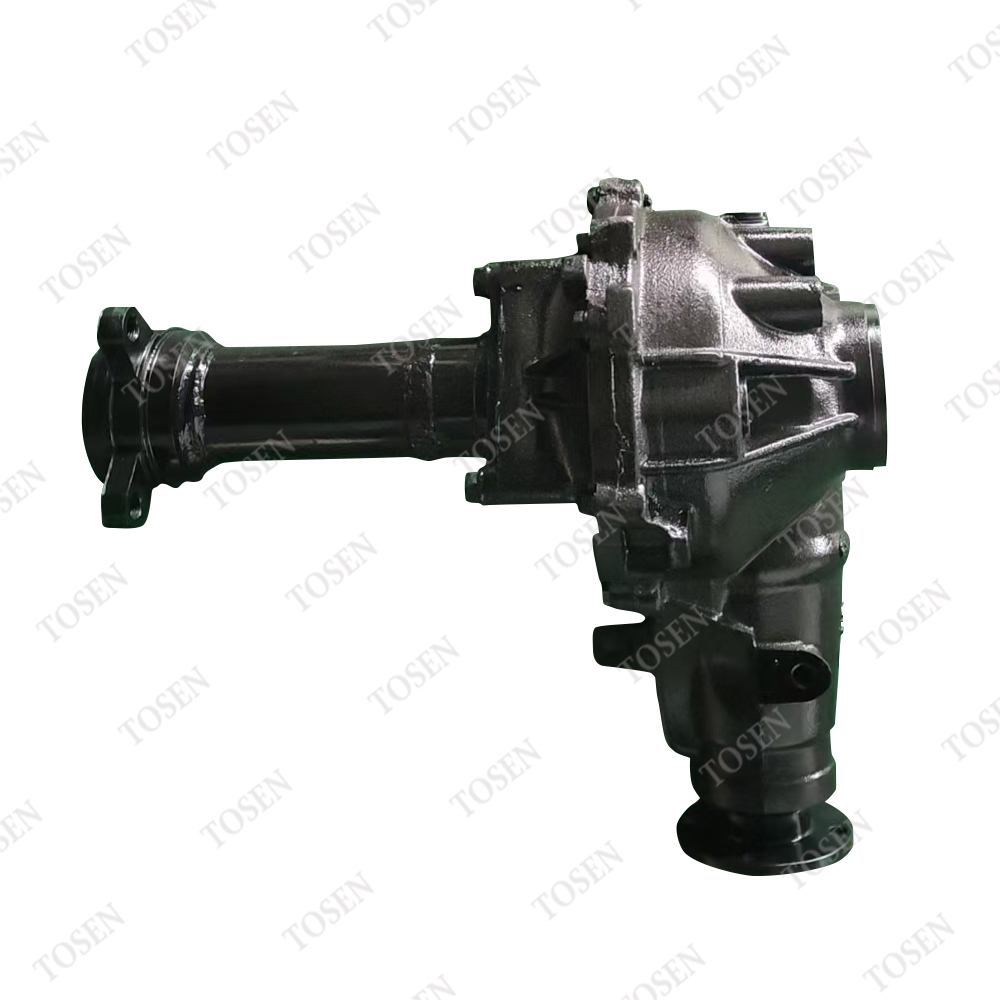
Land Cruisers with full-time four-wheel drive carry a differential in both axles, and the front and rear units are not interchangeable in every detail. The gear pair itself may share the same tooth count, but the carrier, flange, and case can differ between the front axle and the rear axle on the same vehicle. Ordering a “Land Cruiser 11:41 differential” without saying which axle is one of the most common reasons for a returned shipment.
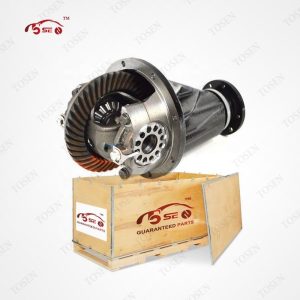
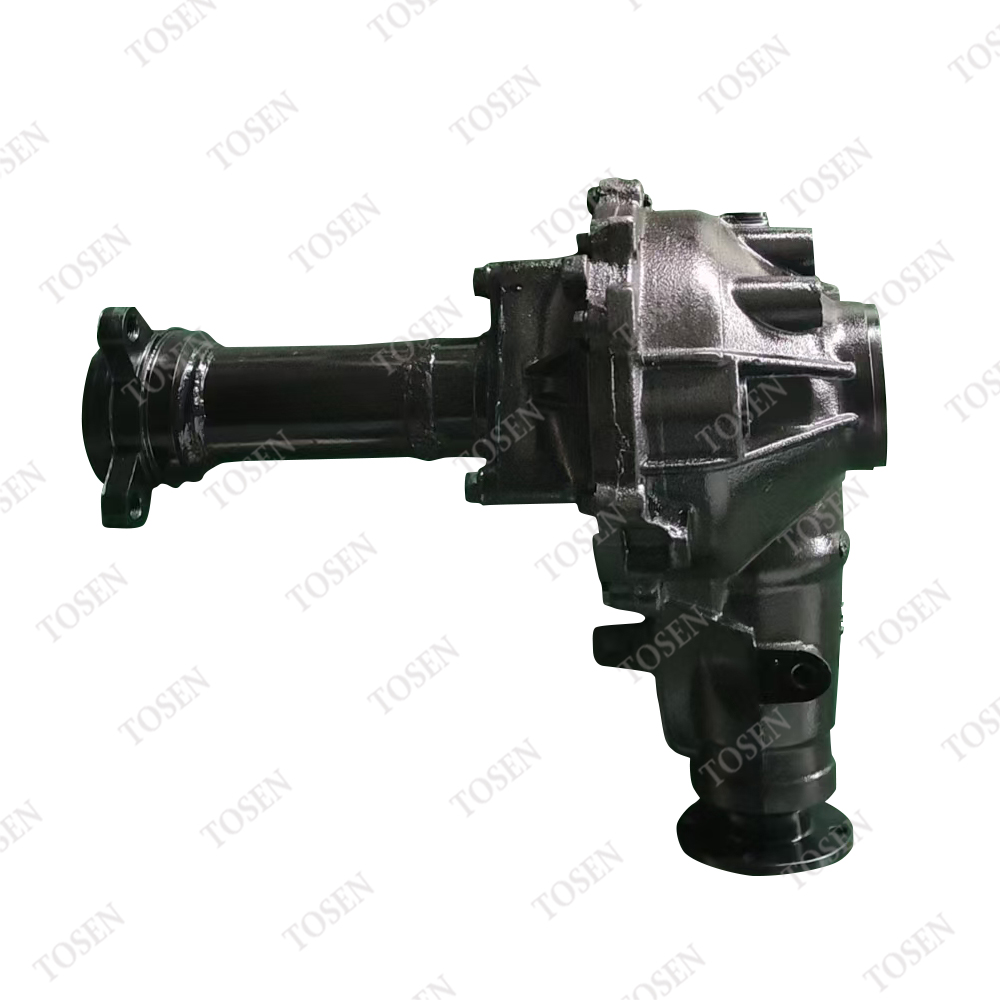
Tell the supplier whether the part is for the front axle or the rear axle, and be ready with the vehicle’s VIN. That single string of characters tells a careful supplier which axle layout, carrier type, and flange pattern your truck uses. For buyers who already know the exact unit they need, our Reliable Differential for Toyota Land Cruiser with 11*41 Ratio product page lists the supplied configuration and fitment so you can compare it directly with your old part.
If you are replacing only one side, also check the other axle. Land Cruisers that came from the factory with matching front and rear ratios will pull evenly on loose ground; a mismatched rear axle is quickly noticed in four-wheel-drive on pavement. Match both axles to the original ratio for normal street driving.
Match the Housing, Splines and Bearings, Not Just the Teeth
A crown wheel and pinion set with the right tooth count can still be the wrong part if the surrounding hardware differs. Three details decide whether a gear set bolts into your axle: the differential housing or carrier pattern, the pinion spline count, and the bearing sizes on both ends of the pinion. These change across Land Cruiser generations, and they change between gasoline and diesel axles.
When you strip the old differential, record what you see before you touch the workbench: the number of splines on the pinion, the bearing numbers stamped on the cups, and the carrier bolt pattern. Photograph the old parts with a ruler in the frame. A supplier that asks for the old-part label or OE number — or for photos of the spline and bearing area — is following the correct process, because those details are what make a set “fit” rather than merely “look close.”
Browsing a supplier’s range helps you see the scale of what is available. Our differential assemblies and gear sets category covers multiple ratios and vehicle families, so you can compare how the 11:41 set sits alongside other Land Cruiser, Isuzu, and Mitsubishi options before you commit.
Contact Pattern and Backlash — the Two Checks That Decide Quiet Running
New gears are matched in the factory, but a differential only runs quietly if the mesh is set up correctly in the housing. Two measurements do most of the work: backlash and contact pattern.
Backlash is the small clearance between the crown wheel and pinion teeth, measured with a dial indicator on the crown wheel while the pinion is held still. Too little backlash and the gears bind and overheat; too much and they hammer, whine, and wear fast. The correct backlash for a given set is published in the vehicle’s workshop manual and should be quoted in the part’s technical data.
The contact pattern is the check that catches setup mistakes. The shop coats the pinion teeth with marking compound, turns the crown wheel by hand, and reads where the compound transfers. The resulting patch should sit in the centre of the tooth face, slightly toward the toe on the drive side, and run the full depth of the tooth. A pattern riding too high or too low tells the installer the pinion depth is wrong. Specialist gear makers such as Quaife publish exactly this guidance for crown wheel and pinion fitting — the same method a good differential shop uses to sign off a build. If you are reading this because a supplier is asking about these checks, you are already one step ahead of most buyers.
For the selection logic that leads to this point, our related technical guide explains how ratios, tooth counts, and gear-set families fit together across the catalogue.
Bare Crown Wheel and Pinion or Complete Differential Assembly?
The buying decision comes down to what your shop can rebuild. A bare crown wheel and pinion set costs less, but it assumes you can set up backlash, pinion depth, and preload correctly, and that your existing carrier and bearings are sound. A complete differential assembly arrives as one unit — housing or carrier, gear set, bearings, and seals — and goes in as a swap for the old differential.
Choose the bare set if you are a differential specialist with the dial indicator, marking compound, and press on hand, and if the rest of the axle is already in good condition. Choose the complete assembly if you are a repair shop or fleet operation that needs the truck back on the road with less rebuild time, or if the old carrier and bearings have already been damaged by the same failure that took out the gears.
Heavy-duty use tips the decision toward the assembly as well. A Land Cruiser that tows, carries a camper body, or works off-road puts constant torque through the axle; the bearings and case take the same load as the gears. A fresh assembly removes the variable of reused, worn bearing surfaces and gives the buyer one part number to record instead of a box of loose components.
Noise After Installation — Who Owns the Claim?
Differential noise is one of the most argued problems in the parts business, which is why documentation decides most warranty outcomes. A gear set that whines immediately after installation is usually a setup problem, not a defective part. A gear set that ran quietly for a week and then developed a growl may be a supply defect or an oil problem. The difference is visible in the setup records.
Protect both sides with a paper trail. Note the backlash figure you set, keep a photo of the contact pattern, record the bearing preload, and write down the oil type and level. Send those records to the supplier if you claim a fault. On the supply side, demand the same honesty: a responsible supplier will state what is covered — usually the gear set against material or machining defects — and what is not covered, such as damage from incorrect installation, wrong oil, or abuse. Agree on that boundary in writing before you pay, not after the whine starts.
For the same reason, keep the old part and its label until the new differential has run and been inspected. The old label carries the OE or tooth-count reference that confirms what was fitted from the factory, and it is the single best piece of evidence if a dispute about original ratio ever comes up.
Frequently Asked Questions
Is 11:41 the same as a 3.727 ratio?
Yes. Divide the crown wheel teeth by the pinion teeth: 41 ÷ 11 = 3.727. It is the same ratio written in gear-tooth form.
Will a 9:41 or 10:41 set fit instead of 11:41?
The gear pair may share the same housing, but the ratio changes your driving behaviour, speedometer reading, and axle torque. Always replace with the same tooth count the axle was built with, or confirm the change with a specialist.
Is a crown wheel and pinion set the same as a complete differential?
No. A set is the two gears only. A complete differential assembly adds the carrier or housing, bearings, and seals, so it can be swapped in as a unit.
What should I check before installing the differential?
Confirm the tooth count, pinion spline count, and bearing numbers against the old part; set the backlash to the manual figure; and run a contact-pattern check with marking compound before final assembly.
Who pays if the differential is noisy after fitting?
Set-up faults are normally the installer’s responsibility; material and machining defects are the supplier’s. Document backlash, contact pattern, preload, and oil so the boundary can be decided fairly.
Get a Fitment-Confirmed Quote
Submit your VIN, old-part label / OE number, model year, quantity, and destination port to receive a fitment confirmation and a quote. The same identifiers that confirm your 11:41 application — axle position, tooth count, splines, and bearings — become the shipping record, so the correct differential arrives in the crate the first time.
References
- Spicer Axle — Gear Ratio Calculator: spicerparts.com/calculators/gear-ratio-calculator
- Heavy-duty parts catalogue (Isuzu) — gear-set identification and differential data: isuzucomlen.com — Download Catalogues
- Quaife — Crown Wheel and Pinions (matched-set fitting guidance): quaife.co.uk/quaife-products/crown-wheel-pinions