DQ200 mechatronic failure is a fault condition inside the combined electronic and hydraulic control section of the 0AM seven-speed dry dual-clutch DSG transmission used across Volkswagen Group vehicles. The system reads the gearbox’s speed, selector and clutch-position sensors, decides when each shift takes place, and directs hydraulic pressure to the two clutches and the shift actuators. Because the DQ200 services its electronics and its hydraulics as different replacement parts, a warning sign is only half the answer — the other half is isolating which side of the system the fault sits on before anything is ordered. This guide lists the warning signs worth recording, explains what each sign implies, and shows the evidence that turns a drivability complaint into a parts enquiry a supplier can verify.
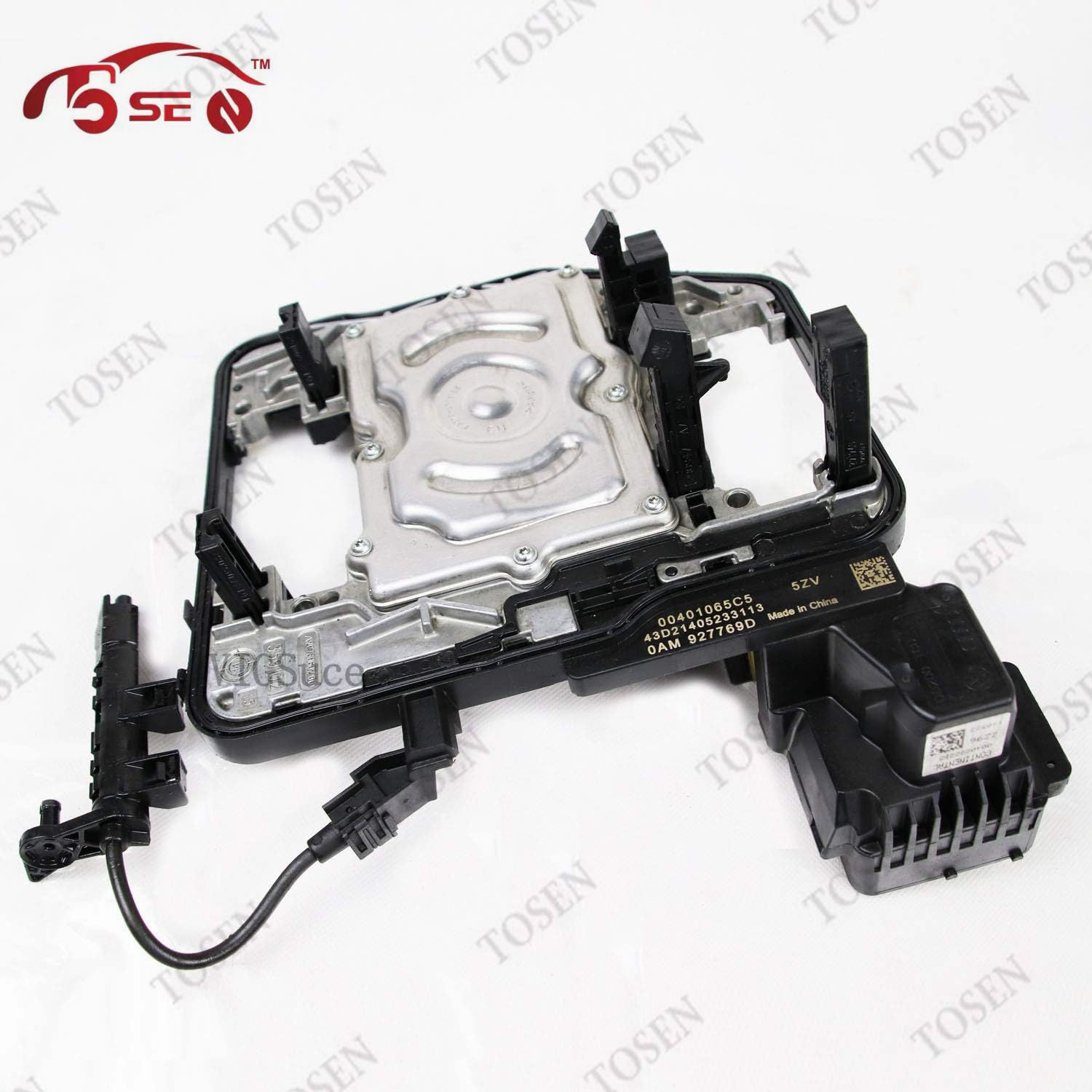
Quick summary: on the DQ200 the transmission control module is the electronics and the mechatronic unit carries the hydraulic actuators, so the two parts are ordered against different faults. A diagnostic scan that isolates a control-side fault calls for a replacement controller such as the 0AM927769D transmission control module or the 0AM927769K control module, while hydraulic or clutch-actuation faults call for a mechatronic assembly such as the 0AM325025LZ3C mechatronic unit. Read the fault codes first, record the original module label, and only then order.
What the DQ200 Control System Actually Does
The DQ200 (0AM) is a seven-speed dry dual-clutch transmission: two clutches feed two gear sets, and every upshift and downshift is a handover between them. The control side of that handover belongs to the transmission control module. The module is the electronic control unit that reads the transmission sensor inputs — input shaft speed, output shaft speed, selector position and clutch position — and then commands the electrohydraulic mechatronic unit that engages the two clutches and selects the gear pairs. The controller also carries the shift software and the adaptation data matched to the transmission it serves, which is why a gearbox and its controller are always confirmed as a pair.
Two repair levels exist on this family, and the distinction is the backbone of every DQ200 fault decision:
| Repair level | What the part covers | When the scan points there | Reference examples |
|---|---|---|---|
| Transmission control module | The electronic controller only: sensor reading, shift decisions, shift software and adaptation data | A control-side fault isolated by the diagnostic scan | 0AM927769D, 0AM927769K |
| Complete mechatronic unit | Control electronics integrated with the hydraulic valve body in one assembly | Hydraulic or clutch-actuation faults | 0AM325025LZ3C |
On the DQ200 the control module and the hydraulic actuator are separate assemblies, so a controller such as the 0AM927769K is the electronics component used when a fault is traced to the control side rather than to the hydraulics. At the other end of the scale, a complete assembly reference such as the 0AM325025LZ3C identifies the full mechatronic — electronics plus hydraulic valve body — for repairs that reach the hydraulic side. Choosing between the two levels is not a price decision; the choice is dictated by where the diagnostic scan places the fault.
Warning Signs That Point to the Control Side
Control-side warning signs all trace back to the module’s three documented jobs: reading sensors, timing shifts, and storing the software and adaptation data the gearbox shifts by. Watch for these patterns:
- Shift timing that drifts or turns inconsistent — the controller decides shift timing from the sensor data it reads, and degraded control-side input produces shifts commanded at the wrong moments.
- Gear selections that do not arrive as commanded — the module selects the gear pairs through the mechatronic unit, and a control-side fault can issue selection commands the gearbox cannot execute cleanly.
- Selector-position registration faults — the module reads the selector position, so a controller that no longer trusts its own input shifts against the driver’s request.
- Shift character that changes after controller work — the module carries shift software and adaptation data matched to its transmission, so a controller whose software state does not match the gearbox specification shifts incorrectly even when every mechanical part is sound.
None of these signs condemns the module on its own. Each one justifies a diagnostic scan, and the scan — not the symptom — is what places the fault on the control side. Recording when each sign appeared, and whether it appeared together with the others, gives the workshop the context the readout needs.
Warning Signs That Point to the Hydraulic Side
The hydraulic half of the system directs pressure to the clutches and to the shift actuators, so its warning signs describe motion that arrives late, unevenly or not at all:
- Clutch engagement that turns late or uneven on one of the two clutches — hydraulic pressure to the clutches is directed by the mechatronic unit, and degradation on the hydraulic side shows up in the quality of each engagement.
- Shift actuators that receive commands but fail to complete the selection — the actuation channel between command and engagement lives in the hydraulic assembly.
- Fault codes isolated to clutch actuation — hydraulic and clutch-actuation faults point to the mechatronic assembly rather than to the controller.
The value of separating the two sign families is economic as much as diagnostic. A gearbox that needs a complete mechatronic assembly is a different order from one that needs the electronics alone, and the only thing worse than ordering the wrong level is ordering the right level against the wrong reference number.
How to Isolate the Fault Before Ordering
The sequence below keeps the decision inside verifiable evidence and ends with an enquiry a supplier can check against the unit actually fitted to the vehicle:
- Save the full scan — record the stored transmission fault codes before any part is chosen, and keep the readout with the vehicle file so the order can be traced back to the diagnosis.
- Place the fault on one side — a diagnostic scan that isolates a control-side fault points to the control module, while hydraulic or clutch-actuation faults point to the mechatronic assembly.
- Choose the repair level — order the controller alone only when the electronics are implicated and the hydraulics are excluded; order the complete assembly when the fault sits on the hydraulic side.
- Read both labels — for a module-only repair, record the complete controller number including the suffix letter and the hardware version; for a complete mechatronic, compare the hydraulic assembly label and the control-module label together.
- Capture the connector evidence — photograph the connector pattern and check the mounting layout against the removed unit, because connector arrangement is part of the identification.
- Write the commissioning scope — a replacement DQ200 controller or mechatronic generally needs coding or adaptation after fitting, so the workshop’s programming requirements belong in the enquiry, not in a follow-up call.
A symptom description alone cannot complete this sequence, and neither can a vehicle model name. The DQ200 family was built in several hardware and software versions across its production life, so the module must be matched to the transmission by part number and hardware version rather than by vehicle model alone.
Why Exact Matching Matters on Every DQ200 Order
Three facts about the DQ200 parts landscape make the label the decisive document. First, the controller reference ends in a letter code that distinguishes variants — two modules that share the 0AM927769 base number but carry different final letters are not interchangeable in every application, which is why the suffix is quoted in full on every order. Second, ordering by vehicle model alone can return a unit that does not match the gearbox in the vehicle, because the same model was produced with different control and hydraulic versions. Third, a replacement unit generally needs coding or adaptation to the vehicle after installation, so the software scope has to be settled before the part ships, not after it arrives.
TOSEN supplies DQ200 controllers and mechatronic assemblies as new components through a factory-direct channel, checks each unit against the reference number and connector arrangement before dispatch, and accepts sample orders so a distributor can confirm the hardware version against the original before committing to a full order. Whether the diagnosis ends at the 0AM927769D controller, the 0AM927769K module or a complete assembly, the full range of matching units is listed under Transmission Control Units.
Frequently Asked Questions
What are the warning signs of DQ200 mechatronic failure?
Warning signs of DQ200 mechatronic failure cluster around the two functions the system controls: shifts that drift away from their normal timing, gear selections that do not arrive as commanded, clutch engagement that turns late or uneven on one of the two clutches, and selector positions the controller no longer registers correctly. Recording which of these signs appeared, and in what order, gives the workshop the context the diagnostic scan needs to place the fault.
How do I tell a control-module fault from a hydraulic fault on a DQ200?
On the DQ200 the transmission control module is the electronics and the mechatronic unit carries the hydraulic actuators, so a diagnostic scan that isolates a control-side fault points to a replacement control module such as the 0AM927769D, while hydraulic or clutch-actuation faults point to the mechatronic assembly. Reading the stored fault codes before choosing the part is what separates the two orders.
Can the control module be replaced on its own on a DQ200 gearbox?
Yes, the DQ200 DSG is built so that the transmission control module can be replaced as a separate electronics component when the fault is confirmed to sit on the control side. Because the mechatronic hydraulics are a different assembly, the diagnostic check should confirm the fault location before the module is ordered, and the replacement generally needs coding or adaptation to the vehicle after installation.
What details should accompany a DQ200 controller or mechatronic enquiry?
A verifiable DQ200 enquiry carries the original module label with the complete reference number including the suffix letter, the hardware version, the transmission code, the vehicle VIN, connector photographs, and the workshop’s coding or programming requirements. For complete mechatronic units, both the hydraulic assembly label and the control-module label from the original unit should be included so the correct 0AM version is supplied.
Diagnosing a DQ200 mechatronic fault? Send TOSEN the controller label with its complete suffix letter, the transmission code, the vehicle VIN, the saved fault scan and the order quantity, together with the workshop’s coding plan, so the correct control module or complete assembly is quoted the first time.