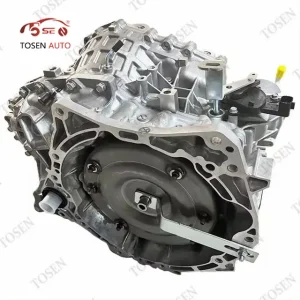
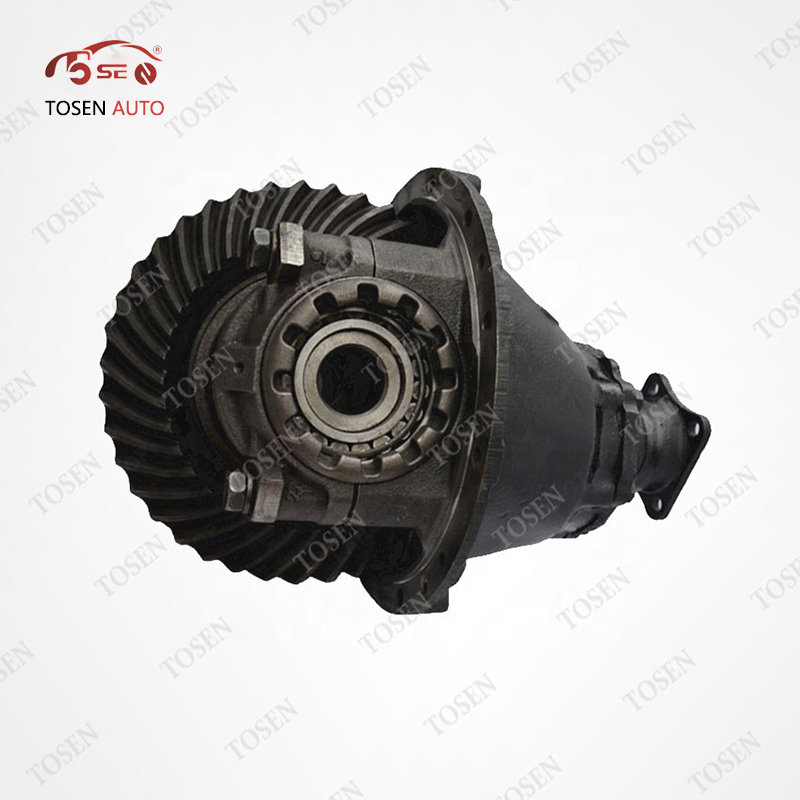
The Mitsubishi Fuso PS100 and PS120 rear differential assemblies are the final-drive units of two Mitsubishi Fuso truck lines, and each assembly is selected through the axle identification of the individual truck rather than through the model badge on its body. Both units perform the same work inside the rear axle — reducing propeller-shaft speed, multiplying torque and letting the two rear wheels roll at different speeds through corners — yet the details that decide the order are collected and stated differently for each line.
This guide compares the two selection processes side by side: what each designation actually covers, which identification details each enquiry needs, how a gear-tooth combination such as the 6×40 pairing is confirmed on the PS100, and how a fleet running more than one platform structures its order so every truck receives the assembly its axle carries.
What Each Designation Actually Covers
The PS100 and PS120 names identify two model lines within the Mitsubishi Fuso truck range, and each line is served by its own rear differential assembly. Mechanically the two units occupy the same position in the driveline. The propeller shaft delivers its rotation to the pinion, the pinion turns the crown wheel, and the crown wheel provides the axle’s last speed reduction while redirecting the drive through a right angle into the axle housing. Behind the crown wheel, side gears divide the resulting torque between the two axle shafts and allow each rear wheel to rotate at its own speed when the truck turns a corner.
The Rear Differential Assembly for Mitsubishi Fuso PS100 is supplied as a complete final-drive unit combining the pinion, the crown wheel and the side gears in a single replacement part, and fleets treat the assembly as a core replacement item because a failed final drive keeps the truck off the road until the unit is exchanged. The Rear Differential Assembly for Mitsubishi Fuso PS120 is likewise the complete final-drive stage of that line’s rear axle, converting propeller-shaft rotation into the slower, stronger rotation that reaches the wheels.
What the two designations do not do is fix the final-drive specification of every truck that carries them. The PS100 assembly is selected against the axle identification and the original final-drive configuration of the individual truck, not against the model badge alone, and the PS120 order pairs the model designation with the axle identification because the name on the body and the axle under the body must agree before the order is placed. A PS100 listing and a PS120 listing therefore answer different questions: the first asks what the axle carries, the second asks that the designation and the axle identification point to the same vehicle.
The rule to keep
The model designation identifies the truck line; the axle identification identifies the final-drive unit actually installed.
An order is only correct when both point to the same vehicle.
Collect the axle details before asking for price, never after.
The Identification Details That Decide the Order
For a PS100 enquiry, the figures that matter are the crown-wheel and pinion tooth counts, the axle-shaft splines, the flange dimensions and the housing pattern, read from the axle plate or from the removed unit. These four groups of details describe the axle as built rather than as named, and the order is constructed from them. For a PS120 enquiry, the gear-side facts to gather are the crown-wheel and pinion tooth counts, and the mechanical interfaces to measure are the axle-shaft splines and the input flange, collected alongside the axle identification itself.
| Detail | PS100 enquiry | PS120 enquiry |
|---|---|---|
| Selection anchor | Axle identification and original final-drive configuration | Model designation paired with the axle identification |
| Gear facts to state | Crown-wheel and pinion tooth counts | Crown-wheel and pinion tooth counts |
| Interfaces to measure | Axle-shaft splines, flange dimensions, housing pattern | Axle-shaft splines, input-flange measurements |
| Evidence to attach | Readings from the axle plate or the removed unit | Photographs of the axle plate |
| Published combination | 6×40 (approximately 6.667:1) carried as a listed specification | Tooth combination confirmed per truck through the axle identification |
The PS120 process adds one practice worth copying on any platform: photographs of the axle plate. Photographs close the remaining identification gap by showing the markings TOSEN needs, and where a customer supplies them they form part of the verification record that travels with the order. Comparing the gathered measurements against the removed unit is the other habit that keeps an order honest, because the comparison confirms the assembly corresponds to the axle being repaired rather than to an axle described from memory.
Orders placed on a designation alone, without the axle details, invite a mismatch that no listing can correct afterwards. That caution applies equally to both lines. Two trucks carrying the same PS120 designation can hold different axle specifications, and within the PS100 model line the axle identification and the original final-drive configuration can differ from truck to truck — which is why the reliable enquiry states the details of the specific axle, not the averages of the model.
Fleets that run the PS100 alongside the PS135 face the same discipline with a second axis of separation. The differential assemblies for the Mitsubishi Fuso PS100 and PS135 are matched per platform, so coverage across two platforms works only when every enquiry separates the trucks by platform and states each vehicle’s own tooth counts, splines, input flange and housing dimensions.
- Axle identification of the specific truck
- Crown-wheel and pinion tooth counts
- Axle-shaft splines
- Flange dimensions and housing pattern (PS100) or input-flange measurements (PS120)
- Photographs of the axle plate where available
- Quantity for that vehicle
Gear Combinations and the 6×40 Example
Gear-tooth combinations are written in pinion-to-crown-wheel order, and the combination a truck carries is a fact of its axle, not of its model name. TOSEN’s PS100 listings include a defined example: the 6×40 Differential Assembly for Mitsubishi Fuso PS100, built around a six-tooth pinion driving a forty-tooth crown wheel. Dividing forty by six gives a calculated final-drive reduction of approximately 6.667:1, which means the propeller shaft completes about 6.667 revolutions for each full revolution of the crown wheel and the rear wheels.
A reduction this deep exchanges propeller speed for wheel torque across a wide margin: the engine’s torque is multiplied heavily by the time it reaches the axle shafts, which is the work a heavy-ratio final drive performs in a truck axle. The 6×40 pairing suits PS100 trucks whose original gears carry the six-and-forty tooth combination, and the pairing has to be confirmed from the vehicle rather than assumed from the model name.
- Count the six teeth on the pinion and the forty on the crown wheel of the assembly being replaced — the direct confirmation when the unit is already out.
- Read the figures from the axle identification when the old unit is still installed.
- Compare the axle-shaft splines, the input flange and the housing dimensions with the assembly offered.
- Send the counts and the measurements with the enquiry so the 6×40 match is verified before dispatch.
The PS120 listing takes a different route to the same discipline. Instead of publishing a tooth combination on the page, the PS120 order is built from the pairing of the model designation with the axle identification, supported by the tooth counts, spline counts and flange measurements gathered from the truck. Buyers comparing the two lines should read this difference as process, not as specification: on both lines, the figures the order is built on come from the axle identification of the specific vehicle, never from the badge alone.
Ordering for a Fleet That Runs More Than One Platform
Fleet orders are where the PS100-versus-PS120 question becomes practical, because a mixed fleet multiplies the chances of a mismatch. The PS100 practice is one line per truck: each vehicle’s axle identification and final-drive configuration, its crown-wheel and pinion tooth counts, its axle-shaft splines, its flange dimensions and its housing pattern are stated on that truck’s own line. Listing each truck separately prevents an axle variant from being covered by the specification of a different truck in the same fleet.
Multi-platform orders add the platform split. An order covering more than one Fuso platform is split by platform first, then by truck, so a PS135 axle is never described through PS100 figures or the reverse. An order built on a single assumed specification risks fitting some vehicles and not others, which is the failure mode the line-by-line structure exists to prevent.
Repeat orders benefit from one further habit: consistent part identification. Keeping the part identification for each axle variant identical between orders means the same truck specification is described with the same reference every time, and routine restocking then needs no fresh identification round. When an axle variant is renumbered or a detail changes, the new identification replaces the old one across the stock list, keeping the reference trustworthy for the next order.
How TOSEN Verifies Each Assembly Before Dispatch
Every differential assembly is supplied new and inspected before dispatch, and the inspection is built around the details the enquiry supplied. The PS100 check covers the tooth counts, the splines and the flange dimensions against the details in the order, so the unit that ships is the unit that was ordered. Fleet customers sending a truck-by-truck list receive assemblies verified against each line of that list, which keeps mixed fleets from receiving parts fitted to the wrong axle.
The PS120 verification runs along the same lines, checking the tooth counts, the splines and the flange measurements line by line against the axle details supplied with the order, with the inspection happening before dispatch so the arriving assembly corresponds to the axle identified in the enquiry rather than merely to the PS120 name. Where axle-plate photographs were supplied, they form part of the verification record, and the checked unit ships with the confirmation that its details were matched to those photographs. On the 6×40 PS100 listing, the pinion is counted to six teeth and the crown wheel to forty during the same pre-dispatch pass, and buyers who need the evidence for their records can request the inspection photographs with the quotation, documenting the counted teeth and the checked interfaces before shipping.
Frequently Asked Questions
What is the difference between PS100 and PS120 differential selection?
The Mitsubishi Fuso PS100 and PS120 rear differential assemblies are final-drive units for two different model lines, and the selection difference lies in how each order is anchored. The PS100 assembly is selected against the axle identification and the original final-drive configuration of the individual truck, while the PS120 order pairs the model designation with the axle identification so that both point to the same vehicle. Neither line accepts the model badge alone as the basis of an order, so both enquiries end up stating tooth counts, splines and flange details from the axle itself.
Can a PS120 differential be ordered with the model designation alone?
No. An order without the axle details relies on the PS120 designation alone, which leaves the final-drive configuration unverified and invites a mismatch on delivery. Two trucks carrying the same designation can hold different axle specifications, so the axle identification, the crown-wheel and pinion tooth counts and the spline and flange measurements take little time to collect while the axle is accessible. Supplying those details means the assembly is matched to the truck before dispatch rather than after arrival.
What does the 6×40 gear combination mean on a PS100 differential?
The 6×40 combination means a six-tooth pinion driving a forty-tooth crown wheel, and the quotient of the two counts is the final-drive ratio of approximately 6.667:1. The propeller shaft therefore completes about 6.667 revolutions for each turn of the crown wheel and the rear wheels, converting propeller speed into a large amount of wheel torque. Confirming the counts on the removed unit, or reading them from the axle identification, verifies that this is the ratio the PS100 truck was built with before the order is placed.
How should a fleet order differentials for PS100 and PS120 trucks together?
A fleet running both lines should split the order by model line first, then give each truck its own line carrying the axle identification, the crown-wheel and pinion tooth counts, the axle-shaft splines, the flange dimensions and the quantity for that vehicle. One line per truck prevents an axle variant from being covered by the specification of a different truck, and TOSEN verifies every line before dispatch so each assembly matches the truck it is intended for. Repeat orders keep the same part identification per axle variant, which removes the need for a fresh identification round on routine restocking.
Get a specification-matched quote: send the axle identification, crown-wheel and pinion tooth counts, spline and flange measurements and the quantity for each truck through the TOSEN enquiry on the PS100 or PS120 differential assembly pages, and the assembly is verified against your details before dispatch.