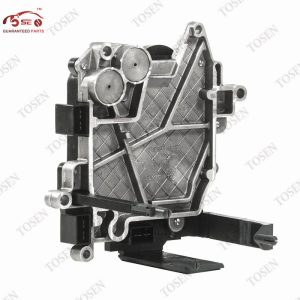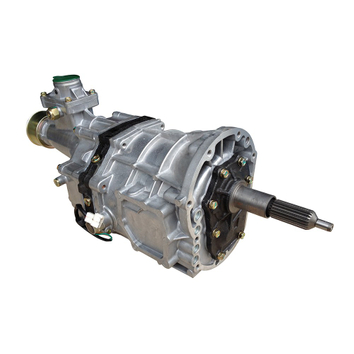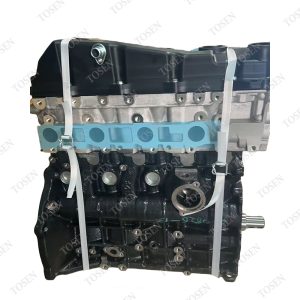
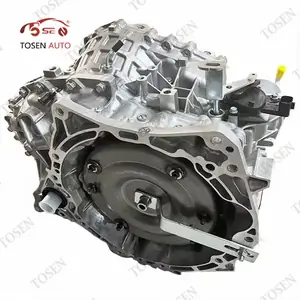
A remanufactured gearbox is a used core that a factory process has returned to like-new condition: fully disassembled, measured, fitted with new wear parts, reassembled to manufacturer specification and tested before it ships. A new gearbox is built entirely from new parts. Both can be the right buy — the deciding factors are what the job demands, what the supplier can document, and whether the unit you receive actually fits the vehicle. The remanufactured vs new gearbox question is really two questions: which condition class your job calls for, and which unit your vehicle's data will confirm.
This comparison answers both. It defines what remanufacturing does and does not include, puts remanufactured and new units on the same purchase axes, matches each option to real buying situations, and closes with the fitment checklist — VIN, unit label, drive layout, flanges, electronics, fluid — that decides whether any replacement gearbox, whatever its condition, will bolt in and work. If your job involves the JF011E CVT family, the worked example at the end applies the whole decision to one real assembly.
What a Remanufactured Gearbox Really Is
Three different products hide behind similar words in this market, and the differences decide what a quote is worth. A used unit is pulled from another vehicle and resold with unknown history. A rebuilt unit is repaired in a workshop, where only the broken parts get replaced and the process depends on that one shop's tools and habits. A remanufactured gearbox is something else: the used core enters a standardized industrial process and leaves it in a condition the supplier can document step by step, a process research engineers at Rochester Institute of Technology describe as returning used components to like-new condition.
- Core acquisition — the failed transmission returns as the raw material for the next build.
- Complete disassembly — the unit is stripped to the bare case, hiding nothing.
- Condition assessment — every part is sorted as usable, repairable, or unusable.
- Industrial cleaning — usable and repairable parts are cleaned to inspection-ready condition.
- Repair — worn surfaces are machined back to tolerance; parts outside tolerance are rejected, not reused.
- Reassembly — the gearbox is rebuilt to the manufacturer's specification with every standard wear part replaced by new components.
- Testing — the finished unit is tested against the specification for its exact model before it ships.
Two details in that sequence do the real work for a buyer. Every wear part — seals, gaskets, bearings, clutch friction material, bushings — is replaced with new components rather than cleaned and reinstalled, and the finished unit is tested rather than assumed good. When a supplier claims its remanufactured gearboxes pass through steps like these, ask which parts are renewed and how each unit is tested; the answers separate a documented process from a paint job. A shop rebuild skips both guarantees by design, and a used unit never had them.
Remanufactured Vs New Gearbox: The Same-Axis Comparison
| Axis | Remanufactured gearbox | New gearbox |
|---|---|---|
| Condition baseline | Used core restored in a documented factory process | All-new parts, first service life |
| Parts content | Hard parts machined or replaced; all wear parts new | Every component new |
| Process and testing | Disassembly, measurement, reassembly to spec, end-of-line test | OEM production process and quality control |
| Warranty scope | Varies by remanufacturer; often 12 months or more, read the terms | Manufacturer or supplier warranty, typically stated with the unit |
| Price position | Lower than new for the same application — the size of the gap is visible only on a like-for-like quote | Highest sticker price of the condition classes — quote it against the remanufactured option on identical terms |
| Model availability | Keeps out-of-production models available | Limited to models still in production or stock |
| Fitment requirements | Full six-point verification (VIN, label, layout, flanges, electronics, fluid) | Identical six-point verification — fitment does not differ by condition |
The availability row deserves honesty, because it is where marketing noise is loudest. For many models, brand-new transmissions are simply not sold through the secondary market — the new-car channel itself installs remanufactured units for warranty work — yet for other models new assemblies are stocked and sold normally. Availability depends on the model and the channel, so treat any absolute claim, in either direction, as a reason to check the specific unit with the supplier rather than as a rule.
The last row is the one buyers miss most often. Fitment is not a reason to prefer one condition class over the other: a remanufactured unit and a new unit must clear exactly the same checks — VIN, unit label, drive layout, flanges, electronics pairing, fluid — before either can be trusted to bolt in and work. Remanufacturing also carries one genuine advantage the table understates: it keeps transmissions available for models the factories no longer build, which is often the difference between repairing a vehicle and writing it off. On price, one habit makes the comparison concrete: ask the supplier to quote both options for your exact unit on identical terms. The gap between the two quotes is the real decision number, and you weigh it against warranty scope, core terms and how long the vehicle can sit.
When to Choose Remanufactured and When to Choose New
There is no universal winner, only a best answer per situation. The two questions that settle most cases are: does anything in the vehicle's program require a new component, and does a documented remanufactured build exist for this exact unit? Around those, price, downtime and comeback risk do the rest.
| Your situation | Better option | Why |
|---|---|---|
| Vehicle under a manufacturer warranty, recall or fleet program that specifies new parts | New | Program terms usually mandate new; paperwork must match |
| Model out of new production, or new assemblies unavailable for this unit | Remanufactured | Remanufacturing is the channel that keeps discontinued units available |
| Tight budget, high downtime cost, one vehicle off the road pays for the difference | Remanufactured, if documented | Lower price with a process you can audit; tested before ship |
| Shop exposed to comeback labor if the unit fails early | Whichever carries the stronger written warranty | Comeback labor dwarfs the price gap; warranty scope decides |
| Buyer who must show a documented process and test record to their own customer | Documented remanufactured build or new from a traceable supply chain | The paperwork is the product; ask what the supplier includes with the unit |
Two limits keep this honest. First, the right answer always depends on what the supplier can actually document and stock for your specific unit — a claimed remanufactured build with no stated process is just a used unit with a longer word attached, and a new unit that cannot be sourced does not exist as an option. Second, whichever class you lean toward, the six fitment checks in the next section still gate the order; they have killed more bad deals than price ever has. Fleet buyers making the same call across a whole depot can extend the comparison with the manual vs automatic transmission fleet guide, which weighs both drivetrain types for whole-fleet use.
Fitment Checks That Decide Whether a Replacement Gearbox Will Bolt In
- Vehicle VIN — the starting key that narrows the unit to the correct family and build
- Transmission ID label and OE number — the stamped code and tag that name the exact unit, not the model name
- Drive layout — 2WD or 4WD changes the output side and must match
- Input and output flanges and shafts — the physical interface to engine and driveline
- TCM and electronics pairing — connector, calibration, and any relearn the vehicle will need
- Fluid and filter specification — the exact fluid class and fill for the unit code, plus the filter
Why the label and not the model name? One CVT family shows the trap clearly. The JF011E — the JATCO CVT fitted to Dodge and Jeep vehicles — is the same family Nissan calls RE0F10A and Mitsubishi calls F1C1A, and unit-level guidance for this family says to match part numbers against the transmission ID tag or VIN before ordering. Inside the family, wiring and terminal numbering differ by brand, and 2WD and 4WD builds carry different flanges — so a buyer quoting the family name has named a category, not a part. If you want a second opinion on the data, the model-specific ATSG service manual for this family is the standard workshop reference.
For the model-level view of which vehicles share this unit, the JF011E cross-application guide carries the application lists and the variant differences between them.
The electronics item catches buyers who get the mechanical side right. Modern automatics and CVTs are controlled by a TCM that expects the unit's calibration; after a replacement, and after any valve body work or battery disconnect, the transmission may need a relearn before it behaves normally. Confirm with the supplier whether the delivered unit arrives ready for your vehicle's calibration, and who performs that step — it is part of the job, not a footnote.
A unit that fails any one of these six checks is not a cheaper deal; it is a return-freight bill plus a vehicle still off the road. Run the full list, write the answers down, and take the completed list to your supplier for written fitment confirmation before you pay. Any supplier worth ordering from will confirm against the same six points.
Core Return, Freight and Warranty: The Total-Cost View
The invoice price is the smallest number in a gearbox deal. The rest sits in terms buyers sign without reading, and each term below can move the real cost by more than a price negotiation would. Confirm every item in writing before you commit.
- Core credit — how much is credited for your old unit, and when the credit is paid
- Core condition — what condition is acceptable, and who grades it on arrival
- Return freight — who pays to get the core back, and on what terms
- Crate and freight class — how the unit ships, and who absorbs damage in transit
- Warranty — duration, what it covers (parts only, or parts plus labor), and whether it is honored in your country
- Arrival checks — fluid and filter to specification, cooler and lines inspected, relearn responsibility after installation
Core mechanics deserve a word of their own, because remanufactured supply is core-driven: the returned failed unit is what the next remanufactured build starts from, which is why suppliers care about getting cores back and why core terms are usually negotiable on volume. A buyer who returns cores reliably builds credit history with the supplier; a buyer who skips the terms often discovers the 'cheap' unit was cheap because the core charge was quietly excluded from the quote.
On arrival, protect the purchase before installation starts. Check the crate and the unit for transit damage, confirm the fluid and filter match the unit code's specification, and inspect or flush the cooler and lines — on CVTs in particular, a restricted cooler is a documented cause of early repeat failure, so treat the cooler as part of the unit, not the vehicle's problem. Then agree who performs the relearn after the install, since a unit that shifts badly on day one for want of a calibration step is a warranty argument nobody enjoys having.
Applying the Decision: the JF011E CVT Family
Run the generic decision on one real family and it stops being abstract. The JF011E is a JATCO-built continuously variable transmission sold across Nissan, Mitsubishi, Chrysler and Dodge lines through the mid-2000s to mid-2010s, in both front-wheel and all-wheel drive. The data below is the verifiable core of what a buyer must hold before quoting anything.
| Item | Description |
|---|---|
| Also known as | CVT2; RE0F10A and RE0F10B (Nissan); F1C1A (Mitsubishi) |
| Production years | Approximately 2005-2015 |
| Fluid | Jatco CVT Fluid NS-2 class |
| Full-refill capacity | Approximately 7-8 quarts |
| Typical applications | Nissan Altima, Rogue, Sentra; Mitsubishi Outlander, Galant, Eclipse; Dodge Caliber; Jeep Compass and Patriot |
| Drive layouts | 2WD and 4WD variants with different flanges |
| Documented wear points | Steel push belt, pulley faces, pressure regulator valve and bore, step motor, forward/reverse clutch packs, torque converter lockup, valve body solenoids, cooler and lines |
The decision here splits cleanly. A remanufactured build of this family is only as good as its handling of the documented wear points: the belt and pulley surfaces, the pump flow-control valve bore that wears and causes slipping and delayed engagement, the solenoids, the torque converter, and a cooler flush before the unit goes back into service. On a CVT where pulley pressures exceed 800 psi, the end-of-line test is not optional paperwork — it is the only proof the clamping force is back. A new assembly sidesteps the core question entirely, at the top of the price range, and is the straightforward call when the vehicle's program or the buyer's risk position points to new. TOSEN AUTO supplies this family as the JF011E CVT Transmission Assembly, a new assembly carrying a 12-month warranty, with the listing built around matching the original transmission label and the vehicle's drive layout — the same six-point verification from the checklist above. The complete transmissions category carries the same enquiry process for the rest of the range.
What you get back is a written answer, not a sales script: whether the unit your label names is the one your vehicle needs, whether TOSEN can supply it new for this application, and what the delivered price looks like with core terms included. If the label names a different family member, that is the moment to find out — while the order still costs nothing to change.
Confirm fitment and supply before you order: send your VIN, transmission label or OE number, model year, drive layout (2WD/4WD) and destination port through the JF011E CVT Transmission Assembly enquiry or the complete transmissions category. The six-point fitment checklist above
Frequently Asked Questions
Is a remanufactured gearbox as good as new?
A properly remanufactured gearbox can match new-unit function because every wear part is new and the unit is tested before shipment. The gap is not in the parts but in the proof: quality rests on the supplier's documented process, so ask what is renewed and how the unit is tested, and weigh the written warranty.
Can I buy a truly new gearbox for my vehicle?
Sometimes — and the fastest way to find out is to ask for both options quoted on the same unit. If new assemblies are stocked for your unit, the supplier can quote them; if they are not, the remanufactured channel is the real supply and the quote will say so. Either answer arrives as a written price for your exact label, which is also the number that settles the remanufactured-vs-new comparison for your job.
What paperwork should come with a remanufactured unit?
As a minimum: the unit's identification (label and OE number), a statement of what the process renewed, the test it passed, and the warranty terms in writing. For B2B orders, add the core terms — credit amount, condition standard and return-freight responsibility — so the real price is fixed before delivery.
Who pays return freight on a core?
It is a negotiable term, not a law of the market. Some suppliers include core return in the price, others credit it separately, and some leave the freight to the buyer. Put the answer in the order confirmation — on a heavy transmission, freight can erase the margin that made the unit attractive.
What fluid does the JF011E take?
The JF011E family uses Jatco CVT Fluid NS-2 class, roughly 7-8 quarts for a full refill; NS-2-class fluids carry cross-references such as Nissan KLE52-0002 and Mitsubishi S0001401. Use the exact fluid class the unit code calls for — wrong fluid accelerates belt and pulley wear — and flush or inspect the cooler and lines at the same time.
What replaced the JF011E, and does it change my order?
The JF015E — also called CVT-7, RE0F11A or F1CJB depending on brand — succeeded the JF011E with a different internal clutch layout, and the two do not interchange on fitment grounds. Order against your vehicle's ID label, not the family name, and have the supplier confirm the unit the label actually names.
Choose by Situation, Then Prove the Fit
The remanufactured vs new gearbox decision comes down to this: remanufactured wins when a documented process and a written warranty cover a unit your job can accept, and new wins when the vehicle's program, your risk position or simple availability points that way. Neither answer survives a failed fitment check. The buyers who never eat return freight are the ones who run the six-point verification — VIN, label, drive layout, flanges, electronics, fluid — and get the fit confirmed in writing before the money moves.
Confirm your fitment before you order: send the six-point packet through the TOSEN AUTO enquiry for the JF011E CVT Transmission Assembly or the complete transmissions category, and receive written fitment confirmation before you commit.