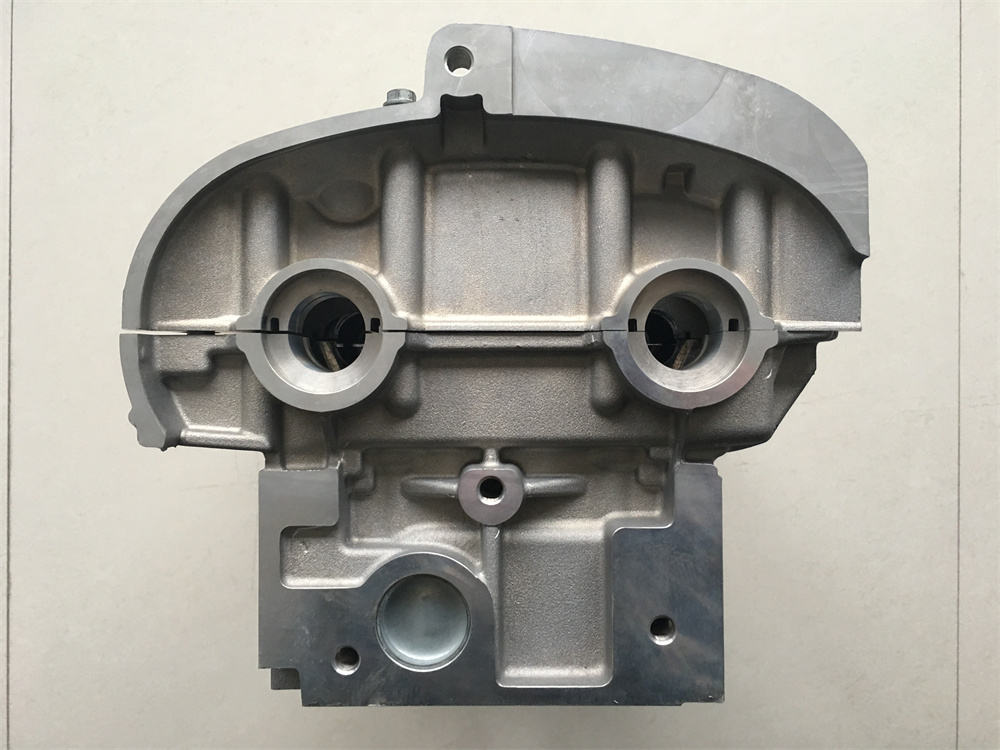
The 7701473353 bare cylinder head is the head casting supplied for Renault engine rebuilding across the K4M and K4J engine families, ordered as a bare component with any valves, camshafts and other valvetrain parts listed separately on the order line. Fitment for this reference is not decided by the vehicle model written on an enquiry form. It runs through two inputs read from the engine being rebuilt — the complete engine code and the original head reference — and is confirmed by physical comparisons made against the removed head. This guide follows one 7701473353 bare cylinder head for Renault order from identification through to dispatch: what the reference selects, how the K4M and K4J fitment check works, how a bare-head order states its scope, and what TOSEN inspects before the casting ships.
What the 7701473353 Reference Selects — and What the Order Must Add
The reference number 7701473353 names the orderable replacement part: a bare cylinder head for Renault engine rebuilding in the K4M and K4J families. The quotation is written against this reference, so it anchors the commercial side of the order. The number alone, however, selects only the part the quote is written against — the physical head removed from the engine, and the version inside the family it belongs to, are described by further inputs carried on the same enquiry.
The first input is the complete engine code. The K4M and K4J families hold more than one engine version, and the code is what places the enquiry against the correct version inside those families. The second input is the original head reference taken from the engine. Read together, the two place the order on the right casting — the code narrows the family to a version, and the head reference confirms the component the replacement must match. A casting photograph set closes the identification: photographs of the removed head and its marks support the identification throughout the order.
Scope rule: the 7701473353 reference names the part the quote is written against; the complete engine code and the original head reference select the casting for the specific Renault being rebuilt; the supply form — bare head, with components listed separately — is stated by the buyer on the order line.
The supply form deserves emphasis because it is a choice, not a default. A bare head order ships the casting itself, and the workshop plans the dressing: valves, camshafts and other components are named on the order when they are needed alongside it. The control is deliberate — a workshop reusing sound valvetrain orders the casting alone, while one renewing the valve gear names the parts on the same line. Buyers choosing between scopes can read the bare versus complete cylinder head decision mapped out for head orders in general; the rest of this guide stays with the 7701473353 order specifically.
The K4M and K4J Fitment Check: Three Physical Comparisons
Once the engine code and the head reference have placed the enquiry, fitment is confirmed on the physical head. Three comparisons do the work, and each one is made against details recorded from the head that came off the engine — not from a model name or a catalogue page. The 7701473353 bare cylinder head carries its passages, camshaft arrangement and sensor openings in the positions the K4M and K4J engines expect, so a replacement that matches the removed head on all three points matches the engine.
| Comparison | What is checked | What it confirms |
|---|---|---|
| Oil and coolant passages | The position of the oil and coolant passages on the replacement head | The head lines up with the block’s oil and coolant routing for the engine version named in the order |
| Camshaft arrangement | The arrangement of the camshaft seats, caps and journals | The casting carries the camshaft layout the engine’s caps and journals require |
| Sensor openings | The openings provided for the sensors the vehicle carries | Every sensor on the engine finds its mounting on the replacement head |
The three comparisons run in a fixed order at the workbench:
- Record the complete engine code from the engine and the original head reference from the removed head, then photograph the head’s marks and surfaces.
- Compare the oil and coolant passage positions on the removed head with the replacement casting, checking each route against the block the engine uses.
- Check the camshaft arrangement against the caps and journals set aside at teardown — the casting must seat the camshaft layout the engine carries.
- Match the sensor openings to the sensors the vehicle carries, so no mounting is missing when the rebuilt engine goes back together.
A head that passes all three comparisons is the right casting for the engine named in the order. A head that fails any one of them is the wrong variant, whatever the paper reference says — and the failure is cheapest to find at the bench, before the order is written.
Ordering a Bare Head: How the Scope Is Written
A bare-head order states its scope explicitly, and the order line is where the workshop keeps control of what arrives. The line carries the complete engine code, the original head reference and the quantity, then lists the valves, camshafts or other components the rebuild plan needs alongside the casting. Nothing about the list is implied: a component that is not named does not ship, and a component that is named ships packed with the head.
- State the complete engine code and the original head reference on the order line — the two inputs that select the casting.
- Add the quantity, so the inspection and packing run per unit against the same identification.
- List the valves, camshafts and any other components needed with the casting, so one order covers the head and its dressing together.
- Attach casting photographs of the removed head, including its marks, to support the identification.
Writing the list this way also keeps quantity orders straightforward. The order line already carries the quantity, and each bare head supplied against the 7701473353 reference is inspected as a casting before dispatch — so every unit in a multi-head shipment is checked against the same engine code, the same head reference and the same component list. The enquiry fields for replacement cylinder heads in the TOSEN range are built around exactly these inputs: engine code, head reference, photographs, quantity and the components to ship with the casting.
What TOSEN Inspects Before a 7701473353 Head Ships
Each bare head supplied against the 7701473353 reference is inspected as a casting before dispatch, and the inspection uses the same inputs the order was placed with. The engine code and the head reference supplied with the enquiry are read together first, so the casting under inspection is checked as the head for the engine version named in the order. The passage and sensor positions are then reviewed against the details recorded from the original head, and the camshaft arrangement is checked so the caps and journals agree with the K4M or K4J engine the rebuild is for.
The inspection ends at packing rather than at the bench: components ordered alongside the casting are packed with the head, so a bare-head order with listed components arrives as one shipment and a bare casting arrives alone, exactly as the order line states. The inspection covers the casting itself — the engine code and the head reference read together, the passage, sensor and camshaft positions checked — and it runs on each head supplied against the reference, so a quantity order is inspected unit by unit against the same identification.
Frequently Asked Questions
What is the 7701473353 cylinder head for Renault?
The 7701473353 cylinder head is the bare head casting supplied for Renault engine rebuilding in the K4M and K4J engine families. The casting closes the engine, presents the combustion chambers and the head face, and carries the camshaft arrangement, the sensor openings and the oil and coolant passages in the positions those engines expect. The complete engine code and the original head reference select the casting for a specific engine, and any valves or camshafts needed alongside it are listed separately on the order.
How does the engine code decide fitment within the K4M and K4J families?
The K4M and K4J families hold more than one engine version, and the complete engine code identifies the version a given rebuild is working on. The code narrows the family to that version, the original head reference taken from the engine confirms the component the replacement must match, and the passages, camshaft arrangement and sensor openings are compared against the removed head. The code and the reference read together place the order on the correct casting for the engine named in the enquiry.
What should a bare-head order for a Renault K4M rebuild include?
A bare-head order states the complete engine code, the original head reference and the quantity, then lists the valves, camshafts and any other components the workshop plans to fit alongside the casting. Photographs of the removed head and its marks support the identification. TOSEN quotes the casting together with the listed components, so one order covers the bare head and its intended dressing, and a casting ordered with no listed components ships as the bare casting alone.
How does TOSEN verify a 7701473353 head before dispatch?
TOSEN inspects each bare head as a casting before dispatch, using the inputs supplied with the enquiry. The engine code and the head reference are read together so the casting is checked as the head for the engine version named in the order; the oil, coolant and sensor positions are reviewed against the details recorded from the original head; and the camshaft arrangement is checked so the caps and journals agree with the K4M or K4J engine the rebuild is for. Components ordered alongside the casting are packed with the head.
Planning a K4M or K4J head rebuild? Send the complete engine code, the original head reference, casting photographs of the removed head, the quantity and the components needed with the casting, and TOSEN returns a quotation for the 7701473353 bare cylinder head.