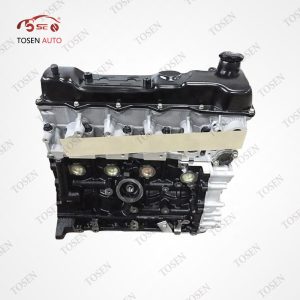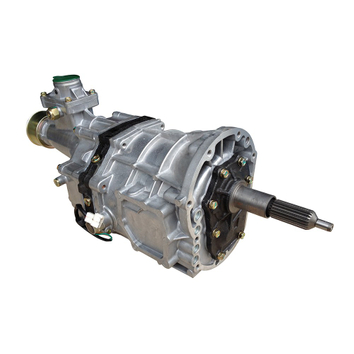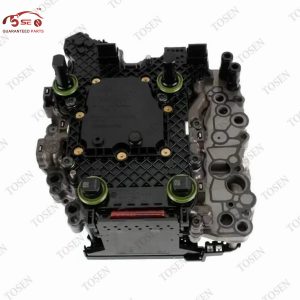
An engine assembly can carry a clean paint finish, a serial tag, and a signed PASS sheet while still leaving the buyer unable to answer a basic question: what exactly was checked on this unit?
A useful engine assembly quality inspection connects identity, assembly scope, method, actual result, acceptance limit, exceptions, and release authority. It also preserves that chain when the engine moves from the test stand into its export crate.
This guide shows importers, workshops, rebuilders, fleet buyers, and supplier-quality teams how to build that release packet without assuming that one test method or one universal limit fits every engine.
Freeze the release rule before inspection starts
| Item | Description |
|---|---|
| Requirement | The drawing, specification, approved sample, purchase-order clause, or engine-specific instruction being checked. |
| Inspection scope | The engines, characteristics, and records covered at unit, lot, or periodic-audit level. |
| Disposition | The documented result: accept, hold, rework, retest, concession, or reject. |
Start with the release decision, not the equipment list. For each characteristic, record what can fail, how the check will find it, which limit controls, and who may release the unit. A supplier statement such as “tested before shipment” leaves all five questions open.
- Identify the engine family, product form, condition, quantity, destination, and approved revision.
- Classify each characteristic as unit-level, lot-sampled, or periodic audit evidence.
- Name the method, setup, equipment, result field, limit source, and required attachment.
- Define what triggers quarantine, tighter inspection, rework, retest, concession, or rejection.
- Name the inspector, reviewer, and final release authority.
ISO 2859-1:2026 provides AQL-indexed schemes for lot-by-lot attribute inspection. That does not mean every engine check should be sampled. Identity, agreed critical characteristics, and shipment-to-record matching may need unit-level control. The buyer and supplier should define the boundary from risk and contract requirements rather than copying an AQL from another product.
Release rule
If the plan does not state the unit or lot, requirement, method, limit, evidence, and authority, it is not yet a release plan.
Lock engine identity and assembly scope
Inspection evidence is useful only when it belongs to the engine the buyer ordered. Freeze the purchase-order line first: vehicle application, VIN or chassis data, engine code, OE reference, condition, short-block or long-block scope, included accessories, quantity, and permitted substitutions.
| Control point | Required evidence | Reject or hold when |
|---|---|---|
| Quotation | Supplier SKU, engine code, OE reference, condition, product form, quantity | The offer relies on a family name without fitment qualifiers |
| Incoming/build identity | Casting or label views, supplier serial or unit key, matched route card | Tags are missing, unreadable, duplicated, or inconsistent |
| Inspection packet | Serial/unit key on every report, data file, photo set, and exception record | Results are batch-only or use a different unit key |
| Packing | Wide engine view, protected openings, accessory inventory, crate label and seal record | The accepted unit cannot be matched to the sealed crate |
| Receiving | Crate label, seal/condition photos, serial confirmation, damage record | Arrival identity or condition differs from dispatch evidence |
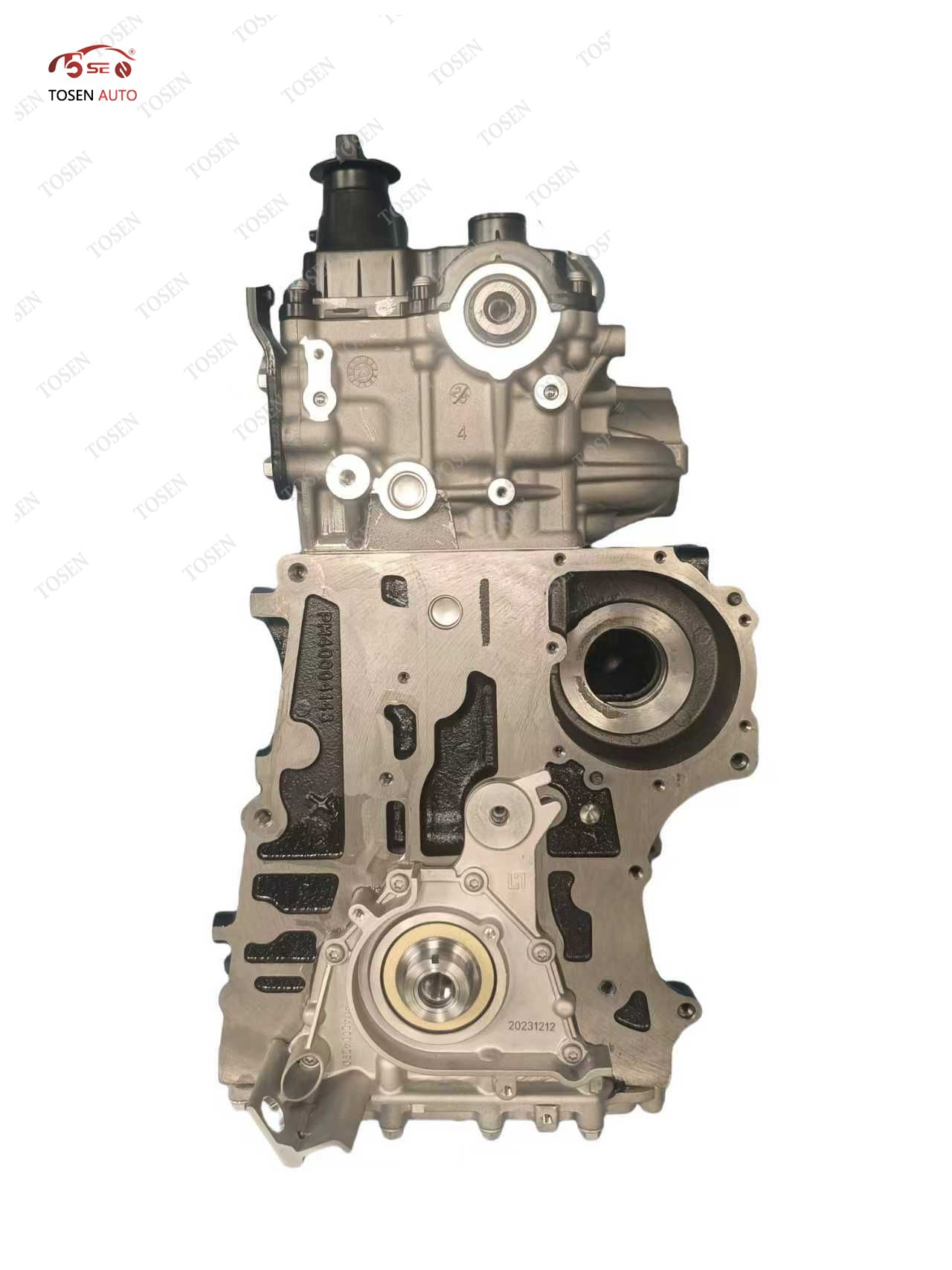
Use the 4F25TC1 2.5L Turbocharged Engine Assembly page as product context, then confirm fitment for the actual order. For broader scope choices, compare engine assemblies and long blocks and use the related technical guide to structure the VIN and engine-code questions. A catalog listing is not proof that a particular engine passed a particular inspection. It helps identify the proposed supply; the unit packet proves what happened to the unit.
- Keep the same unit key in filenames, report headers, image folders, nonconformance records, and crate labels.
- Photograph the identity tag close enough to read and the full engine wide enough to show context.
- Record every accepted substitution and update the bill of materials before release.
- Separate included, excluded, transferred, and optional components in the signed supply scope.
Inspect condition, interfaces, and dimensions
- Inspect castings, covers, sealing faces, brackets, threaded holes, connectors, sensors, harnesses, tubes, and exposed shafts for visible damage.
- Confirm transport plugs, caps, desiccant or corrosion protection, and protective covers are present where the agreed packing plan requires them.
- Check fluid residue, dirt, loose hardware, foreign material, chipped surfaces, and signs of uncontrolled rework.
- Compare critical mounts, flywheel or flexplate interface, intake/exhaust faces, coolant and oil connections, and accessory points to the approved reference.
- Measure only the dimensions named by the drawing or buyer plan; record instrument ID, actual value, tolerance, and result.
| Layer | Evidence to keep | What it cannot prove alone |
|---|---|---|
| Visual condition | Named viewpoints, unit tag, defect location, date, inspector | Internal assembly or performance |
| Presence and scope | Signed component list plus overview photos | Fitment of every interface |
| Dimensional check | Feature, reference revision, instrument, actual value, tolerance | Sealing or operating performance |
| Manual movement | Method, fixture, observed behavior, limit | Loaded performance or durability |
| Packing readiness | Protected openings, restraint points, crate identity, seal | Condition after transport |
Complete this layer before a leak, rotation, cold, or hot test. A blocked port, wrong adapter, loose shipping part, or damaged connector can distort the setup or create a second failure. If the buyer cannot inspect in person, agree the view list and image resolution before the supplier takes the photos.
Practical boundary
A photo can support condition and identity. It cannot replace an actual measurement or functional result when those are required.
Review the build record behind the finished engine
- Select the critical-to-quality operations for this engine and supply scope. Use drawings, process risk analysis, known failure modes, and customer requirements.
- For each operation, identify the controlled instruction, revision, tooling or fixture, and required process record.
- Match the route card or electronic history to the unit serial and confirm all mandatory steps are complete.
- Review exceptions before the final test. Missing data, tool alarms, substitutions, or rework must have a documented disposition.
- Keep the approved process summary with the final inspection packet; preserve original detailed data under the agreed retention rule.
Sciemetric shows why in-process data matters: rotation torque and angle signatures, press-monitoring data, leak results, and other process signals can be collected by serial number. The point is not to demand that exact system. It is to require traceable evidence for the operations that carry the buyer’s actual risk.
| Field | Weak record | Auditable record |
|---|---|---|
| Operation | Assembly complete | Named CTQ operation and instruction revision |
| Control | Tool used | Tool or fixture ID, program/revision, calibration or verification status |
| Result | OK | Actual value or controlled status plus acceptance limit |
| Identity | Batch 24 | Engine serial/unit key and purchase-order line |
| Exception | Rechecked | Original failure, correction, retest result, reviewer, date |
Do not ask for every factory record. Ask for the smallest set that proves the selected risks were controlled. A focused packet is easier to audit and less likely to hide a missing critical field.
Verify sealing and rotation evidence
| Item | Description |
|---|---|
| Leak test | A controlled method for detecting or measuring leakage in a named circuit, component, or assembly. |
| Rotation check | A controlled crankshaft-turning test used to observe resistance, torque/angle behavior, or abnormal mechanical response. |
| Test configuration | The exact assembled state, installed plugs/adapters, fluids or media, temperature, and fixture used for the test. |
Marposs describes leak testing as a way to detect defects from materials, machining, gaskets, positioning, or assembly. Sciemetric describes rotation signatures that can expose abnormal drag and assembly faults. Neither source creates a universal pass value for a replacement engine. The controlling limit must come from an approved engine-specific specification and validated method.
| Field | Question to answer | Evidence |
|---|---|---|
| Unit and configuration | Which engine and assembled state were tested? | Serial, scope, ports/adapters, installed components |
| Method and conditions | How was the test performed? | Procedure revision, pressure/speed/temperature or other controlled setup |
| Equipment | Can the result be trusted and repeated? | Instrument/fixture ID, range, calibration or verification status |
| Actual result | What was observed? | Per-circuit or per-event values, curve/signature, and notes |
| Acceptance | Why did it pass or fail? | Approved limit and unambiguous disposition |
| History | Was the first result changed? | Original result, correction, retest, reviewer, timestamp |
For a deeper document audit, use the engine leak-down test certificate checklist. If a supplier claims an accredited laboratory result, verify the laboratory, accreditation body, certificate status, and scope relevant to that work. ISO/IEC 17025 concerns laboratory competence and consistent operation; a logo on a report is not enough.
Certificate test
Cover the PASS word. If the remaining fields do not let a reviewer identify, interpret, and trace the test, the certificate is incomplete.
Match functional testing to the engine and risk
Functional testing is not one event. AVL distinguishes in-process verification, end-of-line cold testing, end-of-line hot testing, and quality-audit or conformity testing. A buyer should first define the defect or risk to detect, then ask which test can address it on the supplied configuration.
| Test layer | Useful question | Buyer record |
|---|---|---|
| Manual or powered rotation | Does the rotating assembly move within the approved method without abnormal response? | Setup, speed or method, torque/signature where applicable, result, limit |
| Circuit leak test | Does the named sealed circuit meet the approved leakage method? | Circuit, media, conditions, equipment, actual result, limit |
| Cold test | Can selected mechanical and electrical signals be checked without normal combustion? | Installed configuration, driven speed, channels, curves/values, limits |
| Hot or fired test | Do defined operating signals meet the approved loaded or unloaded procedure? | Fuel/oil/coolant setup, operating points, readings, limits, stop criteria |
| Oil-pressure or leak-down record | Does the named method provide the specific evidence the buyer requested? | Method-specific conditions, per-event values, identity, limit, approval |
| Periodic quality audit | Does a deeper test support process confidence beyond routine unit release? | Sample rule, audit scope, results, trend, corrective action |
The engine’s delivered scope determines what can be tested. A long block without its final intake, exhaust, electronics, accessories, or vehicle systems cannot support every complete-vehicle claim. Record included hardware and test adapters so the result is not interpreted more broadly than the setup allows.
- State the test objective and the failure mode it is intended to detect.
- Confirm the supplied components and temporary test hardware.
- Record channels, operating points, stabilization rules, limits, and stop conditions.
- Keep raw or exportable result data when curves or multi-channel evidence matter.
- Link the engine oil-pressure test before shipping record and related leak-down certificates to the same unit rather than storing them as stand-alone PDFs.
Control nonconformance, release, and packing
- Detect and record the original nonconformance
- Quarantine the identified engine and linked parts
- Review cause, scope, and affected units
- Approve correction, rework, concession, or rejection
- Retest under the controlled method and keep both results
- Authorize release and match the accepted unit to its crate
Never overwrite the failed value with a passing retest. The original result explains why work occurred; the correction and retest show what changed; the approval shows who accepted the final state. If more units may share the cause, expand the hold boundary before packing.
- Use a physical and system hold that prevents an open unit from reaching dispatch.
- Record defect, location, requirement, result, suspected cause, and affected serials or lot.
- Require written approval for rework instructions and any concession that changes the requirement.
- Repeat the failed check and any connected checks that the correction could affect.
- Photograph the accepted engine, protected openings, loose-part inventory, restraint points, crate label, and seal.
- Place the unit packet and packing list where receiving staff can reconcile them without opening unrelated crates.
| Packet section | Minimum content | Release question |
|---|---|---|
| Identity | PO line, SKU, VIN/code/OE, serial, product form, condition | Is this the ordered engine? |
| Scope | Included/excluded components and substitutions | Is the supplied configuration clear? |
| Inspection | Requirements, methods, actuals, limits, evidence, dispositions | Did each required check close? |
| Exceptions | Original failures, correction, retest, concession, approver | Are all nonconformances controlled? |
| Packing | Condition photos, protections, inventory, crate tag, seal | Will the accepted unit remain identifiable? |
| Commercial handoff | Warranty version, claim contact, quantity, destination | Can receiving and after-sales act on the record? |
For a supplier quotation, attach this matrix and ask for a sample completed packet before approving the production lot. That shows whether the process is executable, not merely promised.
Frequently Asked Questions
Should every engine receive the same inspection?
No. Freeze a common identity and release structure, then adapt characteristics and tests to the engine, supplied components, application, process risk, and contract. Critical unit checks and lot-sampled attributes should be identified separately.
Can an AQL sample replace unit-level test records?
Not automatically. ISO 2859-1:2026 addresses AQL-indexed lot-by-lot attribute sampling. The buyer still must decide which identity, safety, fitment, or functional characteristics require unit-level evidence.
Does ISO/IEC 17025 accreditation prove the engine passed?
No. It supports confidence in a laboratory’s competence and operation. Verify the laboratory, accreditation, current certificate, relevant scope, method, sample or unit identity, and actual result.
Are inspection photos enough for remote acceptance?
Photos can support identity, visible condition, included parts, and packing. They do not replace dimensional or functional results when the inspection plan requires those checks. Define the required views and link every photo set to the unit key.
What should happen when a retest passes?
Keep the original failure, correction or rework, affected scope, retest result, and approval. A passing retest should close a controlled nonconformance, not erase its history.
Release the evidence packet, not just the engine
A useful engine assembly inspection ends with one reconciled packet: purchase-order identity, supply scope, visual and dimensional checks, relevant build records, sealing and functional evidence, closed exceptions, and packing proof. The report should show actual results and the limits that controlled each decision.
Hold the order when the supplier cannot connect those records to the engine and crate. A short, complete evidence chain is more useful than a thick folder of generic certificates.
Request an engine fitment and inspection-evidence proposal from TOSEN AUTO. Send the VIN, old-engine label or OE number, vehicle year, quantity, destination port, and the checks you need. Ask TOSEN to confirm the supply scope, available evidence, packing plan, warranty terms, and quotation in writing. Existing TOSEN contact and quotation workflow.