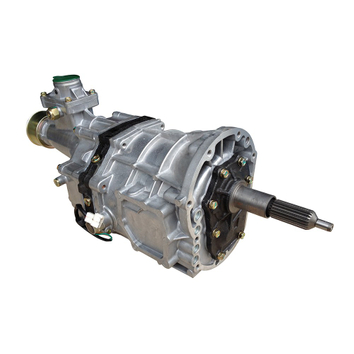
Your VIN starts the compatibility check, but it cannot finish it. The 17 characters identify your vehicle, its model year and its plant, and they narrow transmission compatibility by VIN down to a family — not to the exact gearbox variant bolted to your car. A free decoder returns, at best, the kind of transmission a model could have. The stamped code on the casing, the OE part number and your vehicle's build record decide what your car actually has.
This guide walks through the complete verification a repair shop, importer or fleet buyer can run on every order: what each identifier proves, which variant fields break interchange inside one transmission family, how to resolve a conflict between the VIN and the gearbox, and exactly what to send a supplier so the fitment confirmation comes back in writing before you pay.
What the VIN Identifies — and What It Does Not
The VIN is a standardized vehicle identifier, required on vehicles from model year 1981 forward under the US VIN standard in 49 CFR Part 565. NHTSA's public vPIC platform decodes it from data each manufacturer submits, and it reliably returns the make, model year, plant and body details of your vehicle. For a buyer, that is exactly enough to identify the car — and no more. A quote built only on a decoder result quotes the vehicle, not the gearbox fitted to it.
Transmission fields in basic public decoding carry whatever the manufacturer submitted — often a class, sometimes nothing at all. A six-speed manual is a category of gearbox rather than a unit: it names no part number, no fluid specification and no variant. The exact assembly fitted to your car lives in the manufacturer's factory build record behind the VIN, and on the code stamped or labeled on the gearbox itself. Both are needed: the factory record shows what left the line, and the casing shows what is in the bay now.
The rule to keep
A decoder tells you what the model could have left the factory with.
The stamped transmission code and the OE part number tell you what your car actually has.
Order from the second, never from the first.
Build the Identification Record Before You Ask for Price
A fitment check runs on four identifiers, and each answers a different question. You will find the VIN on the dashboard corner, the driver's door jamb and the registration documents. On the gearbox itself, the transmission code is stamped into the casing, riveted on a small plate or printed on a label — its position changes from one maker to the next, and even between models from the same maker, so look first along the seam between casing and engine, then on top of the housing, then on the flat above the sump. An OE part number sits on the tag of the old unit, while the drivetrain and build date come from the door plate and the VIN's model-year character. Collect all four before the vehicle goes up on the lift.
| Identifier | Where you find it | What it proves | What it does not prove | What to photograph |
|---|---|---|---|---|
| VIN | Dashboard, door jamb, registration | The vehicle: make, model year, plant, factory build data | The exact transmission variant fitted or its part number | Nothing — copy the 17 characters |
| Transmission code | Stamped on the casing, riveted plate or label | The specific unit family and variant, including the suffix | Supersession status or what the unit includes | The stamp, plate or label in place |
| OE part number | Tag on the old unit, or the build record | The strongest hardware reference once supersession is checked | Whether the number is still the current one | The full tag, all visible references |
| Casting number | Raised on the casing | Which casing casting the unit uses | Nothing about fitment — one casting serves many variants | Not needed; never order from it |
| Drivetrain and build date | Door plate, VIN model-year character | 2WD or 4WD, and the production window | Whether the gearbox was swapped later | The door plate sticker |
Two habits protect the whole order. First, photograph everything while the old unit is still in the vehicle: the code stamp or plate, the OE tag, the electrical connectors and both output flanges. Once the gearbox is out and back on a shelf, those photos become your evidence of what was in the bay. Second, ignore the casting number as an ordering reference. It identifies the casing, which is commonly shared across variants with different internals, final drives and sensors — it narrows the field and then misleads at the last step.
Same Code, Different Gearbox: The Variant Fields That Decide the Match
One engine can leave the factory paired with several different gearboxes across a single model year. The engine's output band determines part of the choice, the drive layout determines more of it, and the customer's original specification settles the rest — a buyer who specced the automatic changed the flywheel, the starter, the mounts and the loom. So two vehicles that share a model name, an engine and even a transmission code can still carry units that do not interchange. Five variant fields decide the match.
- Input and output flanges (2WD or 4WD) — the wrong drivetrain layout will not bolt to the driveshaft, and this is the most common wrong-variant order on CVT and manual units.
- Final-drive ratio — a mismatch causes drivability problems from the first drive and, on vehicles that take the speed signal from the gearbox, wrong speedometer readings.
- Torque converter (on automatics and CVTs) — the converter must match the flexplate pattern and lock-up strategy of the exact application, and it does not transfer between variants.
- Valve body and wiring — plug count, keying and calibration differ inside one family, and a mismatched harness sets fault codes immediately.
- Fluid specification and fill quantity — the fluid follows the exact gearbox code, not the model name, and the wrong fluid damages CVT pulleys and belts.
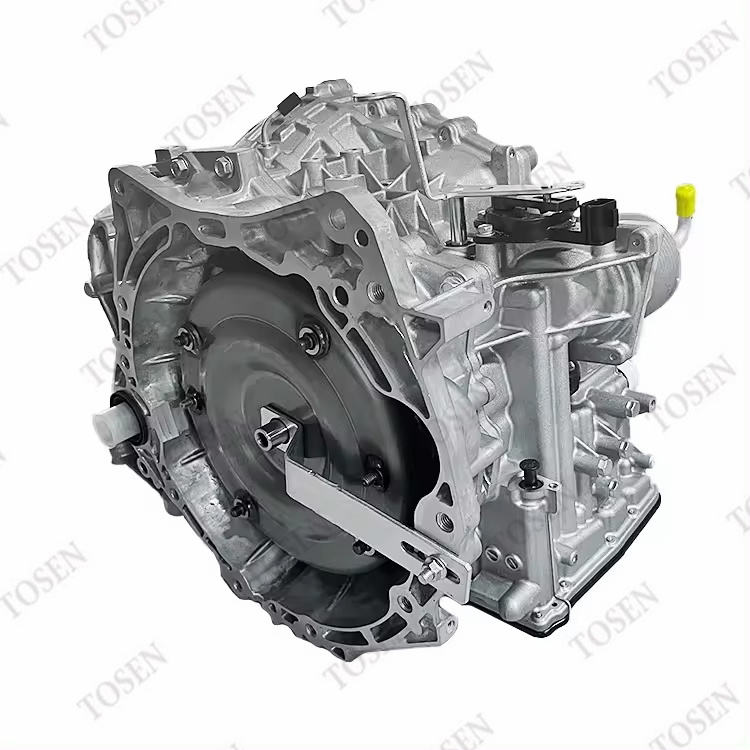
The clearest case is one CVT family wearing three names. The JF011E — the JATCO CVT used in Dodge and Jeep applications — is the same family Nissan calls RE0F10A and Mitsubishi calls F1C1A. Shops meet it constantly, and the model-specific ATSG service manual is the baseline for its repair and identification. Yet even inside this one family, variants differ: the 2WD and 4WD builds use different input and output flanges, the fluid specification follows the exact code, and Nissan builds even use a different terminal numbering in the case connector from the Dodge, Jeep and Mitsubishi builds. A buyer who quotes only "JF011E" has named the family and stopped short of naming the part.
For the JF011E family specifically, the JF011E CVT Transmission Assembly listing covers the Dodge, Mitsubishi and Nissan applications with an enquiry process that accepts the full fitment packet below.
The family's cross-application guide carries the model-level detail: why the same code spans three makes, which input and output flanges fit 2WD versus 4WD vehicles, the fluid and filter the JF011E needs, and how the core return works. Use the family pages to confirm the variant, then apply the same packet-and-confirmation process to any make you buy.
Reconcile Conflicts Before Money Moves
A conflict between the VIN and the gearbox is not a dead end, and it is common on older vehicles: the unit may have been swapped in service, the OE tag may carry a number the factory has since replaced, and some catalogues split one model year into two production windows. Every one of these conflicts costs nothing to resolve before the order is placed — and gets expensive after the crate ships.
- Run the full VIN through the manufacturer catalogue or your parts source and write down the transmission it returns for that individual car.
- Read the stamped code on the casing and the OE tag on the old unit, and photograph both where they sit.
- If the catalogue result and the casing disagree — an exchange unit, a donor box or a past conversion — order to the casing, not to the catalogue, and tell the supplier about the discrepancy in writing.
- Check the OE number for supersession before quoting; control units, valve bodies and solenoids are revised in service, and the number the car left the factory with may since have been superseded by a newer one.
- If the catalogue splits the model year, use the build date on the door plate to pick the production window — a car from early in the year can use a different unit than the same model built months later.
The reasoning behind step three is simple: the gearbox in the bay is the one your customer drives, and its casing code describes the parts that unit actually needs, whatever the factory record says. What matters commercially is that the supplier knows. A disclosed conflict turns into a confirmed match; an undisclosed one turns into a warranty argument when the wrong-variant unit arrives.
Send a Fitment Packet, Not a Model Name
An enquiry that says "gearbox for a 2012 diesel van" earns a generic assurance, because a model name is too vague to be checked. An enquiry that names an exact unit from the complete transmissions category can be checked, right or wrong — and that is exactly why it protects you. Send these fields with every transmission enquiry:
- The full 17-character VIN
- The transmission code from the casing, including its suffix
- The old-part label or OE part number, with supersession noted if you know it
- Model year and build date from the door plate
- Drivetrain: 2WD or 4WD
- Photos of the old label and both output flanges
- Quantity and destination port
Then require five statements back, in writing, before you pay: the exact unit and variant the supplier matched, including the drivetrain; confirmation that the OE number's supersession was checked; exactly what the shipment includes — converter, sensors, mounts or gearbox alone; the fluid specification for first fill; and the date. A confirmation that answers a model name with "will fit" is an assurance; a confirmation that names the variant against your packet is a commitment. The economics reward the discipline: a wrong-fit cross-border order means return freight, restocking, a second removal and weeks of downtime, and the time to confirm fitment is the cheapest part of any quote — cheaper than the smallest discount a supplier can offer. Put those failure costs into the fleet gearbox replacement budget before you compare quotes, not after.
Get a fitment-confirmed quote: send the packet above through the enquiry on the JF011E CVT assembly page for Dodge, Mitsubishi and Nissan applications, or browse the complete transmissions category for the family you need — TOSEN AUTO confirms the matched variant against your VIN and old-part references before the order ships.
Close the Loop at Delivery
The order is verified when the unit is in the bay and matches the confirmation — not when the payment clears. Check the arriving crate against the packet you sent before the old gearbox comes out. Crate and freight damage checks are covered separately in the gearbox crate requirements guide.
- The label on the arriving unit matches the variant named in the confirmation
- The output flange and sensor layout match the photos you sent
- The inclusions match the written confirmation — converter, sensors, mounts
- You have the fluid specification confirmed for first fill
- Any coding or adaptation requirements are known before the vehicle is dismantled
Frequently Asked Questions
Can a free VIN decoder tell me which transmission I have?
Only to a class. Basic public decoding returns what the manufacturer submitted — sometimes a category like "six-speed manual" or "CVT", sometimes nothing — and never a part number or fluid specification. The exact fitted unit comes from the manufacturer build record behind the VIN plus the code stamped on the gearbox.
Does the suffix on my transmission code matter?
Yes. The suffix often separates variants with different ratios, hardware or calibration inside the same casing. Quote the code exactly as stamped, including the suffix, and ask the supplier to confirm the full string in writing.
Why do two identical cars have different gearboxes?
The gearbox fitted at the factory was chosen on the build sheet, not from the model name. Output rating, drive layout, market and the choice of manual or automatic all decide the fitted unit, and several units can sit behind one engine within a single model year.
My old gearbox label is missing — can photos replace the numbers?
Photos narrow the field, but they do not replace the numbers. Photograph the casing stamp, the connectors and both output flanges, then ask the supplier to match them against the build record for your VIN. A disclosed gap gets resolved before payment; an assumed number ships the wrong part.
Should I order to the VIN or to the code on the old unit?
To the code on the old unit when the two disagree, because that is the assembly actually driving the vehicle — and tell the supplier about the mismatch in writing. Order to the VIN only when the casing confirms it.
Does a supplier fitment confirmation guarantee the unit will work?
It guarantees the supplier matched the variant against your packet and checked the supersession — which is what a buyer can verify. It cannot prove installation quality or the condition of surrounding systems, so keep the confirmation with the order record for any later claim.
Order With the Evidence, Not the Model Name
The VIN opens the check and the evidence closes it: the stamped code and OE part number name the exact unit, the variant fields — flanges, ratio, converter, wiring, fluid — decide the match, and a written fitment confirmation against your packet is the only point where a wrong order still costs nothing. Run the same sequence on every gearbox you buy, whatever the make: VIN, code with suffix, OE number, model year, drivetrain, photos, quantity and destination port. The shops that avoid return-freight bills are rarely the ones ordering from a model name.
Submit your fitment packet — VIN, old-part label or OE number, model year, quantity and destination port — through the TOSEN AUTO enquiry for a fitment-confirmed quote on your complete transmission.